Snakes and spiders in Southeast Fairbanks Census Area, Alaska
Southeast Fairbanks Census Area has 0 snake and 13 spider species on record, from 0 licensed snake and 944 spider records. No venomous snake or spider reaches the county list.
What spiders are in Southeast Fairbanks Census Area?
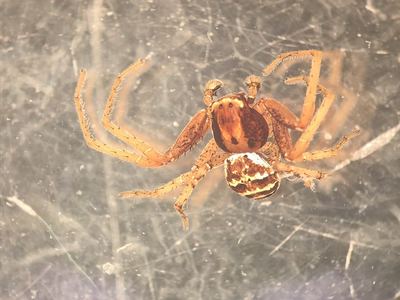
In all, 13 spider species are on the Southeast Fairbanks Census Area list. The most recorded are the threebanded crab spider (98), Satilatlas gertschi (88) and Cnephalocotes obscurus (41). Southeast Fairbanks Census Area holds more than half of all Alaska records of the threebanded crab spider, Satilatlas gertschi, Cnephalocotes obscurus and the marbled cobweb spider.
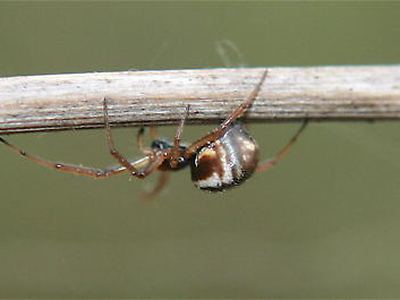 Same family (Linyphiidae): Frontinella pyramitela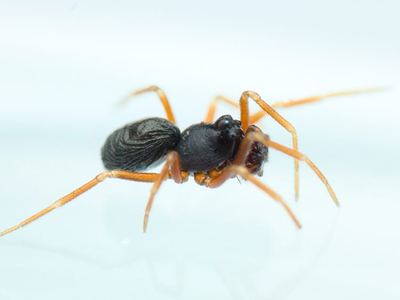
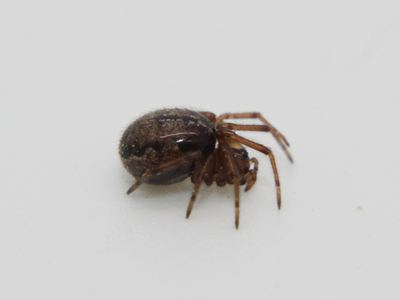
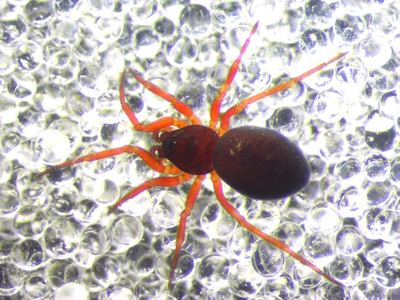
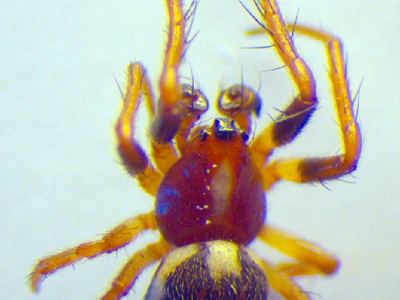
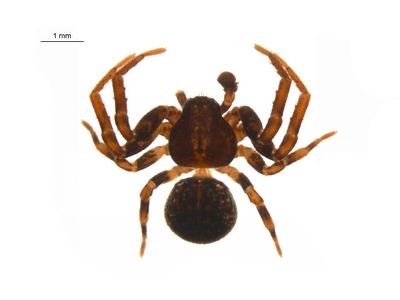 Related species: Ozyptila conspurcata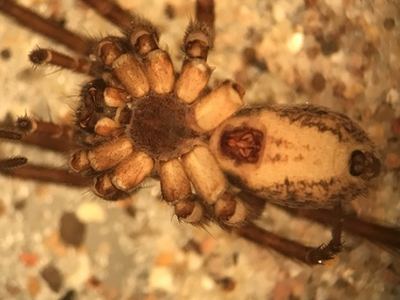
| # | Species | Records | Share of Alaska records |
|---|---|---|---|
| 1 | Threebanded crab spider Xysticus triguttatus | 98 | 100% |
| 2 | Satilatlas gertschi | 88 | 97% |
| 3 | Cnephalocotes obscurus | 41 | 50% |
| 4 | Marbled cobweb spider Enoplognatha marmorata | 32 | 91% |
| 5 | Styloctetor compar | 24 | 73% |
| 6 | Hypsosinga albovittata | 21 | 100% |
| 7 | Ozyptila gertschi | 13 | 62% |
| 8 | Pardosa concinna | 13 | 68% |
| 9 | Proszynski's jumping spider Evarcha proszynskii | 13 | 57% |
| 10 | Marvelous ground hunter Drassodes mirus | 12 | 92% |
| 11 | Micaria rossica | 12 | 71% |
| 12 | Minute jumping spider Talavera minuta | 12 | 100% |
| 13 | Robertus arcticus | 11 | 61% |
What stands out in Southeast Fairbanks Census Area
Species for which Southeast Fairbanks Census Area holds a large share of all Alaska records: the threebanded crab spider, 100% (98 of 98); Hypsosinga albovittata, 100% (21 of 21); Satilatlas gertschi, 97% (88 of 91); the marbled cobweb spider, 91% (32 of 35); Styloctetor compar, 73% (24 of 33); Ozyptila gertschi, 62% (13 of 21); the Proszynski's jumping spider, 57% (13 of 23); Cnephalocotes obscurus, 50% (41 of 82).
Common in Alaska, not on the Southeast Fairbanks Census Area list
Among the spiders most recorded across Alaska, these do not reach the county list: the common west coast woodland spider (1,213 statewide), Ceratinops inflatus (736 statewide), Sisicottus nesides (528 statewide), Tenuiphantes zelatus (508 statewide), the common six-spotted cobweaver (464 statewide) and Symmigma minimum (398 statewide). Few records here can mean the species is rare in the county, or that few people have looked.
Southeast Fairbanks Census Area among Alaska counties
Other Alaska counties with their own page: Haines Borough, Juneau City and Borough, Kenai Peninsula Borough, Matanuska-Susitna Borough, North Slope Borough, Prince of Wales-Outer Ketchikan Census Area, Skagway-Yakutat-Angoon Census Area and Wrangell-Petersburg Census Area.
The whole state: venomous species in Alaska, all spiders.
GBIF records read 2026-09-29. Listed: any license. Counted: CC0/CC BY only. How we count.