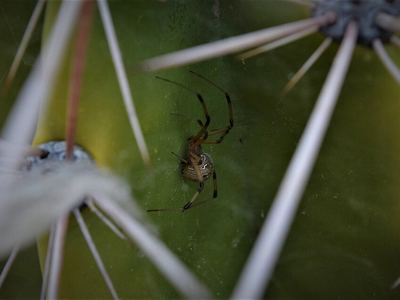
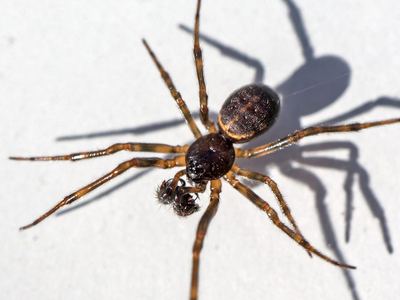
Common six-spotted cobweaver (Rugathodes sexpunctatus)
The common six-spotted cobweaver is a spider in the family Theridiidae that is not dangerous to people. GBIF holds 508 licensed U.S. records of it; it reaches our listing threshold in 3 states, most of all Alaska (464), Washington (39) and Maine (0). Its observation records peak in August.
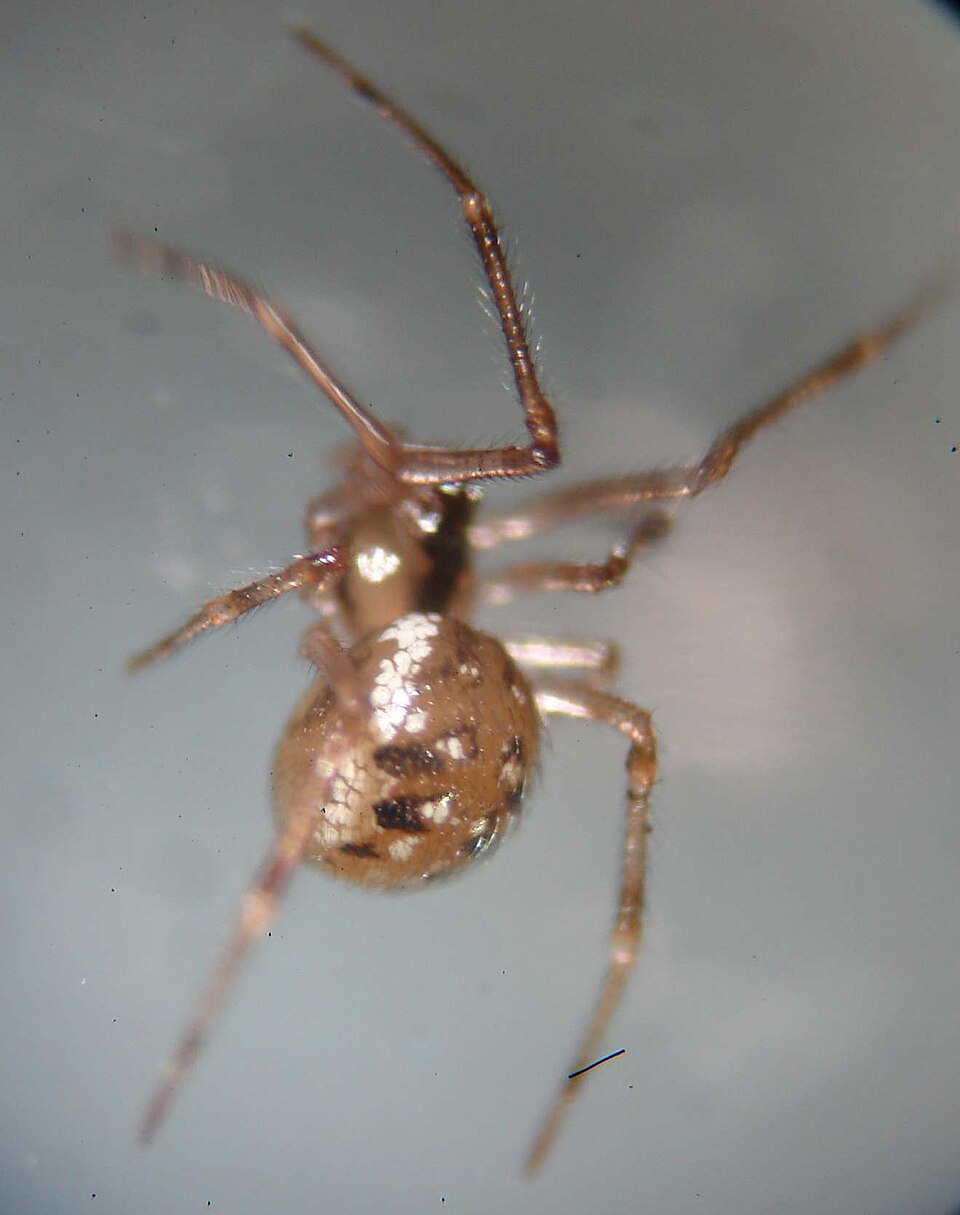

Rugathodes sexpunctatus is a minute species of spider in the family Theridiidae, the cobweb or tangle-web spiders. This family includes the medically important genus Latrodectus—the widow spiders. The species in the genus Rugathodes are too small to be dangerous to humans.
From Wikipedia: Rugathodes sexpunctatus, text under CC BY-SA 4.0.
Is the common six-spotted cobweaver poisonous or venomous?
Not in any medically significant way. Like almost all spiders the common six-spotted cobweaver (family Theridiidae) has venom for its prey, but it is not a widow or recluse, the two U.S. groups whose bites need medical attention.
Which states have the common six-spotted cobweaver?
The common six-spotted cobweaver's U.S. record is concentrated: Alaska alone holds 91% of licensed records. It is listed in 3 states in all; the next are Washington (39) and Maine (0).
| # | State | Records | Share of state spiders | Rank in state |
|---|---|---|---|---|
| 1 | Alaska | 464 | 1.8% | 5th of 280 |
| 2 | Washington | 39 | 1.0% | 19th of 157 |
| 3 | Maine | 0 | — | — |
When is the common six-spotted cobweaver seen?
Across the U.S., observation records of the common six-spotted cobweaver run mostly February through September, peaking in August with 27% of them. Winter (December to February) holds 25% of them.
Where the common six-spotted cobweaver is recorded in each state
Alaska
Alaska holds 464 licensed records, the 5th most recorded of 280 spiders listed there. Most of its licensed records in Alaska come from Prince of Wales-Outer Ketchikan Census Area, Wrangell-Petersburg Census Area and Skagway-Yakutat-Angoon Census Area. Next come Aleutians West Census Area (10) and Juneau City and Borough (9).
Washington
Washington holds 39 licensed records, the joint 19th most recorded of 157 spiders listed there. Its observation records in Washington run mostly August through April, peaking in February; most licensed records come from King County, Island County and Grays Harbor County. Next come Clallam County (3) and Kitsap County (1).
Top counties in the U.S.
| # | County | State | Records | Share of U.S. |
|---|---|---|---|---|
| 1 | Prince of Wales-Outer Ketchikan Census Area | Alaska | 393 | 77.4% |
| 2 | King County | Washington | 26 | 5.1% |
| 3 | Wrangell-Petersburg Census Area | Alaska | 18 | 3.5% |
| 4 | Skagway-Yakutat-Angoon Census Area | Alaska | 14 | 2.8% |
| 5 | Aleutians West Census Area | Alaska | 10 | 2.0% |
| 6 | Juneau City and Borough | Alaska | 9 | 1.8% |
| 7 | Kodiak Island Borough | Alaska | 6 | 1.2% |
| 8 | Ketchikan Gateway Borough | Alaska | 5 | 1.0% |
| 9 | Island County | Washington | 4 | 0.8% |
| 10 | Sitka City and Borough | Alaska | 3 | 0.6% |
| 11 | Anchorage Municipality | Alaska | 3 | 0.6% |
| 12 | Grays Harbor County | Washington | 3 | 0.6% |
| 13 | Clallam County | Washington | 3 | 0.6% |
| 14 | Haines Borough | Alaska | 2 | 0.4% |
| 15 | Matanuska-Susitna Borough | Alaska | 1 | 0.2% |
How recent are the common six-spotted cobweaver records?
The common six-spotted cobweaver record leans on older material: only 7% of dated U.S. records come from 2017–2026, and the median record is from 2011. The oldest dated record is from 1977; the busiest year was 2011, with 124 records.
| Decade | Records | Share |
|---|---|---|
| 1970s | 10 | 2.0% |
| 1990s | 1 | 0.2% |
| 2000s | 76 | 15.2% |
| 2010s | 375 | 75.2% |
| 2020s | 37 | 7.4% |
Species recorded in the same counties
Of the 18 counties where the common six-spotted cobweaver is most recorded, 13 are also top counties for the versicolor long-jawed orbweaver, more than for any other spider. None of its closest neighbors is venomous.
| Species | Shared counties |
|---|---|
| Versicolor long-jawed orbweaver | 13 |
| Nearctic white-striped running crab spider | 12 |
| Goldenrod crab spider | 11 |
| Sixspotted orbweaver | 11 |
| Grey sheetweb weaver | 10 |
| Miller dwarf weaver | 10 |
| Sisicottus nesides | 10 |
| Callobius pictus | 9 |
Related species in the U.S.
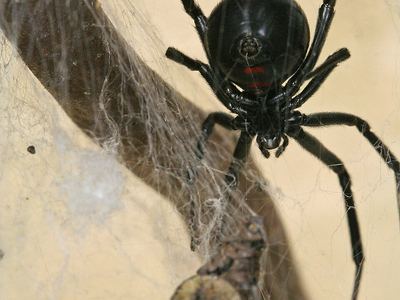
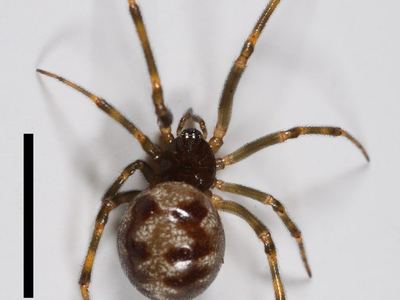
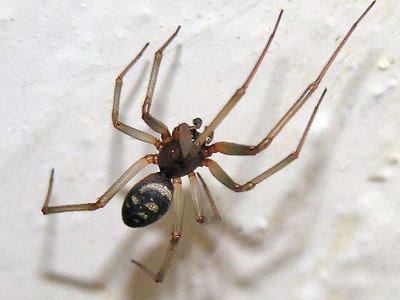
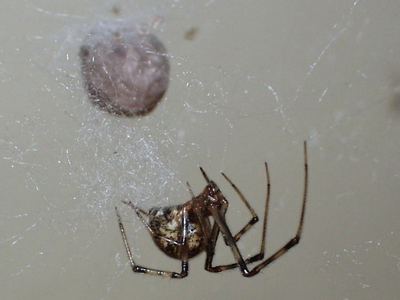
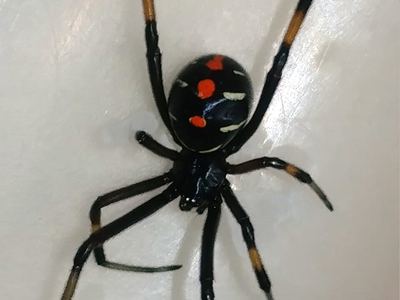
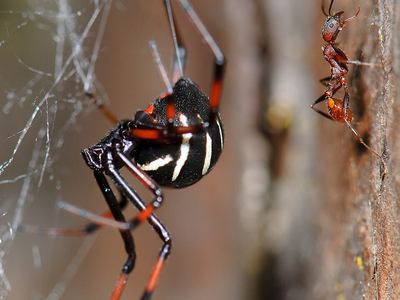
Other members of the family Theridiidae with profiles here: Western black widow, Triangulate bud spider, False black widow, Brown widow, Common house spider and Southern black widow.
GBIF records read 2026-09-29. Listed: any license. Counted: CC0/CC BY only. How we count.