Maricopa leafnose snake (Phyllorhynchus browni)
The Maricopa leafnose snake (genus Phyllorhynchus) is a non-venomous snake in the family Colubridae. Of the 28 small woodland and burrowing snakes profiled here, it is listed in fewer states than any other. It is listed in one state only, Arizona, in the Mountain division.
Also called: pima leafnose snake, saddled leaf-nosed snake, saddled leafnose snake (English names in GBIF)
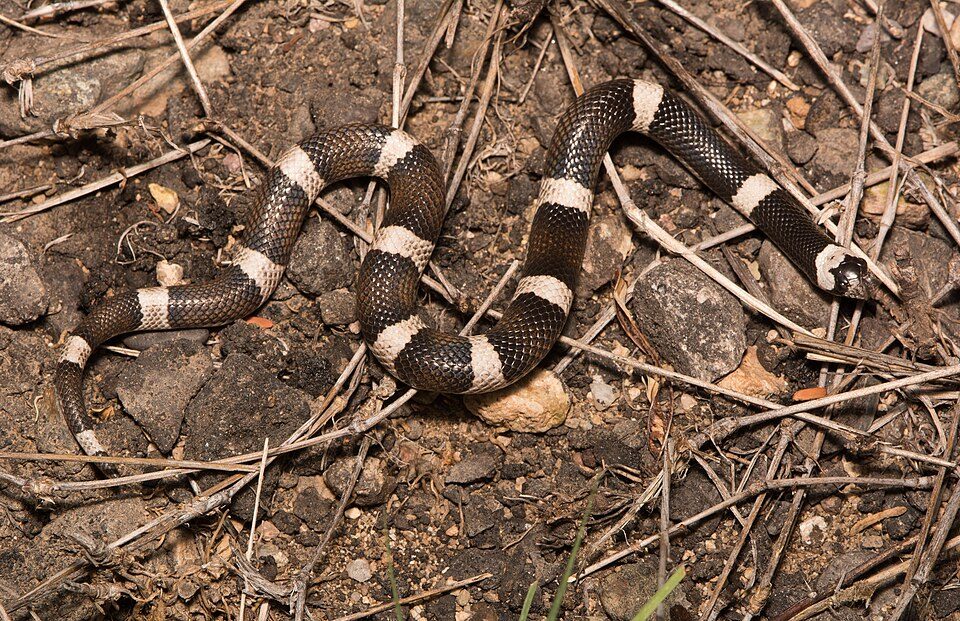

Phyllorhynchus browni, the saddled leafnose snake, is a species of snake of the family Colubridae. The snake is found in Arizona in the United States and Mexico.
From Wikipedia: Phyllorhynchus browni, text under CC BY-SA 4.0.
Is the Maricopa leafnose snake poisonous or venomous?
No. The Maricopa leafnose snake is non-venomous: it belongs to the family Colubridae, not to the pit vipers or coral snakes, the only U.S. land snakes with medically dangerous venom. It may bite if handled; clean the bite like any small wound.
Which states have the Maricopa leafnose snake?
| # | State | Records | Share of state snakes | Rank in state |
|---|---|---|---|---|
| 1 | Arizona | 379 | 1.8% | 16th of 60 |
How recent are the Maricopa leafnose snake records?
| Decade | Records | Share |
|---|---|---|
| 1920s | 1 | 0.6% |
| 1930s | 1 | 0.6% |
| 1940s | 4 | 2.4% |
| 1950s | 23 | 13.9% |
| 1960s | 20 | 12.0% |
| 1970s | 62 | 37.3% |
| 1980s | 11 | 6.6% |
| 1990s | 13 | 7.8% |
| 2000s | 13 | 7.8% |
| 2010s | 14 | 8.4% |
| 2020s | 4 | 2.4% |
Related species in the U.S.
GBIF records read 2026-11-05 (open these records on GBIF). Listed: any license. Counted: CC0/CC BY only. How we count.