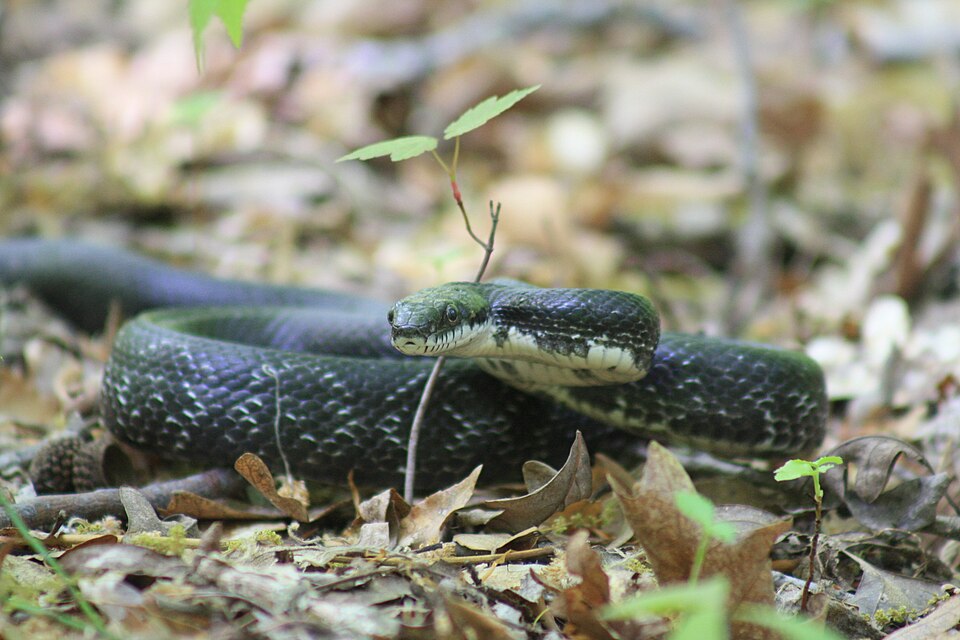
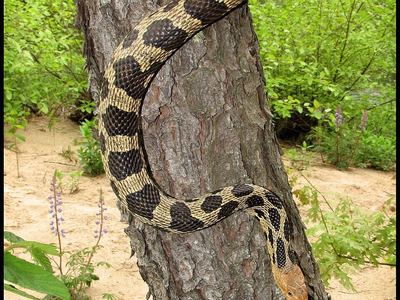
Eastern rat snake (Pantherophis alleghaniensis)
The eastern rat snake is a non-venomous snake in the family Colubridae. GBIF holds 6,072 licensed U.S. records of it; it reaches our listing threshold in 26 states, most of all North Carolina (1,917), Virginia (1,247) and Maryland (560). Its observation records peak in May.
.jpg)
Pantherophis quadrivittatus, commonly called the yellow ratsnake or eastern ratsnake, is a species of nonvenomous snake in the family Colubridae. The species is endemic to North America.
From Wikipedia: Yellow ratsnake, text under CC BY-SA 4.0.
Is the eastern rat snake poisonous or venomous?
No. The eastern rat snake is non-venomous: it belongs to the family Colubridae, not to the pit vipers or coral snakes, the only U.S. land snakes with medically dangerous venom. It may bite if handled; clean the bite like any small wound.
Often mistaken for
The eastern rat snake is non-venomous, but people often take it for copperheads (both are recorded in 22 of its 26 states).
Which states have the eastern rat snake?
Records are spread over 26 states; the top three, North Carolina, Virginia and Maryland, hold 61% of them. It is the most recorded snake of all in North Carolina.
The count includes 2,497 records filed under the older name Pantherophis obsoletus in Connecticut (2), Delaware (8), Maryland (109), New Jersey (6), North Carolina (1,566), South Carolina (105), Vermont (2) and Virginia (699).
| # | State | Records | Share of state snakes | Rank in state |
|---|---|---|---|---|
| 1 | North Carolina | 1,917 | 9.3% | 1st of 39 |
| 2 | Virginia | 1,247 | 11.4% | 2nd of 30 |
| 3 | Maryland | 560 | 15.5% | 2nd of 20 |
| 4 | Pennsylvania | 358 | 4.2% | 11th of 20 |
| 5 | Ohio | 256 | 4.2% | 5th of 25 |
| 6 | Tennessee | 215 | 8.2% | 4th of 32 |
| 7 | Georgia | 203 | 3.3% | 6th of 44 |
| 8 | South Carolina | 163 | 4.5% | 7th of 40 |
| 9 | New York | 151 | 2.5% | 10th of 17 |
| 10 | Alabama | 144 | 2.5% | 14th of 44 |
| 11 | Florida | 131 | 0.6% | 25th of 49 |
| 12 | Indiana | 125 | 5.7% | 5th of 27 |
| 13 | New Jersey | 109 | 9.7% | 3rd of 18 |
| 14 | Kentucky | 104 | 8.2% | 3rd of 24 |
| 15 | Illinois | 86 | 3.1% | 8th of 33 |
| 16 | Delaware | 77 | 11.4% | 4th of 14 |
| 17 | Mississippi | 60 | 3.2% | 11th of 38 |
| 18 | West Virginia | 56 | 3.4% | 11th of 18 |
| 19 | Connecticut | 44 | 3.8% | 10th of 14 |
| 20 | Louisiana | 29 | 0.6% | 26th of 41 |
| 21 | Vermont | 18 | 1.6% | 6th of 9 |
| 22 | Michigan | 9 | 0.2% | 15th of 17 |
| 23 | Massachusetts | 3 | 0.2% | 13th of 13 |
| 24 | Missouri | 1 | 0.1% | 35th of 36 |
| 25 | Rhode Island | 1 | 0.5% | 10th of 10 |
| 26 | Wisconsin | 1 | 0.1% | 16th of 16 |
When is the eastern rat snake seen?
Across the U.S., observation records of the eastern rat snake run mostly April through October, peaking in May with 27% of them. Almost none are from December to February.
Season by state
Among states whose main season falls within one calendar year, it starts earliest in February (Mississippi) and latest in May (New Jersey). The most common peak month is May, shared by Alabama, Delaware, Georgia, Illinois, Indiana, Kentucky and 9 more.
| State | Main season | Peak month | Observation records |
|---|---|---|---|
| Virginia | April through October | May | 548 |
| Maryland | April through October | May | 449 |
| Pennsylvania | April through September | June | 357 |
| North Carolina | April through October | May | 350 |
| Ohio | April through September | May | 250 |
| Tennessee | March through October | May | 213 |
| Georgia | March through October | May | 187 |
| New York | April through October | June | 145 |
| Alabama | March through September | May | 141 |
| Indiana | April through October | May | 125 |
| Kentucky | April through September | May | 104 |
| New Jersey | May through October | May | 103 |
| Illinois | April through October | May | 86 |
| Delaware | March through September | May | 69 |
| South Carolina | March through September | May | 56 |
| West Virginia | April through September | May | 56 |
| Mississippi | February through August | May | 46 |
| Florida | December through August | December | 41 |
Where the eastern rat snake is recorded in each state
North Carolina
North Carolina holds 1,917 licensed records, the most recorded of 39 snakes listed there. Its observation records in North Carolina run mostly April through October, peaking in May; most licensed records come from Sampson County, Wake County and Orange County. Next come Chatham County (72) and Moore County (71).
Virginia
Virginia holds 1,247 licensed records, the 2nd most recorded of 30 snakes listed there. Its observation records in Virginia run mostly April through October, peaking in May; most licensed records come from Fairfax County, Prince William County and Henrico County. Next come Fauquier County (44) and Loudoun County (42).
Maryland
Maryland holds 560 licensed records, the 2nd most recorded of 20 snakes listed there. Its observation records in Maryland run mostly April through October, peaking in May; most licensed records come from Prince George's County, Montgomery County and Anne Arundel County. Next come Frederick County (52) and Baltimore County (48).
Pennsylvania
Pennsylvania holds 358 licensed records, the 11th most recorded of 20 snakes listed there. Its observation records in Pennsylvania run mostly April through September, peaking in June; most licensed records come from Allegheny County, Westmoreland County and Centre County. Next come Blair County (30) and Huntingdon County (27).
Ohio
Ohio holds 256 licensed records, the 5th most recorded of 25 snakes listed there. Its observation records in Ohio run mostly April through September, peaking in May; most licensed records come from Lake County, Clermont County and Summit County. Next come Butler County (20) and Hamilton County (19).
Tennessee
Tennessee holds 215 licensed records, the 4th most recorded of 32 snakes listed there. Its observation records in Tennessee run mostly March through October, peaking in May; most licensed records come from Knox County, Hamilton County and Cheatham County. Next come Blount County (17) and Montgomery County (13).
Georgia
Georgia holds 203 licensed records, the 6th most recorded of 44 snakes listed there. Its observation records in Georgia run mostly March through October, peaking in May; most licensed records come from Clarke County, Jones County and Cobb County. Next come Fulton County (10) and DeKalb County (8).
South Carolina
South Carolina holds 163 licensed records, the 7th most recorded of 40 snakes listed there. Its observation records in South Carolina run mostly March through September, peaking in May; most licensed records come from Greenville County, Berkeley County and Charleston County. Next come Oconee County (9) and Jasper County (9).
New York
New York holds 151 licensed records, the 10th most recorded of 17 snakes listed there. Its observation records in New York run mostly April through October, peaking in June; most licensed records come from Ulster County, Rockland County and Orange County. Next come Westchester County (10) and Onondaga County (7).
Alabama
Alabama holds 144 licensed records, the 14th most recorded of 44 snakes listed there. Its observation records in Alabama run mostly March through September, peaking in May; most licensed records come from Madison County, Blount County and DeKalb County. Next come Tuscaloosa County (11) and Jefferson County (10).
Florida
Florida holds 131 licensed records, the 25th most recorded of 49 snakes listed there. Its observation records in Florida run mostly December through August, peaking in December; most licensed records come from Palm Beach County, Monroe County and Miami-Dade County. Next come Alachua County (11) and Collier County (10).
Indiana
Indiana holds 125 licensed records, the 5th most recorded of 27 snakes listed there. Its observation records in Indiana run mostly April through October, peaking in May; most licensed records come from Monroe County, Marion County and Morgan County. Next come Brown County (10) and Clay County (7).
New Jersey
New Jersey holds 109 licensed records, the 3rd most recorded of 18 snakes listed there. Its observation records in New Jersey run mostly May through October, peaking in May; most licensed records come from Cape May County, Burlington County and Cumberland County. Next come Sussex County (7) and Warren County (7).
Kentucky
Kentucky holds 104 licensed records, the 3rd most recorded of 24 snakes listed there. Its observation records in Kentucky run mostly April through September, peaking in May; most licensed records come from Madison County, Fayette County and Pulaski County. Next come Wolfe County (6) and Powell County (5).
Illinois
Illinois holds 86 licensed records, the 8th most recorded of 33 snakes listed there. Its observation records in Illinois run mostly April through October, peaking in May; most licensed records come from Union County, Peoria County and Johnson County. Next come Jackson County (7) and St. Clair County (7).
Delaware
Delaware holds 77 licensed records, the 4th most recorded of 14 snakes listed there. Its observation records in Delaware run mostly March through September, peaking in May; most licensed records come from Sussex County, Kent County and New Castle County.
Mississippi
Mississippi holds 60 licensed records, the 11th most recorded of 38 snakes listed there. Its observation records in Mississippi run mostly February through August, peaking in May; most licensed records come from Lafayette County, Simpson County and Jackson County. Next come Smith County (5) and Panola County (4).
West Virginia
West Virginia holds 56 licensed records, the 11th most recorded of 18 snakes listed there. Its observation records in West Virginia run mostly April through September, peaking in May; most licensed records come from Monongalia County, Jefferson County and Hampshire County. Next come Fayette County (4) and Greenbrier County (3).
Connecticut
Connecticut holds 44 licensed records, the joint 10th most recorded of 14 snakes listed there. Most of its licensed records in Connecticut come from Middlesex County, New Haven County and Fairfield County. Next come Hartford County (5) and New London County (4).
Top counties in the U.S.
| # | County | State | Records | Share of U.S. |
|---|---|---|---|---|
| 1 | Sampson County | North Carolina | 319 | 5.3% |
| 2 | Fairfax County | Virginia | 138 | 2.3% |
| 3 | Wake County | North Carolina | 113 | 1.9% |
| 4 | Prince George's County | Maryland | 109 | 1.8% |
| 5 | Orange County | North Carolina | 107 | 1.8% |
| 6 | Montgomery County | Maryland | 106 | 1.7% |
| 7 | Chatham County | North Carolina | 72 | 1.2% |
| 8 | Moore County | North Carolina | 71 | 1.2% |
| 9 | Anne Arundel County | Maryland | 70 | 1.2% |
| 10 | Bladen County | North Carolina | 69 | 1.1% |
| 11 | Ulster County | New York | 65 | 1.1% |
| 12 | Mecklenburg County | North Carolina | 59 | 1.0% |
| 13 | Cape May County | New Jersey | 54 | 0.9% |
| 14 | Richmond County | North Carolina | 54 | 0.9% |
| 15 | Frederick County | Maryland | 52 | 0.9% |
How recent are the eastern rat snake records?
Records of the eastern rat snake span old collections and new observations: 61% date from 2017–2026, and the median record is from 2020. The oldest dated record is from 1855; the busiest year was 2025, with 513 records.
| Decade | Records | Share |
|---|---|---|
| 1850s | 1 | 0.0% |
| 1870s | 2 | 0.0% |
| 1880s | 2 | 0.0% |
| 1890s | 3 | 0.0% |
| 1900s | 7 | 0.1% |
| 1910s | 19 | 0.3% |
| 1920s | 12 | 0.2% |
| 1930s | 86 | 1.4% |
| 1940s | 81 | 1.3% |
| 1950s | 90 | 1.5% |
| 1960s | 229 | 3.8% |
| 1970s | 452 | 7.5% |
| 1980s | 586 | 9.7% |
| 1990s | 215 | 3.5% |
| 2000s | 253 | 4.2% |
| 2010s | 875 | 14.4% |
| 2020s | 3,144 | 51.9% |
Species recorded in the same counties
Of the 449 counties where the eastern rat snake is most recorded, 154 are also top counties for the northern water snake, more than for any other snake. Venomous species among its neighbors: the eastern copperhead.
| Species | Shared counties |
|---|---|
| Northern water snake | 154 |
| Eastern racer | 152 |
| Ring-necked snake | 152 |
| Common garter snake | 151 |
| DeKay's brown snake | 142 |
| Eastern copperhead venomous | 129 |
| Eastern wormsnake | 121 |
| Rough greensnake | 115 |
Related species in the U.S.
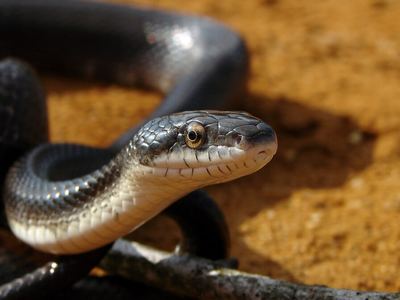
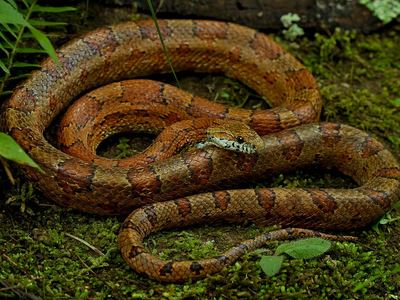
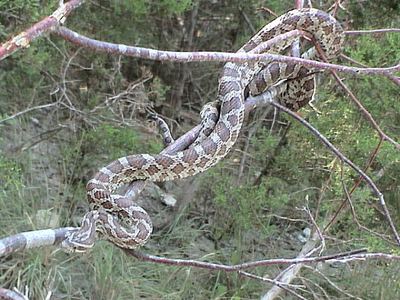
Other species of the genus Pantherophis with profiles here: Western rat snake, Corn snake, Great Plains rat snake and Eastern fox snake.
GBIF records read 2026-09-29. Listed: any license. Counted: CC0/CC BY only. How we count.