Sonoran coralsnake (Micruroides euryxanthus)
The Sonoran coralsnake (genus Micruroides) is a venomous elapid snake in the family Elapidae. Among the three coral snakes profiled here, it ranks 2nd by number of states listed, level with one other. All 2 states where it is listed lie in the Mountain division: Arizona and New Mexico. Its observation records peak in July.
Also called: western coral snake (English names in GBIF). Also spelled: Sonoran coral snake
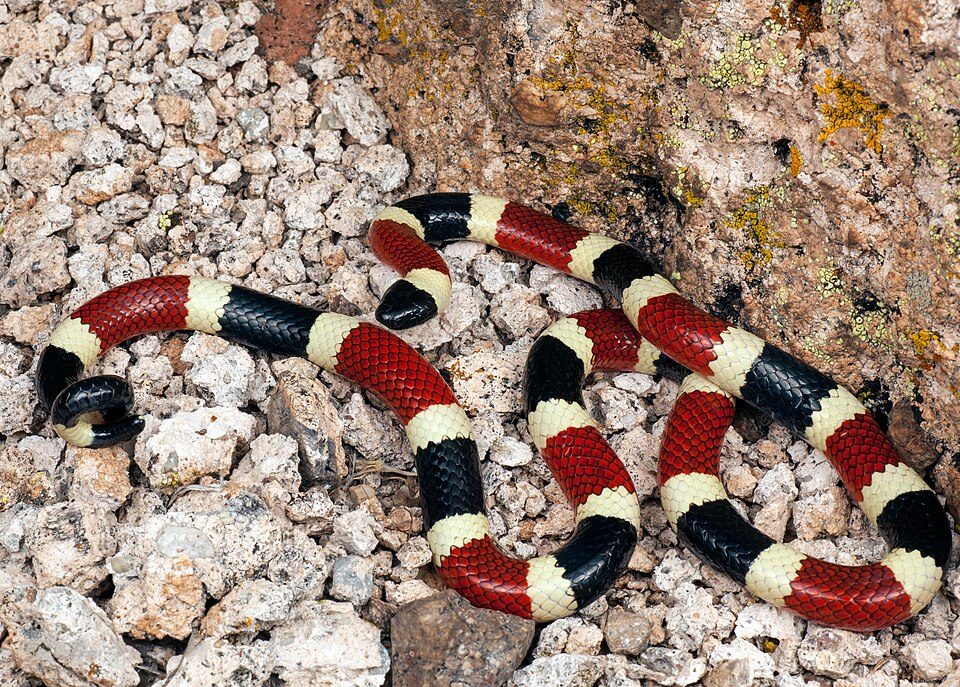
Is the Sonoran coralsnake poisonous or venomous?
Yes. The Sonoran coralsnake is an elapid (family Elapidae), the family of coral snakes.
Is a Sonoran coralsnake bite dangerous?
Yes. Coral snake venom acts on nerves, and symptoms can be delayed for hours, so any Sonoran coralsnake bite needs a hospital even if it seems minor.
Coral snake vs. king snake, long-nosed snake and milk snake
| Species commonly confused with coral snakes | Its states where both are recorded |
|---|---|
| eastern milksnake | all 2 |
| long-nosed snake | all 2 |
| Sonoran mountain kingsnake | all 2 |
| central plains milksnake | 1 of 2 |
Which states have the Sonoran coralsnake?
Arizona alone holds 99% of its licensed U.S. records.
| # | State | Records | Share of state snakes | Rank in state |
|---|---|---|---|---|
| 1 | Arizona | 363 | 1.7% | 19th of 60 |
| 2 | New Mexico | 5 | 0.1% | 50th of 56 |
When is the Sonoran coralsnake seen?
Its observation records run mostly May through October.
How recent are the Sonoran coralsnake records?
| Decade | Records | Share |
|---|---|---|
| 1900s | 1 | 0.5% |
| 1910s | 2 | 1.1% |
| 1920s | 2 | 1.1% |
| 1930s | 5 | 2.7% |
| 1940s | 7 | 3.8% |
| 1950s | 15 | 8.2% |
| 1960s | 15 | 8.2% |
| 1970s | 26 | 14.1% |
| 1980s | 30 | 16.3% |
| 1990s | 13 | 7.1% |
| 2000s | 20 | 10.9% |
| 2010s | 23 | 12.5% |
| 2020s | 25 | 13.6% |
Species recorded in the same counties
| Species | Shared counties |
|---|---|
| Glossy snake | 13 |
| Gopher snake | 13 |
| Long-nosed snake | 13 |
| Mohave rattlesnake venomous | 13 |
| Ring-necked snake | 13 |
| Sonoran lyre snake | 13 |
| Southwestern blackhead snake | 13 |
| Western diamondback rattlesnake venomous | 13 |
Related species in the U.S.

GBIF records read 2026-11-05 (open these records on GBIF). Listed: any license. Counted: CC0/CC BY only. How we count.