Snakes and spiders in Stevens County, Minnesota
Stevens County, home of Morris, has 0 snake and 8 spider species on record, from 1 licensed snake and 303 spider records. No venomous snake or spider reaches the county list, but the timber rattlesnake is on the Minnesota list: treat any snake or spider like it as venomous until identified.
What spiders are in Stevens County?
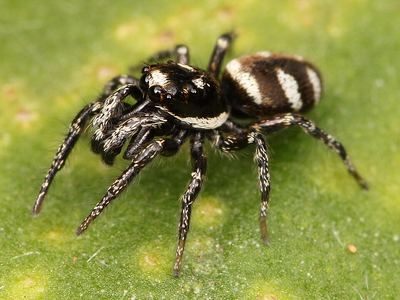
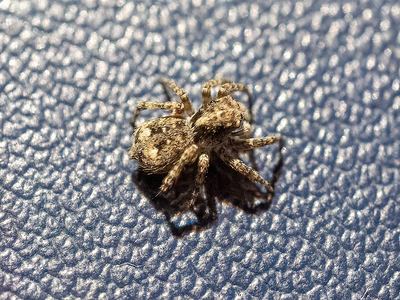
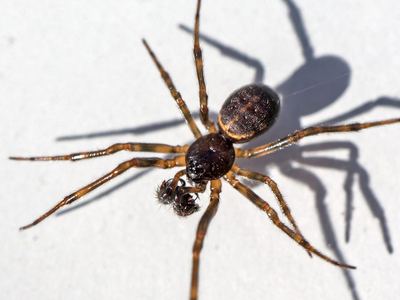
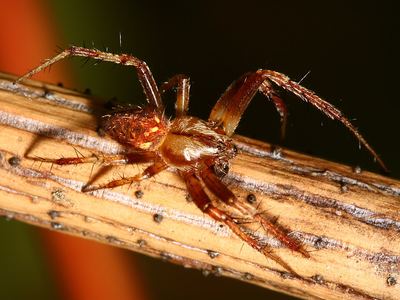
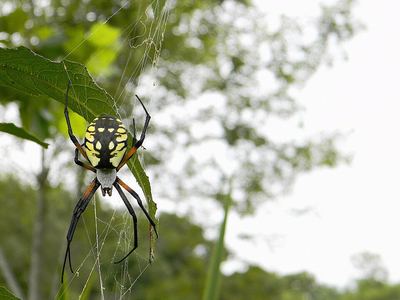
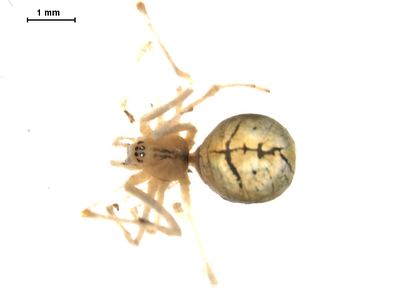
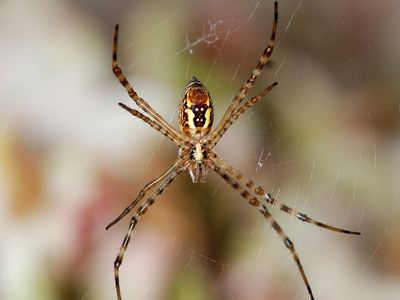
In all, 8 spider species are on the Stevens County list. The most recorded are the zebra spider (50), the Asian wall jumper (41) and the boreal combfoot (35). Stevens County holds more than half of all Minnesota records of the boreal combfoot.
| # | Species | Records | Share of Minnesota records |
|---|---|---|---|
| 1 | Zebra spider Salticus scenicus | 50 | 24% |
| 2 | Asian wall jumper Attulus fasciger | 41 | 28% |
| 3 | Boreal combfoot Steatoda borealis | 35 | 58% |
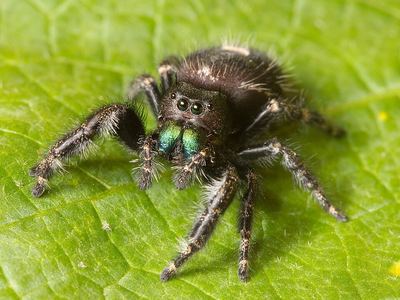
| 4 | Bold jumper Phidippus audax | 21 | 11% |
| 5 | Arabesque orbweaver Neoscona arabesca | 15 | 28% |
| 6 | Black-and-yellow argiope Argiope aurantia | 13 | 15% |
| 7 | Eastern long-legged cobweaver Theridion frondeum | 12 | 34% |
| 8 | Banded garden spider Argiope trifasciata | 8 | 12% |
When are spiders out in Stevens County?
Observation records of spiders in Stevens County run mostly February through September, peaking in June with 20% of them; across Minnesota the peak is August.
What stands out in Stevens County
Species for which Stevens County holds a large share of all Minnesota records: the boreal combfoot, 58% (35 of 60); the eastern long-legged cobweaver, 34% (12 of 35); the arabesque orbweaver, 28% (15 of 53); the Asian wall jumper, 28% (41 of 148); the zebra spider, 24% (50 of 205).
Common in Minnesota, not on the Stevens County list
Among the spiders most recorded across Minnesota, these do not reach the county list: the dark fishing spider (119 statewide), the goldenrod crab spider (93 statewide), the bronze jumper (73 statewide), the nursery web spider (72 statewide), the spotted orbweaver (61 statewide) and the dimorphic jumper (58 statewide). Few records here can mean the species is rare in the county, or that few people have looked.
Harmless lookalikes in Stevens County
Widow spiders are not on the Minnesota list, but GBIF holds 6 widow spider records of any license in Minnesota (western black widow 2, northern black widow 2, brown widow 1, southern black widow 1): treat any spider like this as venomous until identified. Harmless species often taken for them here: the boreal combfoot.
Stevens County among Minnesota counties
By licensed snake records Stevens County ranks 64th of 74 Minnesota counties with any.
Other Minnesota counties with their own page: Hennepin County and Ramsey County.
The whole state: venomous species in Minnesota, all snakes, all spiders.
GBIF records read 2026-09-29. Listed: any license. Counted: CC0/CC BY only. How we count.