Spotted orbweaver (Neoscona crucifera)
The spotted orbweaver (genus Neoscona) is a spider in the family Araneidae that is not dangerous to people. Among the 31 orb weavers profiled here, it ranks 4th by number of states listed. It is listed in 40 states, spread over all nine census divisions. Its observation records peak in September.
Also called: Hentz's orbweaver (English names in GBIF)
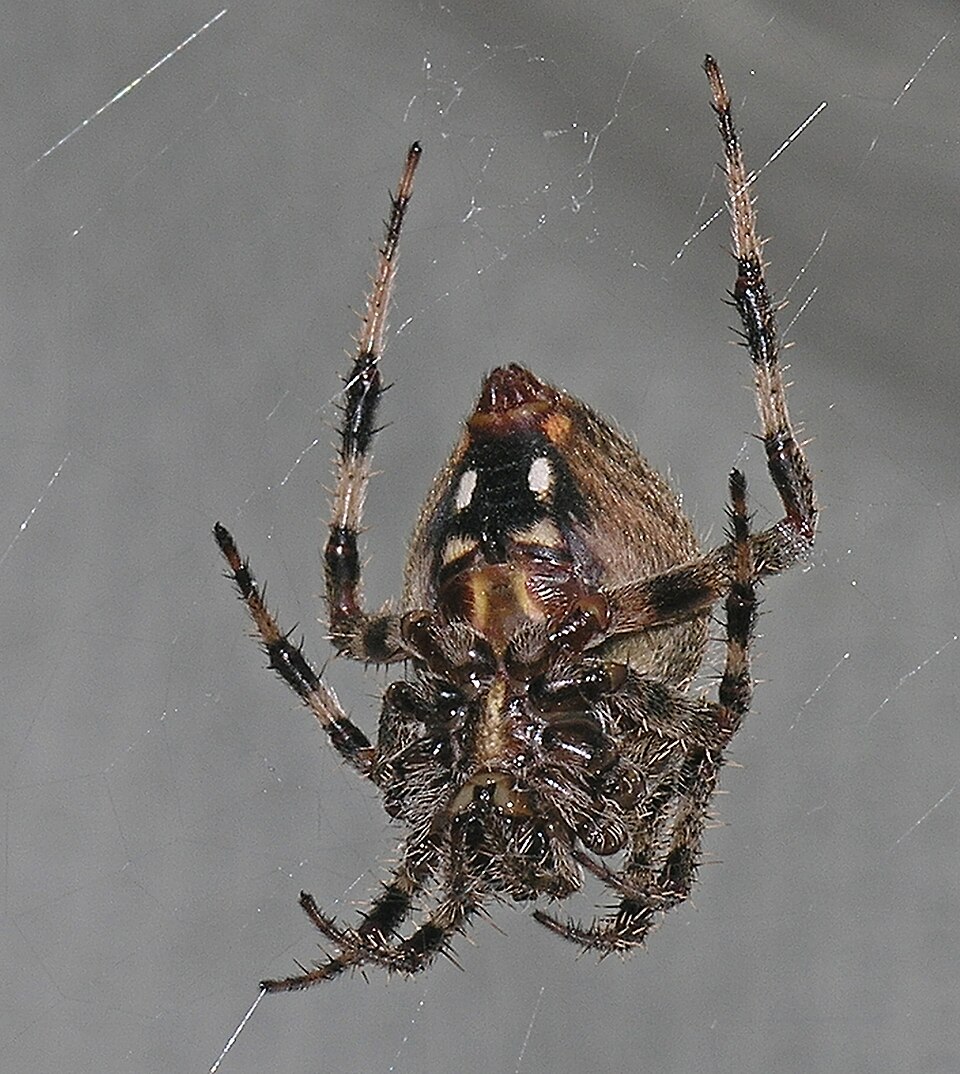

Neoscona crucifera is an orb-weaver spider in the family Araneidae. It is found in the United States from Maine to Florida in the east, to Minnesota in the Midwest, to Arizona in the southwest, southern California coastal communities and in Mexico. Its common names include Hentz orbweaver (after Nicholas Marcellus Hentz), spotted orbweaver, and barn spider.
From Wikipedia: Neoscona crucifera, text under CC BY-SA 4.0.
Is the spotted orbweaver poisonous or venomous?
Not in any medically significant way. Like almost all spiders the spotted orbweaver (family Araneidae) has venom for its prey, but it is not a widow or recluse, the two U.S. groups whose bites need medical attention.
Which states have the spotted orbweaver?
| # | State | Records | Share of state spiders | Rank in state |
|---|---|---|---|---|
| 1 | Texas | 471 | 1.6% | 12th of 387 |
| 2 | California | 419 | 0.8% | 20th of 312 |
| 3 | Virginia | 218 | 1.8% | 14th of 178 |
| 4 | North Carolina | 207 | 2.4% | 7th of 189 |
| 5 | Ohio | 175 | 2.4% | 11th of 333 |
| 6 | Illinois | 168 | 0.9% | 10th of 243 |
| 7 | Maryland | 140 | 2.4% | 11th of 155 |
| 8 | Georgia | 139 | 2.0% | 11th of 190 |
| 9 | Indiana | 97 | 2.1% | 10th of 134 |
| 10 | Oklahoma | 94 | 1.8% | 10th of 151 |
| 11 | Alabama | 90 | 2.3% | 9th of 146 |
| 12 | Pennsylvania | 90 | 1.2% | 15th of 169 |
| 13 | Tennessee | 85 | 2.2% | 10th of 143 |
| 14 | New York | 78 | 1.2% | 21st of 152 |
| 15 | Delaware | 77 | 3.6% | 6th of 73 |
| 16 | Minnesota | 75 | 2.3% | 8th of 145 |
| 17 | Kentucky | 66 | 3.3% | 8th of 104 |
| 18 | Missouri | 57 | 2.3% | 9th of 117 |
| 19 | New Jersey | 57 | 2.4% | 8th of 127 |
| 20 | Massachusetts | 53 | 1.1% | 26th of 191 |
| 21 | South Carolina | 46 | 1.7% | 13th of 124 |
| 22 | Mississippi | 42 | 2.9% | 7th of 117 |
| 23 | Kansas | 40 | 2.3% | 5th of 93 |
| 24 | Florida | 36 | 0.3% | 54th of 241 |
| 25 | Arkansas | 35 | 2.1% | 10th of 114 |
| 26 | Louisiana | 34 | 0.8% | 24th of 108 |
| 27 | Michigan | 34 | 1.3% | 21st of 123 |
| 28 | Connecticut | 31 | 3.0% | 9th of 85 |
| 29 | Nebraska | 23 | 1.8% | 10th of 72 |
| 30 | Iowa | 22 | 3.1% | 6th of 58 |
| 31 | Colorado | 19 | 0.4% | 27th of 372 |
| 32 | West Virginia | 19 | 2.4% | 11th of 90 |
| 33 | Wisconsin | 19 | 0.6% | 44th of 148 |
| 34 | New Mexico | 7 | 0.3% | 66th of 248 |
| 35 | New Hampshire | 5 | 0.4% | 48th of 74 |
| 36 | Arizona | 4 | 0.1% | 91st of 161 |
| 37 | Hawaii | 4 | 0.1% | 46th of 57 |
| 38 | Rhode Island | 3 | 1.7% | 15th of 52 |
| 39 | Vermont | 3 | 0.2% | 45th of 73 |
| 40 | South Dakota | 1 | 0.5% | 22nd of 30 |
When is the spotted orbweaver seen?
Its observation records run mostly July through November.
Season by state
Where the season stays within one calendar year, it starts earliest in June (Oklahoma, South Carolina and Texas) and latest in August (Massachusetts and Missouri). September is the most common peak month (Arkansas, Georgia, Illinois, Indiana, Kansas, Kentucky and 10 more).
| State | Main season | Peak month | Observation records |
|---|---|---|---|
| Texas | June through December | October | 448 |
| California | July through October | October | 336 |
| Virginia | July through October | September | 218 |
| North Carolina | July through November | September | 207 |
| Ohio | July through October | September | 175 |
| Illinois | July through September | September | 157 |
| Maryland | July through October | September | 140 |
| Georgia | July through November | September | 139 |
| Alabama | July through November | October | 90 |
| Indiana | July through October | September | 89 |
| Pennsylvania | July through October | August | 89 |
| Tennessee | July through October | September | 85 |
| Delaware | July through November | August | 77 |
| New York | July through October | September | 76 |
| Minnesota | July through September | September | 75 |
| Oklahoma | June through October | July | 68 |
| Kentucky | July through November | September | 66 |
| New Jersey | July through October | September | 57 |
| Massachusetts | August through October | September | 53 |
| Missouri | August through November | September | 52 |
| South Carolina | June through October | July | 46 |
| Mississippi | July through November | November | 41 |
| Kansas | July through October | September | 40 |
| Louisiana | July through December | July | 34 |
| Florida | May through January | June | 33 |
| Arkansas | July through November | September | 32 |
| Connecticut | concentrated in August and September | — | 31 |
| Michigan | concentrated in August and September | — | 31 |
Where the spotted orbweaver is recorded in each state
| State | Licensed records | Place among the state's spiders | Most recorded counties |
|---|---|---|---|
| Texas | 471 | 12th of 387 | Dallas County (57), Bexar County (48), Travis County (47), Tarrant County (41) and Fort Bend County (20) |
| California | 419 | 20th of 312 | Los Angeles County (168), San Diego County (111), Orange County (42), Santa Clara County (31) and Ventura County (16) |
| Virginia | 218 | 14th of 178 | Fairfax County (39), Arlington County (23), Prince William County (13), Henrico County (11) and Loudoun County (10) |
| North Carolina | 207 | joint 7th of 189 | Orange County (52), Wake County (32), Mecklenburg County (19), Durham County (17) and Cumberland County (11) |
| Ohio | 175 | 11th of 333 | Franklin County (21), Hamilton County (15), Summit County (15), Lorain County (11) and Richland County (11) |
| Illinois | 168 | 10th of 243 | Cook County (58), Champaign County (40), DuPage County (12), Will County (7) and Kane County (6) |
| Maryland | 140 | 11th of 155 | Baltimore County (26), Howard County (20), Montgomery County (20), Prince George's County (19) and Frederick County (10) |
| Georgia | 139 | 11th of 190 | Clarke County (21), DeKalb County (21), Fulton County (13), Stephens County (8) and Cobb County (8) |
| Indiana | 97 | 10th of 134 | Morgan County (16), Lake County (15), Marion County (14), Tippecanoe County (7) and Huntington County (6) |
| Oklahoma | 94 | 10th of 151 | McIntosh County (25), Mayes County (22), Oklahoma County (9), Cleveland County (8) and Tulsa County (4) |
| Alabama | 90 | 9th of 146 | Jefferson County (22), Mobile County (13), Blount County (13), St. Clair County (7) and Cullman County (5) |
| Pennsylvania | 90 | 15th of 169 | Montgomery County (16), Allegheny County (11), Chester County (9), Delaware County (6) and Washington County (6) |
| Tennessee | 85 | joint 10th of 143 | Knox County (13), Hamilton County (11), Davidson County (9), Bradley County (8) and Lincoln County (5) |
| New York | 78 | 21st of 152 | Westchester County (16), Nassau County (10), Tompkins County (8), Richmond County (6) and Kings County (5) |
| Delaware | 77 | 6th of 73 | Sussex County (64), New Castle County (10) and Kent County (3) |
| Minnesota | 75 | joint 8th of 145 | Hennepin County (33), Ramsey County (32), Anoka County (6), Dakota County (1) and Scott County (1) |
| Kentucky | 66 | 8th of 104 | Madison County (15), Jefferson County (14), Fayette County (7), Bullitt County (6) and Shelby County (4) |
| Missouri | 57 | 9th of 117 | St. Louis County (21), Jackson County (6), Boone County (4), Shannon County (3) and Texas County (3) |
| New Jersey | 57 | joint 8th of 127 | Cape May County (10), Middlesex County (9), Salem County (6), Bergen County (6) and Burlington County (4) |
| Massachusetts | 53 | 26th of 191 | Barnstable County (8), Middlesex County (8), Suffolk County (7), Dukes County (7) and Essex County (7) |
| South Carolina | 46 | 13th of 124 | Greenville County (8), Richland County (7), Spartanburg County (7), Lexington County (6) and York County (4) |
| Mississippi | 42 | 7th of 117 | Jackson County (7), Oktibbeha County (5), Simpson County (5), Pearl River County (4) and Rankin County (3) |
| Kansas | 40 | joint 5th of 93 | Douglas County (10), Leavenworth County (9), Shawnee County (8), Johnson County (4) and Riley County (4) |
| Florida | 36 | joint 54th of 241 | Alachua County (7), Duval County (4), Wakulla County (4), Columbia County (3) and Marion County (2) |
| Arkansas | 35 | joint 10th of 114 | Benton County (6), Pulaski County (5), Pike County (4), Clay County (3) and Craighead County (2) |
Top counties in the U.S.
| # | County | State | Records | Share of U.S. |
|---|---|---|---|---|
| 1 | Los Angeles County | California | 168 | 5.1% |
| 2 | San Diego County | California | 111 | 3.4% |
| 3 | Sussex County | Delaware | 64 | 1.9% |
| 4 | Cook County | Illinois | 58 | 1.8% |
| 5 | Dallas County | Texas | 57 | 1.7% |
| 6 | Orange County | North Carolina | 52 | 1.6% |
| 7 | Bexar County | Texas | 48 | 1.5% |
| 8 | Travis County | Texas | 47 | 1.4% |
| 9 | Orange County | California | 42 | 1.3% |
| 10 | Tarrant County | Texas | 41 | 1.2% |
| 11 | Champaign County | Illinois | 40 | 1.2% |
| 12 | Fairfax County | Virginia | 39 | 1.2% |
| 13 | Hennepin County | Minnesota | 33 | 1.0% |
| 14 | Ramsey County | Minnesota | 32 | 1.0% |
| 15 | Wake County | North Carolina | 32 | 1.0% |
How recent are the spotted orbweaver records?
| Decade | Records | Share |
|---|---|---|
| 1960s | 1 | 0.0% |
| 1970s | 4 | 0.1% |
| 1980s | 4 | 0.1% |
| 1990s | 6 | 0.2% |
| 2000s | 75 | 2.2% |
| 2010s | 616 | 18.3% |
| 2020s | 2,660 | 79.0% |
Species recorded in the same counties
| Species | Shared counties |
|---|---|
| Black-and-yellow argiope | 246 |
| Familiar jumping spider | 234 |
| Bold jumper | 215 |
| Nursery web spider | 209 |
| Orchard orbweaver | 195 |
| Spined micrathena | 190 |
| Rabid wolf spider | 164 |
| Dark fishing spider | 162 |
Related species in the U.S.
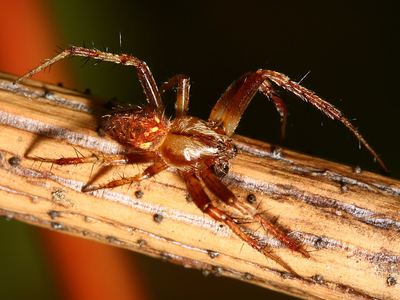
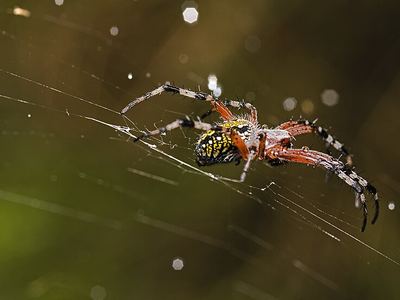
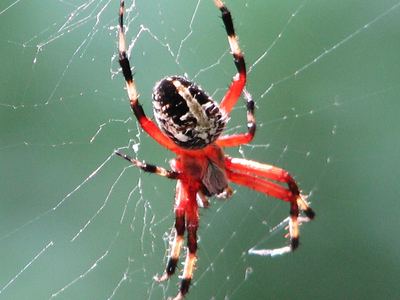
GBIF records read 2026-11-05 (open these records on GBIF). Listed: any license. Counted: CC0/CC BY only. How we count.