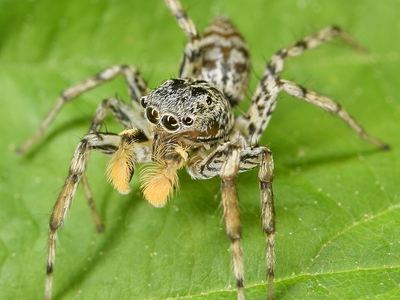
Zebra spider (Salticus scenicus)
The zebra spider is a spider in the family Salticidae that is not dangerous to people. GBIF holds 3,288 licensed U.S. records of it; it reaches our listing threshold in 38 states, most of all Colorado (411), New York (368) and California (304). Its observation records peak in June.
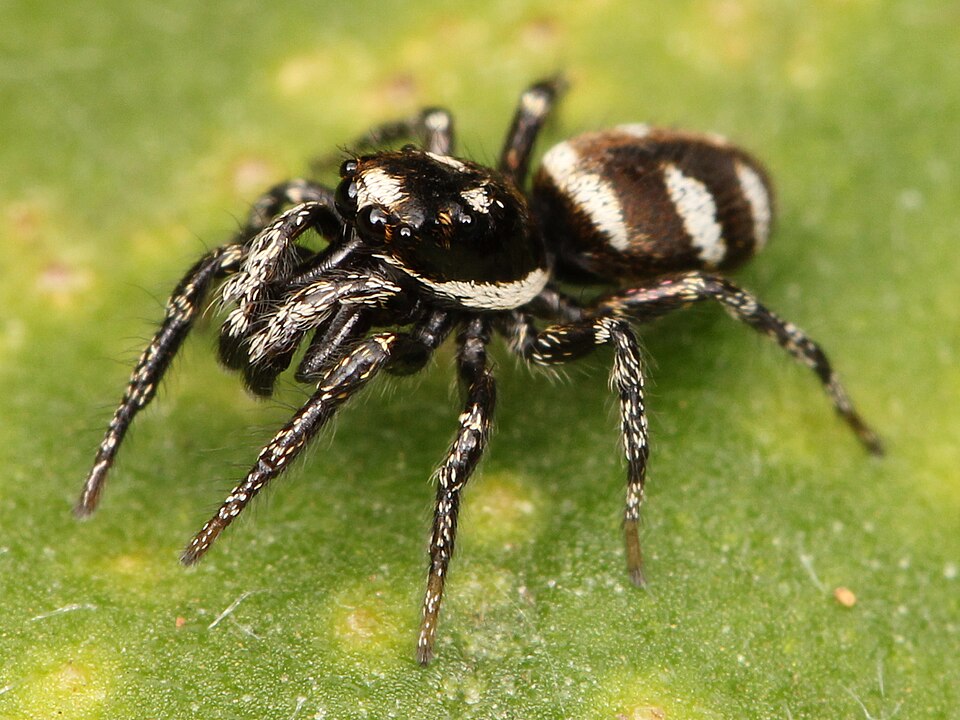

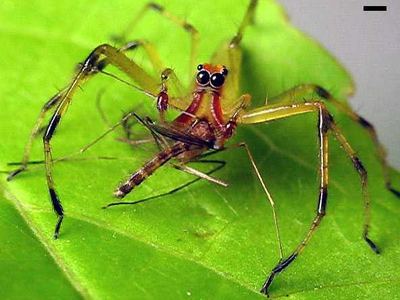
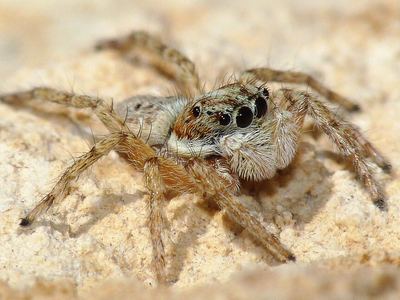
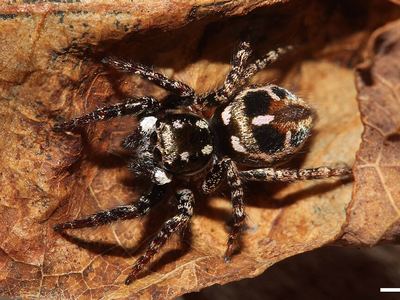
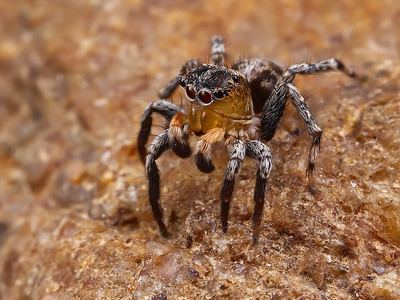
The zebra spider (Salticus scenicus), zebra jumping spider or just zebra jumper is a common jumping spider of the Northern Hemisphere. The common name refers to its vivid black-and-white colouration. The scientific name derives from the Latin salticus, meaning 'jump', and the Greek scenicus, meaning 'theatrical' or 'of a decorative place', in reference to the flashy, zebra-like coloration of the species.
From Wikipedia: Zebra spider, text under CC BY-SA 4.0.
Is the zebra spider poisonous or venomous?
Not in any medically significant way. Like almost all spiders the zebra spider (family Salticidae) has venom for its prey, but it is not a widow or recluse, the two U.S. groups whose bites need medical attention.
Which states have the zebra spider?
Records are spread over 38 states; the top three, Colorado, New York and California, hold 33% of them. It is the most recorded spider of all in Minnesota and Wisconsin.
| # | State | Records | Share of state spiders | Rank in state |
|---|---|---|---|---|
| 1 | Colorado | 411 | 9.9% | 2nd of 378 |
| 2 | New York | 368 | 6.0% | 2nd of 149 |
| 3 | California | 304 | 0.6% | 28th of 309 |
| 4 | Washington | 226 | 5.7% | 3rd of 157 |
| 5 | Ohio | 213 | 3.1% | 5th of 332 |
| 6 | Oregon | 212 | 7.6% | 3rd of 88 |
| 7 | Minnesota | 205 | 6.9% | 1st of 145 |
| 8 | Illinois | 173 | 0.9% | 8th of 243 |
| 9 | Indiana | 142 | 3.2% | 4th of 133 |
| 10 | Pennsylvania | 135 | 1.8% | 9th of 164 |
| 11 | Utah | 124 | 5.1% | 4th of 97 |
| 12 | Wisconsin | 123 | 3.9% | 1st of 149 |
| 13 | Michigan | 92 | 3.9% | 3rd of 122 |
| 14 | Massachusetts | 86 | 1.9% | 10th of 189 |
| 15 | New Hampshire | 58 | 4.2% | 4th of 72 |
| 16 | Montana | 54 | 2.4% | 5th of 75 |
| 17 | Idaho | 52 | 10.0% | 2nd of 56 |
| 18 | Vermont | 47 | 3.0% | 9th of 74 |
| 19 | New Jersey | 42 | 1.9% | 13th of 127 |
| 20 | Maryland | 28 | 0.5% | 48th of 153 |
| 21 | Maine | 27 | 2.9% | 12th of 297 |
| 22 | Virginia | 25 | 0.2% | 76th of 176 |
| 23 | Iowa | 20 | 2.9% | 7th of 57 |
| 24 | Connecticut | 18 | 1.8% | 15th of 86 |
| 25 | Wyoming | 18 | 8.4% | 2nd of 68 |
| 26 | Kansas | 17 | 1.0% | 19th of 94 |
| 27 | Missouri | 17 | 0.7% | 28th of 117 |
| 28 | Nebraska | 9 | 0.7% | 31st of 71 |
| 29 | Rhode Island | 9 | 5.3% | 3rd of 53 |
| 30 | North Dakota | 7 | 8.2% | 5th of 115 |
| 31 | South Dakota | 6 | 3.1% | 5th of 29 |
| 32 | Kentucky | 4 | 0.2% | 69th of 103 |
| 33 | Alaska | 3 | 0.0% | 280th of 280 |
| 34 | Delaware | 3 | 0.1% | 63rd of 71 |
| 35 | North Carolina | 3 | 0.0% | 142nd of 184 |
| 36 | Tennessee | 3 | 0.1% | 105th of 138 |
| 37 | West Virginia | 2 | 0.3% | 48th of 90 |
| 38 | Nevada | 0 | — | — |
When is the zebra spider seen?
Across the U.S., observation records of the zebra spider run mostly March through September, peaking in June with 25% of them. Winter (December to February) holds 2% of them.
Season by state
Among states whose main season falls within one calendar year, it starts earliest in January (California) and latest in April (Colorado, Massachusetts, Michigan, New Jersey, New York, Utah and 2 more). The most common peak month is June, shared by Colorado, Idaho, Illinois, Indiana, Massachusetts, Michigan and 7 more.
| State | Main season | Peak month | Observation records |
|---|---|---|---|
| Colorado | April through September | June | 411 |
| New York | April through October | June | 368 |
| California | January through September | March | 303 |
| Washington | February through September | June | 226 |
| Ohio | March through August | June | 213 |
| Oregon | March through August | June | 212 |
| Minnesota | March through September | June | 202 |
| Illinois | March through September | June | 158 |
| Indiana | March through July | June | 139 |
| Pennsylvania | March through August | May | 134 |
| Utah | April through September | May | 123 |
| Wisconsin | April through September | June | 123 |
| Michigan | April through September | June | 92 |
| Massachusetts | April through September | June | 85 |
| New Hampshire | concentrated in June and July | — | 57 |
| Montana | March through September | August | 54 |
| Idaho | March through September | June | 52 |
| Vermont | April through September | June | 47 |
| New Jersey | April through September | May | 42 |
Where the zebra spider is recorded in each state
Colorado
Colorado holds 411 licensed records, the 2nd most recorded of 378 spiders listed there. Its observation records in Colorado run mostly April through September, peaking in June; most licensed records come from El Paso County, Boulder County and Denver County. Next come Larimer County (15) and Jefferson County (6).
New York
New York holds 368 licensed records, the 2nd most recorded of 149 spiders listed there. Its observation records in New York run mostly April through October, peaking in June; most licensed records come from Tompkins County, Rockland County and Erie County. Next come Onondaga County (28) and Nassau County (27).
California
California holds 304 licensed records, the 28th most recorded of 309 spiders listed there. Its observation records in California run mostly January through September, peaking in March; most licensed records come from Solano County, Napa County and Santa Clara County. Next come Sonoma County (25) and Marin County (15).
Washington
Washington holds 226 licensed records, the 3rd most recorded of 157 spiders listed there. Its observation records in Washington run mostly February through September, peaking in June; most licensed records come from King County, Pierce County and Thurston County. Next come Snohomish County (12) and Clallam County (12).
Ohio
Ohio holds 213 licensed records, the 5th most recorded of 332 spiders listed there. Its observation records in Ohio run mostly March through August, peaking in June; most licensed records come from Franklin County, Cuyahoga County and Richland County. Next come Erie County (8) and Summit County (7).
Oregon
Oregon holds 212 licensed records, the 3rd most recorded of 88 spiders listed there. Its observation records in Oregon run mostly March through August, peaking in June; most licensed records come from Multnomah County, Lane County and Marion County. Next come Clackamas County (13) and Washington County (10).
Minnesota
Minnesota holds 205 licensed records, the most recorded of 145 spiders listed there. Its observation records in Minnesota run mostly March through September, peaking in June; most licensed records come from Hennepin County, Stevens County and Ramsey County. Next come Anoka County (11) and Lake County (9).
Illinois
Illinois holds 173 licensed records, the 8th most recorded of 243 spiders listed there. Its observation records in Illinois run mostly March through September, peaking in June; most licensed records come from Cook County, Champaign County and Lake County. Next come Will County (5) and DuPage County (4).
Indiana
Indiana holds 142 licensed records, the 4th most recorded of 133 spiders listed there. Its observation records in Indiana run mostly March through July, peaking in June; most licensed records come from Lake County, Tippecanoe County and Porter County. Next come Allen County (10) and Huntington County (8).
Pennsylvania
Pennsylvania holds 135 licensed records, the 9th most recorded of 164 spiders listed there. Its observation records in Pennsylvania run mostly March through August, peaking in May; most licensed records come from Allegheny County, Lackawanna County and Westmoreland County. Next come Centre County (9) and Erie County (6).
Utah
Utah holds 124 licensed records, the 4th most recorded of 97 spiders listed there. Its observation records in Utah run mostly April through September, peaking in May; most licensed records come from Salt Lake County, Utah County and Davis County. Next come Weber County (3) and Morgan County (2).
Wisconsin
Wisconsin holds 123 licensed records, the most recorded of 149 spiders listed there. Its observation records in Wisconsin run mostly April through September, peaking in June; most licensed records come from Dane County, Waukesha County and Milwaukee County. Next come Outagamie County (6) and Kenosha County (4).
Michigan
Michigan holds 92 licensed records, the 3rd most recorded of 122 spiders listed there. Its observation records in Michigan run mostly April through September, peaking in June; most licensed records come from Washtenaw County, Oakland County and Bay County. Next come Charlevoix County (7) and Midland County (7).
Massachusetts
Massachusetts holds 86 licensed records, the 10th most recorded of 189 spiders listed there. Its observation records in Massachusetts run mostly April through September, peaking in June; most licensed records come from Middlesex County, Suffolk County and Worcester County. Next come Essex County (10) and Plymouth County (8).
New Hampshire
New Hampshire holds 58 licensed records, the 4th most recorded of 72 spiders listed there. Its observation records in New Hampshire are concentrated in June and July (96% of them); most licensed records come from Rockingham County, Merrimack County and Grafton County. Next come Hillsborough County (2) and Carroll County (1).
Montana
Montana holds 54 licensed records, the 5th most recorded of 75 spiders listed there. Its observation records in Montana run mostly March through September, peaking in August; most licensed records come from Fergus County, Missoula County and Lake County. Next come Park County (2) and Yellowstone County (2).
Idaho
Idaho holds 52 licensed records, the 2nd most recorded of 56 spiders listed there. Its observation records in Idaho run mostly March through September, peaking in June; most licensed records come from Ada County, Latah County and Canyon County. Next come Valley County (2) and Bonneville County (1).
Vermont
Vermont holds 47 licensed records, the 9th most recorded of 74 spiders listed there. Its observation records in Vermont run mostly April through September, peaking in June; most licensed records come from Washington County, Chittenden County and Windham County. Next come Windsor County (8) and Orange County (3).
New Jersey
New Jersey holds 42 licensed records, the 13th most recorded of 127 spiders listed there. Its observation records in New Jersey run mostly April through September, peaking in May; most licensed records come from Bergen County, Morris County and Middlesex County. Next come Hudson County (4) and Hunterdon County (3).
Top counties in the U.S.
| # | County | State | Records | Share of U.S. |
|---|---|---|---|---|
| 1 | El Paso County | Colorado | 317 | 9.6% |
| 2 | Solano County | California | 124 | 3.8% |
| 3 | Multnomah County | Oregon | 103 | 3.1% |
| 4 | Franklin County | Ohio | 94 | 2.9% |
| 5 | Salt Lake County | Utah | 91 | 2.8% |
| 6 | Tompkins County | New York | 89 | 2.7% |
| 7 | King County | Washington | 83 | 2.5% |
| 8 | Lake County | Indiana | 78 | 2.4% |
| 9 | Cook County | Illinois | 69 | 2.1% |
| 10 | Napa County | California | 62 | 1.9% |
| 11 | Hennepin County | Minnesota | 62 | 1.9% |
| 12 | Champaign County | Illinois | 58 | 1.8% |
| 13 | Stevens County | Minnesota | 50 | 1.5% |
| 14 | Rockingham County | New Hampshire | 41 | 1.2% |
| 15 | Cuyahoga County | Ohio | 40 | 1.2% |
How recent are the zebra spider records?
Most of what is known about the zebra spider is recent: 96% of dated U.S. records were made in 2017–2026, and half date from 2024 or later. The oldest dated record is from 1933; the busiest year was 2025, with 712 records.
| Decade | Records | Share |
|---|---|---|
| 1930s | 4 | 0.1% |
| 1940s | 6 | 0.2% |
| 1950s | 2 | 0.1% |
| 1960s | 1 | 0.0% |
| 1970s | 1 | 0.0% |
| 1980s | 4 | 0.1% |
| 1990s | 2 | 0.1% |
| 2000s | 8 | 0.2% |
| 2010s | 427 | 12.5% |
| 2020s | 2,955 | 86.7% |
Species recorded in the same counties
Of the 245 counties where the zebra spider is most recorded, 147 are also top counties for the bold jumper, more than for any other spider. None of its closest neighbors is venomous.
| Species | Shared counties |
|---|---|
| Bold jumper | 147 |
| Bronze jumper | 101 |
| Sixspotted orbweaver | 99 |
| Black-and-yellow argiope | 96 |
| Nursery web spider | 90 |
| Triangulate bud spider | 89 |
| Banded garden spider | 87 |
| Dark fishing spider | 87 |
Related species in the U.S.
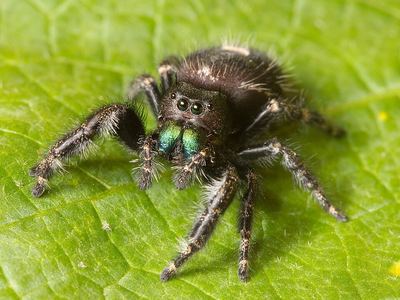
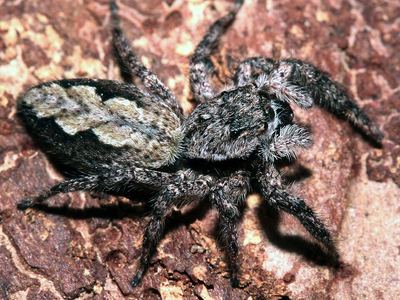
Other members of the family Salticidae with profiles here: Bold jumper, Familiar jumping spider, Bronze jumper, Magnolia green jumper, Half-edged wall jumping spider and Twin-flagged jumping spider.
GBIF records read 2026-09-29. Listed: any license. Counted: CC0/CC BY only. How we count.