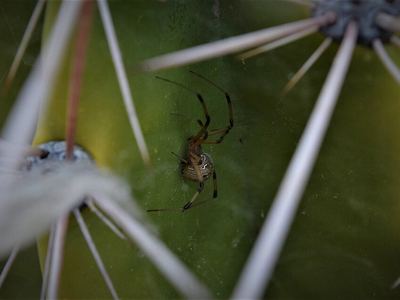
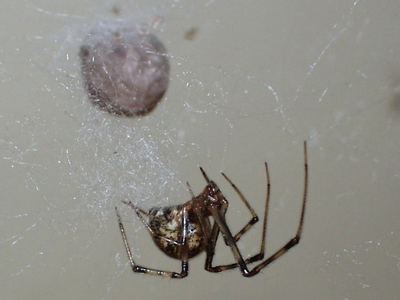
Boreal combfoot (Steatoda borealis)
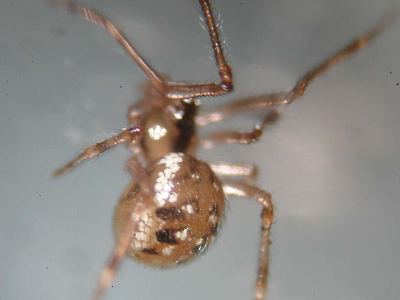
The boreal combfoot (genus Steatoda) is a spider in the family Theridiidae that is not dangerous to people. Among the six cobweb spiders profiled here, it ranks 3rd by number of states listed. Most of its 28 listed states are in the New England (6), West North Central (6) and East North Central (5) census divisions. Its observation records peak in May.
Also called: northern cobweb weaver (English names in GBIF)
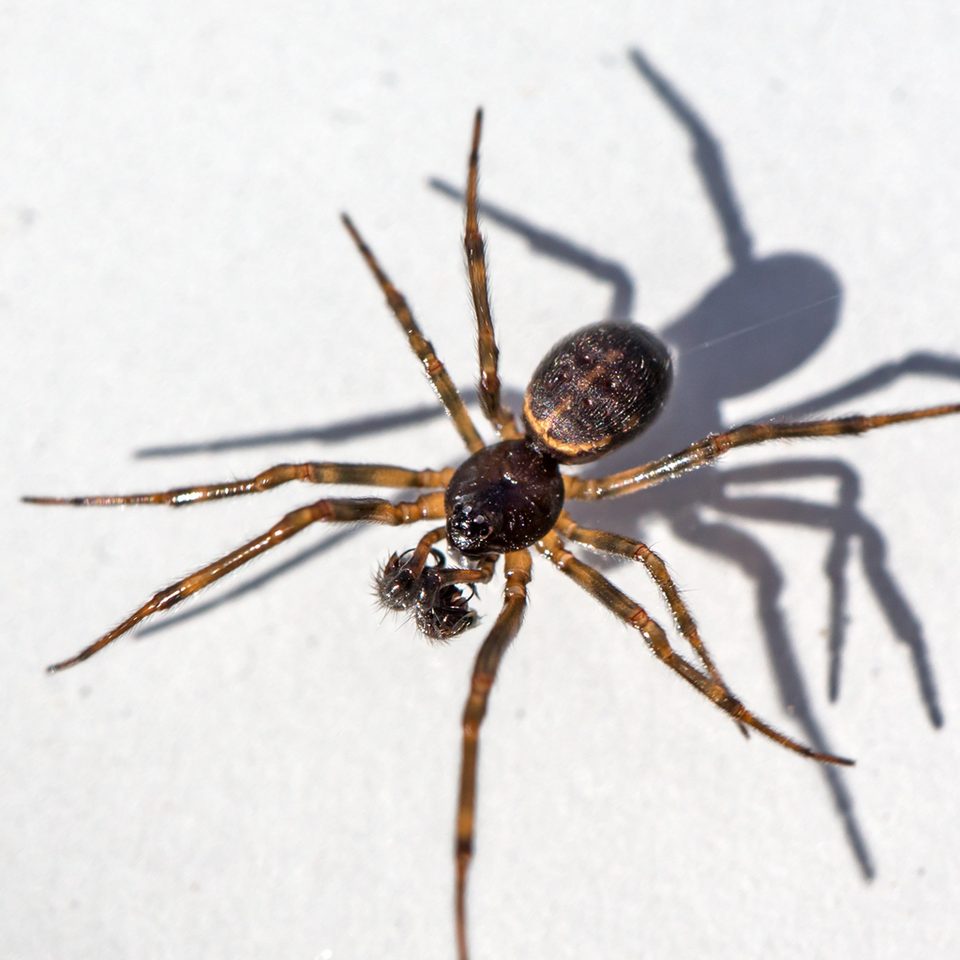
Is the boreal combfoot poisonous or venomous?
Not in any medically significant way. Like almost all spiders the boreal combfoot (family Theridiidae) has venom for its prey, but it is not a widow or recluse, the two U.S. groups whose bites need medical attention.
Often mistaken for
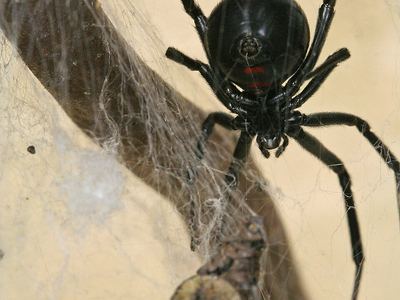
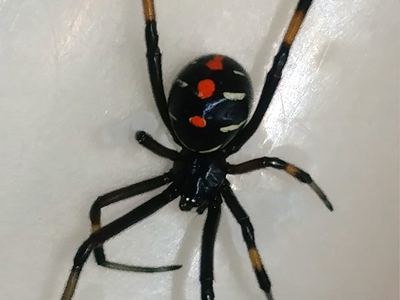
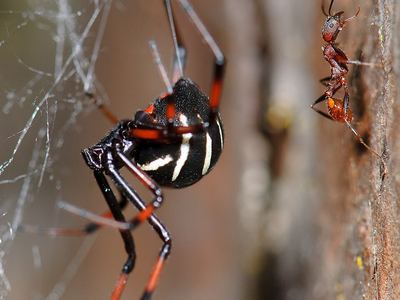
The boreal combfoot is not dangerous to people, but people often take it for widow spiders (both are recorded in 23 of its 28 states).
Which states have the boreal combfoot?
| # | State | Records | Share of state spiders | Rank in state |
|---|---|---|---|---|
| 1 | Virginia | 75 | 0.6% | 38th of 178 |
| 2 | Minnesota | 61 | 1.9% | 12th of 145 |
| 3 | Alaska | 58 | 0.2% | 86th of 280 |
| 4 | Ohio | 45 | 0.6% | 41st of 333 |
| 5 | Massachusetts | 37 | 0.7% | 30th of 191 |
| 6 | Maryland | 33 | 0.6% | 44th of 155 |
| 7 | Illinois | 25 | 0.1% | 107th of 243 |
| 8 | Nebraska | 20 | 1.6% | 13th of 72 |
| 9 | New York | 20 | 0.3% | 59th of 152 |
| 10 | Indiana | 13 | 0.3% | 71st of 134 |
| 11 | Michigan | 11 | 0.4% | 40th of 123 |
| 12 | Pennsylvania | 11 | 0.1% | 83rd of 169 |
| 13 | Connecticut | 9 | 0.9% | 25th of 85 |
| 14 | New Jersey | 9 | 0.4% | 54th of 127 |
| 15 | Wisconsin | 8 | 0.2% | 83rd of 148 |
| 16 | North Carolina | 7 | 0.1% | 101st of 189 |
| 17 | Kansas | 5 | 0.3% | 55th of 93 |
| 18 | Iowa | 2 | 0.3% | 37th of 58 |
| 19 | Kentucky | 2 | 0.1% | 87th of 104 |
| 20 | New Hampshire | 2 | 0.1% | 63rd of 74 |
| 21 | Vermont | 2 | 0.1% | 56th of 73 |
| 22 | Colorado | 1 | 0.0% | 147th of 372 |
| 23 | Maine | 1 | 0.1% | 63rd of 298 |
| 24 | Missouri | 1 | 0.0% | 103rd of 117 |
| 25 | North Dakota | 1 | 1.1% | 12th of 129 |
| 26 | Tennessee | 1 | 0.0% | 125th of 143 |
| 27 | West Virginia | 1 | 0.1% | 58th of 90 |
| 28 | Rhode Island | 0 | — | — |
When is the boreal combfoot seen?
Its observation records run through most of the year. December to February still holds 15% of them.
Season by state
Observation records run through most of the year in Ohio. The main season starts in the same month, April, in all 2 states whose main season falls within one calendar year. Each of these states peaks in a different month: February in Virginia, March in Ohio, May in Minnesota and October in Massachusetts.
| State | Main season | Peak month | Observation records |
|---|---|---|---|
| Virginia | July through March | February | 75 |
| Minnesota | April through September | May | 61 |
| Ohio | most of the year | March | 45 |
| Massachusetts | April through November | October | 35 |
Where the boreal combfoot is recorded in each state
| State | Licensed records | Place among the state's spiders | Most recorded counties |
|---|---|---|---|
| Virginia | 75 | 38th of 178 | Fairfax County (51), Loudoun County (9), Powhatan County (4), Prince William County (2) and Fairfax City County (2) |
| Minnesota | 61 | 12th of 145 | Stevens County (35), Hennepin County (6), Cass County (3), Cook County (3) and Carlton County (3) |
| Alaska | 58 | joint 86th of 280 | Fairbanks North Star Borough (31), Anchorage Municipality (18), Kenai Peninsula Borough (5), Matanuska-Susitna Borough (3) and Southeast Fairbanks Census Area (1) |
| Ohio | 45 | 41st of 333 | Franklin County (9), Summit County (9), Richland County (7), Medina County (5) and Cuyahoga County (3) |
| Massachusetts | 37 | joint 30th of 191 | Middlesex County (15), Suffolk County (7), Norfolk County (6), Barnstable County (2) and Dukes County (2) |
| Maryland | 33 | joint 44th of 155 | Montgomery County (11), Howard County (8), Baltimore County (6), Frederick County (4) and Anne Arundel County (2) |
Top counties in the U.S.
| # | County | State | Records | Share of U.S. |
|---|---|---|---|---|
| 1 | Fairfax County | Virginia | 51 | 10.9% |
| 2 | Stevens County | Minnesota | 35 | 7.5% |
| 3 | Fairbanks North Star Borough | Alaska | 31 | 6.7% |
| 4 | Anchorage Municipality | Alaska | 18 | 3.9% |
| 5 | Middlesex County | Massachusetts | 15 | 3.2% |
| 6 | Montgomery County | Maryland | 11 | 2.4% |
| 7 | Franklin County | Ohio | 9 | 1.9% |
| 8 | Summit County | Ohio | 9 | 1.9% |
| 9 | Loudoun County | Virginia | 9 | 1.9% |
| 10 | Howard County | Maryland | 8 | 1.7% |
| 11 | Suffolk County | Massachusetts | 7 | 1.5% |
| 12 | Richland County | Ohio | 7 | 1.5% |
| 13 | Baltimore County | Maryland | 6 | 1.3% |
| 14 | Norfolk County | Massachusetts | 6 | 1.3% |
| 15 | Hennepin County | Minnesota | 6 | 1.3% |
How recent are the boreal combfoot records?
| Decade | Records | Share |
|---|---|---|
| 1930s | 4 | 0.8% |
| 1940s | 5 | 1.0% |
| 1950s | 2 | 0.4% |
| 1960s | 4 | 0.8% |
| 1970s | 15 | 3.1% |
| 1980s | 11 | 2.3% |
| 1990s | 15 | 3.1% |
| 2000s | 13 | 2.7% |
| 2010s | 76 | 15.8% |
| 2020s | 337 | 69.9% |
Species recorded in the same counties
| Species | Shared counties |
|---|---|
| Bronze jumper | 45 |
| Marbled orbweaver | 43 |
| Nursery web spider | 41 |
| Sixspotted orbweaver | 39 |
| Parson spider | 38 |
| Bold jumper | 37 |
| Dark fishing spider | 37 |
| Spotted orbweaver | 36 |
Related species in the U.S.
GBIF records read 2026-11-05 (open these records on GBIF). Listed: any license. Counted: CC0/CC BY only. How we count.