Desert recluse (Loxosceles deserta)
The desert recluse is a venomous spider in the family Sicariidae. GBIF holds 54 licensed U.S. records of it; it reaches our listing threshold in 3 states, most of all California (40), Arizona (7) and Nevada (5). Its observation records peak in April.
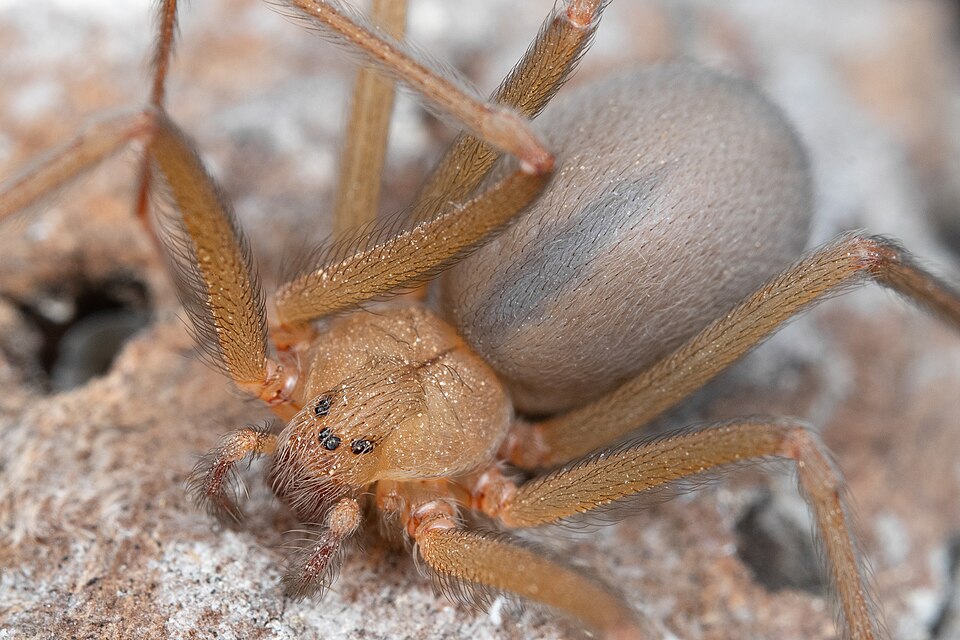
Loxosceles deserta, commonly known as the desert recluse, is a recluse spider of the family Sicariidae. It is found in Mexico and the United States. The desert recluse is commonly misidentified as L. unicolor (of South America) or as L. reclusa (the brown recluse of the southern and midwestern states), two spiders which do not live anywhere near the vicinity.
From Wikipedia: Loxosceles deserta, text under CC BY-SA 4.0.
Is the desert recluse poisonous or venomous?
Yes. The desert recluse is a recluse spider (genus Loxosceles). Most bites heal alone, but some cause a slowly spreading wound. Call Poison Help at 1-800-222-1222 for advice.
Spiders often mistaken for it
Species commonly confused with recluse spiders and recorded in the same states: longbodied cellar spider (recorded in 1 of its 3 states) and spitting spider (recorded in 1 of its 3 states).
Which states have the desert recluse?
The desert recluse's U.S. record is concentrated: California alone holds 74% of licensed records. It is listed in 3 states in all; the next are Arizona (7) and Nevada (5).
| # | State | Records | Share of state spiders | Rank in state |
|---|---|---|---|---|
| 1 | California | 40 | 0.1% | 111th of 309 |
| 2 | Arizona | 7 | 0.1% | 66th of 162 |
| 3 | Nevada | 5 | 0.9% | 18th of 47 |
When is the desert recluse seen?
Across the U.S., observation records of the desert recluse run mostly February through October, peaking in April with 21% of them. Winter (December to February) holds 13% of them.
How recent are the desert recluse records?
Most of what is known about the desert recluse is recent: 70% of dated U.S. records were made in 2017–2026, and half date from 2020 or later. The oldest dated record is from 1954; the busiest year was 2024, with 8 records.
| Decade | Records | Share |
|---|---|---|
| 1950s | 1 | 1.9% |
| 1970s | 1 | 1.9% |
| 2000s | 3 | 5.6% |
| 2010s | 20 | 37.0% |
| 2020s | 29 | 53.7% |
Species recorded in the same counties
Of the 8 counties where the desert recluse is most recorded, 7 are also top counties for each of the first three spiders in the table below; no other spider shares more. None of its closest neighbors is venomous.
| Species | Shared counties |
|---|---|
| Drassyllus insularis | 7 |
| Hirsute paradise spider | 7 |
| Xysticus californicus | 7 |
| Allocosa subparva | 6 |
| Common house combfoot | 6 |
| Green lynx spider | 6 |
| Habronattus tarsalis | 6 |
| Habronattus ustulatus | 6 |
Related species in the U.S.
Other species of the genus Loxosceles with profiles here: Brown recluse and Texas recluse.
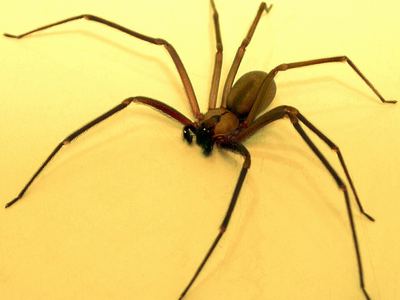
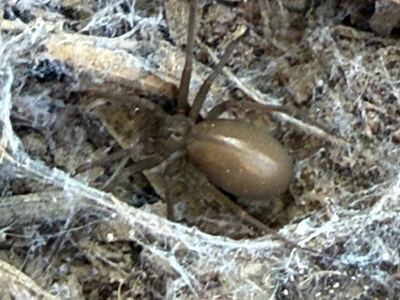
.jpg)
GBIF records read 2026-09-29. Listed: any license. Counted: CC0/CC BY only. How we count.