Spiders in Nevada
Nevada has 47 spider species on record, each with at least 10 GBIF records in the state, and 536 licensed records in all. The most recorded are Habronattus tarsalis, the western black widow and the Bay Area blonde. Medically significant: the western black widow and the desert recluse.
Widow spiders in Nevada
One species of this group is listed for Nevada: the western black widow, with 40 records (7% of the state's spider records).
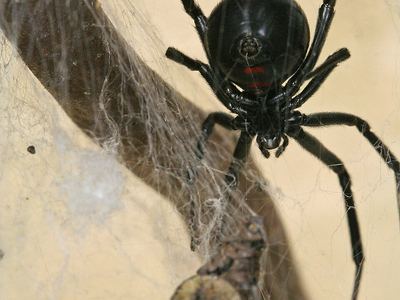
Observation records of the western black widow in Nevada run mostly April through October, peaking in June; most licensed records come from Clark County, Washoe County and Nye County.
Recluse spiders in Nevada
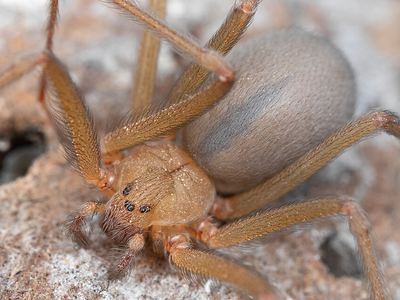
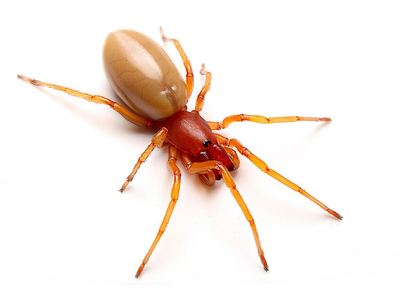
One species of this group is listed for Nevada: the desert recluse, with 5 records (0.9% of the state's spider records).
Jumping spiders in Nevada
Jumping spiders dominate the spider record of Nevada: 22 species and 40% of all records. The most recorded is Habronattus tarsalis (56), ahead of Phidippus californicus (24).
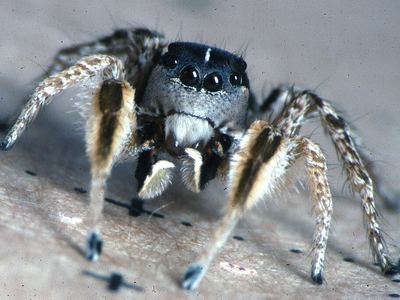
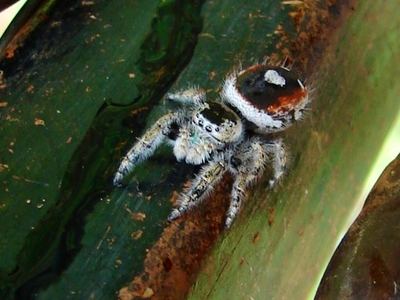
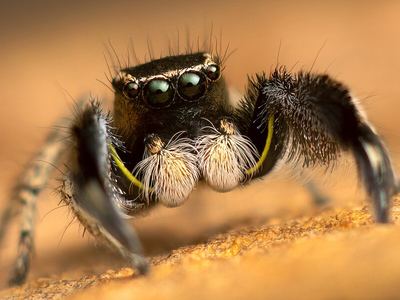
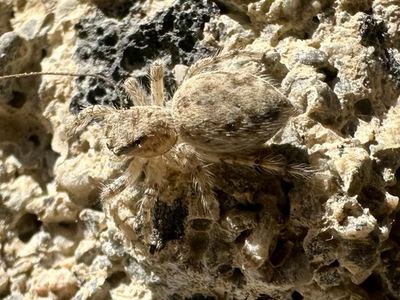
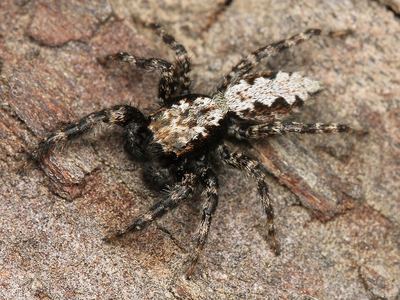
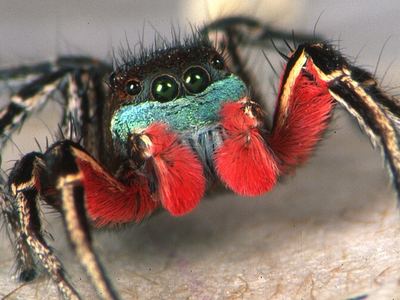
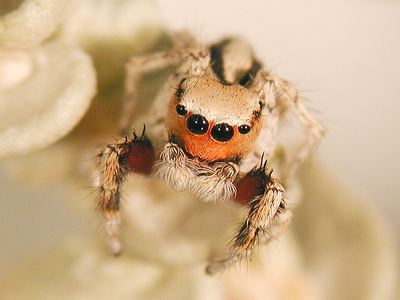
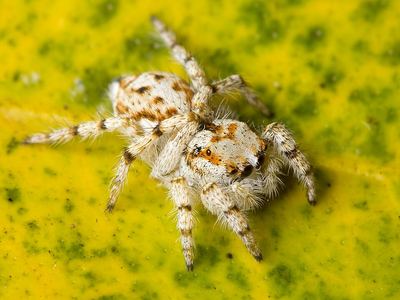
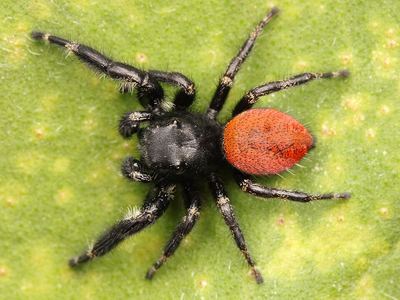
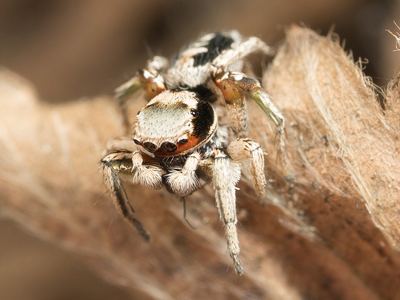
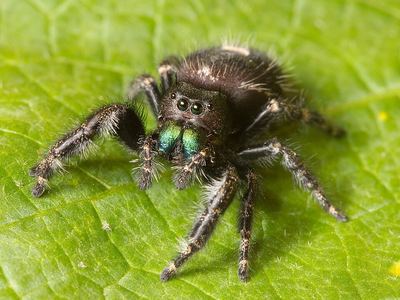
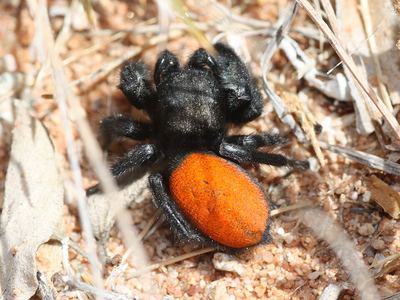
Plus ten: Habronattus hallani, Hairy tufted jumping spider, Marchena minuta, Oregon paradise jumping spider, Pelegrina aeneola, Phidippus nikites, Sassacus papenhoei, Ribbon jumping spider, Buttonhook leafbeetle jumping spider, Zebra spider.
Most licensed records of Habronattus tarsalis in Nevada come from Nye County, Humboldt County and Clark County.
Wolf spiders in Nevada
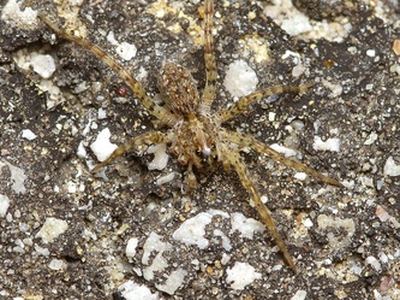
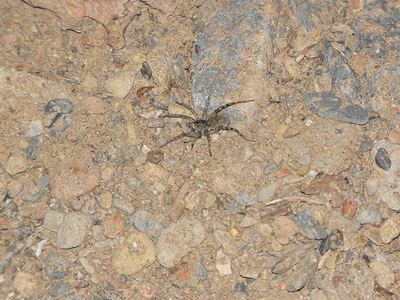
Wolf spiders are a small part of the spider record here: four species with 3% of records between them. The most recorded is the Koch's wolf spider (6), ahead of the McCook's split wolf spider (6).
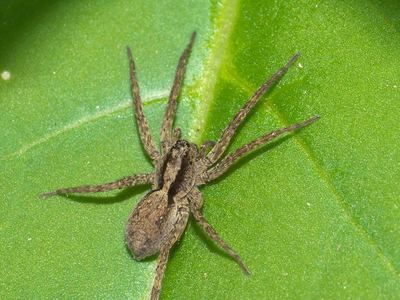
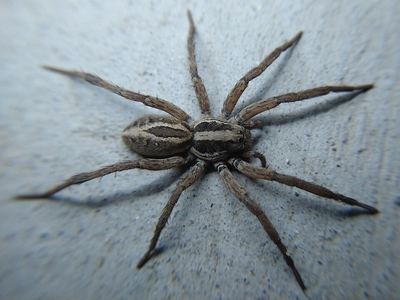
Orb weavers in Nevada
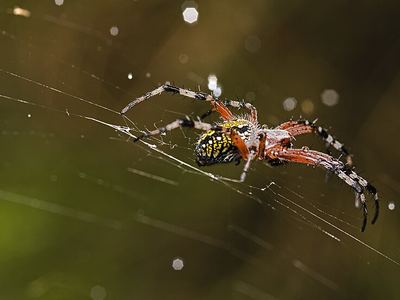
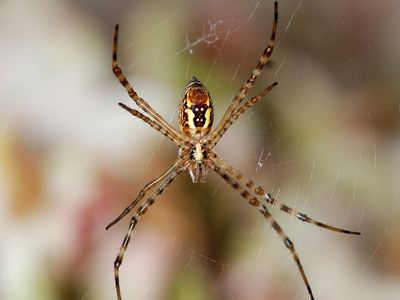
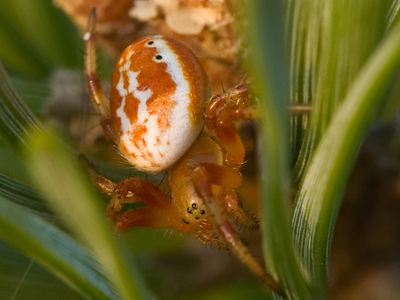
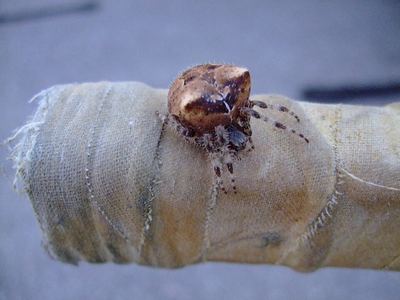
Orb weavers: four species are listed for Nevada, with 40 records (7% of the state's spider records). The most recorded is the western spotted orbweaver (21), ahead of the banded garden spider (18).
Fishing and nursery web spiders in Nevada
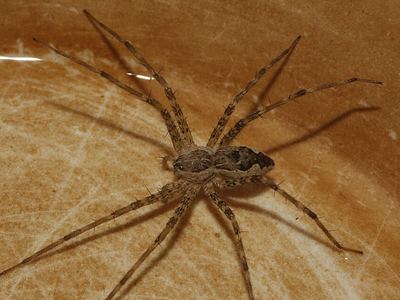
One species of this group is listed for Nevada: Tinus peregrinus, with 2 records (0.4% of the state's spider records).
Tarantulas in Nevada
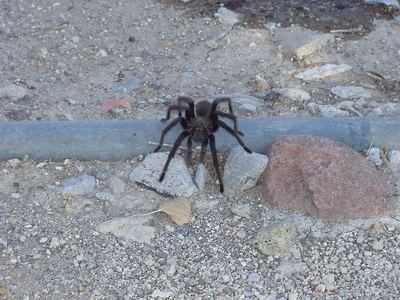
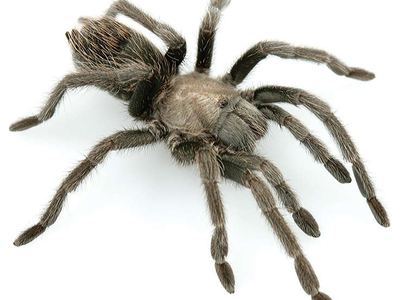
Tarantulas: two species are listed for Nevada, with 27 records (5% of the state's spider records). The most recorded is the Bay Area blonde (27), ahead of Aphonopelma prenticei (0).
Crab spiders in Nevada
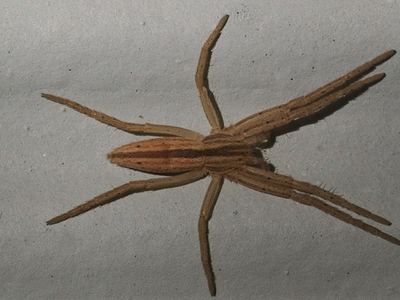
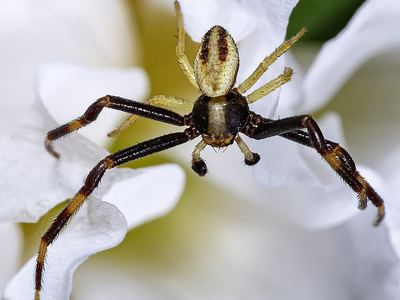
Crab spiders are a small part of the spider record here: two species with 0.2% of records between them. The most recorded is the oblong running spider (1), ahead of the goldenrod crab spider (0).
Cobweb spiders in Nevada
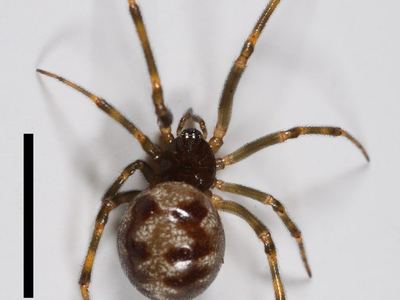
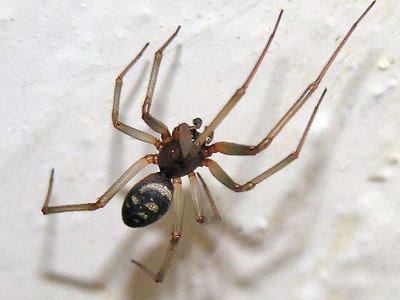
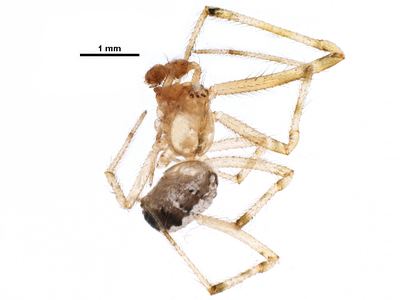
Cobweb spiders are a small part of the spider record here: three species with 0.9% of records between them. The most recorded is the triangulate bud spider (3), ahead of the false black widow (2).
Funnel weavers and grass spiders in Nevada
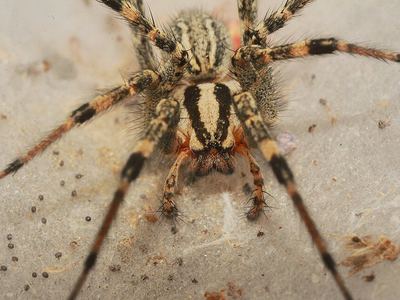
One species of this group is listed for Nevada: the desert grass spider, with 1 record (0.2% of the state's spider records).
Lynx spiders in Nevada
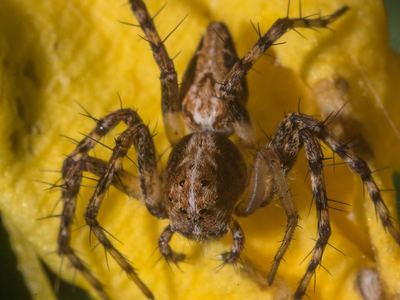
One species of this group is listed for Nevada: the western lynx spider, with 4 records (0.7% of the state's spider records).
Other spiders in Nevada
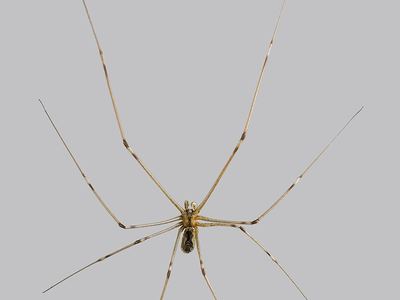
Other spiders: five species are listed for Nevada, with 24 records (4% of the state's spider records). The most recorded is the marbled cellar spider (10), ahead of Dysdera crocata (6).
Where in Nevada are spiders recorded most?
Clark County dominates: 51% of the state's licensed spider records come from it alone, and the top five counties hold 80%. 17 of Nevada's 17 counties have at least one licensed spider record.
| # | County | Records | Share |
|---|---|---|---|
| 1 | Clark County | 273 | 50.9% |
| 2 | Washoe County | 62 | 11.6% |
| 3 | Nye County | 51 | 9.5% |
| 4 | Humboldt County | 23 | 4.3% |
| 5 | Lyon County | 21 | 3.9% |
| 6 | White Pine County | 21 | 3.9% |
| 7 | Lincoln County | 15 | 2.8% |
| 8 | Mineral County | 12 | 2.2% |
| 9 | Lander County | 12 | 2.2% |
| 10 | Carson City | 11 | 2.1% |
| 11 | Elko County | 10 | 1.9% |
| 12 | Churchill County | 7 | 1.3% |
When do spiders come out in Nevada?
Observation records of spiders in Nevada run mostly March through November, peaking in June with 15% of them. Winter (December to February) holds 5% of the records. The sharpest rise comes from March to April.
| Jan | Feb | Mar | Apr | May | Jun | Jul | Aug | Sep | Oct | Nov | Dec |
|---|---|---|---|---|---|---|---|---|---|---|---|
| 1% | 3% | 5% | 9% | 11% | 15% | 15% | 14% | 10% | 10% | 5% | 1% |
Spiders: Nevada compared with its neighbors
Nevada ranks 49th of 50 states by the number of spider species listed; Texas leads with 386 species.
Every state bordering Nevada lists more spider species (Nevada: 47 species; California 309, Arizona 162, Utah 97, Oregon 88, Idaho 56).
What spiders are in Nevada? All 47 species
Ranked by licensed records in Nevada. Species with a profile page are linked.
| # | Species | Family | Records | Share |
|---|---|---|---|---|
| 1 | Habronattus tarsalis | Salticidae | 56 | 10.4% |
| 2 | Western black widow venomous Latrodectus hesperus | Theridiidae | 40 | 7.5% |
| 3 | Bay Area blonde Aphonopelma iodius | Theraphosidae | 27 | 5.0% |
| 4 | Phidippus californicus | Salticidae | 24 | 4.5% |
| 5 | Hirsute paradise spider Habronattus hirsutus | Salticidae | 21 | 3.9% |
| 6 | Western spotted orbweaver Neoscona oaxacensis | Araneidae | 21 | 3.9% |
| 7 | Plexippoides flavescens | Salticidae | 20 | 3.7% |
| 8 | Banded garden spider Argiope trifasciata | Araneidae | 18 | 3.4% |
| 9 | California flattened jumping spider Platycryptus californicus | Salticidae | 15 | 2.8% |
| 10 | Habronattus americanus | Salticidae | 14 | 2.6% |
| 11 | Habronattus signatus | Salticidae | 13 | 2.4% |
| 12 | Habronattus amicus | Salticidae | 10 | 1.9% |
| 13 | Marbled cellar spider Holocnemus pluchei | Pholcidae | 10 | 1.9% |
| 14 | Johnson jumper Phidippus johnsoni | Salticidae | 9 | 1.7% |
| 15 | Dysdera crocata | Dysderidae | 6 | 1.1% |
| 16 | Koch's wolf spider Alopecosa kochi | Lycosidae | 6 | 1.1% |
| 17 | McCook's split wolf spider Schizocosa mccooki | Lycosidae | 6 | 1.1% |
| 18 | Desert recluse venomous Loxosceles deserta | Sicariidae | 5 | 0.9% |
| 19 | Habronattus pyrrithrix | Salticidae | 4 | 0.7% |
| 20 | Hogna antelucana | Lycosidae | 4 | 0.7% |
| 21 | Syspira longipes | Miturgidae | 4 | 0.7% |
| 22 | Western lynx spider Oxyopes scalaris | Oxyopidae | 4 | 0.7% |
| 23 | Bold jumper Phidippus audax | Salticidae | 3 | 0.6% |
| 24 | Desert red jumping spider Phidippus ardens | Salticidae | 3 | 0.6% |
| 25 | Giant crab spider Olios giganteus | Sparassidae | 3 | 0.6% |
| 26 | Habronattus hallani | Salticidae | 3 | 0.6% |
| 27 | Hairy tufted jumping spider Phidippus comatus | Salticidae | 3 | 0.6% |
| 28 | Marchena minuta | Salticidae | 3 | 0.6% |
| 29 | Oregon paradise jumping spider Habronattus oregonensis | Salticidae | 3 | 0.6% |
| 30 | Pelegrina aeneola | Salticidae | 3 | 0.6% |
| 31 | Phidippus nikites | Salticidae | 3 | 0.6% |
| 32 | Sassacus papenhoei | Salticidae | 3 | 0.6% |
| 33 | Triangulate bud spider Steatoda triangulosa | Theridiidae | 3 | 0.6% |
| 34 | False black widow Steatoda grossa | Theridiidae | 2 | 0.4% |
| 35 | Tinus peregrinus | Pisauridae | 2 | 0.4% |
| 36 | Desert grass spider Agelenopsis aperta | Agelenidae | 1 | 0.2% |
| 37 | Dictis striatipes | Scytodidae | 1 | 0.2% |
| 38 | Oblong running spider Tibellus oblongus | Philodromidae | 1 | 0.2% |
| 39 | Ribbon jumping spider Metacyrba taeniola | Salticidae | 1 | 0.2% |
| 40 | Sixspotted orbweaver Araniella displicata | Araneidae | 1 | 0.2% |
| 41 | Aphonopelma prenticei | Theraphosidae | 0 | 0.0% |
| 42 | Buttonhook leafbeetle jumping spider Sassacus vitis | Salticidae | 0 | 0.0% |
| 43 | Cat-faced spider Araneus gemmoides | Araneidae | 0 | 0.0% |
| 44 | Goldenrod crab spider Misumena vatia | Thomisidae | 0 | 0.0% |
| 45 | Shoreline wolf spider Arctosa littoralis | Lycosidae | 0 | 0.0% |
| 46 | Theridion neomexicanum | Theridiidae | 0 | 0.0% |
| 47 | Zebra spider Salticus scenicus | Salticidae | 0 | 0.0% |
Related pages
GBIF records read 2026-09-29. Listed: any license. Counted: CC0/CC BY only. How we count.