Texas recluse (Loxosceles devia)
The Texas recluse (genus Loxosceles) is a venomous spider in the family Sicariidae. Of the three recluse spiders profiled here, it is listed in fewer states than any other. It is listed in one state only, Texas, in the West South Central division.
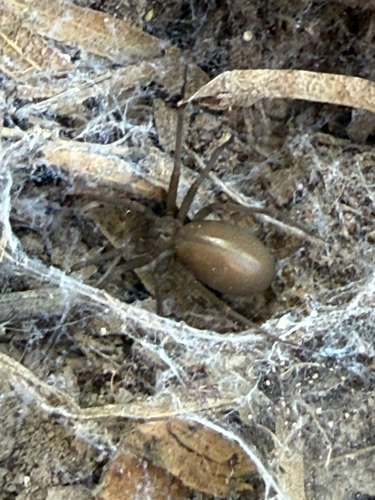
Loxosceles devia, the Texas recluse, is a species of recluse spider in the family Sicariidae. It is found in the United States and Mexico.
From Wikipedia: Loxosceles devia, text under CC BY-SA 4.0.
Is the Texas recluse poisonous or venomous?
Yes. The Texas recluse is a recluse spider (genus Loxosceles).
Is a Texas recluse bite dangerous?
It can be. Most Texas recluse spider bites heal alone, but some cause a slowly spreading wound. Call Poison Help at 1-800-222-1222 for advice.
Spiders often mistaken for it
| Species commonly confused with recluse spiders | Its states where both are recorded |
|---|---|
| longbodied cellar spider | all 1 |
| southern house spider | all 1 |
Which states have the Texas recluse?
| # | State | Records | Share of state spiders | Rank in state |
|---|---|---|---|---|
| 1 | Texas | 59 | 0.2% | 95th of 387 |
How recent are the Texas recluse records?
| Decade | Records | Share |
|---|---|---|
| 1930s | 27 | 45.8% |
| 1940s | 1 | 1.7% |
| 1950s | 2 | 3.4% |
| 1960s | 9 | 15.3% |
| 1970s | 1 | 1.7% |
| 1990s | 1 | 1.7% |
| 2010s | 1 | 1.7% |
| 2020s | 17 | 28.8% |
Species recorded in the same counties
| Species | Shared counties |
|---|---|
| Silver argiope | 7 |
| Southwestern trapdoor spider | 7 |
| Eriophora edax | 6 |
| Mecaphesa dubia | 6 |
| Texas tan tarantula | 6 |
| Araneus detrimentosus | 5 |
| Brown widow venomous | 5 |
| Gray wall jumper | 5 |
Related species in the U.S.
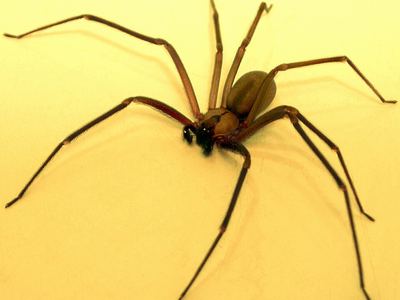
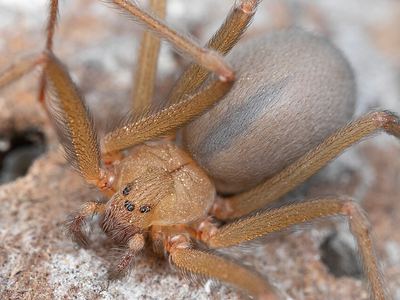
GBIF records read 2026-11-05 (open these records on GBIF). Listed: any license. Counted: CC0/CC BY only. How we count.