Long-jawed orb weaver (Tetragnatha laboriosa)
The long-jawed orb weaver (genus Tetragnatha) is a spider in the family Tetragnathidae that is not dangerous to people. Among the three long-jawed orb weavers profiled here, it ranks 2nd by number of states listed. Most of its 21 listed states are in the East North Central (4), Mountain (4) and Pacific (4) census divisions. Its observation records peak in April.
Also called: silver long-jawed orbweaver (English names in GBIF)
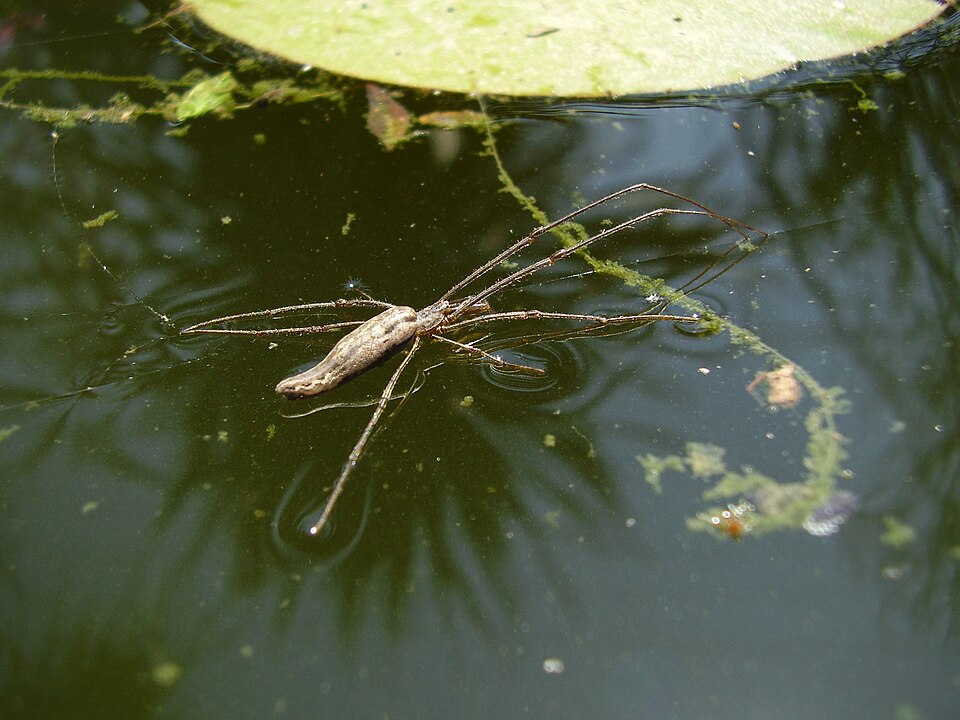
Tetragnatha laboriosa, the silver longjawed orbweaver, is a species of long-jawed orb weaver in the spider family Tetragnathidae. It is found in North and Central America. T. laboriosa goes through nine instars, including its adult stage.
From Wikipedia: Tetragnatha laboriosa, text under CC BY-SA 4.0.
Is the long-jawed orb weaver poisonous or venomous?
Not in any medically significant way. Like almost all spiders the long-jawed orb weaver (family Tetragnathidae) has venom for its prey, but it is not a widow or recluse, the two U.S. groups whose bites need medical attention.
Which states have the long-jawed orb weaver?
| # | State | Records | Share of state spiders | Rank in state |
|---|---|---|---|---|
| 1 | Alaska | 107 | 0.4% | 38th of 280 |
| 2 | California | 96 | 0.2% | 62nd of 312 |
| 3 | Oklahoma | 46 | 0.9% | 25th of 151 |
| 4 | Nebraska | 42 | 3.3% | 3rd of 72 |
| 5 | Texas | 40 | 0.1% | 115th of 387 |
| 6 | Illinois | 32 | 0.2% | 86th of 243 |
| 7 | Indiana | 30 | 0.6% | 33rd of 134 |
| 8 | Pennsylvania | 15 | 0.2% | 68th of 169 |
| 9 | Washington | 15 | 0.3% | 47th of 159 |
| 10 | Montana | 13 | 0.6% | 20th of 73 |
| 11 | Wisconsin | 13 | 0.4% | 60th of 148 |
| 12 | South Carolina | 9 | 0.3% | 61st of 124 |
| 13 | Colorado | 6 | 0.1% | 61st of 372 |
| 14 | New Mexico | 6 | 0.2% | 76th of 248 |
| 15 | Oregon | 4 | 0.1% | 61st of 89 |
| 16 | Minnesota | 2 | 0.1% | 111th of 145 |
| 17 | Maine | 0 | — | — |
| 18 | Massachusetts | 0 | — | — |
| 19 | North Dakota | 0 | — | — |
| 20 | Ohio | 0 | — | — |
| 21 | Wyoming | 0 | — | — |
When is the long-jawed orb weaver seen?
Its observation records run mostly March through September.
Where the long-jawed orb weaver is recorded in each state
| State | Licensed records | Place among the state's spiders | Most recorded counties |
|---|---|---|---|
| Alaska | 107 | joint 38th of 280 | Kenai Peninsula Borough (22), Prince of Wales-Outer Ketchikan Census Area (22), Skagway-Yakutat-Angoon Census Area (16), Wrangell-Petersburg Census Area (12) and Juneau City and Borough (8) |
| California | 96 | 62nd of 312 | Mono County (70), Merced County (9), Solano County (4), Inyo County (3) and Modoc County (2) |
| Oklahoma | 46 | joint 25th of 151 | Marshall County (38), Comanche County (2), McIntosh County (2), Carter County (1) and Cleveland County (1) |
| Nebraska | 42 | 3rd of 72 | Jefferson County (5), Harlan County (3), Kearney County (3), Richardson County (3) and Saline County (3) |
| Texas | 40 | joint 115th of 387 | Comal County (4), Dallas County (4), Galveston County (4), Hidalgo County (3) and Hudspeth County (3) |
| Illinois | 32 | joint 86th of 243 | Jo Daviess County (12), Cook County (11), Lake County (3), Carroll County (2) and Effingham County (1) |
| Indiana | 30 | 33rd of 134 | Lake County (17), Porter County (5), Parke County (4), LaPorte County (2) and Martin County (1) |
Top counties in the U.S.
| # | County | State | Records | Share of U.S. |
|---|---|---|---|---|
| 1 | Mono County | California | 70 | 13.6% |
| 2 | Marshall County | Oklahoma | 38 | 7.4% |
| 3 | Kenai Peninsula Borough | Alaska | 22 | 4.3% |
| 4 | Prince of Wales-Outer Ketchikan Census Area | Alaska | 22 | 4.3% |
| 5 | Lake County | Indiana | 17 | 3.3% |
| 6 | Skagway-Yakutat-Angoon Census Area | Alaska | 16 | 3.1% |
| 7 | Wrangell-Petersburg Census Area | Alaska | 12 | 2.3% |
| 8 | Jo Daviess County | Illinois | 12 | 2.3% |
| 9 | Cook County | Illinois | 11 | 2.1% |
| 10 | Merced County | California | 9 | 1.7% |
| 11 | Juneau City and Borough | Alaska | 8 | 1.6% |
| 12 | Kodiak Island Borough | Alaska | 5 | 1.0% |
| 13 | Yukon-Koyukuk Census Area | Alaska | 5 | 1.0% |
| 14 | Porter County | Indiana | 5 | 1.0% |
| 15 | Jefferson County | Nebraska | 5 | 1.0% |
How recent are the long-jawed orb weaver records?
| Decade | Records | Share |
|---|---|---|
| 1890s | 13 | 2.7% |
| 1920s | 3 | 0.6% |
| 1930s | 15 | 3.1% |
| 1940s | 8 | 1.6% |
| 1950s | 14 | 2.9% |
| 1960s | 12 | 2.5% |
| 1970s | 32 | 6.6% |
| 1980s | 31 | 6.4% |
| 1990s | 22 | 4.5% |
| 2000s | 86 | 17.7% |
| 2010s | 178 | 36.6% |
| 2020s | 72 | 14.8% |
Species recorded in the same counties
| Species | Shared counties |
|---|---|
| Bold jumper | 30 |
| Striped lynx spider | 26 |
| Bronze jumper | 24 |
| Nursery web spider | 24 |
| Banded garden spider | 21 |
| Black-and-yellow argiope | 21 |
| Familiar jumping spider | 21 |
| Peppered jumper | 21 |
Related species in the U.S.

GBIF records read 2026-11-05 (open these records on GBIF). Listed: any license. Counted: CC0/CC BY only. How we count.