Spiders in Nebraska
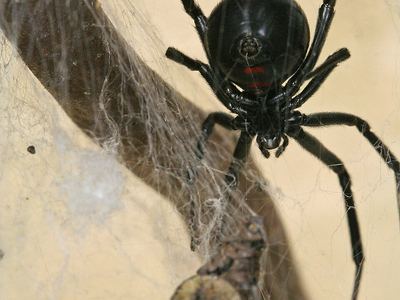
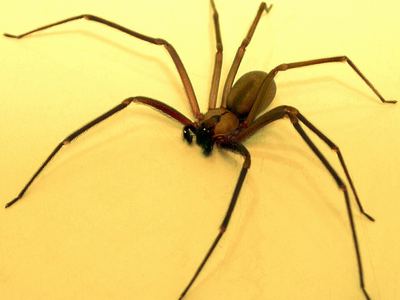
Nebraska has 71 spider species on record, each with at least 10 GBIF records in the state, and 1,267 licensed records in all. The most recorded are the bold jumper, the oblong running spider and the long-jawed orb weaver. Medically significant: the brown recluse and the western black widow.
Widow spiders in Nebraska
One species of this group is listed for Nebraska: the western black widow, with 9 records (0.7% of the state's spider records).
Recluse spiders in Nebraska
One species of this group is listed for Nebraska: the brown recluse, with 13 records (1% of the state's spider records).
Jumping spiders in Nebraska
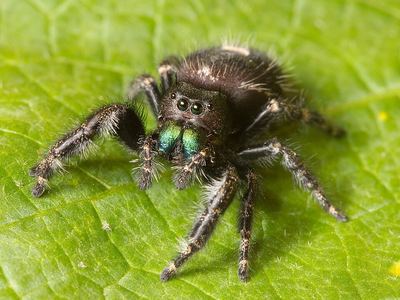
Jumping spiders: 17 species are listed for Nebraska, with 161 records (13% of the state's spider records). The most recorded is the bold jumper (58), ahead of the familiar jumping spider (24).
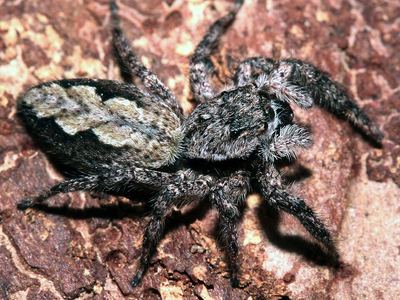
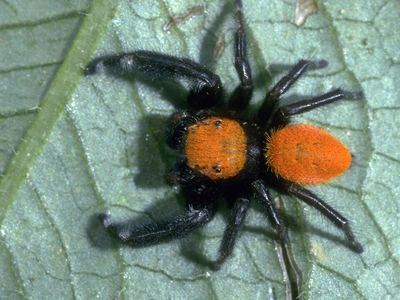
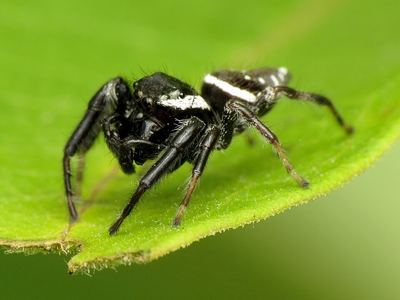
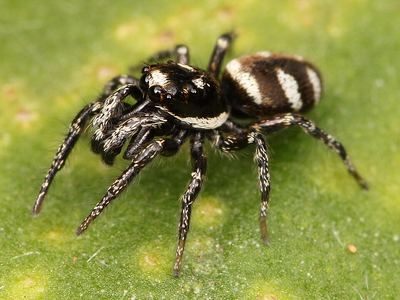
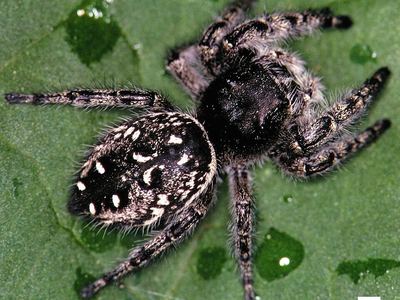
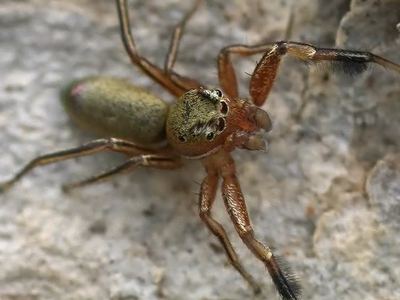
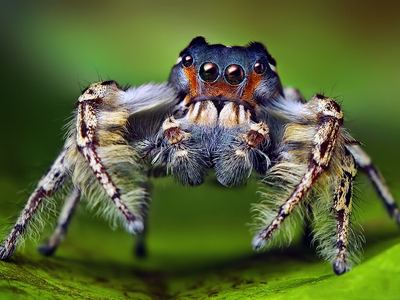
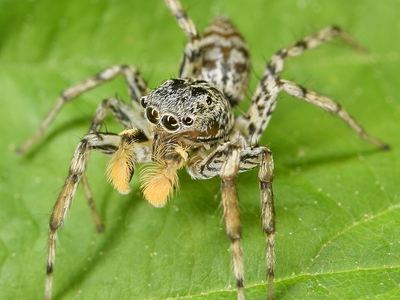
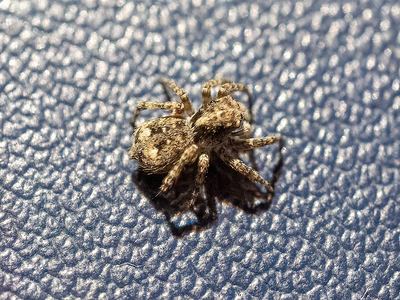
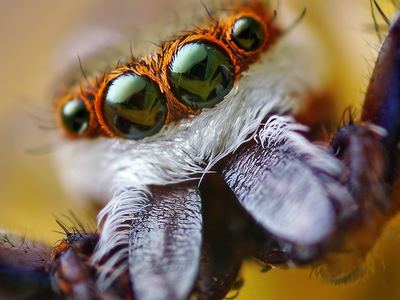
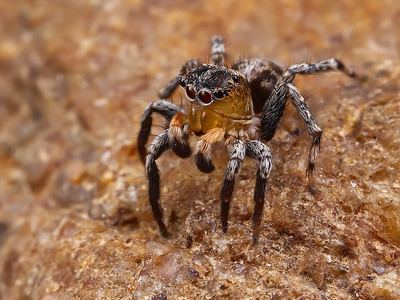
Plus five: Grayish jumping spider, Peppered jumper, Pike slender jumper, Brilliant jumping spider, White-jawed jumping spider.
Observation records of the bold jumper in Nebraska run mostly April through November, peaking in September; most licensed records come from Lancaster County, Douglas County and Scotts Bluff County.
Wolf spiders in Nebraska
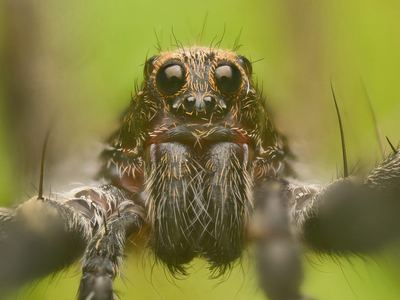
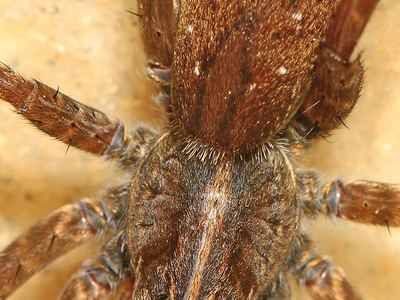
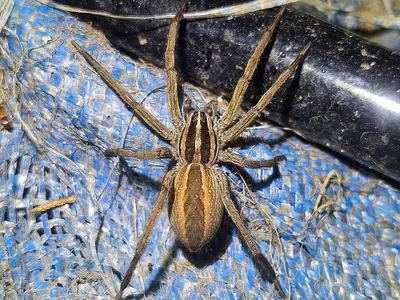
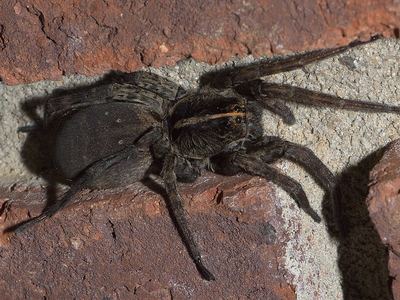
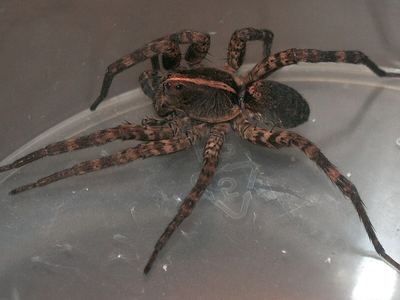
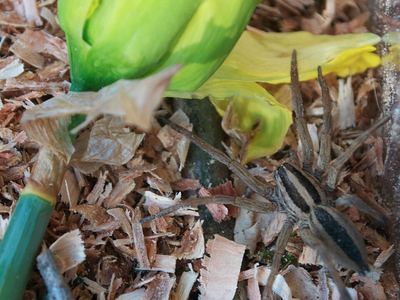
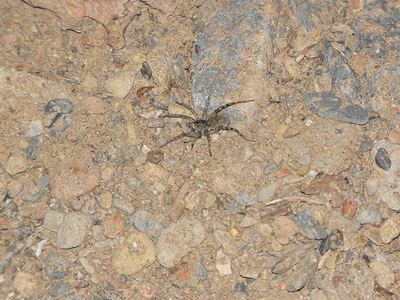
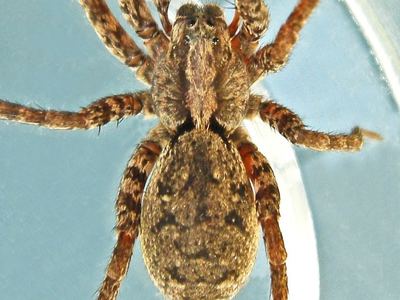
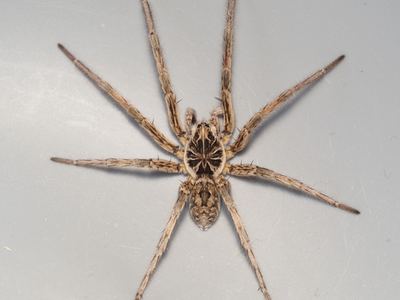
Wolf spiders: nine species are listed for Nebraska, with 55 records (4% of the state's spider records). The most recorded is the brush-legged split wolf spider (14), ahead of the wetland giant wolf spider (11).
Orb weavers in Nebraska
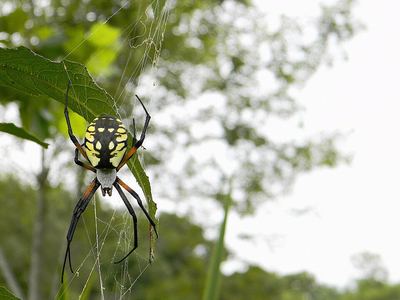
Orb weavers: 14 species are listed for Nebraska, with 169 records (13% of the state's spider records). The most recorded is the black-and-yellow argiope (24), ahead of the banded garden spider (23).
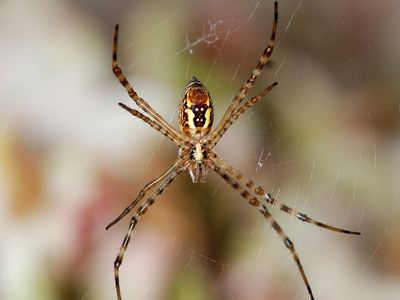
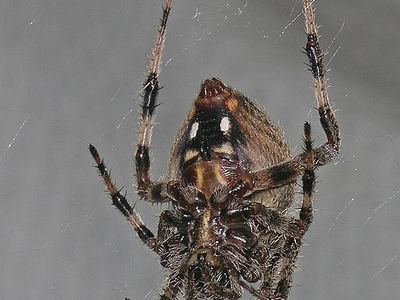
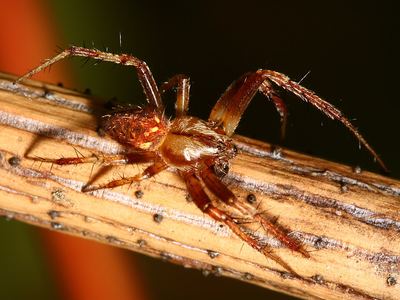
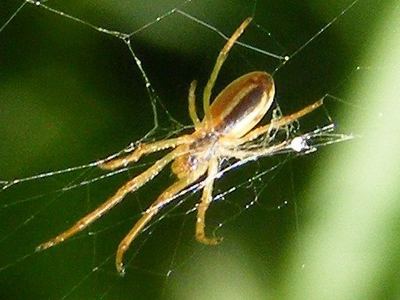
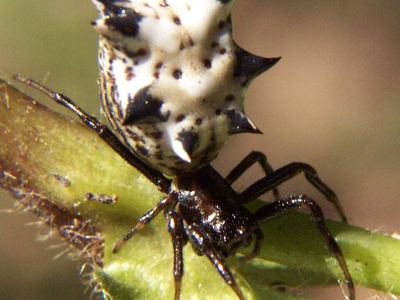
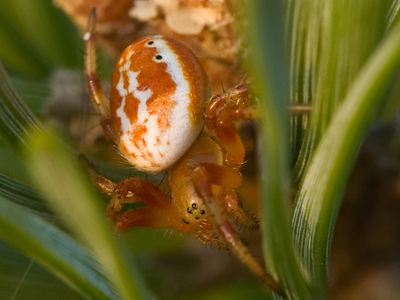
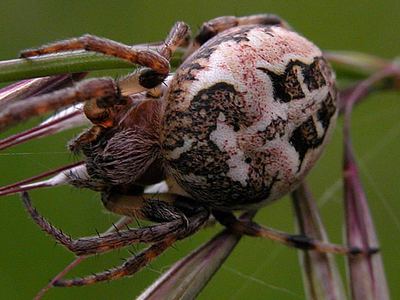
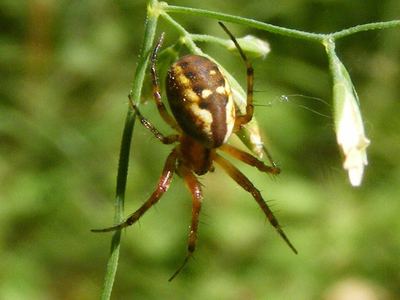
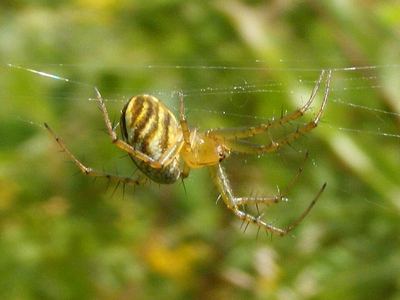
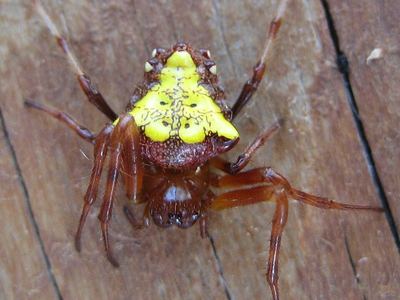
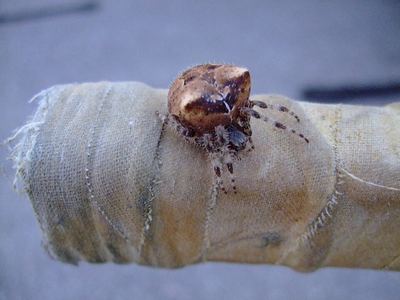
Plus two: Marbled orbweaver, White micrathena.
Long-jawed orb weavers in Nebraska
Long-jawed orb weavers: two species are listed for Nebraska, with 47 records (4% of the state's spider records). The most recorded is the long-jawed orb weaver (42), ahead of the orchard orbweaver (5).
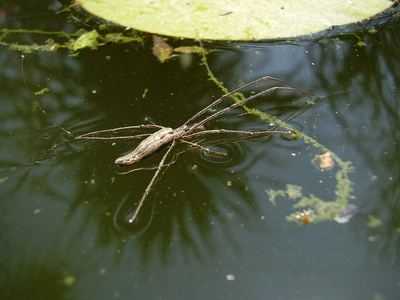
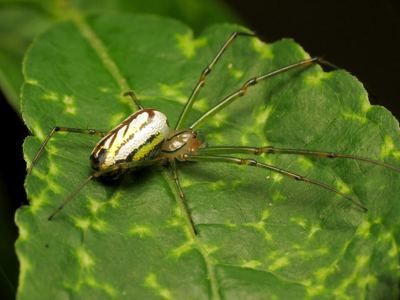
Most licensed records of the long-jawed orb weaver in Nebraska come from Jefferson County, Harlan County and Kearney County.
Fishing and nursery web spiders in Nebraska
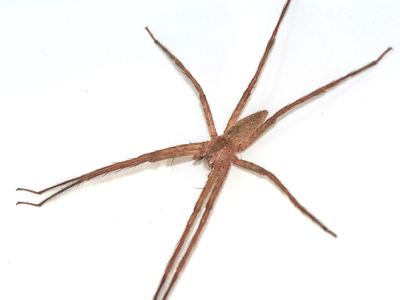
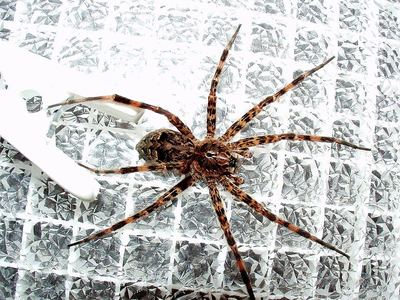
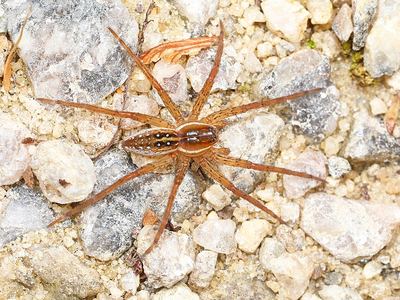
Fishing and nursery web spiders: four species are listed for Nebraska, with 60 records (5% of the state's spider records). The most recorded is the nursery web spider (29), ahead of the dark fishing spider (27).
Crab spiders in Nebraska
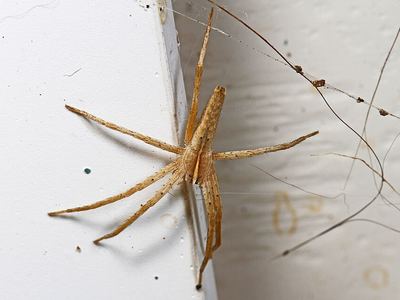
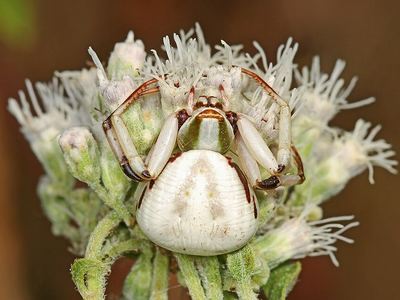
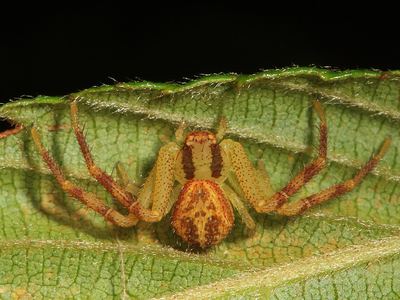
Crab spiders: nine species are listed for Nebraska, with 119 records (9% of the state's spider records). The most recorded is the oblong running spider (58), ahead of the whitebanded crab spider (20).
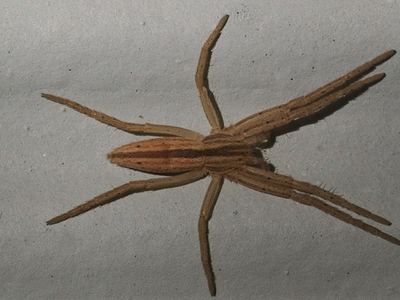
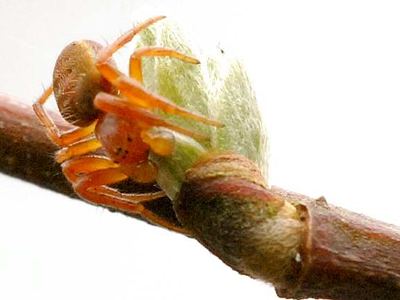
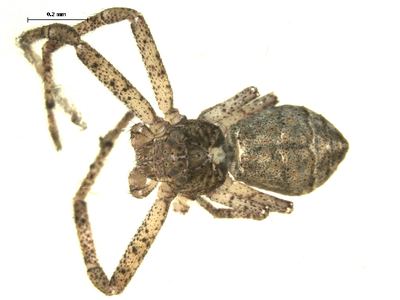
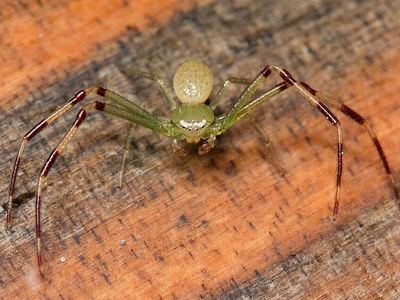
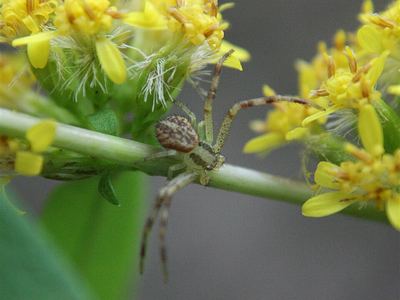
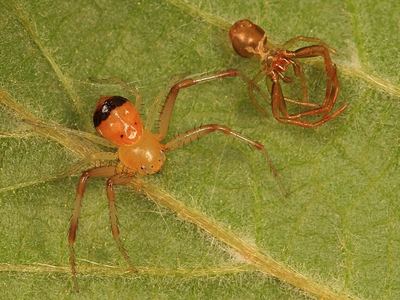
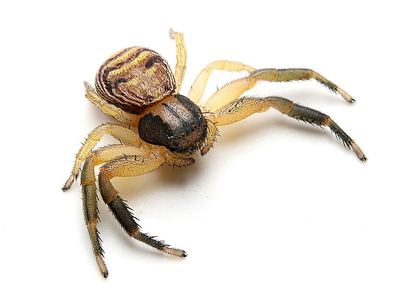
Most licensed records of the oblong running spider in Nebraska come from Harlan County, Thayer County and Jefferson County.
Cobweb spiders in Nebraska
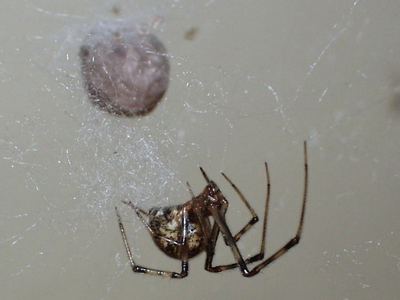
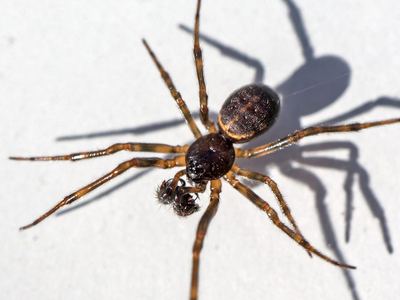
Cobweb spiders: three species are listed for Nebraska, with 58 records (5% of the state's spider records). The most recorded is the common house spider (24), ahead of the boreal combfoot (20).
Funnel weavers and grass spiders in Nebraska
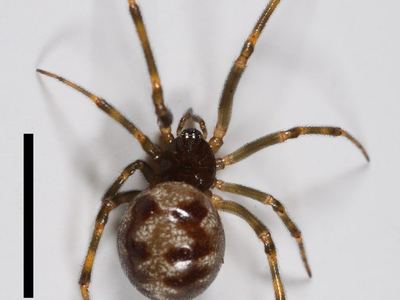
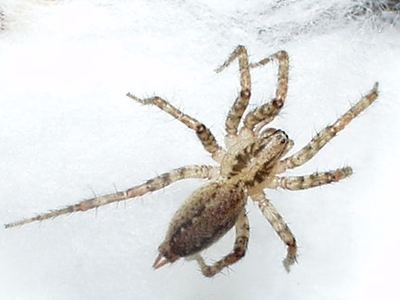
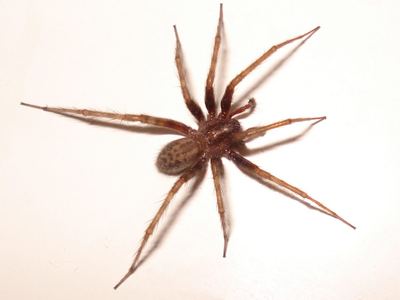
Funnel weavers and grass spiders are a small part of the spider record here: two species with 2% of records between them. The most recorded is the Pennsylvania grass spider (16), ahead of the barn funnel weaver (6).
Lynx spiders in Nebraska
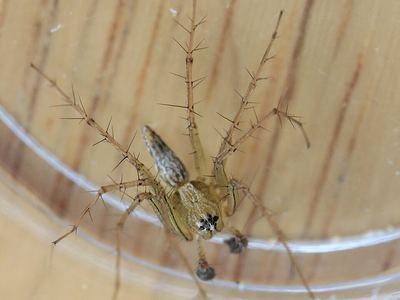
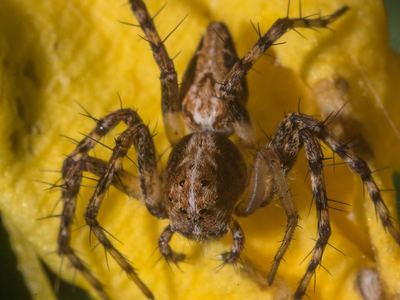
Lynx spiders are a small part of the spider record here: two species with 2% of records between them. The most recorded is the striped lynx spider (14), ahead of the western lynx spider (10).
Sheetweb and dwarf spiders in Nebraska
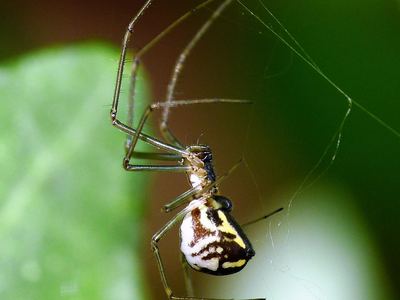
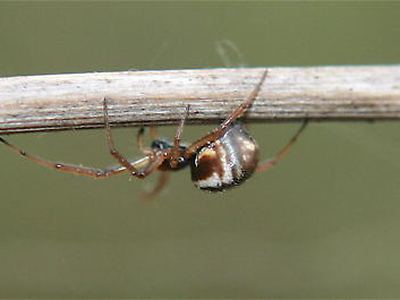
Sheetweb and dwarf spiders are a small part of the spider record here: two species with 2% of records between them. The most recorded is the filmy dome spider (21), ahead of the bowl and doily spider (6).
Ground and sac spiders in Nebraska
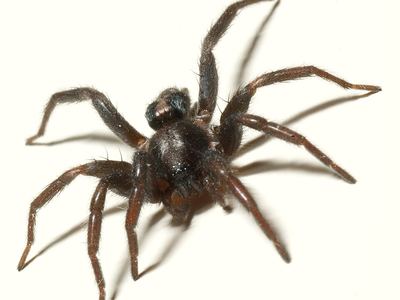
Ground and sac spiders are a small part of the spider record here: two species with 3% of records between them. The most recorded is the parson spider (21), ahead of the broad-faced sac spider (15).
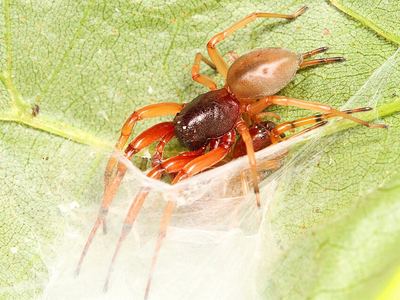
Other spiders in Nebraska
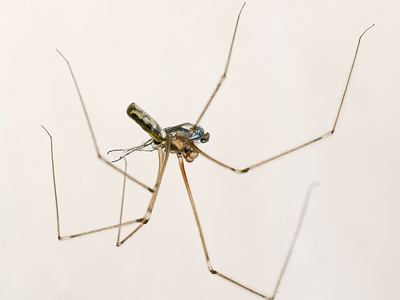
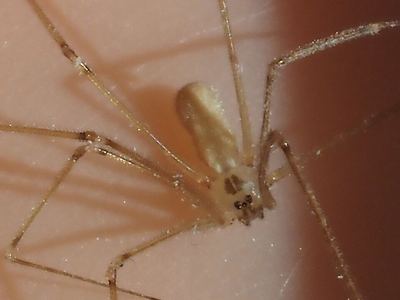
Other spiders are a small part of the spider record here: three species with 2% of records between them. The most recorded is Dysdera crocata (14), ahead of the longbodied cellar spider (6).
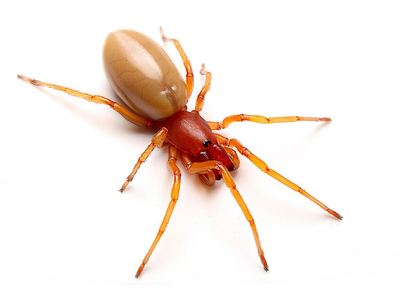
Where in Nebraska are spiders recorded most?
Saline County leads with 182 records (14%), followed by Lancaster County and Jefferson County; the top five counties hold 50% of the total. 64 of Nebraska's 93 counties have at least one licensed spider record.
| # | County | Records | Share |
|---|---|---|---|
| 1 | Saline County | 182 | 14.4% |
| 2 | Lancaster County | 166 | 13.1% |
| 3 | Jefferson County | 103 | 8.1% |
| 4 | Douglas County | 98 | 7.7% |
| 5 | Gage County | 79 | 6.2% |
| 6 | Scotts Bluff County | 57 | 4.5% |
| 7 | Richardson County | 54 | 4.3% |
| 8 | Thayer County | 54 | 4.3% |
| 9 | Sarpy County | 46 | 3.6% |
| 10 | Harlan County | 36 | 2.8% |
| 11 | Cass County | 33 | 2.6% |
| 12 | Knox County | 28 | 2.2% |
When do spiders come out in Nebraska?
Observation records of spiders in Nebraska run mostly April through October, peaking in September with 19% of them. December through February together hold under 2% of the records, so spiders in Nebraska are rarely recorded in winter. The sharpest rise comes from March to April.
| Jan | Feb | Mar | Apr | May | Jun | Jul | Aug | Sep | Oct | Nov | Dec |
|---|---|---|---|---|---|---|---|---|---|---|---|
| 0% | 0% | 3% | 11% | 10% | 12% | 16% | 17% | 19% | 7% | 5% | 0% |
Spiders: Nebraska compared with its neighbors
Nebraska ranks 42nd of 50 states by the number of spider species listed, level with Delaware; Texas leads with 386 species.
Of the six states bordering Nebraska, Colorado, Missouri and Kansas list more spider species (Nebraska: 71 species; Colorado 378, Missouri 117, Kansas 94, Wyoming 68, Iowa 57, South Dakota 29).
What spiders are in Nebraska? All 71 species
Ranked by licensed records in Nebraska. The table shows the 60 most recorded of 71 listed spiders.
| # | Species | Family | Records | Share |
|---|---|---|---|---|
| 1 | Bold jumper Phidippus audax | Salticidae | 58 | 4.6% |
| 2 | Oblong running spider Tibellus oblongus | Philodromidae | 58 | 4.6% |
| 3 | Long-jawed orb weaver Tetragnatha laboriosa | Tetragnathidae | 42 | 3.3% |
| 4 | Nursery web spider Pisaurina mira | Pisauridae | 29 | 2.3% |
| 5 | Dark fishing spider Dolomedes tenebrosus | Pisauridae | 27 | 2.1% |
| 6 | Black-and-yellow argiope Argiope aurantia | Araneidae | 24 | 1.9% |
| 7 | Common house spider Parasteatoda tepidariorum | Theridiidae | 24 | 1.9% |
| 8 | Familiar jumping spider Platycryptus undatus | Salticidae | 24 | 1.9% |
| 9 | Banded garden spider Argiope trifasciata | Araneidae | 23 | 1.8% |
| 10 | Spotted orbweaver Neoscona crucifera | Araneidae | 23 | 1.8% |
| 11 | Filmy dome spider Neriene radiata | Linyphiidae | 21 | 1.7% |
| 12 | Parson spider Herpyllus ecclesiasticus | Gnaphosidae | 21 | 1.7% |
| 13 | Boreal combfoot Steatoda borealis | Theridiidae | 20 | 1.6% |
| 14 | Whitebanded crab spider Misumenoides formosipes | Thomisidae | 20 | 1.6% |
| 15 | Arabesque orbweaver Neoscona arabesca | Araneidae | 16 | 1.3% |
| 16 | Pennsylvania grass spider Agelenopsis pennsylvanica | Agelenidae | 16 | 1.3% |
| 17 | Broad-faced sac spider Trachelas tranquillus | Trachelidae | 15 | 1.2% |
| 18 | Apache jumping spider Phidippus apacheanus | Salticidae | 14 | 1.1% |
| 19 | Brush-legged split wolf spider Schizocosa ocreata | Lycosidae | 14 | 1.1% |
| 20 | Dysdera crocata | Dysderidae | 14 | 1.1% |
| 21 | Openfield orbweaver Araneus pratensis | Araneidae | 14 | 1.1% |
| 22 | Spined micrathena Micrathena gracilis | Araneidae | 14 | 1.1% |
| 23 | Striped lynx spider Oxyopes salticus | Oxyopidae | 14 | 1.1% |
| 24 | Triangulate bud spider Steatoda triangulosa | Theridiidae | 14 | 1.1% |
| 25 | Brown recluse venomous Loxosceles reclusa | Sicariidae | 13 | 1.0% |
| 26 | Sixspotted orbweaver Araniella displicata | Araneidae | 11 | 0.9% |
| 27 | Wetland giant wolf spider Tigrosa helluo | Lycosidae | 11 | 0.9% |
| 28 | Flower crab spider Mecaphesa asperata | Thomisidae | 10 | 0.8% |
| 29 | Paraphidippus aurantius | Salticidae | 10 | 0.8% |
| 30 | Western lynx spider Oxyopes scalaris | Oxyopidae | 10 | 0.8% |
| 31 | Furrow orbweaver Larinioides cornutus | Araneidae | 9 | 0.7% |
| 32 | Nearctic white-striped running crab spider Philodromus rufus | Philodromidae | 9 | 0.7% |
| 33 | Rabid wolf spider Rabidosa rabida | Lycosidae | 9 | 0.7% |
| 34 | Tigrosa grandis | Lycosidae | 9 | 0.7% |
| 35 | Tuftlegged orbweaver Mangora placida | Araneidae | 9 | 0.7% |
| 36 | Western black widow venomous Latrodectus hesperus | Theridiidae | 9 | 0.7% |
| 37 | Zebra spider Salticus scenicus | Salticidae | 9 | 0.7% |
| 38 | Lined orbweaver Mangora gibberosa | Araneidae | 8 | 0.6% |
| 39 | Marbled purple jumper Phidippus purpuratus | Salticidae | 7 | 0.6% |
| 40 | Thin-spined jumping spider Tutelina elegans | Salticidae | 7 | 0.6% |
| 41 | Tuberculated crab spider Tmarus angulatus | Thomisidae | 7 | 0.6% |
| 42 | Arrowhead orbweaver Verrucosa arenata | Araneidae | 6 | 0.5% |
| 43 | Barn funnel weaver Tegenaria domestica | Agelenidae | 6 | 0.5% |
| 44 | Bowl and doily spider Frontinella pyramitela | Linyphiidae | 6 | 0.5% |
| 45 | Longbodied cellar spider Pholcus phalangioides | Pholcidae | 6 | 0.5% |
| 46 | Putnam's jumper Phidippus putnami | Salticidae | 6 | 0.5% |
| 47 | American green crab spider Misumessus oblongus | Thomisidae | 5 | 0.4% |
| 48 | Celer crab spider Mecaphesa celer | Thomisidae | 5 | 0.4% |
| 49 | Orchard orbweaver Leucauge venusta | Tetragnathidae | 5 | 0.4% |
| 50 | Pholcus manueli | Pholcidae | 5 | 0.4% |
| 51 | Black-banded crab spider Synema parvulum | Thomisidae | 4 | 0.3% |
| 52 | Carolina wolf spider Hogna carolinensis | Lycosidae | 4 | 0.3% |
| 53 | Cat-faced spider Araneus gemmoides | Araneidae | 4 | 0.3% |
| 54 | Dimorphic jumper Maevia inclemens | Salticidae | 4 | 0.3% |
| 55 | Marbled orbweaver Araneus marmoreus | Araneidae | 4 | 0.3% |
| 56 | White micrathena Micrathena mitrata | Araneidae | 4 | 0.3% |
| 57 | Asian wall jumper Attulus fasciger | Salticidae | 3 | 0.2% |
| 58 | Common Hentz jumping spider Hentzia palmarum | Salticidae | 3 | 0.2% |
| 59 | Dotted wolf spider Rabidosa punctulata | Lycosidae | 3 | 0.2% |
| 60 | Flea jumping spider Naphrys pulex | Salticidae | 3 | 0.2% |
Related pages
GBIF records read 2026-09-29. Listed: any license. Counted: CC0/CC BY only. How we count.