Brown widow (Latrodectus geometricus)
The brown widow is a venomous spider in the family Theridiidae. GBIF holds 1,143 licensed U.S. records of it; it reaches our listing threshold in 11 states, most of all California (776), Florida (146) and Texas (91). It is not native to the U.S.; it is introduced in California, Florida, Texas, Georgia, Louisiana, North Carolina and 5 more. Its observation records peak in August.
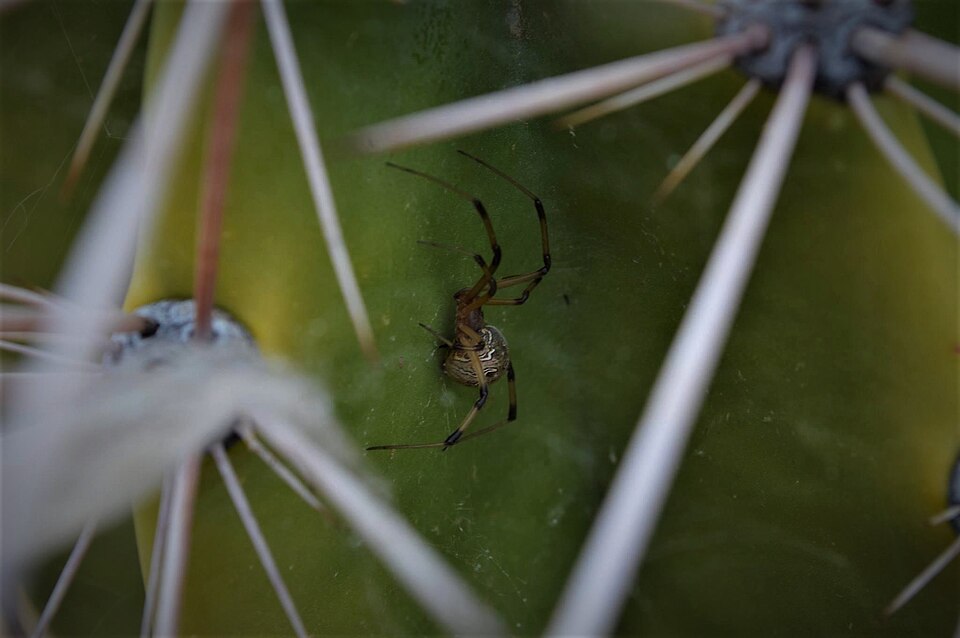

Latrodectus geometricus, commonly known as the brown widow, brown button spider, grey widow, brown black widow, house button spider or geometric button spider, is one of the widow spiders in the genus Latrodectus. As such, it is a 'cousin' to the more infamous Latrodectus mactans (black widow). L. geometricus has black and white patterns on the sides of its abdomen as well as an orange-yellow colored hourglass shape marking.
From Wikipedia: Latrodectus geometricus, text under CC BY-SA 4.0.
Is the brown widow poisonous or venomous?
Yes. The brown widow is a widow spider (genus Latrodectus). Its venom can cause pain, cramps and sweating spreading from the bite. Bites are rarely fatal but worth a call to Poison Help at 1-800-222-1222.
Spiders often mistaken for it
Species commonly confused with widow spiders and recorded in the same states: common house spider (recorded in 9 of its 11 states), triangulate bud spider (recorded in 9 of its 11 states), false black widow (recorded in 6 of its 11 states) and boreal combfoot (recorded in 1 of its 11 states).
Which states have the brown widow?
The brown widow's U.S. record is concentrated: California alone holds 68% of licensed records. It is listed in 11 states in all; the next are Florida (146), Texas (91) and Georgia (42).
| # | State | Records | Share of state spiders | Rank in state |
|---|---|---|---|---|
| 1 | California | 776 | 1.6% | 12th of 309 |
| 2 | Florida | 146 | 1.2% | 15th of 237 |
| 3 | Texas | 91 | 0.3% | 66th of 386 |
| 4 | Georgia | 42 | 0.6% | 33rd of 186 |
| 5 | Louisiana | 27 | 0.7% | 30th of 107 |
| 6 | North Carolina | 16 | 0.2% | 76th of 184 |
| 7 | Alabama | 15 | 0.4% | 59th of 143 |
| 8 | South Carolina | 14 | 0.6% | 36th of 121 |
| 9 | Hawaii | 4 | 0.1% | 45th of 57 |
| 10 | Mississippi | 4 | 0.3% | 62nd of 117 |
| 11 | Arizona | 2 | 0.0% | 120th of 162 |
When is the brown widow seen?
Across the U.S., observation records of the brown widow run through most of the year, peaking in August with 16% of them. Winter (December to February) holds 13% of them.
Season by state
Observation records run through most of the year in California, Florida and Georgia. The most common peak month is August, shared by California and Georgia.
| State | Main season | Peak month | Observation records |
|---|---|---|---|
| California | most of the year | August | 537 |
| Florida | most of the year | July | 137 |
| Texas | April through November | October | 91 |
| Georgia | most of the year | August | 42 |
Where the brown widow is recorded in each state
California
California holds 776 licensed records, the 12th most recorded of 309 spiders listed there. Its observation records in California run through most of the year, peaking in August; most licensed records come from Los Angeles County, San Diego County and Orange County. Next come Riverside County (33) and San Bernardino County (25).
Florida
Florida holds 146 licensed records, the 15th most recorded of 237 spiders listed there. Its observation records in Florida run through most of the year, peaking in July; most licensed records come from Broward County, Alachua County and Sarasota County. Next come Orange County (9) and Miami-Dade County (8).
Texas
Texas holds 91 licensed records, the 66th most recorded of 386 spiders listed there. Its observation records in Texas run mostly April through November, peaking in October; most licensed records come from Bexar County, Harris County and Hidalgo County. Next come Nueces County (5) and Brazos County (4).
Georgia
Georgia holds 42 licensed records, the 33rd most recorded of 186 spiders listed there. Its observation records in Georgia run through most of the year, peaking in August; most licensed records come from Chatham County, Clarke County and Bryan County. Next come Columbia County (3) and Floyd County (3).
Top counties in the U.S.
| # | County | State | Records | Share of U.S. |
|---|---|---|---|---|
| 1 | Los Angeles County | California | 442 | 38.7% |
| 2 | San Diego County | California | 161 | 14.1% |
| 3 | Orange County | California | 68 | 5.9% |
| 4 | Broward County | Florida | 44 | 3.8% |
| 5 | Riverside County | California | 33 | 2.9% |
| 6 | Bexar County | Texas | 26 | 2.3% |
| 7 | San Bernardino County | California | 25 | 2.2% |
| 8 | Harris County | Texas | 21 | 1.8% |
| 9 | Santa Clara County | California | 19 | 1.7% |
| 10 | Alachua County | Florida | 19 | 1.7% |
| 11 | Hidalgo County | Texas | 16 | 1.4% |
| 12 | Sarasota County | Florida | 14 | 1.2% |
| 13 | Ventura County | California | 12 | 1.0% |
| 14 | Orange County | Florida | 9 | 0.8% |
| 15 | Miami-Dade County | Florida | 8 | 0.7% |
How recent are the brown widow records?
Most of what is known about the brown widow is recent: 85% of dated U.S. records were made in 2017–2026, and half date from 2021 or later. The oldest dated record is from 1936; the busiest year was 2026, with 133 records.
| Decade | Records | Share |
|---|---|---|
| 1930s | 2 | 0.2% |
| 1940s | 1 | 0.1% |
| 1950s | 1 | 0.1% |
| 1970s | 1 | 0.1% |
| 1980s | 1 | 0.1% |
| 1990s | 2 | 0.2% |
| 2000s | 26 | 2.2% |
| 2010s | 375 | 31.6% |
| 2020s | 776 | 65.5% |
Species recorded in the same counties
Of the 59 counties where the brown widow is most recorded, 29 are also top counties for the green lynx spider, more than for any other spider. None of its closest neighbors is venomous.
| Species | Shared counties |
|---|---|
| Green lynx spider | 29 |
| Gray wall jumper | 25 |
| Arabesque orbweaver | 23 |
| Banded garden spider | 23 |
| Black-and-yellow argiope | 23 |
| Bold jumper | 23 |
| Spiny-backed orbweaver | 23 |
| Spotted orbweaver | 23 |
Related species in the U.S.
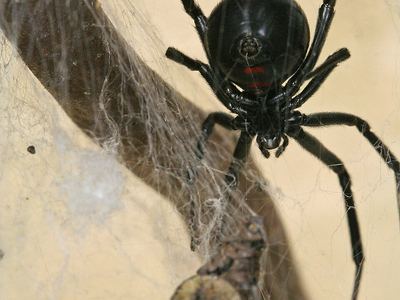
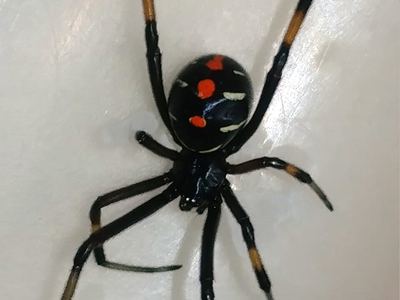
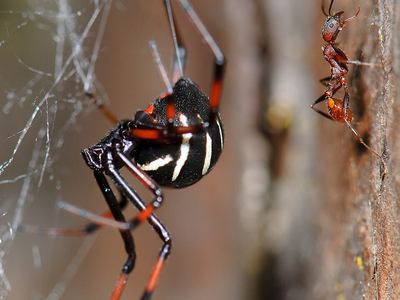
Other species of the genus Latrodectus with profiles here: Western black widow, Southern black widow and Northern black widow.
GBIF records read 2026-09-29. Listed: any license. Counted: CC0/CC BY only. How we count.