Snakes in Vermont
Vermont has 9 snake species on record, each with at least 10 GBIF records in the state, and 1,133 licensed records in all. The most recorded are the common garter snake, the eastern milksnake and the red-bellied snake. One of them is venomous.
Rattlesnakes in Vermont
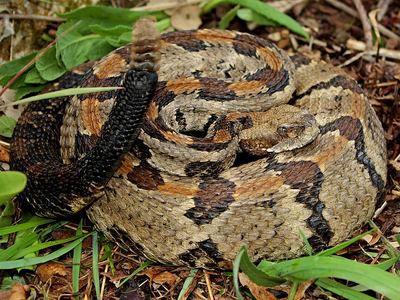
One species of this group is listed for Vermont: the timber rattlesnake, with 3 records (0.3% of the state's snake records).
Water snakes and swamp snakes in Vermont
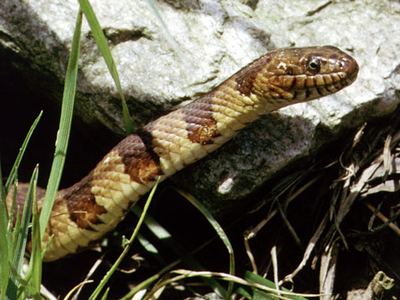
One species of this group is listed for Vermont: the northern water snake, with 21 records (2% of the state's snake records).
Garter snakes and ribbon snakes in Vermont
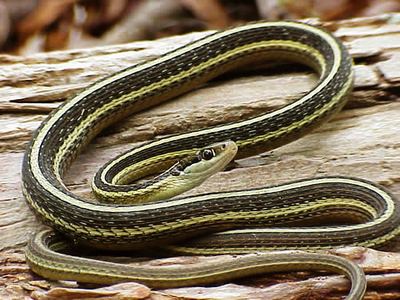
One species of this group is listed for Vermont: the common garter snake, with 462 records (41% of the state's snake records).
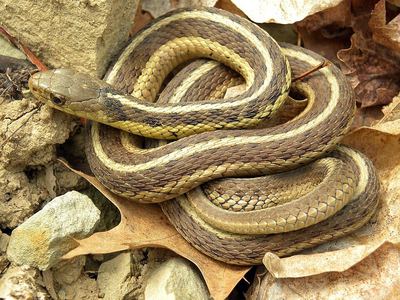
Observation records of the common garter snake in Vermont run mostly April through October, peaking in May; most licensed records come from Chittenden County, Washington County and Windham County.
Rat snakes and corn snakes in Vermont
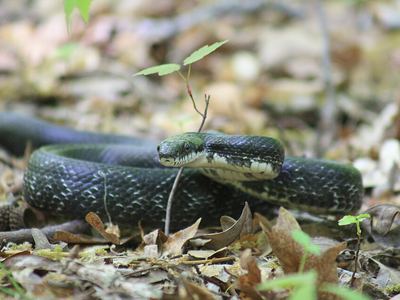
One species of this group is listed for Vermont: the eastern rat snake, with 18 records (2% of the state's snake records).
Kingsnakes and milksnakes in Vermont
One species of this group is listed for Vermont: the eastern milksnake, with 74 records (7% of the state's snake records).
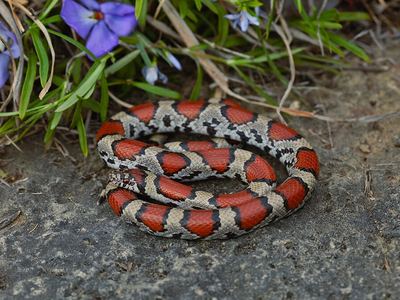
Observation records of the eastern milksnake in Vermont run mostly May through September, peaking in June; most licensed records come from Windsor County, Chittenden County and Orange County.
Green snakes in Vermont
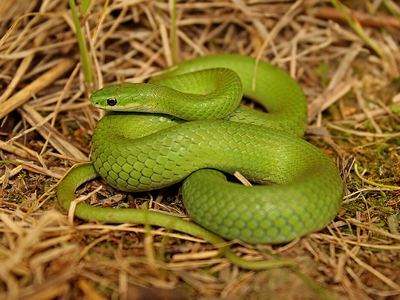
One species of this group is listed for Vermont: the smooth green snake, with 8 records (0.7% of the state's snake records).
Small woodland and burrowing snakes in Vermont
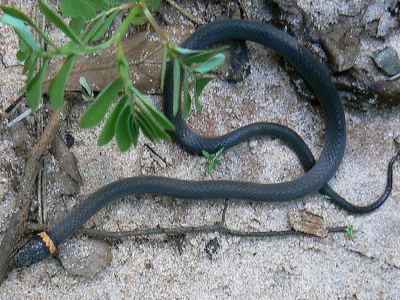
Small woodland and burrowing snakes: three species are listed for Vermont, with 96 records (8% of the state's snake records). The most recorded is the red-bellied snake (57), ahead of the ring-necked snake (22).
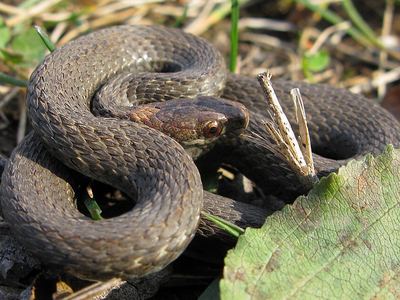
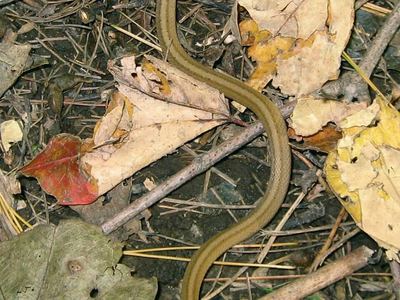
Observation records of the red-bellied snake in Vermont run mostly April through September, peaking in September; most licensed records come from Lamoille County, Washington County and Rutland County.
Where in Vermont are snakes recorded most?
Orange County dominates: 44% of the state's licensed snake records come from it alone, and the top five counties hold 81%. 14 of Vermont's 14 counties have at least one licensed snake record.
| # | County | Records | Share |
|---|---|---|---|
| 1 | Orange County | 498 | 44.0% |
| 2 | Chittenden County | 182 | 16.1% |
| 3 | Rutland County | 91 | 8.0% |
| 4 | Washington County | 75 | 6.6% |
| 5 | Windsor County | 69 | 6.1% |
| 6 | Windham County | 66 | 5.8% |
| 7 | Lamoille County | 42 | 3.7% |
| 8 | Addison County | 40 | 3.5% |
| 9 | Bennington County | 22 | 1.9% |
| 10 | Caledonia County | 11 | 1.0% |
| 11 | Orleans County | 10 | 0.9% |
| 12 | Essex County | 10 | 0.9% |
When do snakes come out in Vermont?
Observation records of snakes in Vermont run mostly May through October, peaking in June with 24% of them. December through February together hold under 2% of the records, so snakes in Vermont are rarely recorded in winter. The sharpest rise comes from April to May.
| Jan | Feb | Mar | Apr | May | Jun | Jul | Aug | Sep | Oct | Nov | Dec |
|---|---|---|---|---|---|---|---|---|---|---|---|
| 0% | 0% | 1% | 8% | 17% | 24% | 15% | 13% | 15% | 8% | 0% | 0% |
Snakes: Vermont compared with its neighbors
Vermont ranks 44th of 50 states by the number of snake species listed, level with Maine, Montana and New Hampshire; Texas leads with 86 species.
Of the three states bordering Vermont, New York and Massachusetts list more snake species; New Hampshire lists as many (Vermont: 9 species; New York 17, Massachusetts 13, New Hampshire 9).
What snakes are in Vermont? All 9 species
Ranked by licensed records in Vermont. Species with a profile page are linked.
| # | Species | Family | Records | Share |
|---|---|---|---|---|
| 1 | Common garter snake Thamnophis sirtalis | Colubridae | 462 | 40.8% |
| 2 | Eastern milksnake Lampropeltis triangulum | Colubridae | 74 | 6.5% |
| 3 | Red-bellied snake Storeria occipitomaculata | Colubridae | 57 | 5.0% |
| 4 | Ring-necked snake Diadophis punctatus | Colubridae | 22 | 1.9% |
| 5 | Northern water snake Nerodia sipedon | Colubridae | 21 | 1.9% |
| 6 | Eastern rat snake Pantherophis alleghaniensis | Colubridae | 18 | 1.6% |
| 7 | DeKay's brown snake Storeria dekayi | Colubridae | 17 | 1.5% |
| 8 | Smooth green snake Opheodrys vernalis | Colubridae | 8 | 0.7% |
| 9 | Timber rattlesnake venomous Crotalus horridus | Viperidae | 3 | 0.3% |
Also recorded in Vermont, fewer than 10 times
Beyond the main list, one snake species is known from Vermont by only six records of any license. It may be a genuine rarity at the edge of its range, or a stray, a released pet or an old misidentification, so treat it as unconfirmed.
Related pages
GBIF records read 2026-09-29. Listed: any license. Counted: CC0/CC BY only. How we count.