Spiders in Vermont
Vermont has 74 spider species on record, each with at least 10 GBIF records in the state, and 1,559 licensed records in all. The most recorded are the goldenrod crab spider, the bold jumper and the black-and-yellow argiope. Medically significant: the northern black widow.
Widow spiders in Vermont
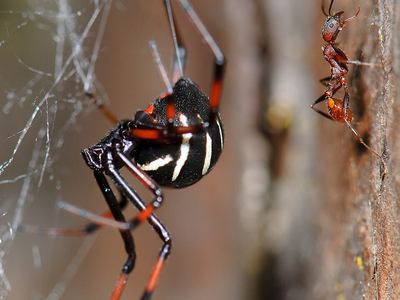
One species of this group is listed for Vermont: the northern black widow, with 0 records (0% of the state's spider records).
Jumping spiders in Vermont
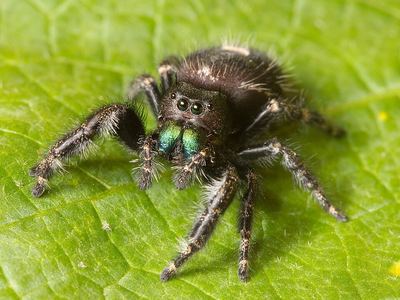
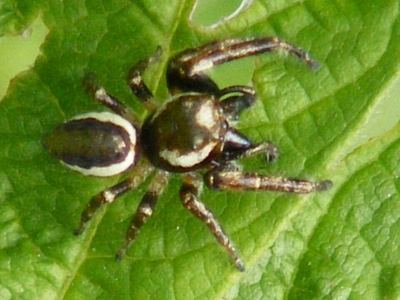
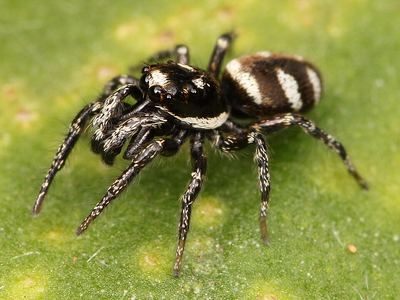
Jumping spiders: 17 species are listed for Vermont, with 356 records (23% of the state's spider records). The most recorded is the bold jumper (114), ahead of the bronze jumper (55).
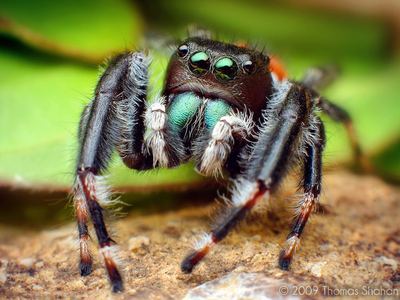
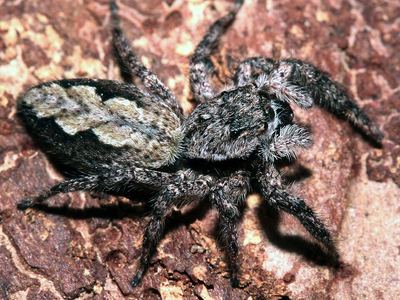
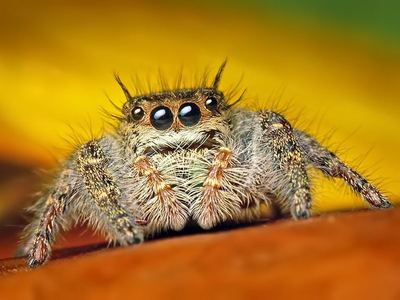
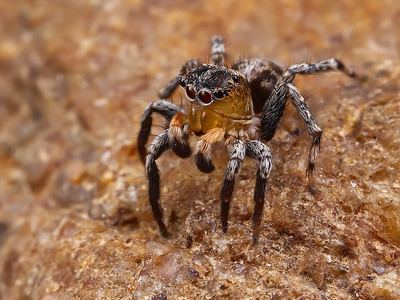
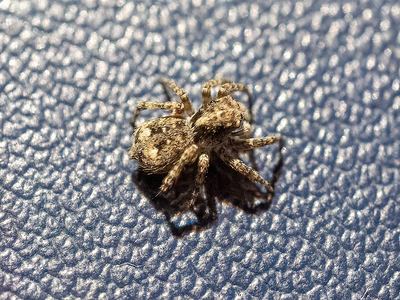
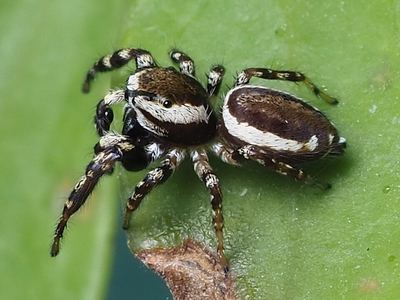
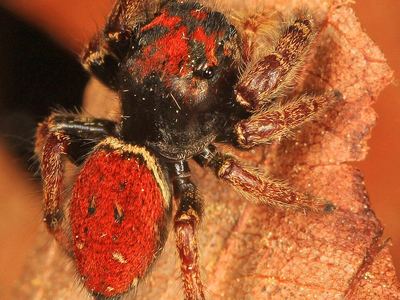
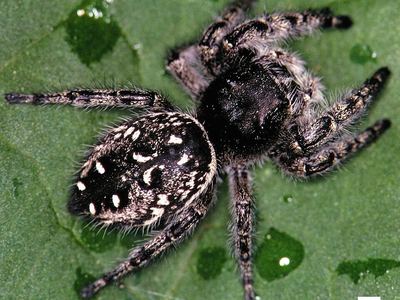
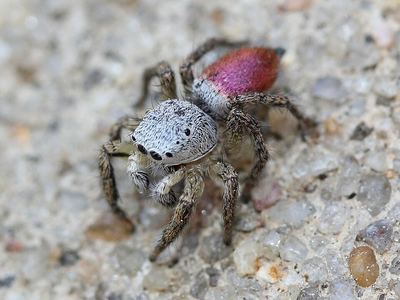
Plus five: Hoy's jumper, Myrmarachne formicaria, Common Hentz jumping spider, Hart's jumping spider, White-jawed jumping spider.
Observation records of the bold jumper in Vermont run mostly April through October, peaking in June; most licensed records come from Chittenden County, Washington County and Rutland County. Observation records of the bronze jumper in Vermont run mostly May through October, peaking in September; most licensed records come from Chittenden County, Windham County and Windsor County. Observation records of the zebra spider in Vermont run mostly April through September, peaking in June; most licensed records come from Washington County, Chittenden County and Windham County.
Wolf spiders in Vermont
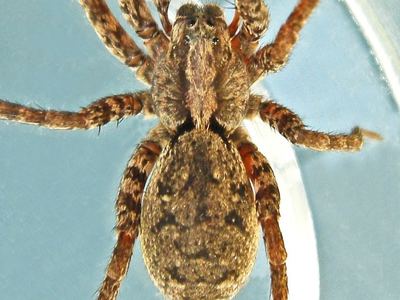
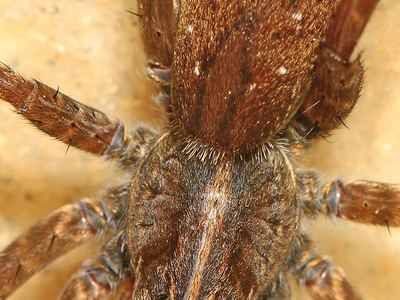
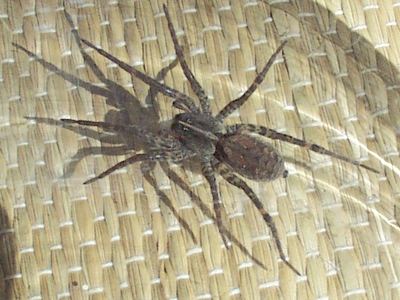
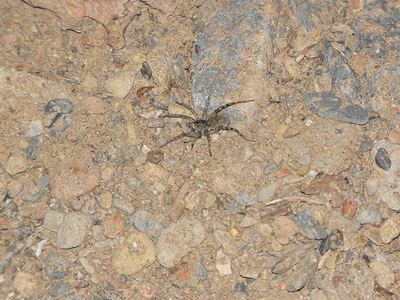
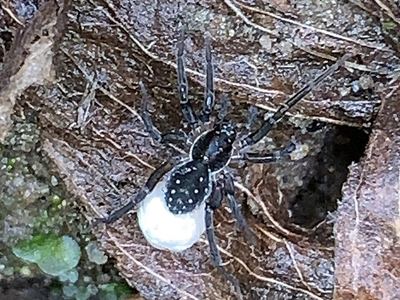
Wolf spiders are a small part of the spider record here: five species with 3% of records between them. The most recorded is the drumming sword wolf spider (18), ahead of the wetland giant wolf spider (15).
Orb weavers in Vermont
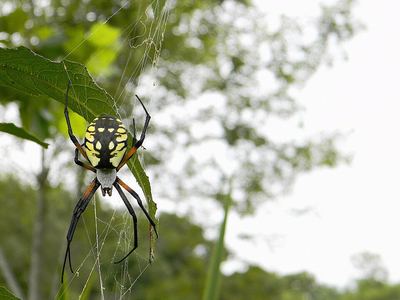
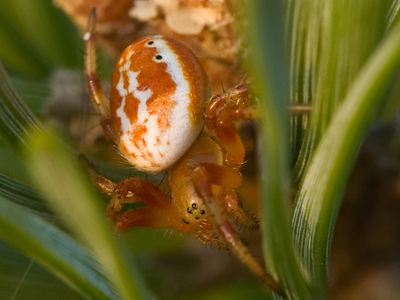
Orb weavers dominate the spider record of Vermont: 18 species and 29% of all records. The most recorded is the black-and-yellow argiope (111), ahead of the sixspotted orbweaver (69).
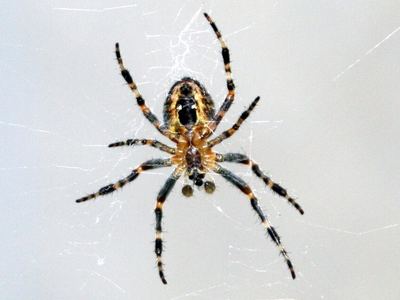
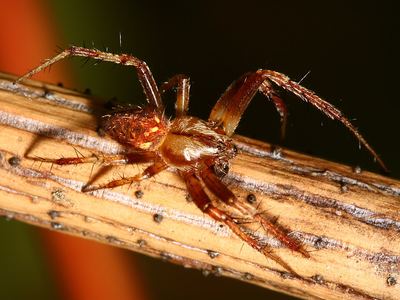
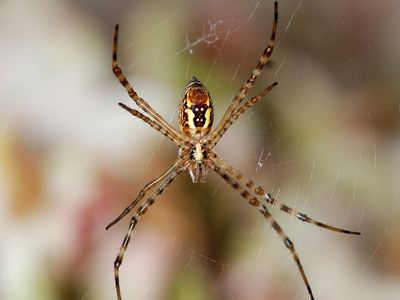
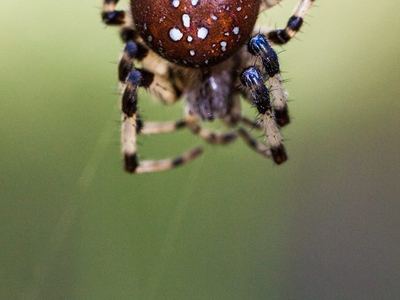
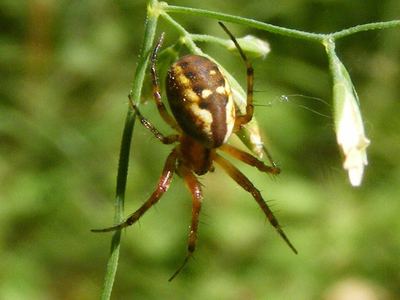
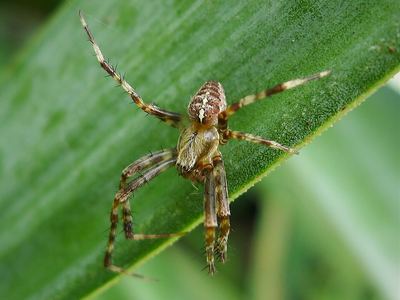
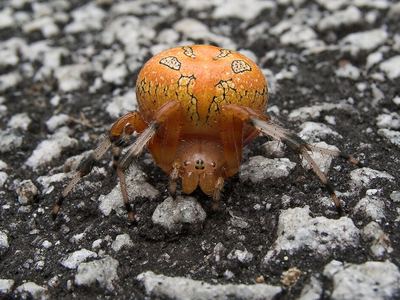
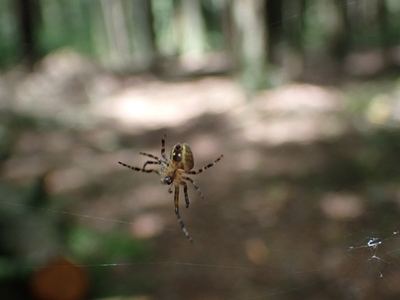
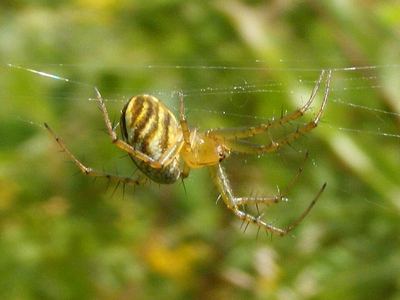
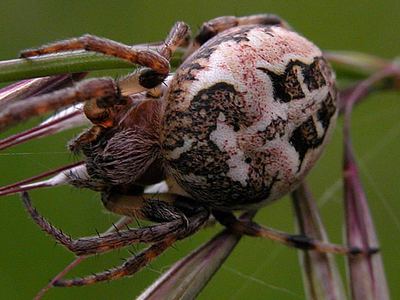
Plus six: Bridge orbweaver, Fierce orbweaver, Cone-shaped orbweaver, Spotted orbweaver, Giant lichen orbweaver, Starbellied orbweaver.
Observation records of the black-and-yellow argiope in Vermont run mostly July through September, peaking in August; most licensed records come from Chittenden County, Washington County and Windsor County. Observation records of the sixspotted orbweaver in Vermont run mostly May through October, peaking in June; most licensed records come from Chittenden County, Washington County and Windsor County. Observation records of the barn spider in Vermont run mostly May through September, peaking in September; most licensed records come from Chittenden County, Washington County and Windham County.
Long-jawed orb weavers in Vermont
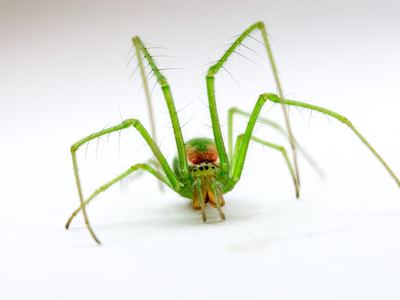
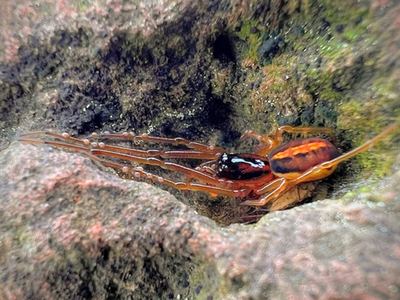
Long-jawed orb weavers are a small part of the spider record here: four species with 1% of records between them. The most recorded is the orchard orbweaver (8), ahead of the eastern cave long-jawed spider (3).
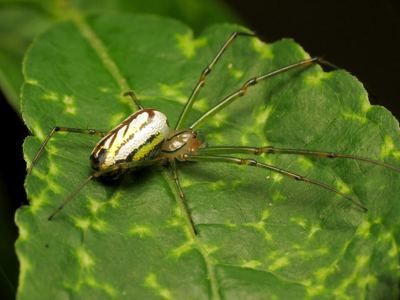
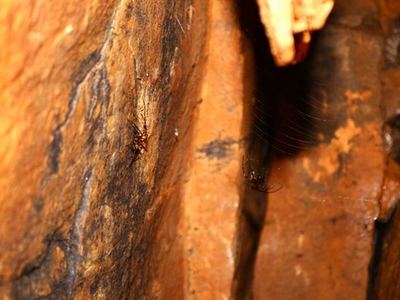
Fishing and nursery web spiders in Vermont
Fishing and nursery web spiders: five species are listed for Vermont, with 165 records (11% of the state's spider records). The most recorded is the nursery web spider (66), ahead of the dark fishing spider (59).
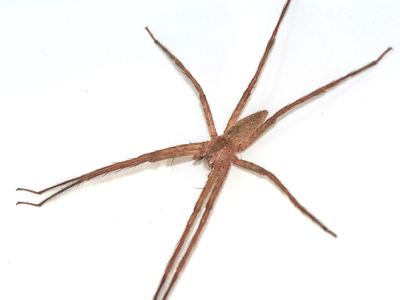
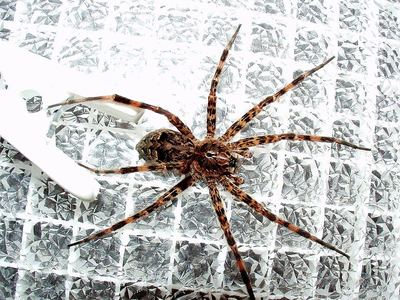
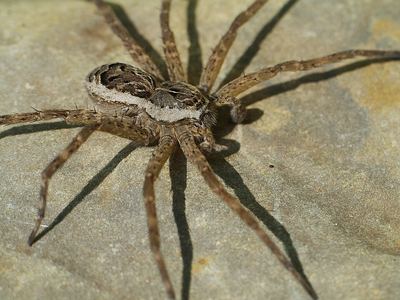
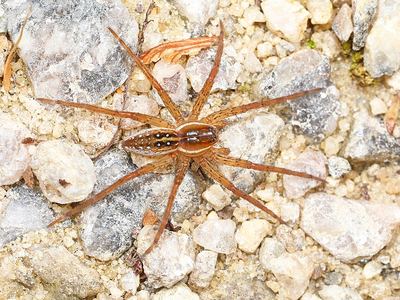
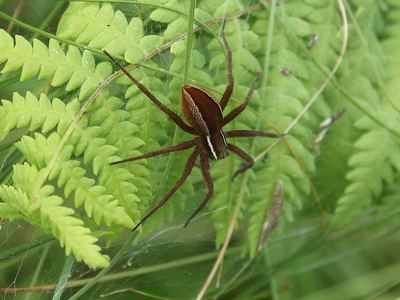
Observation records of the nursery web spider in Vermont run mostly May through October, peaking in July; most licensed records come from Windsor County, Chittenden County and Windham County. Observation records of the dark fishing spider in Vermont run mostly April through September, peaking in May; most licensed records come from Chittenden County, Windsor County and Washington County.
Crab spiders in Vermont
Crab spiders: eight species are listed for Vermont, with 256 records (16% of the state's spider records). The most recorded is the goldenrod crab spider (230), ahead of the American green crab spider (6).
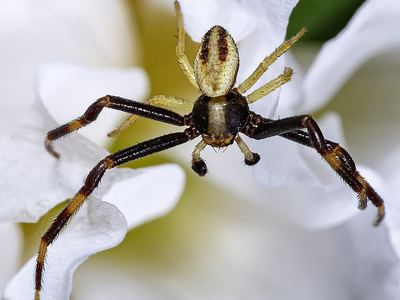
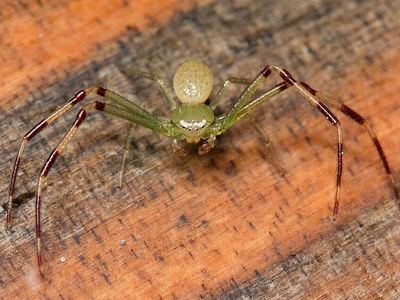
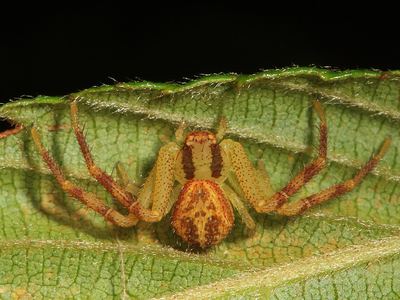
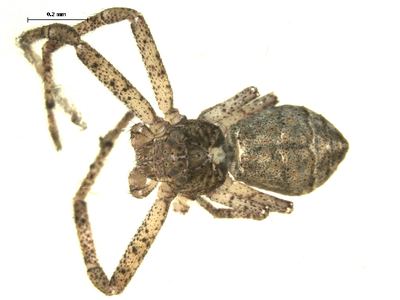
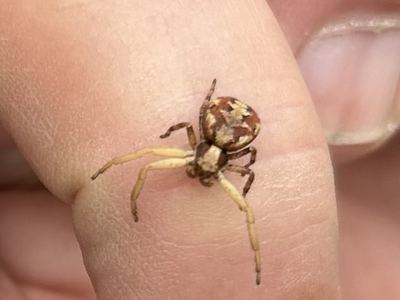
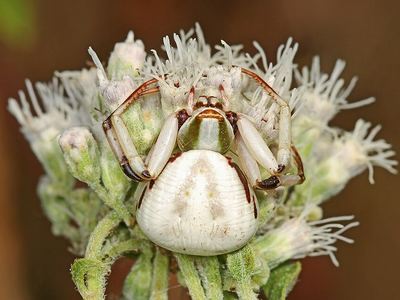
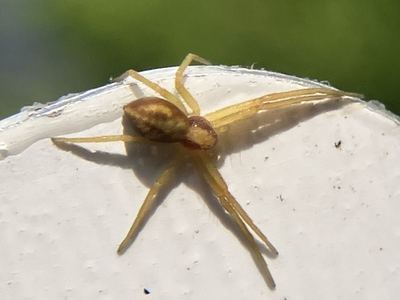
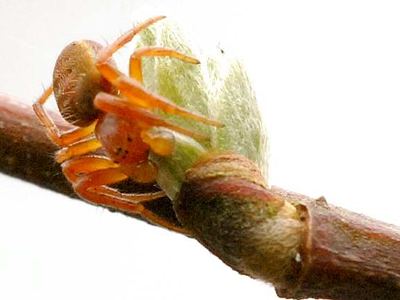
Observation records of the goldenrod crab spider in Vermont run mostly May through August, peaking in July; most licensed records come from Chittenden County, Washington County and Windsor County.
Cobweb spiders in Vermont
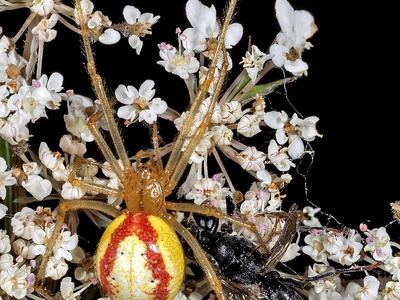
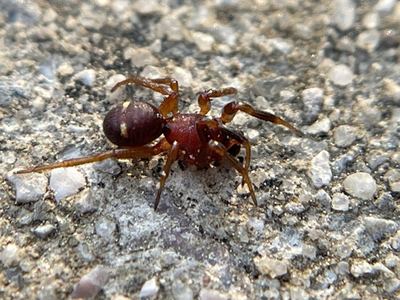
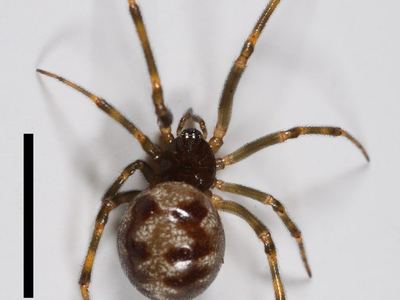
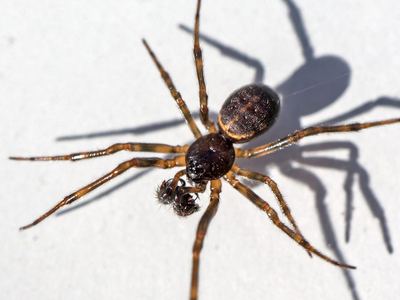
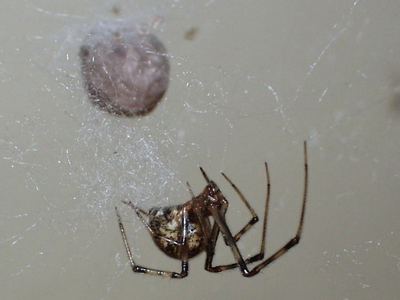
Cobweb spiders are a small part of the spider record here: five species with 2% of records between them. The most recorded is the common candy-striped spider (19), ahead of the twospotted cobweb spider (4).
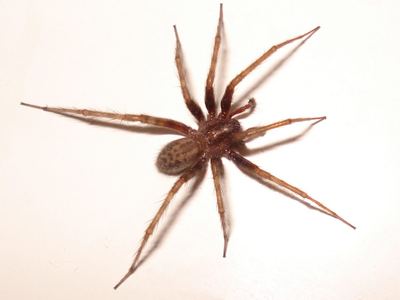
Funnel weavers and grass spiders in Vermont
One species of this group is listed for Vermont: the barn funnel weaver, with 2 records (0.1% of the state's spider records).
Sheetweb and dwarf spiders in Vermont
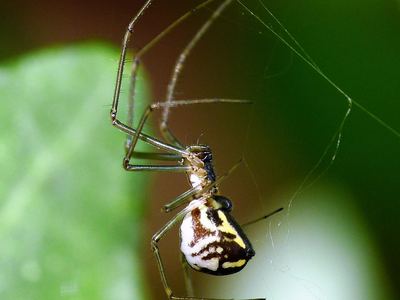
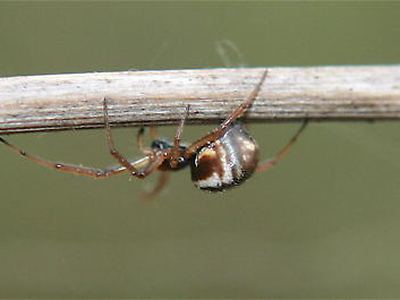
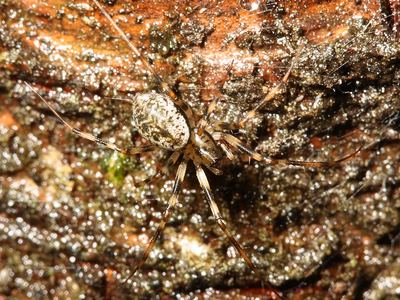
Sheetweb and dwarf spiders are a small part of the spider record here: three species with 1% of records between them. The most recorded is the filmy dome spider (12), ahead of the bowl and doily spider (3).
Ground and sac spiders in Vermont
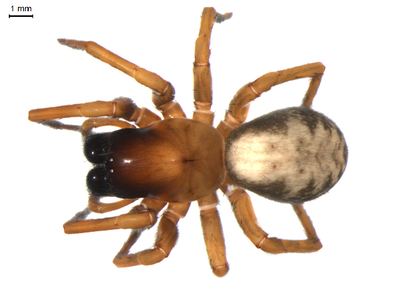
Ground and sac spiders: three species are listed for Vermont, with 47 records (3% of the state's spider records). The most recorded is the parson spider (39), ahead of the broad-faced sac spider (5).
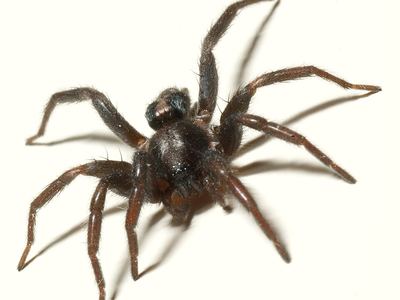
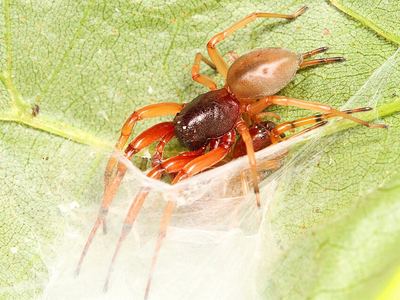
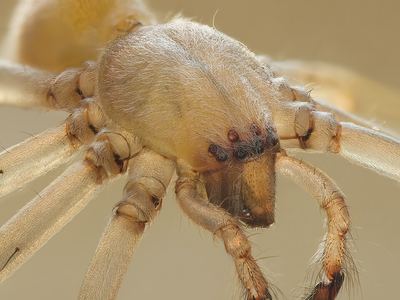
Observation records of the parson spider in Vermont run mostly February through September, peaking in April; most licensed records come from Windsor County, Washington County and Bennington County.
Other spiders in Vermont
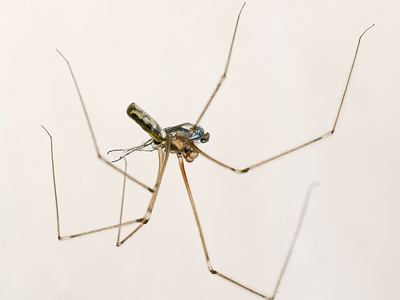
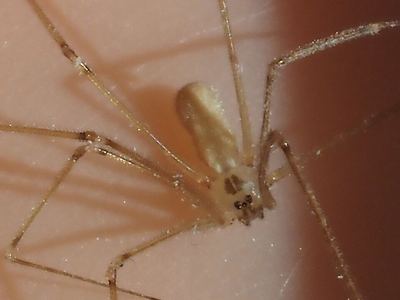
Other spiders are a small part of the spider record here: four species with 1% of records between them. The most recorded is the longbodied cellar spider (13), ahead of the Bennett's laceweaver (1).
Where in Vermont are spiders recorded most?
Chittenden County dominates: 32% of the state's licensed spider records come from it alone, and the top five counties hold 80%. 14 of Vermont's 14 counties have at least one licensed spider record.
| # | County | Records | Share |
|---|---|---|---|
| 1 | Chittenden County | 503 | 32.3% |
| 2 | Windsor County | 249 | 16.0% |
| 3 | Washington County | 219 | 14.0% |
| 4 | Windham County | 216 | 13.9% |
| 5 | Orange County | 66 | 4.2% |
| 6 | Rutland County | 63 | 4.0% |
| 7 | Bennington County | 61 | 3.9% |
| 8 | Caledonia County | 53 | 3.4% |
| 9 | Addison County | 43 | 2.8% |
| 10 | Grand Isle County | 22 | 1.4% |
| 11 | Lamoille County | 19 | 1.2% |
| 12 | Franklin County | 18 | 1.2% |
When do spiders come out in Vermont?
Observation records of spiders in Vermont run mostly May through October, peaking in June with 21% of them. December through February together hold under 2% of the records, so spiders in Vermont are rarely recorded in winter. The sharpest rise comes from May to June.
| Jan | Feb | Mar | Apr | May | Jun | Jul | Aug | Sep | Oct | Nov | Dec |
|---|---|---|---|---|---|---|---|---|---|---|---|
| 1% | 0% | 2% | 5% | 10% | 21% | 19% | 20% | 16% | 5% | 1% | 1% |
Spiders: Vermont compared with its neighbors
Vermont ranks 40th of 50 states by the number of spider species listed; Texas leads with 386 species.
Of the three states bordering Vermont, Massachusetts and New York list more spider species (Vermont: 74 species; Massachusetts 189, New York 149, New Hampshire 72).
What spiders are in Vermont? All 74 species
Ranked by licensed records in Vermont. The table shows the 60 most recorded of 74 listed spiders.
| # | Species | Family | Records | Share |
|---|---|---|---|---|
| 1 | Goldenrod crab spider Misumena vatia | Thomisidae | 230 | 14.8% |
| 2 | Bold jumper Phidippus audax | Salticidae | 114 | 7.3% |
| 3 | Black-and-yellow argiope Argiope aurantia | Araneidae | 111 | 7.1% |
| 4 | Sixspotted orbweaver Araniella displicata | Araneidae | 69 | 4.4% |
| 5 | Nursery web spider Pisaurina mira | Pisauridae | 66 | 4.2% |
| 6 | Dark fishing spider Dolomedes tenebrosus | Pisauridae | 59 | 3.8% |
| 7 | Bronze jumper Eris militaris | Salticidae | 55 | 3.5% |
| 8 | Barn spider Araneus cavaticus | Araneidae | 51 | 3.3% |
| 9 | Zebra spider Salticus scenicus | Salticidae | 47 | 3.0% |
| 10 | Arabesque orbweaver Neoscona arabesca | Araneidae | 41 | 2.6% |
| 11 | Parson spider Herpyllus ecclesiasticus | Gnaphosidae | 39 | 2.5% |
| 12 | Banded garden spider Argiope trifasciata | Araneidae | 33 | 2.1% |
| 13 | Brilliant jumping spider Phidippus clarus | Salticidae | 27 | 1.7% |
| 14 | Familiar jumping spider Platycryptus undatus | Salticidae | 27 | 1.7% |
| 15 | Shamrock orbweaver Araneus trifolium | Araneidae | 26 | 1.7% |
| 16 | Dock spider Dolomedes scriptus | Pisauridae | 24 | 1.5% |
| 17 | Grayish jumping spider Phidippus princeps | Salticidae | 24 | 1.5% |
| 18 | Tuftlegged orbweaver Mangora placida | Araneidae | 23 | 1.5% |
| 19 | Garden spider Araneus diadematus | Araneidae | 20 | 1.3% |
| 20 | Common candy-striped spider Enoplognatha ovata | Theridiidae | 19 | 1.2% |
| 21 | Drumming sword wolf spider Gladicosa gulosa | Lycosidae | 18 | 1.2% |
| 22 | Marbled orbweaver Araneus marmoreus | Araneidae | 18 | 1.2% |
| 23 | Nordmann's orbweaver spider Araneus nordmanni | Araneidae | 16 | 1.0% |
| 24 | Flea jumping spider Naphrys pulex | Salticidae | 15 | 1.0% |
| 25 | Wetland giant wolf spider Tigrosa helluo | Lycosidae | 15 | 1.0% |
| 26 | Asian wall jumper Attulus fasciger | Salticidae | 13 | 0.8% |
| 27 | Lined orbweaver Mangora gibberosa | Araneidae | 13 | 0.8% |
| 28 | Longbodied cellar spider Pholcus phalangioides | Pholcidae | 13 | 0.8% |
| 29 | Sixspotted fishing spider Dolomedes triton | Pisauridae | 13 | 0.8% |
| 30 | Filmy dome spider Neriene radiata | Linyphiidae | 12 | 0.8% |
| 31 | Furrow orbweaver Larinioides cornutus | Araneidae | 12 | 0.8% |
| 32 | Bridge orbweaver Larinioides sclopetarius | Araneidae | 11 | 0.7% |
| 33 | Orchard orbweaver Leucauge venusta | Tetragnathidae | 8 | 0.5% |
| 34 | Common white-cheeked jumping spider Pelegrina proterva | Salticidae | 7 | 0.4% |
| 35 | Whitman's jumping spider Phidippus whitmani | Salticidae | 7 | 0.4% |
| 36 | American green crab spider Misumessus oblongus | Thomisidae | 6 | 0.4% |
| 37 | Broad-faced sac spider Trachelas tranquillus | Trachelidae | 5 | 0.3% |
| 38 | Fierce orbweaver Araneus saevus | Araneidae | 5 | 0.3% |
| 39 | Flower crab spider Mecaphesa asperata | Thomisidae | 5 | 0.3% |
| 40 | Forest wolf spider Hogna frondicola | Lycosidae | 5 | 0.3% |
| 41 | Marbled purple jumper Phidippus purpuratus | Salticidae | 5 | 0.3% |
| 42 | Tuberculated crab spider Tmarus angulatus | Thomisidae | 5 | 0.3% |
| 43 | Habronattus decorus | Salticidae | 4 | 0.3% |
| 44 | Punctated ground crab spider Xysticus punctatus | Thomisidae | 4 | 0.3% |
| 45 | Twospotted cobweb spider Asagena americana | Theridiidae | 4 | 0.3% |
| 46 | Bowl and doily spider Frontinella pyramitela | Linyphiidae | 3 | 0.2% |
| 47 | Cone-shaped orbweaver Cyclosa conica | Araneidae | 3 | 0.2% |
| 48 | Dolomedes striatus | Pisauridae | 3 | 0.2% |
| 49 | Eastern cave long-jawed spider Meta ovalis | Tetragnathidae | 3 | 0.2% |
| 50 | Green long-jawed orbweaver Tetragnatha viridis | Tetragnathidae | 3 | 0.2% |
| 51 | Hoy's jumper Evarcha hoyi | Salticidae | 3 | 0.2% |
| 52 | Myrmarachne formicaria | Salticidae | 3 | 0.2% |
| 53 | Northern yellow sac spider Cheiracanthium mildei | Cheiracanthiidae | 3 | 0.2% |
| 54 | Spotted orbweaver Neoscona crucifera | Araneidae | 3 | 0.2% |
| 55 | Triangulate bud spider Steatoda triangulosa | Theridiidae | 3 | 0.2% |
| 56 | Whitebanded crab spider Misumenoides formosipes | Thomisidae | 3 | 0.2% |
| 57 | Barn funnel weaver Tegenaria domestica | Agelenidae | 2 | 0.1% |
| 58 | Big-eyed thick long-jawed spider Pachygnatha autumnalis | Tetragnathidae | 2 | 0.1% |
| 59 | Boreal combfoot Steatoda borealis | Theridiidae | 2 | 0.1% |
| 60 | Common Hentz jumping spider Hentzia palmarum | Salticidae | 2 | 0.1% |
Related pages
GBIF records read 2026-09-29. Listed: any license. Counted: CC0/CC BY only. How we count.