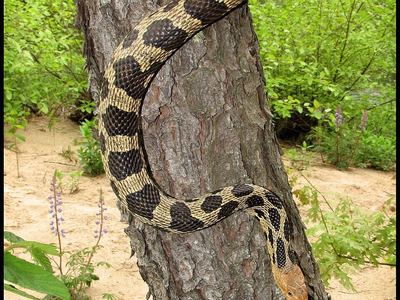
Western rat snake (Pantherophis obsoletus)
The western rat snake is a non-venomous snake in the family Colubridae. GBIF holds 3,267 licensed U.S. records of it; it reaches our listing threshold in 8 states, most of all Texas (1,769), Oklahoma (497) and Kansas (443). Its observation records peak in May.
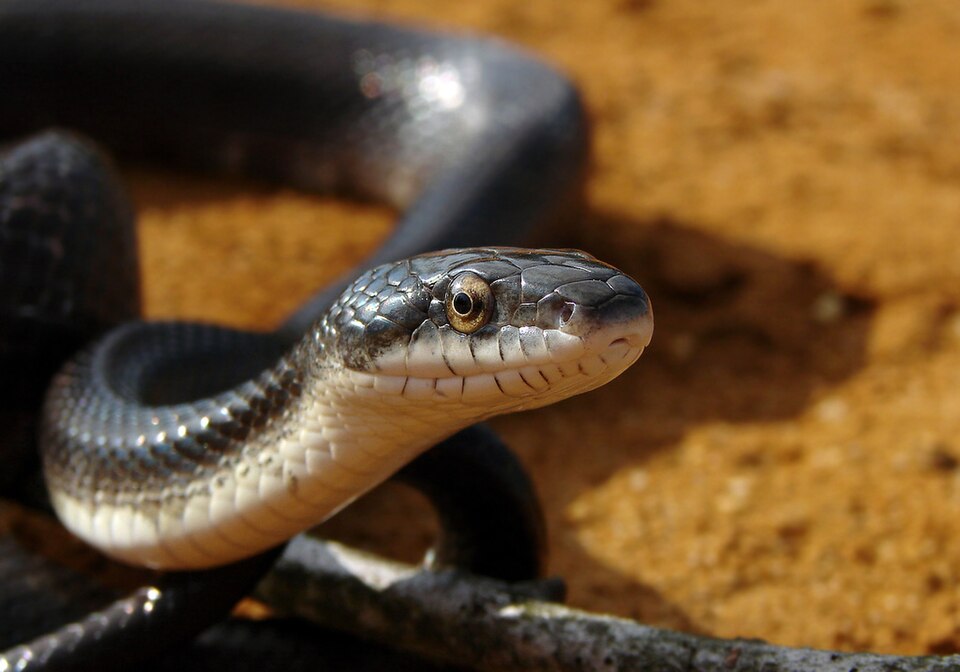

Pantherophis obsoletus, also known commonly as the western rat snake, black rat snake (not to be confused with Pantherophis alleghaniensis), pilot black snake, or simply black snake, is a nonvenomous species of snake in the family Colubridae. The species is native to central North America west of the Mississippi River. No subspecies are recognized as being valid.
From Wikipedia: Pantherophis obsoletus, text under CC BY-SA 4.0.
Is the western rat snake poisonous or venomous?
No. The western rat snake is non-venomous: it belongs to the family Colubridae, not to the pit vipers or coral snakes, the only U.S. land snakes with medically dangerous venom. It may bite if handled; clean the bite like any small wound.
Which states have the western rat snake?
The western rat snake's U.S. record is concentrated: Texas alone holds 54% of licensed records. It is listed in 8 states in all; the next are Oklahoma (497), Kansas (443) and Louisiana (169).
GBIF records filed under this name in Connecticut, Delaware, Maryland, New Jersey, North Carolina, South Carolina, Vermont and Virginia are counted as the eastern rat snake, the species that lives there. Records filed under this name in Alabama, Florida, Georgia, Illinois, Indiana, Kentucky, Michigan, Mississippi, New York, Ohio, Pennsylvania, Tennessee and West Virginia are not counted: there the name stands for another species, or the record lies outside this species’ range.
| # | State | Records | Share of state snakes | Rank in state |
|---|---|---|---|---|
| 1 | Texas | 1,769 | 4.3% | 7th of 86 |
| 2 | Oklahoma | 497 | 3.7% | 8th of 50 |
| 3 | Kansas | 443 | 3.0% | 11th of 44 |
| 4 | Louisiana | 169 | 3.4% | 10th of 41 |
| 5 | Missouri | 169 | 9.0% | 4th of 36 |
| 6 | Arkansas | 144 | 2.7% | 5th of 36 |
| 7 | Nebraska | 60 | 2.5% | 9th of 31 |
| 8 | Iowa | 14 | 1.3% | 17th of 22 |
When is the western rat snake seen?
Across the U.S., observation records of the western rat snake run mostly March through October, peaking in May with 27% of them. Winter (December to February) holds 4% of them.
Season by state
Among states whose main season falls within one calendar year, it starts earliest in February (Louisiana) and latest in May (Nebraska). The most common peak month is May, shared by Arkansas, Kansas, Missouri, Oklahoma and Texas.
| State | Main season | Peak month | Observation records |
|---|---|---|---|
| Texas | March through October | May | 903 |
| Missouri | April through October | May | 132 |
| Kansas | April through October | May | 120 |
| Arkansas | April through October | May | 115 |
| Oklahoma | April through November | May | 88 |
| Louisiana | February through September | April | 65 |
| Nebraska | May through October | October | 35 |
Where the western rat snake is recorded in each state
Texas
Texas holds 1,769 licensed records, the 7th most recorded of 86 snakes listed there. Its observation records in Texas run mostly March through October, peaking in May; most licensed records come from Travis County, Brazos County and Williamson County. Next come Bexar County (73) and Harris County (61).
Oklahoma
Oklahoma holds 497 licensed records, the 8th most recorded of 50 snakes listed there. Its observation records in Oklahoma run mostly April through November, peaking in May; most licensed records come from Cleveland County, Oklahoma County and Pottawatomie County. Next come Tulsa County (27) and Comanche County (24).
Kansas
Kansas holds 443 licensed records, the 11th most recorded of 44 snakes listed there. Its observation records in Kansas run mostly April through October, peaking in May; most licensed records come from Douglas County, Marshall County and Cherokee County. Next come Riley County (23) and Linn County (15).
Louisiana
Louisiana holds 169 licensed records, the 10th most recorded of 41 snakes listed there. Its observation records in Louisiana run mostly February through September, peaking in April; most licensed records come from East Baton Rouge Parish, Avoyelles Parish and Lafayette Parish. Next come Natchitoches Parish (9) and Iberia Parish (7).
Missouri
Missouri holds 169 licensed records, the 4th most recorded of 36 snakes listed there. Its observation records in Missouri run mostly April through October, peaking in May; most licensed records come from Franklin County, Texas County and St. Louis County. Next come Holt County (12) and Jackson County (9).
Arkansas
Arkansas holds 144 licensed records, the 5th most recorded of 36 snakes listed there. Its observation records in Arkansas run mostly April through October, peaking in May; most licensed records come from Washington County, Columbia County and Benton County. Next come Greene County (8) and Lafayette County (8).
Nebraska
Nebraska holds 60 licensed records, the 9th most recorded of 31 snakes listed there. Its observation records in Nebraska run mostly May through October, peaking in October; most licensed records come from Gage County, Cass County and Pawnee County. Next come Richardson County (6) and Nemaha County (5).
Top counties in the U.S.
| # | County | State | Records | Share of U.S. |
|---|---|---|---|---|
| 1 | Travis County | Texas | 170 | 5.2% |
| 2 | Brazos County | Texas | 114 | 3.5% |
| 3 | Douglas County | Kansas | 93 | 2.8% |
| 4 | Williamson County | Texas | 78 | 2.4% |
| 5 | Bexar County | Texas | 73 | 2.2% |
| 6 | Cleveland County | Oklahoma | 70 | 2.1% |
| 7 | Harris County | Texas | 61 | 1.9% |
| 8 | Bastrop County | Texas | 45 | 1.4% |
| 9 | Milam County | Texas | 43 | 1.3% |
| 10 | Tarrant County | Texas | 43 | 1.3% |
| 11 | Oklahoma County | Oklahoma | 40 | 1.2% |
| 12 | Dallas County | Texas | 40 | 1.2% |
| 13 | Marshall County | Kansas | 37 | 1.1% |
| 14 | Pottawatomie County | Oklahoma | 33 | 1.0% |
| 15 | Kendall County | Texas | 32 | 1.0% |
How recent are the western rat snake records?
Records of the western rat snake span old collections and new observations: 43% date from 2017–2026, and the median record is from 2011. The oldest dated record is from 1881; the busiest year was 2025, with 198 records.
| Decade | Records | Share |
|---|---|---|
| 1880s | 6 | 0.2% |
| 1890s | 4 | 0.1% |
| 1900s | 10 | 0.3% |
| 1910s | 35 | 1.1% |
| 1920s | 113 | 3.5% |
| 1930s | 157 | 4.9% |
| 1940s | 144 | 4.5% |
| 1950s | 140 | 4.4% |
| 1960s | 188 | 5.9% |
| 1970s | 185 | 5.8% |
| 1980s | 159 | 5.0% |
| 1990s | 110 | 3.5% |
| 2000s | 299 | 9.4% |
| 2010s | 517 | 16.2% |
| 2020s | 1,117 | 35.1% |
Species recorded in the same counties
Of the 102 counties where the western rat snake is most recorded, 60 are also top counties for the speckled kingsnake, more than for any other snake. Venomous species among its neighbors: the eastern copperhead.
| Species | Shared counties |
|---|---|
| Speckled kingsnake | 60 |
| DeKay's brown snake | 56 |
| Eastern copperhead venomous | 51 |
| Eastern racer | 51 |
| Common garter snake | 49 |
| Rough greensnake | 48 |
| Plain-bellied watersnake | 47 |
| Diamondback water snake | 43 |
Related species in the U.S.
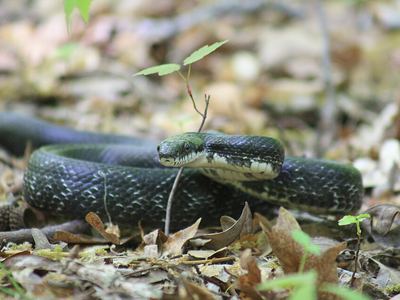
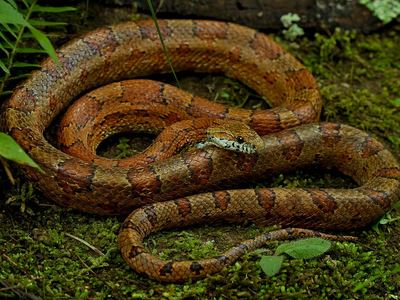
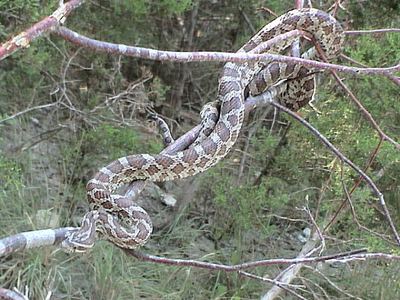
Other species of the genus Pantherophis with profiles here: Eastern rat snake, Corn snake, Great Plains rat snake and Eastern fox snake.
GBIF records read 2026-09-29. Listed: any license. Counted: CC0/CC BY only. How we count.