Snakes in Texas
Texas has 86 snake species on record, each with at least 10 GBIF records in the state, and 41,014 licensed records in all. The most recorded are the western diamondback rattlesnake, the western ribbon snake and the plain-bellied watersnake. Twelve of them are venomous.
Rattlesnakes in Texas
Rattlesnakes: eight species are listed for Texas, with 4,603 records (11% of the state's snake records). The most recorded is the western diamondback rattlesnake (2,667), ahead of the prairie rattlesnake (476).
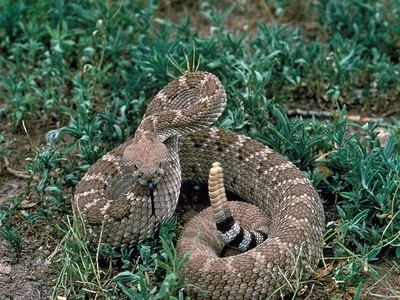
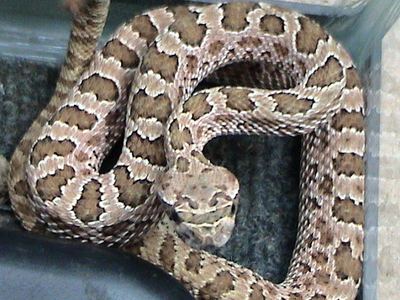
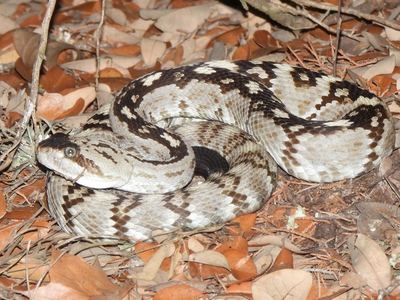
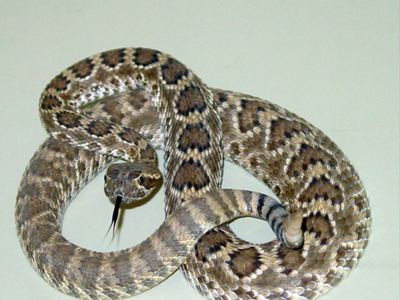
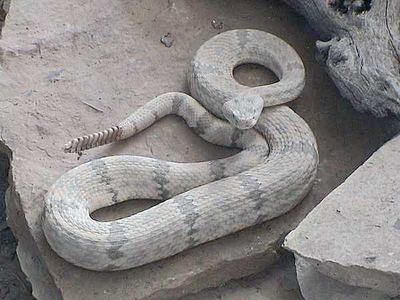
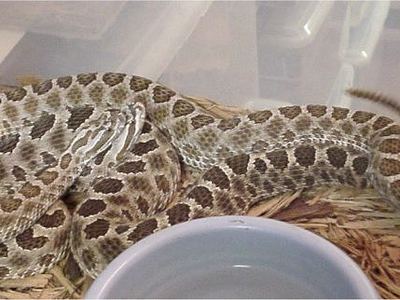
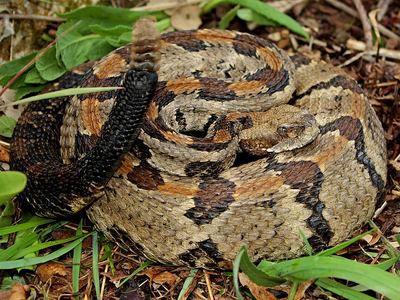
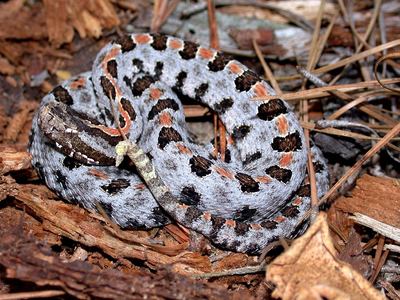
Observation records of the western diamondback rattlesnake in Texas run mostly March through October, peaking in April; most licensed records come from Brewster County, El Paso County and Kent County. Observation records of the prairie rattlesnake in Texas run mostly April through September, peaking in July; most licensed records come from El Paso County, Randall County and Andrews County. Observation records of the eastern black-tailed rattlesnake in Texas run mostly April through October, peaking in August; most licensed records come from Brewster County, Jeff Davis County and El Paso County.
Copperheads and cottonmouths in Texas
Copperheads and cottonmouths: three species are listed for Texas, with 2,587 records (6% of the state's snake records). The most recorded is the eastern copperhead (1,188), ahead of the northern cottonmouth (1,025).
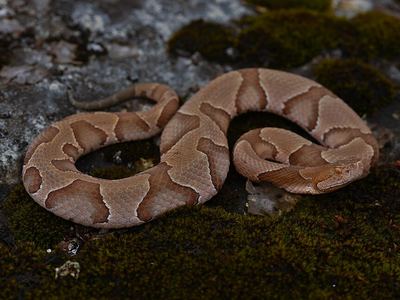
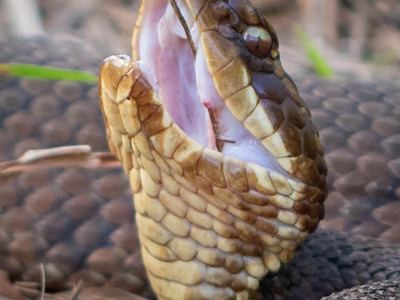
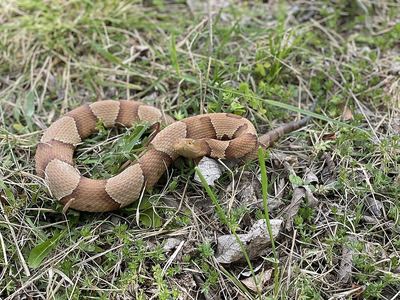
Observation records of the eastern copperhead in Texas run mostly March through October, peaking in April; most licensed records come from Brazos County, Terrell County and Wharton County. Observation records of the northern cottonmouth in Texas run mostly March through November, peaking in May; most licensed records come from Harris County, Denton County and Hardin County. Observation records of the broad-banded copperhead in Texas run mostly March through October, peaking in May; most licensed records come from Wilson County, Dallas County and Tarrant County.
Coral snakes in Texas
One species of this group is listed for Texas: the Texas coral snake, with 571 records (1% of the state's snake records).
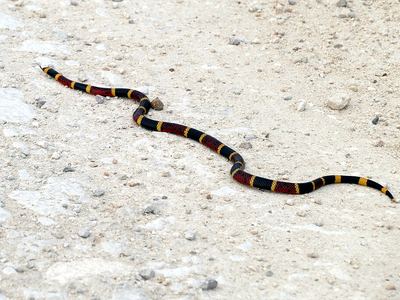
Observation records of the Texas coral snake in Texas run mostly March through November, peaking in April; most licensed records come from Travis County, Harris County and Brazos County.
Water snakes and swamp snakes in Texas
Water snakes and swamp snakes: eleven species are listed for Texas, with 5,778 records (14% of the state's snake records). The most recorded is the plain-bellied watersnake (2,226), ahead of the diamondback water snake (1,612).
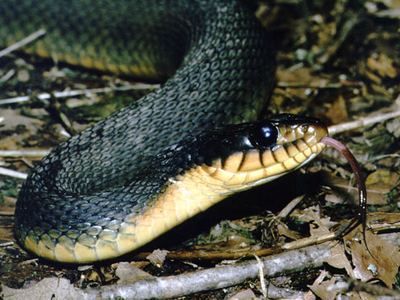
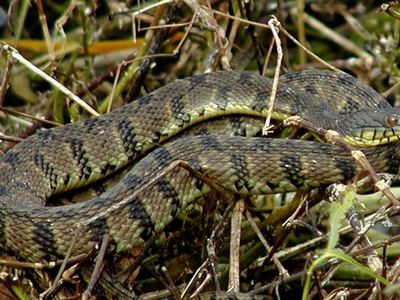
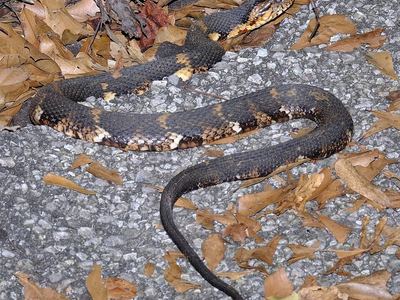
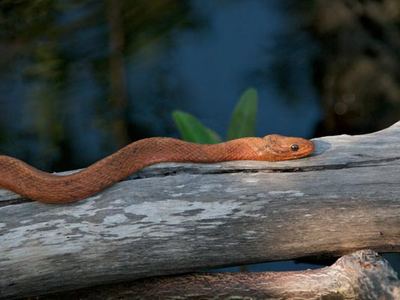
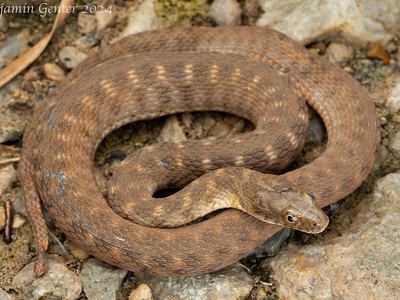
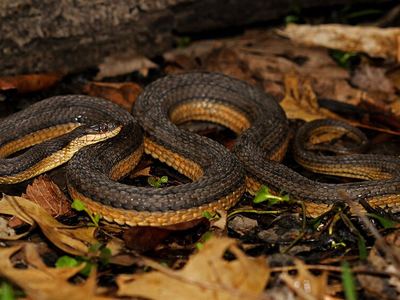
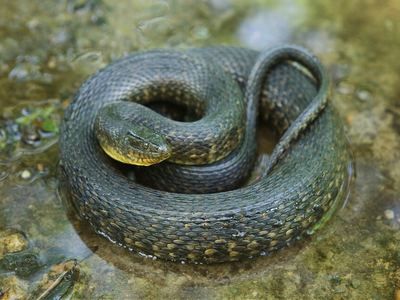
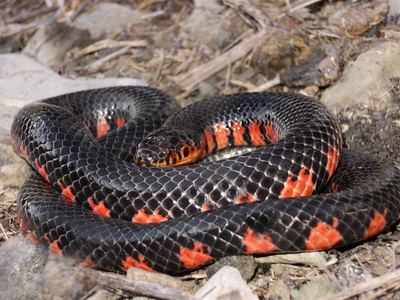
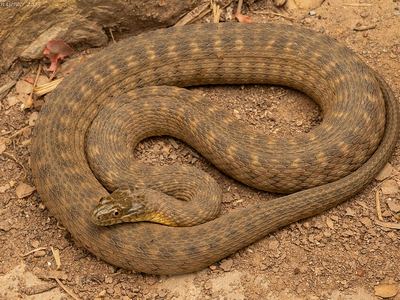
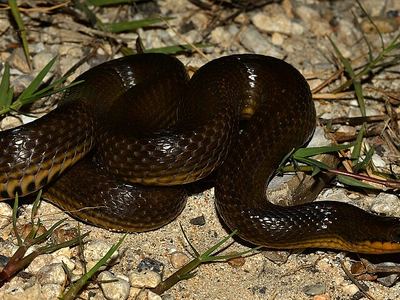
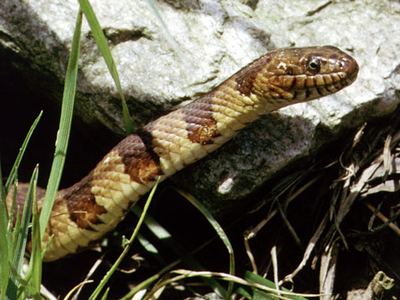
Observation records of the plain-bellied watersnake in Texas run mostly March through October, peaking in April; most licensed records come from Travis County, Harris County and Williamson County. Observation records of the diamondback water snake in Texas run mostly March through October, peaking in April; most licensed records come from Parker County, Brazos County and Travis County. Observation records of the southern watersnake in Texas run mostly February through October, peaking in April; most licensed records come from Harris County, Brazos County and Chambers County.
Garter snakes and ribbon snakes in Texas
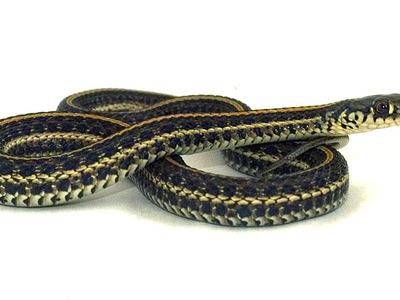
Garter snakes and ribbon snakes: six species are listed for Texas, with 5,082 records (12% of the state's snake records). The most recorded is the western ribbon snake (2,587), ahead of the checkered garter snake (1,851).
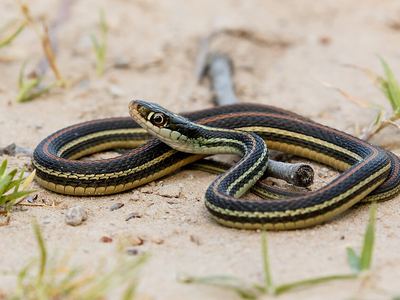
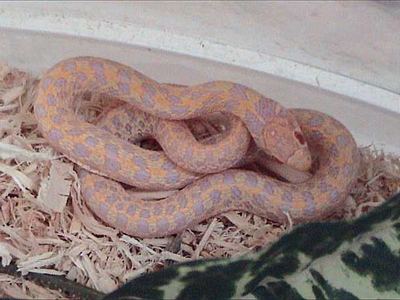
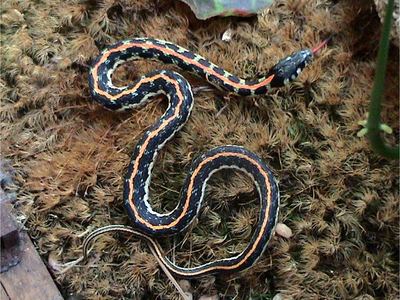
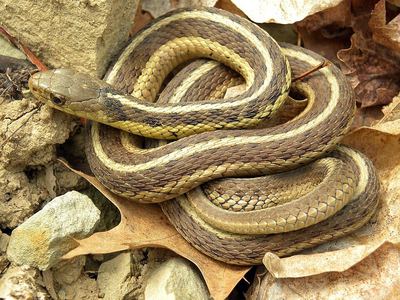
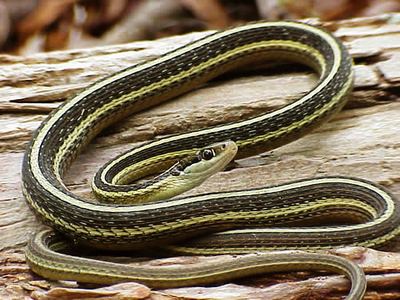
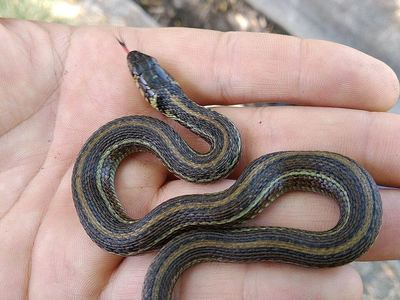
Observation records of the western ribbon snake in Texas run mostly March through November, peaking in April; most licensed records come from Travis County, Harris County and Cameron County. Observation records of the checkered garter snake in Texas run mostly March through October, peaking in July; most licensed records come from Jeff Davis County, McMullen County and Frio County. Observation records of the blackneck garter snake in Texas run mostly March through September, peaking in May; most licensed records come from Brewster County, Travis County and Jeff Davis County.
Rat snakes and corn snakes in Texas
Rat snakes and corn snakes: six species are listed for Texas, with 3,146 records (8% of the state's snake records). The most recorded is the western rat snake (1,769), ahead of the Great Plains rat snake (709).
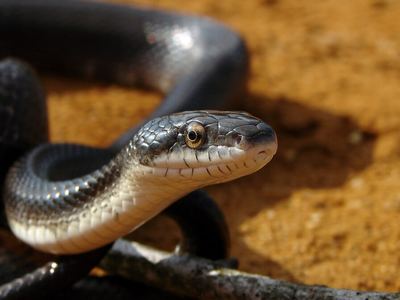
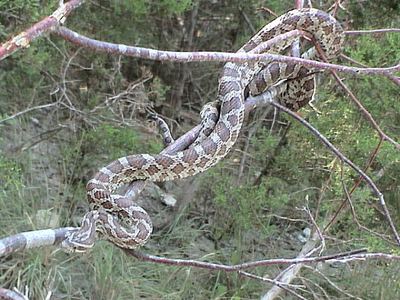
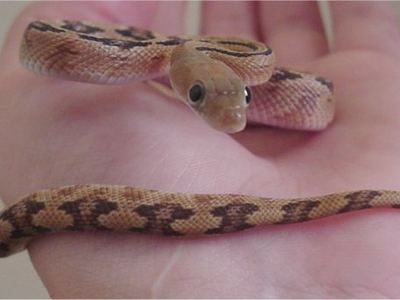
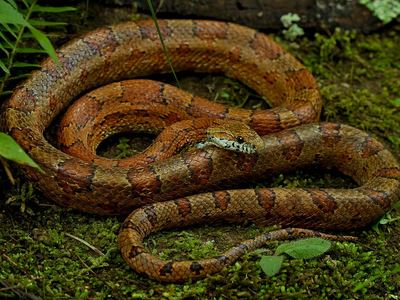
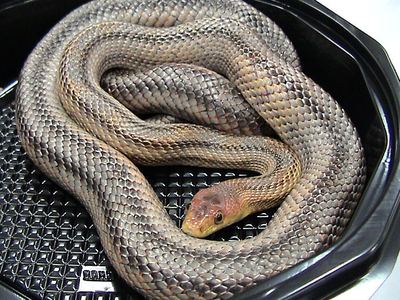
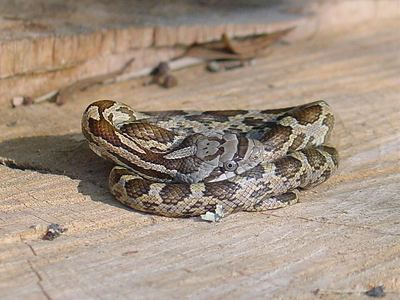
Observation records of the western rat snake in Texas run mostly March through October, peaking in May; most licensed records come from Travis County, Brazos County and Williamson County. Observation records of the Great Plains rat snake in Texas run mostly March through October, peaking in May; most licensed records come from Hidalgo County, Brewster County and Bexar County. Observation records of the Trans-Pecos rat snake in Texas run mostly April through August, peaking in June; most licensed records come from El Paso County, Brewster County and Val Verde County.
Kingsnakes and milksnakes in Texas
Kingsnakes and milksnakes are a small part of the snake record here: eight species with 2% of records between them. The most recorded is the prairie kingsnake (238), ahead of the grey-banded kingsnake (187).
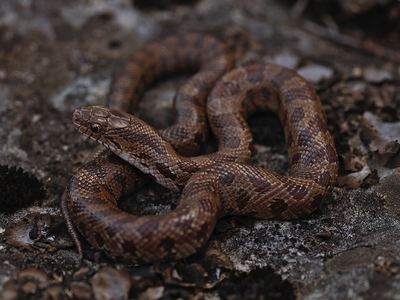
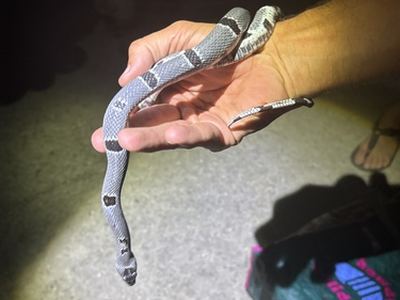
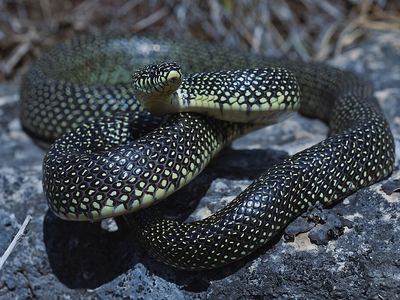
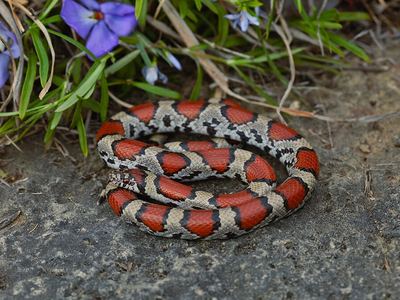
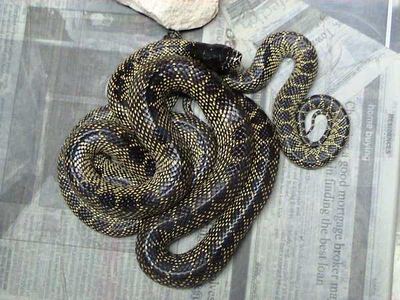
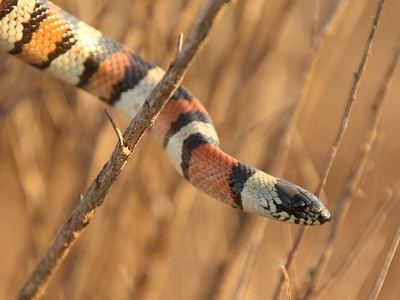
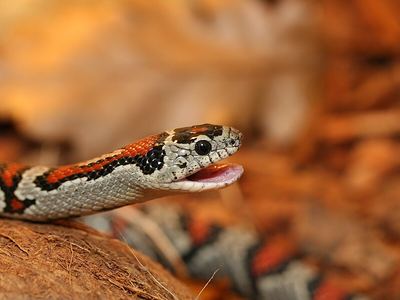
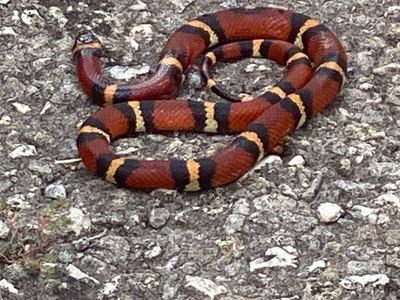
Most licensed records of the prairie kingsnake in Texas come from Wichita County, Brazos County and Harris County. Most licensed records of the grey-banded kingsnake in Texas come from Val Verde County, Terrell County and Brewster County. Observation records of the speckled kingsnake in Texas run mostly March through November, peaking in May; most licensed records come from Brazos County, Harrison County and Jefferson County.
Racers, whipsnakes and indigo snakes in Texas
Racers, whipsnakes and indigo snakes: nine species are listed for Texas, with 3,988 records (10% of the state's snake records). The most recorded is the coachwhip (2,062), ahead of the eastern racer (660).
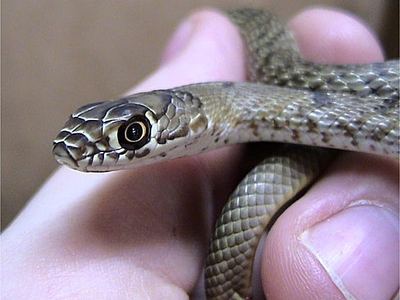
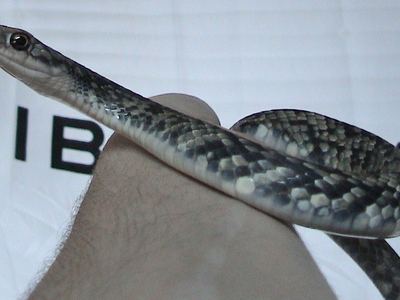
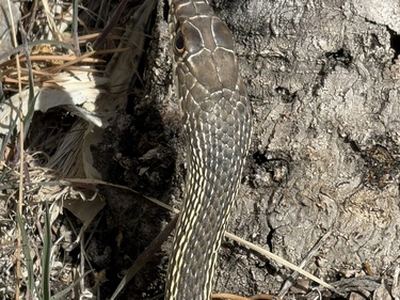
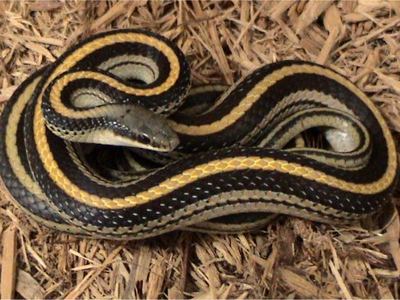
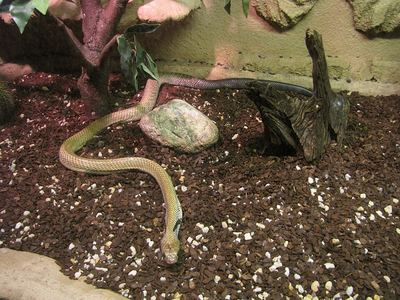
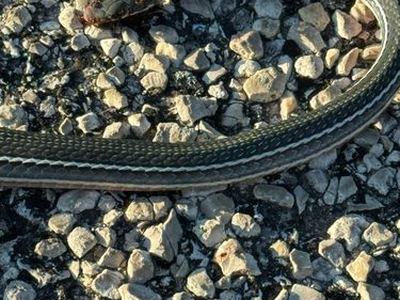
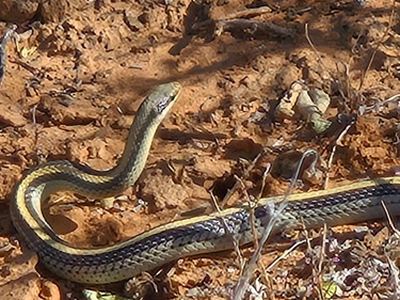
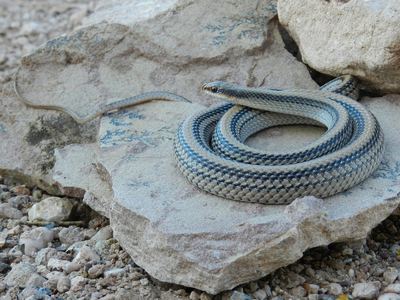
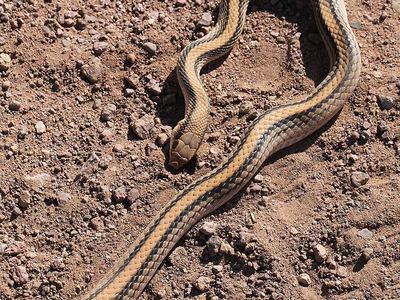
Observation records of the coachwhip in Texas run mostly April through October, peaking in April; most licensed records come from Brewster County, Jeff Davis County and Val Verde County. Observation records of the eastern racer in Texas run mostly April through October, peaking in April; most licensed records come from Travis County, Hutchinson County and Denton County. Observation records of the striped whipsnake in Texas run mostly March through September, peaking in April; most licensed records come from El Paso County, Brewster County and Val Verde County.
Gopher snakes, bullsnakes and pine snakes in Texas
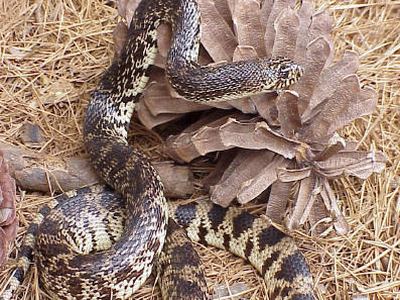
One species of this group is listed for Texas: the gopher snake, with 1,440 records (4% of the state's snake records).
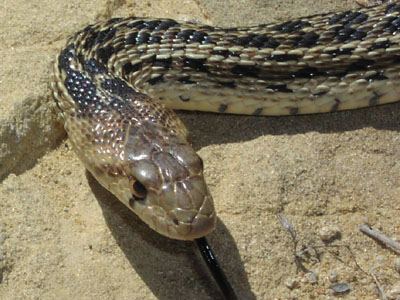
Observation records of the gopher snake in Texas run mostly April through November, peaking in June; most licensed records come from Brewster County, El Paso County and Jeff Davis County.
Hognose snakes in Texas
Hognose snakes are a small part of the snake record here: three species with 2% of records between them. The most recorded is the eastern hog-nosed snake (456), ahead of the plains hog-nosed snake (289).
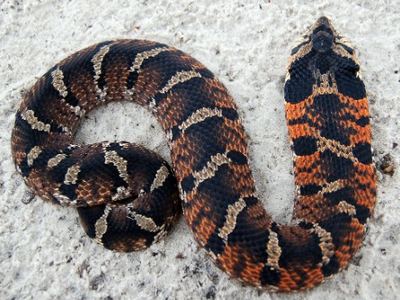
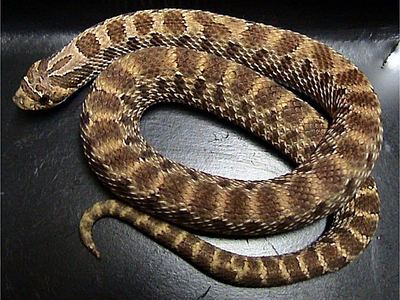
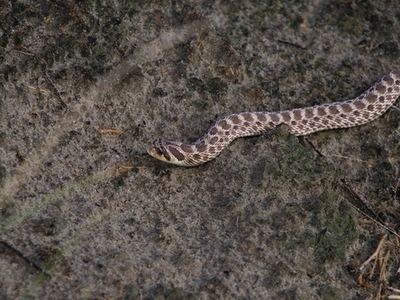
Observation records of the eastern hog-nosed snake in Texas run mostly March through November, peaking in April; most licensed records come from Brazos County, Travis County and Harris County. Observation records of the plains hog-nosed snake in Texas run mostly April through September, peaking in May; most licensed records come from Gaines County, Lubbock County and Coke County. Most licensed records of the Mexican hog-nose snake in Texas come from Jeff Davis County, Brewster County and Culberson County.
Green snakes in Texas
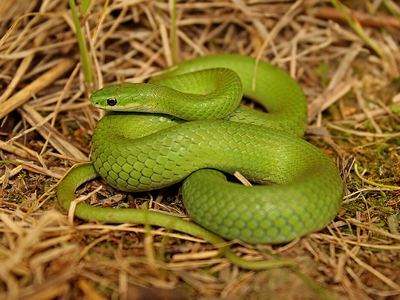
One species of this group is listed for Texas: the rough greensnake, with 865 records (2% of the state's snake records).
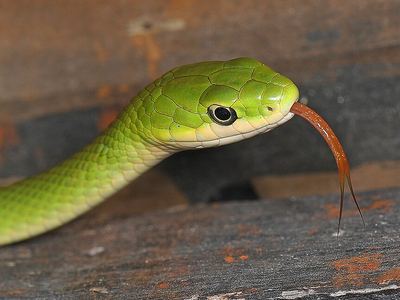
Observation records of the rough greensnake in Texas run mostly March through October, peaking in May; most licensed records come from Travis County, Williamson County and Dallas County.
Small woodland and burrowing snakes in Texas
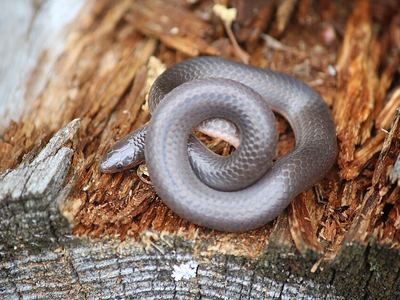
Small woodland and burrowing snakes dominate the snake record of Texas: 26 species and 26% of all records. The most recorded is the western ground snake (1,963), ahead of the rough earthsnake (1,448).
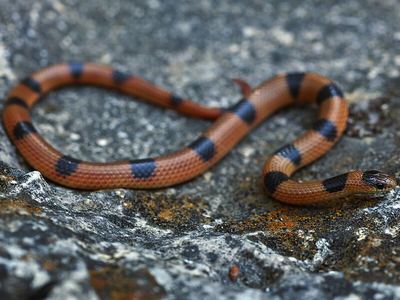
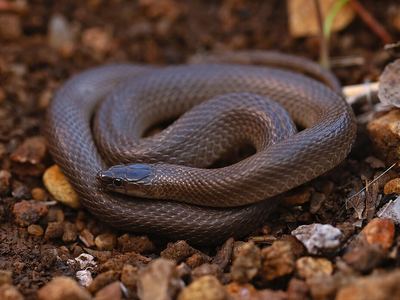
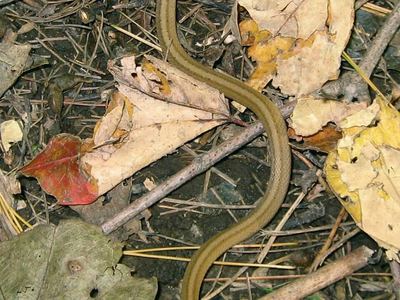
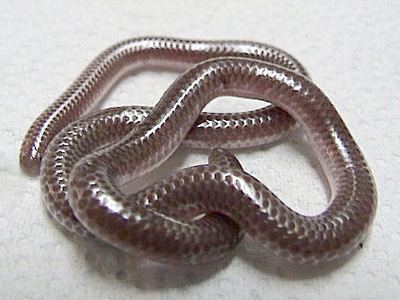
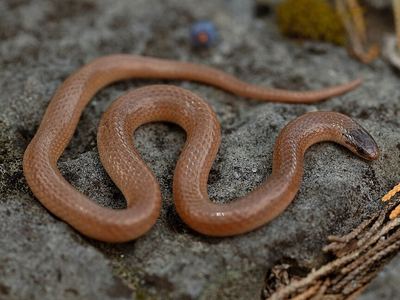
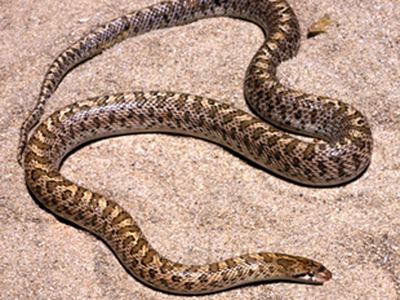
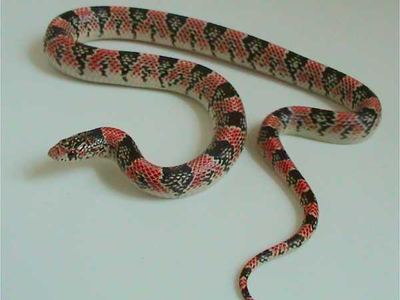
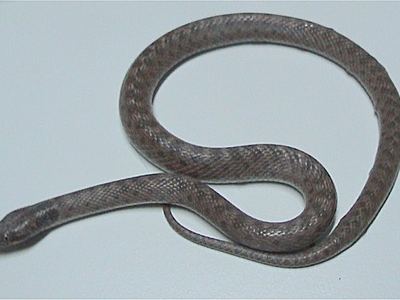
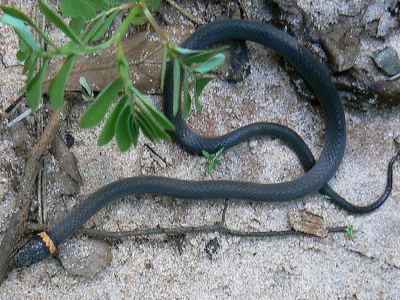
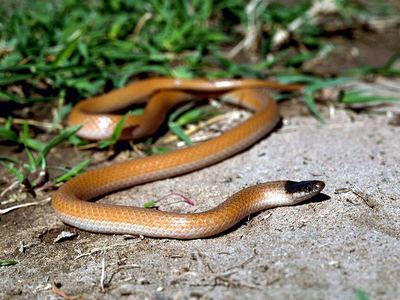
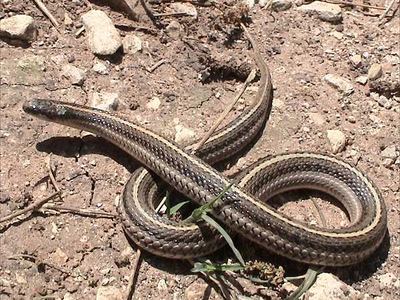
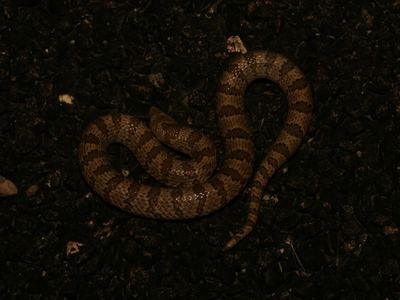
Plus 14: Southwestern blackhead snake, Great Plains ground snake, Sonora taylori, Texas lyre snake, Western worm snake, Mexican black-headed snake, Western threadsnake, Mexican hook-nosed snake, Brahminy blindsnake, Smooth earth snake, Red-bellied snake, Big Bend blackhead snake, New Mexico threadsnake, Scarlet snake.
Most licensed records of the western ground snake in Texas come from Palo Pinto County, Burnet County and Archer County. Observation records of the rough earthsnake in Texas run through most of the year, peaking in April; most licensed records come from Travis County, Dallas County and Brazos County. Observation records of the DeKay's brown snake in Texas run through most of the year, peaking in April; most licensed records come from Travis County, Brazos County and Harris County.
Other snakes in Texas
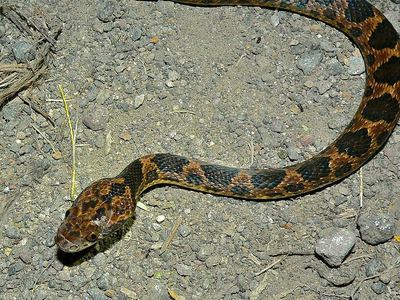
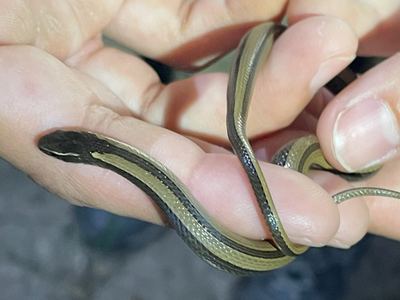
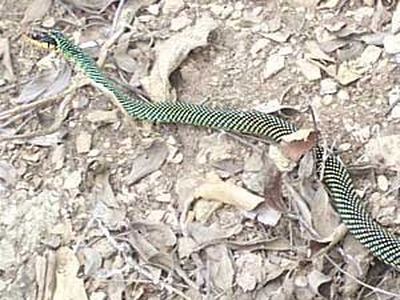
Other snakes are a small part of the snake record here: three species with 0.1% of records between them. The most recorded is the cat-eyed snake (24), ahead of the black-striped snake (19).
Where in Texas are snakes recorded most?
Records are spread widely: even the top five counties, led by Travis County, hold only 17% of them. 254 of Texas's 254 counties have at least one licensed snake record.
| # | County | Records | Share |
|---|---|---|---|
| 1 | Travis County | 2,003 | 4.9% |
| 2 | Brewster County | 1,560 | 3.8% |
| 3 | Harris County | 1,373 | 3.3% |
| 4 | Brazos County | 1,054 | 2.6% |
| 5 | El Paso County | 1,026 | 2.5% |
| 6 | Jeff Davis County | 937 | 2.3% |
| 7 | Val Verde County | 853 | 2.1% |
| 8 | Bexar County | 708 | 1.7% |
| 9 | Hudspeth County | 679 | 1.7% |
| 10 | Palo Pinto County | 646 | 1.6% |
| 11 | Dallas County | 606 | 1.5% |
| 12 | Terrell County | 566 | 1.4% |
When do snakes come out in Texas?
Observation records of snakes in Texas run mostly March through October, peaking in April with 19% of them. Winter (December to February) holds 5% of the records. The sharpest rise comes from March to April.
| Jan | Feb | Mar | Apr | May | Jun | Jul | Aug | Sep | Oct | Nov | Dec |
|---|---|---|---|---|---|---|---|---|---|---|---|
| 1% | 2% | 8% | 19% | 18% | 13% | 10% | 8% | 8% | 7% | 4% | 2% |
Snakes: Texas compared with its neighbors
Texas ranks 1st of 50 states by the number of snake species listed; Texas leads with 86 species.
Texas lists more snake species than any state it borders (Texas: 86 species; New Mexico 56, Oklahoma 50, Louisiana 41, Arkansas 36).
What snakes are in Texas? All 86 species
Ranked by licensed records in Texas. Species with a profile page are linked.
| # | Species | Family | Records | Share |
|---|---|---|---|---|
| 1 | Western diamondback rattlesnake venomous Crotalus atrox | Viperidae | 2,667 | 6.5% |
| 2 | Western ribbon snake Thamnophis proximus | Colubridae | 2,587 | 6.3% |
| 3 | Plain-bellied watersnake Nerodia erythrogaster | Colubridae | 2,226 | 5.4% |
| 4 | Coachwhip Masticophis flagellum | Colubridae | 2,062 | 5.0% |
| 5 | Western ground snake Sonora semiannulata | Colubridae | 1,963 | 4.8% |
| 6 | Checkered garter snake Thamnophis marcianus | Colubridae | 1,851 | 4.5% |
| 7 | Western rat snake Pantherophis obsoletus | Colubridae | 1,769 | 4.3% |
| 8 | Diamondback water snake Nerodia rhombifer | Colubridae | 1,612 | 3.9% |
| 9 | Rough earthsnake Haldea striatula | Colubridae | 1,448 | 3.5% |
| 10 | Gopher snake Pituophis catenifer | Colubridae | 1,440 | 3.5% |
| 11 | Eastern copperhead venomous Agkistrodon contortrix | Viperidae | 1,188 | 2.9% |
| 12 | DeKay's brown snake Storeria dekayi | Colubridae | 1,037 | 2.5% |
| 13 | Northern cottonmouth venomous Agkistrodon piscivorus | Viperidae | 1,025 | 2.5% |
| 14 | Texas blind snake Rena dulcis | Leptotyphlopidae | 989 | 2.4% |
| 15 | Flathead snake Tantilla gracilis | Colubridae | 946 | 2.3% |
| 16 | Rough greensnake Opheodrys aestivus | Colubridae | 865 | 2.1% |
| 17 | Southern watersnake Nerodia fasciata | Colubridae | 814 | 2.0% |
| 18 | Glossy snake Arizona elegans | Colubridae | 751 | 1.8% |
| 19 | Long-nosed snake Rhinocheilus lecontei | Colubridae | 725 | 1.8% |
| 20 | Great Plains rat snake Pantherophis emoryi | Colubridae | 709 | 1.7% |
| 21 | Eastern racer Coluber constrictor | Colubridae | 660 | 1.6% |
| 22 | Chihuahuan night snake Hypsiglena jani | Colubridae | 589 | 1.4% |
| 23 | Texas coral snake venomous Micrurus tener | Elapidae | 571 | 1.4% |
| 24 | Prairie rattlesnake venomous Crotalus viridis | Viperidae | 476 | 1.2% |
| 25 | Eastern hog-nosed snake Heterodon platirhinos | Colubridae | 456 | 1.1% |
| 26 | Ring-necked snake Diadophis punctatus | Colubridae | 452 | 1.1% |
| 27 | Blackneck garter snake Thamnophis cyrtopsis | Colubridae | 438 | 1.1% |
| 28 | Plains black-headed snake Tantilla nigriceps | Colubridae | 430 | 1.0% |
| 29 | Eastern black-tailed rattlesnake venomous Crotalus ornatus | Viperidae | 394 | 1.0% |
| 30 | Striped whipsnake Masticophis taeniatus | Colubridae | 379 | 0.9% |
| 31 | Broad-banded copperhead venomous Agkistrodon laticinctus | Viperidae | 374 | 0.9% |
| 32 | Trans-Pecos rat snake Bogertophis subocularis | Colubridae | 373 | 0.9% |
| 33 | Eastern patch-nosed snake Salvadora grahamiae | Colubridae | 349 | 0.9% |
| 34 | Salt marsh snake Nerodia clarkii | Colubridae | 299 | 0.7% |
| 35 | Mohave rattlesnake venomous Crotalus scutulatus | Viperidae | 290 | 0.7% |
| 36 | Plains hog-nosed snake Heterodon nasicus | Colubridae | 289 | 0.7% |
| 37 | Lined snake Tropidoclonion lineatum | Colubridae | 287 | 0.7% |
| 38 | Rock rattlesnake venomous Crotalus lepidus | Viperidae | 255 | 0.6% |
| 39 | Prairie kingsnake Lampropeltis calligaster | Colubridae | 238 | 0.6% |
| 40 | Western massasauga venomous Sistrurus tergeminus | Viperidae | 237 | 0.6% |
| 41 | Brazos water snake Nerodia harteri | Colubridae | 217 | 0.5% |
| 42 | Texas indigo snake Drymarchon melanurus | Colubridae | 211 | 0.5% |
| 43 | Corn snake Pantherophis guttatus | Colubridae | 202 | 0.5% |
| 44 | Graham's crayfish snake Regina grahamii | Colubridae | 197 | 0.5% |
| 45 | Timber rattlesnake venomous Crotalus horridus | Viperidae | 188 | 0.5% |
| 46 | Grey-banded kingsnake Lampropeltis alterna | Colubridae | 187 | 0.5% |
| 47 | Common garter snake Thamnophis sirtalis | Colubridae | 184 | 0.4% |
| 48 | Speckled kingsnake Lampropeltis holbrooki | Colubridae | 171 | 0.4% |
| 49 | Schott's whipsnake Masticophis schotti | Colubridae | 151 | 0.4% |
| 50 | Eastern milksnake Lampropeltis triangulum | Colubridae | 148 | 0.4% |
| 51 | Green water snake Nerodia cyclopion | Colubridae | 141 | 0.3% |
| 52 | Chihuahuan hook-nosed snake Gyalopion canum | Colubridae | 137 | 0.3% |
| 53 | Southwestern blackhead snake Tantilla hobartsmithi | Colubridae | 120 | 0.3% |
| 54 | Mud snake Farancia abacura | Colubridae | 118 | 0.3% |
| 55 | Desert kingsnake Lampropeltis splendida | Colubridae | 114 | 0.3% |
| 56 | Texas patch-nosed snake Salvadora lineata | Colubridae | 112 | 0.3% |
| 57 | Great Plains ground snake Sonora episcopa | Colubridae | 101 | 0.2% |
| 58 | Sonora taylori | Colubridae | 98 | 0.2% |
| 59 | Pygmy rattlesnake venomous Sistrurus miliarius | Viperidae | 96 | 0.2% |
| 60 | Baird's rat snake Pantherophis bairdi | Colubridae | 84 | 0.2% |
| 61 | Concho water snake Nerodia paucimaculata | Colubridae | 74 | 0.2% |
| 62 | Central plains milksnake Lampropeltis gentilis | Colubridae | 65 | 0.2% |
| 63 | Crayfish snake Liodytes rigida | Colubridae | 61 | 0.1% |
| 64 | Big Bend patch-nosed snake Salvadora deserticola | Colubridae | 59 | 0.1% |
| 65 | Texas lyre snake Trimorphodon vilkinsonii | Colubridae | 58 | 0.1% |
| 66 | Western worm snake Carphophis vermis | Colubridae | 56 | 0.1% |
| 67 | Mexican kingsnake Lampropeltis mexicana | Colubridae | 53 | 0.1% |
| 68 | Mexican black-headed snake Tantilla atriceps | Colubridae | 47 | 0.1% |
| 69 | Western threadsnake Rena humilis | Leptotyphlopidae | 47 | 0.1% |
| 70 | Mexican hog-nose snake Heterodon kennerlyi | Colubridae | 43 | 0.1% |
| 71 | Mexican hook-nosed snake Ficimia streckeri | Colubridae | 39 | 0.1% |
| 72 | Mexican milksnake Lampropeltis annulata | Colubridae | 36 | 0.1% |
| 73 | Brahminy blindsnake introduced Indotyphlops braminus | Typhlopidae | 34 | 0.1% |
| 74 | Smooth earth snake Virginia valeriae | Colubridae | 34 | 0.1% |
| 75 | Red-bellied snake Storeria occipitomaculata | Colubridae | 27 | 0.1% |
| 76 | Cat-eyed snake Leptodeira septentrionalis | Colubridae | 24 | 0.1% |
| 77 | Big Bend blackhead snake Tantilla cucullata | Colubridae | 23 | 0.1% |
| 78 | New Mexico threadsnake Rena dissecta | Leptotyphlopidae | 23 | 0.1% |
| 79 | Black-striped snake Coniophanes imperialis | Colubridae | 19 | 0.0% |
| 80 | Northern water snake Nerodia sipedon | Colubridae | 19 | 0.0% |
| 81 | Scarlet snake Cemophora coccinea | Colubridae | 15 | 0.0% |
| 82 | Eastern ribbonsnake Thamnophis saurita | Colubridae | 12 | 0.0% |
| 83 | Mexican garter snake Thamnophis eques | Colubridae | 10 | 0.0% |
| 84 | Slowinski's cornsnake Pantherophis slowinskii | Colubridae | 9 | 0.0% |
| 85 | Central American speckled racer Drymobius margaritiferus | Colubridae | 6 | 0.0% |
| 86 | Western patch-nosed snake Salvadora hexalepis | Colubridae | 5 | 0.0% |
Also recorded in Texas, fewer than 10 times
Beyond the main list, four snake species are known from Texas by only 3 to 9 records each. Some are genuine rarities at the edge of their range; others may be strays, released pets or old misidentifications, so treat them as unconfirmed.
Related pages
GBIF records read 2026-09-29. Listed: any license. Counted: CC0/CC BY only. How we count.