Marbled cellar spider (Holocnemus pluchei)
The marbled cellar spider is a spider in the family Pholcidae that is not dangerous to people. GBIF holds 888 licensed U.S. records of it; it reaches our listing threshold in 10 states, most of all California (805), Arizona (19) and Texas (14). Its observation records peak in May.
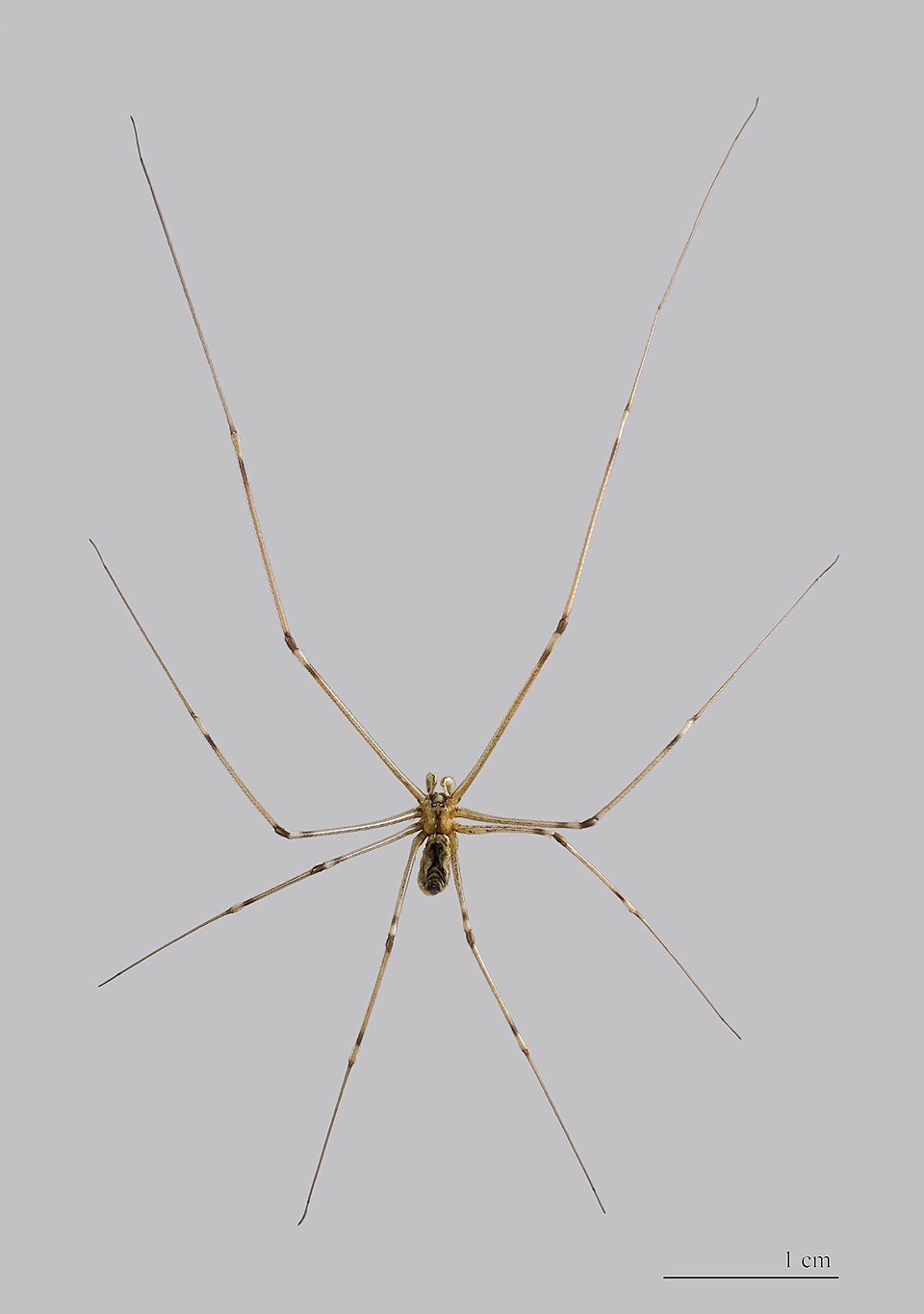
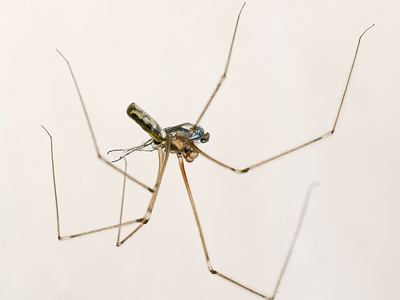
Holocnemus pluchei, commonly known as the marbled cellar spider, is a species of Pholcidae, a family commonly referred to as "cellar spiders" or "daddy long-legs". This species is distributed across the North Pacific region of the United States, as well as in parts of North Africa, Europe, Australia, and the Mediterranean. It is considered a common household spider and builds its nest in attics, basements, and eaves of houses.
From Wikipedia: Holocnemus pluchei, text under CC BY-SA 4.0.
Is the marbled cellar spider poisonous or venomous?
Not in any medically significant way. Like almost all spiders the marbled cellar spider (family Pholcidae) has venom for its prey, but it is not a widow or recluse, the two U.S. groups whose bites need medical attention.
Which states have the marbled cellar spider?
The marbled cellar spider's U.S. record is concentrated: California alone holds 91% of licensed records. It is listed in 10 states in all; the next are Arizona (19), Texas (14) and Oregon (12).
| # | State | Records | Share of state spiders | Rank in state |
|---|---|---|---|---|
| 1 | California | 805 | 1.6% | 10th of 309 |
| 2 | Arizona | 19 | 0.4% | 28th of 162 |
| 3 | Texas | 14 | 0.0% | 182nd of 386 |
| 4 | Oregon | 12 | 0.4% | 37th of 88 |
| 5 | Virginia | 12 | 0.1% | 109th of 176 |
| 6 | Nevada | 10 | 1.9% | 12th of 47 |
| 7 | Washington | 6 | 0.2% | 69th of 157 |
| 8 | New Mexico | 3 | 0.1% | 111th of 247 |
| 9 | Utah | 1 | 0.0% | 74th of 97 |
| 10 | Maryland | 0 | — | — |
When is the marbled cellar spider seen?
Across the U.S., observation records of the marbled cellar spider run mostly March through November, peaking in May with 14% of them. Winter (December to February) holds 6% of them.
How recent are the marbled cellar spider records?
Most of what is known about the marbled cellar spider is recent: 78% of dated U.S. records were made in 2017–2026, and half date from 2023 or later. The oldest dated record is from 1985; the busiest year was 2025, with 151 records.
| Decade | Records | Share |
|---|---|---|
| 1980s | 1 | 0.1% |
| 1990s | 3 | 0.3% |
| 2000s | 109 | 12.3% |
| 2010s | 166 | 18.7% |
| 2020s | 608 | 68.5% |
Species recorded in the same counties
Of the 15 counties where the marbled cellar spider is most recorded, 11 are also top counties for each of the first three spiders in the table below; no other spider shares more. Venomous species among its neighbors: the western black widow.
| Species | Shared counties |
|---|---|
| Bold jumper | 11 |
| Western black widow venomous | 11 |
| Western spotted orbweaver | 11 |
| Cribellate spider | 10 |
| Habronattus pyrrithrix | 10 |
| Hibana incursa | 10 |
| Koch's wolf spider | 10 |
| Triangulate bud spider | 10 |
Related species in the U.S.
Other members of the family Pholcidae with profiles here: Longbodied cellar spider.

GBIF records read 2026-09-29. Listed: any license. Counted: CC0/CC BY only. How we count.