Western black widow (Latrodectus hesperus)
The western black widow is a venomous spider in the family Theridiidae. GBIF holds 2,302 licensed U.S. records of it; it reaches our listing threshold in 18 states, most of all California (1,236), Arizona (290) and Colorado (167). Outside its native range it is introduced in Hawaii. Its observation records peak in September.
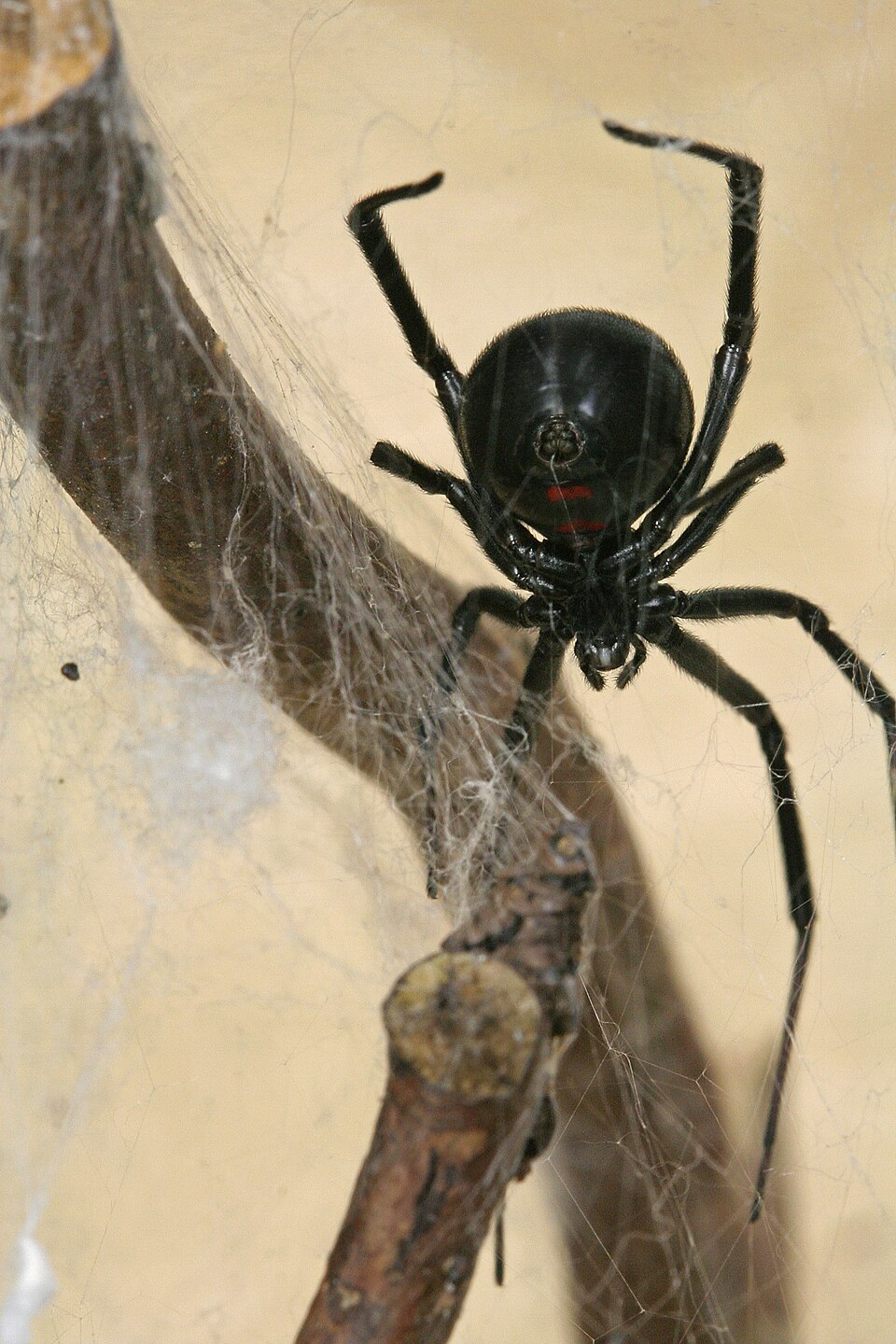

Latrodectus hesperus, the western black widow spider or western widow, is a venomous spider species found in western regions of North America. The female's body is 14–16 mm (1/2 in) in length and is black, often with an hourglass-shaped red mark on the lower abdomen. This "hourglass" mark can be red, yellow, and on rare occasions, white.
From Wikipedia: Latrodectus hesperus, text under CC BY-SA 4.0.
Is the western black widow poisonous or venomous?
Yes. The western black widow is a widow spider (genus Latrodectus). Its venom can cause pain, cramps and sweating spreading from the bite. Bites are rarely fatal but worth a call to Poison Help at 1-800-222-1222.
Spiders often mistaken for it
Species commonly confused with widow spiders and recorded in the same states: triangulate bud spider (recorded in 14 of its 18 states), false black widow (recorded in 8 of its 18 states), common house spider (recorded in 7 of its 18 states), boreal combfoot (recorded in 4 of its 18 states) and twospotted cobweb spider (recorded in 2 of its 18 states).
Which states have the western black widow?
The western black widow's U.S. record is concentrated: California alone holds 54% of licensed records. It is listed in 18 states in all; the next are Arizona (290), Colorado (167) and Texas (164).
The count includes 19 records filed under the older name Latrodectus mactans in Arizona (3), California (15) and Colorado (1).
| # | State | Records | Share of state spiders | Rank in state |
|---|---|---|---|---|
| 1 | California | 1,236 | 2.5% | 4th of 309 |
| 2 | Arizona | 290 | 6.2% | 2nd of 162 |
| 3 | Colorado | 167 | 4.0% | 5th of 378 |
| 4 | Texas | 164 | 0.6% | 34th of 386 |
| 5 | Utah | 149 | 6.1% | 3rd of 97 |
| 6 | New Mexico | 137 | 5.7% | 1st of 247 |
| 7 | Nevada | 40 | 7.5% | 2nd of 47 |
| 8 | Washington | 25 | 0.6% | 31st of 157 |
| 9 | Oregon | 22 | 0.8% | 24th of 88 |
| 10 | Idaho | 16 | 3.1% | 6th of 56 |
| 11 | Oklahoma | 12 | 0.2% | 75th of 149 |
| 12 | Hawaii | 10 | 0.2% | 36th of 57 |
| 13 | Montana | 9 | 0.4% | 23rd of 75 |
| 14 | Nebraska | 9 | 0.7% | 31st of 71 |
| 15 | Kansas | 6 | 0.4% | 48th of 94 |
| 16 | Wyoming | 4 | 1.9% | 5th of 68 |
| 17 | South Dakota | 3 | 1.6% | 10th of 29 |
| 18 | North Dakota | 0 | — | — |
When is the western black widow seen?
Across the U.S., observation records of the western black widow run mostly March through November, peaking in September with 15% of them. Winter (December to February) holds 9% of them.
Season by state
Observation records run through most of the year in California. Among states whose main season falls within one calendar year, it starts earliest in March (Arizona) and latest in May (Colorado and New Mexico). The most common peak month is August, shared by Arizona, Colorado, New Mexico and Utah.
| State | Main season | Peak month | Observation records |
|---|---|---|---|
| California | most of the year | October | 964 |
| Arizona | March through November | August | 210 |
| Colorado | May through November | August | 165 |
| Texas | April through November | July | 157 |
| Utah | April through October | August | 143 |
| New Mexico | May through November | August | 101 |
| Nevada | April through October | June | 40 |
Where the western black widow is recorded in each state
California
California holds 1,236 licensed records, the 4th most recorded of 309 spiders listed there. Its observation records in California run through most of the year, peaking in October; most licensed records come from Los Angeles County, San Diego County and Napa County. Next come San Bernardino County (73) and Riverside County (72).
Arizona
Arizona holds 290 licensed records, the 2nd most recorded of 162 spiders listed there. Its observation records in Arizona run mostly March through November, peaking in August; most licensed records come from Pima County, Coconino County and Maricopa County. Next come Cochise County (28) and Santa Cruz County (13).
Colorado
Colorado holds 167 licensed records, the 5th most recorded of 378 spiders listed there. Its observation records in Colorado run mostly May through November, peaking in August; most licensed records come from El Paso County, Denver County and Boulder County. Next come Jefferson County (11) and Larimer County (11).
Texas
Texas holds 164 licensed records, the 34th most recorded of 386 spiders listed there. Its observation records in Texas run mostly April through November, peaking in July; most licensed records come from Brewster County, Randall County and Briscoe County. Next come Lubbock County (9) and Jeff Davis County (7).
Utah
Utah holds 149 licensed records, the 3rd most recorded of 97 spiders listed there. Its observation records in Utah run mostly April through October, peaking in August; most licensed records come from Salt Lake County, Utah County and Grand County. Next come Washington County (13) and Davis County (8).
New Mexico
New Mexico holds 137 licensed records, the most recorded of 247 spiders listed there. Its observation records in New Mexico run mostly May through November, peaking in August; most licensed records come from Bernalillo County, Doña Ana County and Hidalgo County. Next come Sandoval County (6) and Santa Fe County (6).
Nevada
Nevada holds 40 licensed records, the 2nd most recorded of 47 spiders listed there. Its observation records in Nevada run mostly April through October, peaking in June; most licensed records come from Clark County, Washoe County and Nye County. Next come Lincoln County (2) and Lyon County (2).
Top counties in the U.S.
| # | County | State | Records | Share of U.S. |
|---|---|---|---|---|
| 1 | Los Angeles County | California | 215 | 9.3% |
| 2 | Pima County | Arizona | 139 | 6.0% |
| 3 | San Diego County | California | 124 | 5.4% |
| 4 | Napa County | California | 73 | 3.2% |
| 5 | San Bernardino County | California | 73 | 3.2% |
| 6 | Riverside County | California | 72 | 3.1% |
| 7 | Contra Costa County | California | 71 | 3.1% |
| 8 | Santa Clara County | California | 60 | 2.6% |
| 9 | Salt Lake County | Utah | 58 | 2.5% |
| 10 | Sacramento County | California | 56 | 2.4% |
| 11 | El Paso County | Colorado | 54 | 2.3% |
| 12 | Coconino County | Arizona | 42 | 1.8% |
| 13 | Sonoma County | California | 42 | 1.8% |
| 14 | San Joaquin County | California | 39 | 1.7% |
| 15 | Solano County | California | 38 | 1.7% |
How recent are the western black widow records?
Most of what is known about the western black widow is recent: 78% of dated U.S. records were made in 2017–2026, and half date from 2022 or later. The oldest dated record is from 1927; the busiest year was 2025, with 279 records.
| Decade | Records | Share |
|---|---|---|
| 1920s | 1 | 0.0% |
| 1930s | 6 | 0.3% |
| 1940s | 13 | 0.6% |
| 1960s | 3 | 0.1% |
| 1970s | 1 | 0.0% |
| 1980s | 12 | 0.5% |
| 1990s | 22 | 1.0% |
| 2000s | 164 | 7.1% |
| 2010s | 523 | 22.7% |
| 2020s | 1,558 | 67.7% |
Species recorded in the same counties
Of the 100 counties where the western black widow is most recorded, 46 are also top counties for the bold jumper, more than for any other spider. None of its closest neighbors is venomous.
| Species | Shared counties |
|---|---|
| Bold jumper | 46 |
| Western spotted orbweaver | 44 |
| Banded garden spider | 35 |
| Apache jumping spider | 28 |
| Dysdera crocata | 28 |
| Triangulate bud spider | 26 |
| Zebra spider | 24 |
| Pelegrina aeneola | 22 |
Related species in the U.S.
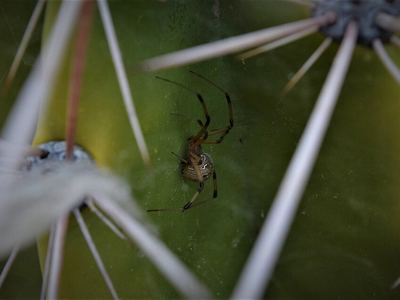
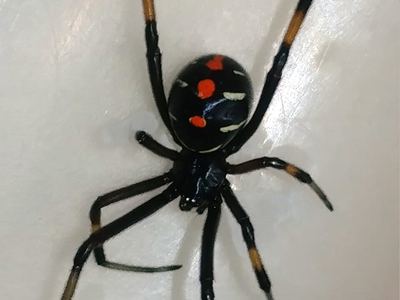
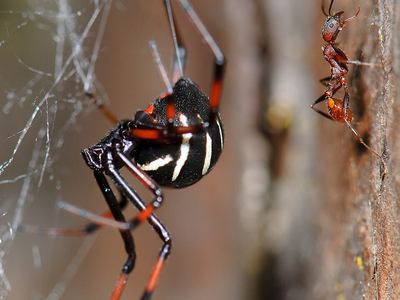
Other species of the genus Latrodectus with profiles here: Brown widow, Southern black widow and Northern black widow.
GBIF records read 2026-09-29. Listed: any license. Counted: CC0/CC BY only. How we count.