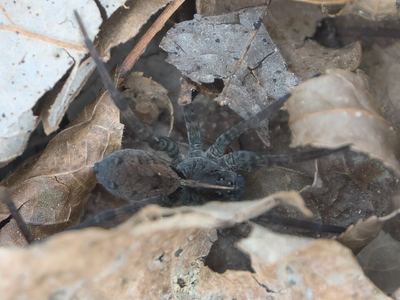
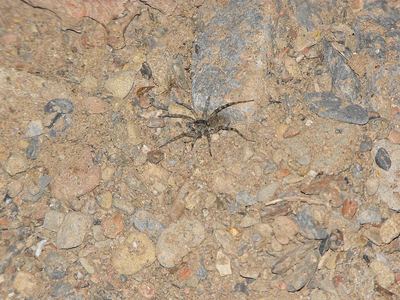
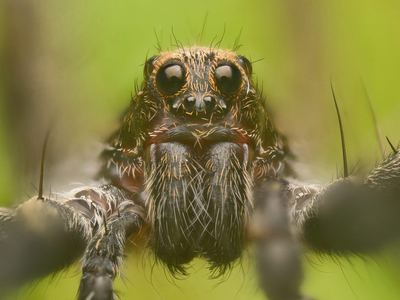
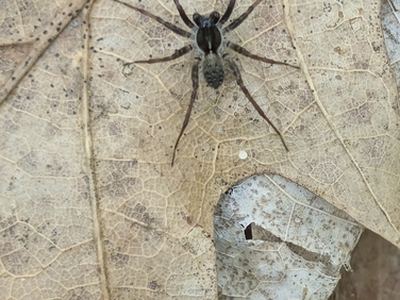
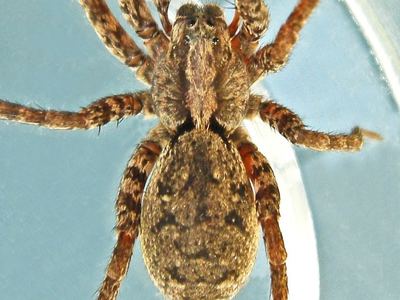
McCook's split wolf spider (Schizocosa mccooki)
The McCook's split wolf spider (genus Schizocosa) is a spider in the family Lycosidae that is not dangerous to people. Among the 13 wolf spiders profiled here, it ranks 11th by number of states listed. Most of its 14 listed states are in the Mountain (7) and Pacific (3) census divisions. None is in the Northeast. Its observation records peak in June.
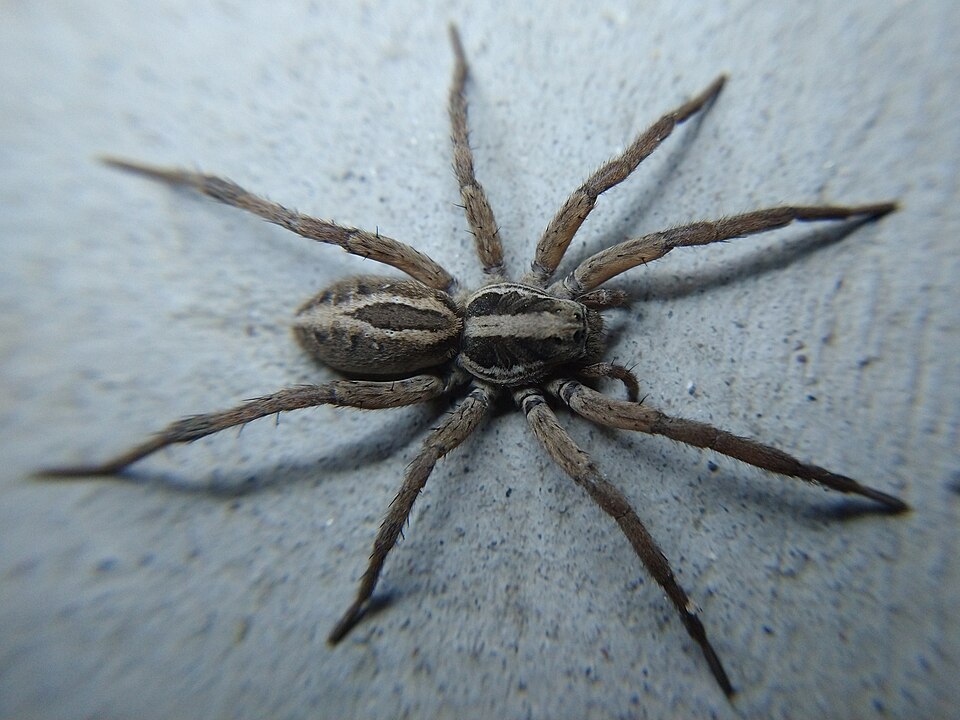

Schizocosa mccooki is a species of wolf spider in the family Lycosidae. They can be found from the west coast to western Lake Erie in western North America, including Canada, the United States, and Mexico.
From Wikipedia: Schizocosa mccooki, text under CC BY-SA 4.0.
Is the McCook's split wolf spider poisonous or venomous?
Not in any medically significant way. Like almost all spiders the McCook's split wolf spider (family Lycosidae) has venom for its prey, but it is not a widow or recluse, the two U.S. groups whose bites need medical attention.
Which states have the McCook's split wolf spider?
It is the most recorded spider of all in Montana.
| # | State | Records | Share of state spiders | Rank in state |
|---|---|---|---|---|
| 1 | Montana | 257 | 11.2% | 1st of 73 |
| 2 | California | 211 | 0.4% | 40th of 312 |
| 3 | Colorado | 21 | 0.5% | 25th of 372 |
| 4 | Illinois | 17 | 0.1% | 143rd of 243 |
| 5 | New Mexico | 10 | 0.4% | 46th of 248 |
| 6 | Utah | 7 | 0.3% | 36th of 99 |
| 7 | Nevada | 6 | 1.1% | 15th of 51 |
| 8 | Texas | 6 | 0.0% | 241st of 387 |
| 9 | Idaho | 4 | 0.7% | 23rd of 58 |
| 10 | Oregon | 3 | 0.1% | 68th of 89 |
| 11 | Washington | 3 | 0.1% | 95th of 159 |
| 12 | North Dakota | 1 | 1.1% | 12th of 129 |
| 13 | Minnesota | 0 | — | — |
| 14 | Wyoming | 0 | — | — |
When is the McCook's split wolf spider seen?
Its observation records run mostly April through October.
Where the McCook's split wolf spider is recorded in each state
| State | Licensed records | Place among the state's spiders | Most recorded counties |
|---|---|---|---|
| Montana | 257 | 1st of 73 | Missoula County (256) and Cascade County (1) |
| California | 211 | 40th of 312 | San Diego County (111), Los Angeles County (14), Stanislaus County (13), Santa Barbara County (8) and Santa Clara County (6) |
Top counties in the U.S.
| # | County | State | Records | Share of U.S. |
|---|---|---|---|---|
| 1 | Missoula County | Montana | 256 | 46.0% |
| 2 | San Diego County | California | 111 | 19.9% |
| 3 | Los Angeles County | California | 14 | 2.5% |
| 4 | Stanislaus County | California | 13 | 2.3% |
| 5 | Santa Barbara County | California | 8 | 1.4% |
| 6 | Santa Clara County | California | 6 | 1.1% |
| 7 | Contra Costa County | California | 5 | 0.9% |
| 8 | Kern County | California | 4 | 0.7% |
| 9 | Alameda County | California | 4 | 0.7% |
| 10 | Monterey County | California | 4 | 0.7% |
| 11 | Shasta County | California | 4 | 0.7% |
| 12 | Solano County | California | 4 | 0.7% |
| 13 | Napa County | California | 3 | 0.5% |
| 14 | Orange County | California | 3 | 0.5% |
| 15 | Sonoma County | California | 3 | 0.5% |
How recent are the McCook's split wolf spider records?
| Decade | Records | Share |
|---|---|---|
| 1980s | 4 | 0.7% |
| 1990s | 24 | 4.3% |
| 2000s | 97 | 17.6% |
| 2010s | 309 | 56.0% |
| 2020s | 118 | 21.4% |
Species recorded in the same counties
| Species | Shared counties |
|---|---|
| Steatoda nobilis | 11 |
| Banded garden spider | 10 |
| Cyclosa turbinata | 10 |
| False black widow | 10 |
| Green lynx | 10 |
| Hairy tufted jumping spider | 10 |
| Koch's wolf spider | 10 |
| Western lynx spider | 10 |
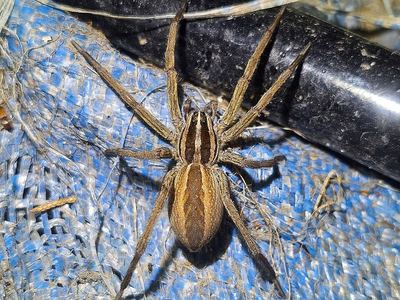
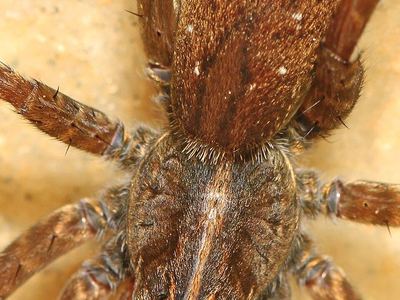
Related species in the U.S.
GBIF records read 2026-11-05 (open these records on GBIF). Listed: any license. Counted: CC0/CC BY only. How we count.