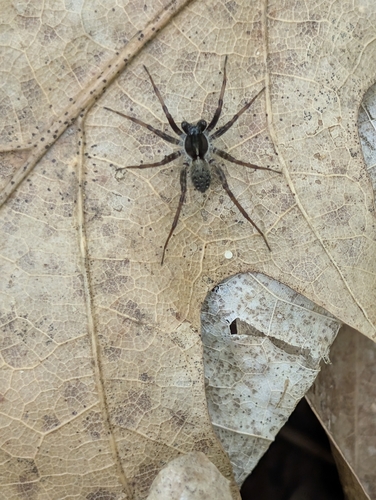
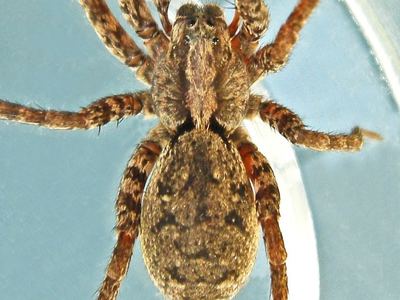
Shiny wolf spider (Pardosa moesta)
The shiny wolf spider (genus Pardosa) is a spider in the family Lycosidae that is not dangerous to people. Among the 13 wolf spiders profiled here, it ranks 12th by number of states listed, level with one other. Most of its 11 listed states are in the East North Central (4) and New England (2) census divisions. None is in the South.
11states on record
461licensed U.S. records
Novenomous to people
1%of wild records are field observations
Bitten? Call 911 for a venomous snakebite or any bite with trouble breathing. For advice on any bite or sting, call Poison Help at 1-800-222-1222 (free, 24/7, U.S.-wide). Do not cut the wound, suck out venom or use a tourniquet. General information, not medical advice. Do not handle or try to identify a snake or spider by this page; if unsure, treat it as venomous.
Is the shiny wolf spider poisonous or venomous?
Not in any medically significant way. Like almost all spiders the shiny wolf spider (family Lycosidae) has venom for its prey, but it is not a widow or recluse, the two U.S. groups whose bites need medical attention.
Which states have the shiny wolf spider?
| # | State | Records | Share of state spiders | Rank in state |
|---|---|---|---|---|
| 1 | Alaska | 224 | 0.9% | 12th of 280 |
| 2 | Illinois | 170 | 0.9% | 9th of 243 |
| 3 | Wisconsin | 40 | 1.2% | 14th of 148 |
| 4 | Montana | 7 | 0.3% | 30th of 73 |
| 5 | Minnesota | 4 | 0.1% | 93rd of 145 |
| 6 | Massachusetts | 3 | 0.1% | 115th of 191 |
| 7 | Ohio | 3 | 0.0% | 132nd of 333 |
| 8 | Michigan | 2 | 0.1% | 86th of 123 |
| 9 | Colorado | 0 | — | — |
| 10 | Maine | 0 | — | — |
| 11 | North Dakota | 0 | — | — |
Where the shiny wolf spider is recorded in each state
| State | Licensed records | Place among the state's spiders | Most recorded counties |
|---|---|---|---|
| Alaska | 224 | 12th of 280 | Denali Borough (114), Fairbanks North Star Borough (26), Prince of Wales-Outer Ketchikan Census Area (23), Anchorage Municipality (16) and Skagway-Yakutat-Angoon Census Area (13) |
| Illinois | 170 | 9th of 243 | Jo Daviess County (97), Lee County (43), McHenry County (14), Cook County (5) and Lake County (5) |
| Wisconsin | 40 | 14th of 148 | Vilas County (27), Kenosha County (6), Milwaukee County (5) and Lafayette County (2) |
Top counties in the U.S.
| # | County | State | Records | Share of U.S. |
|---|---|---|---|---|
| 1 | Denali Borough | Alaska | 114 | 24.7% |
| 2 | Jo Daviess County | Illinois | 97 | 21.0% |
| 3 | Lee County | Illinois | 43 | 9.3% |
| 4 | Vilas County | Wisconsin | 27 | 5.9% |
| 5 | Fairbanks North Star Borough | Alaska | 26 | 5.6% |
| 6 | Prince of Wales-Outer Ketchikan Census Area | Alaska | 23 | 5.0% |
| 7 | Anchorage Municipality | Alaska | 16 | 3.5% |
| 8 | McHenry County | Illinois | 14 | 3.0% |
| 9 | Skagway-Yakutat-Angoon Census Area | Alaska | 13 | 2.8% |
| 10 | Matanuska-Susitna Borough | Alaska | 9 | 2.0% |
| 11 | Yukon-Koyukuk Census Area | Alaska | 6 | 1.3% |
| 12 | Kenosha County | Wisconsin | 6 | 1.3% |
| 13 | North Slope Borough | Alaska | 5 | 1.1% |
| 14 | Cook County | Illinois | 5 | 1.1% |
| 15 | Lake County | Illinois | 5 | 1.1% |
How recent are the shiny wolf spider records?
2014median record year
37%dated records from 2017–2026
1935oldest dated record
2018busiest year, 76 records
| Decade | Records | Share |
|---|---|---|
| 1930s | 2 | 0.4% |
| 1940s | 3 | 0.7% |
| 1960s | 1 | 0.2% |
| 1970s | 18 | 3.9% |
| 1980s | 2 | 0.4% |
| 1990s | 59 | 12.9% |
| 2000s | 87 | 19.0% |
| 2010s | 247 | 53.8% |
| 2020s | 40 | 8.7% |
Species recorded in the same counties
| Species | Shared counties |
|---|---|
| Long-jawed orb weaver | 15 |
| Pale sheetweb weaver | 13 |
| Sixspotted orbweaver | 12 |
| Trochosa terricola | 12 |
| Bronze jumper | 11 |
| Nearctic white-striped running crab spider | 11 |
| Common stretch spider | 10 |
| Dictyna major | 10 |
Related species in the U.S.
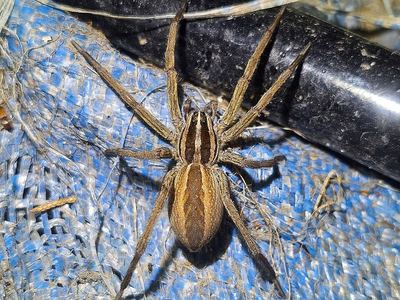
Rabid wolf spiderRabidosa rabida
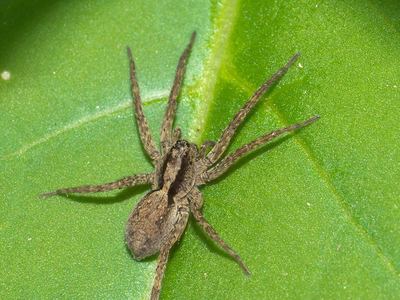
Koch's wolf spiderAlopecosa kochi
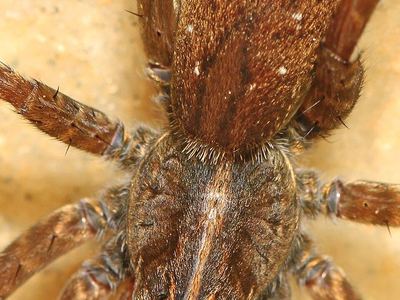
Wetland giant wolf spiderTigrosa helluo
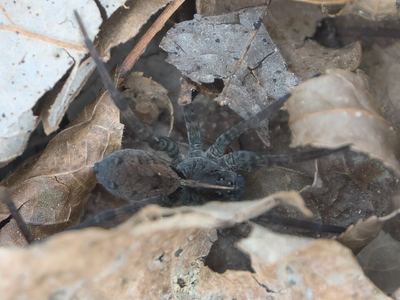
Georgia wolf spiderTigrosa georgicola
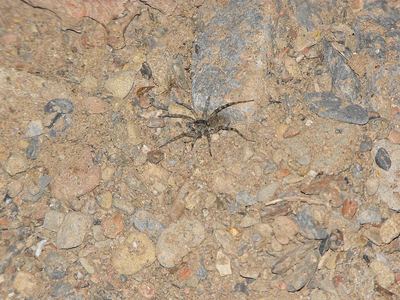
Shoreline wolf spiderArctosa littoralis
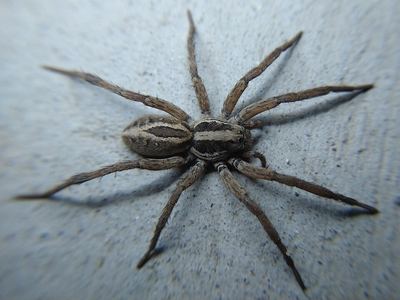
McCook's split wolf spiderSchizocosa mccooki
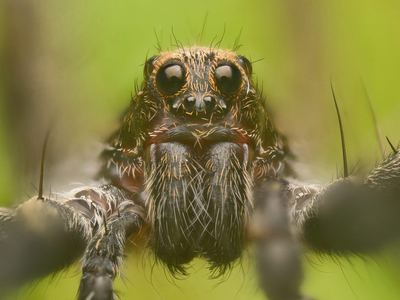
Brush-legged split wolf spiderSchizocosa ocreata
Drumming sword wolf spiderGladicosa gulosa
GBIF records read 2026-11-05 (open these records on GBIF). Listed: any license. Counted: CC0/CC BY only. How we count.