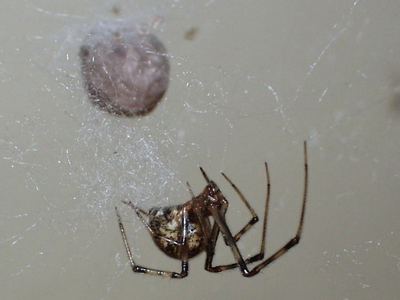
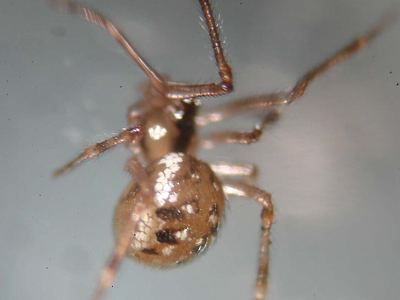
False black widow (Steatoda grossa)
The false black widow is a spider in the family Theridiidae that is not dangerous to people. GBIF holds 1,420 licensed U.S. records of it; it reaches our listing threshold in 17 states, most of all California (1,201), Washington (62) and North Carolina (46). Its observation records peak in November.
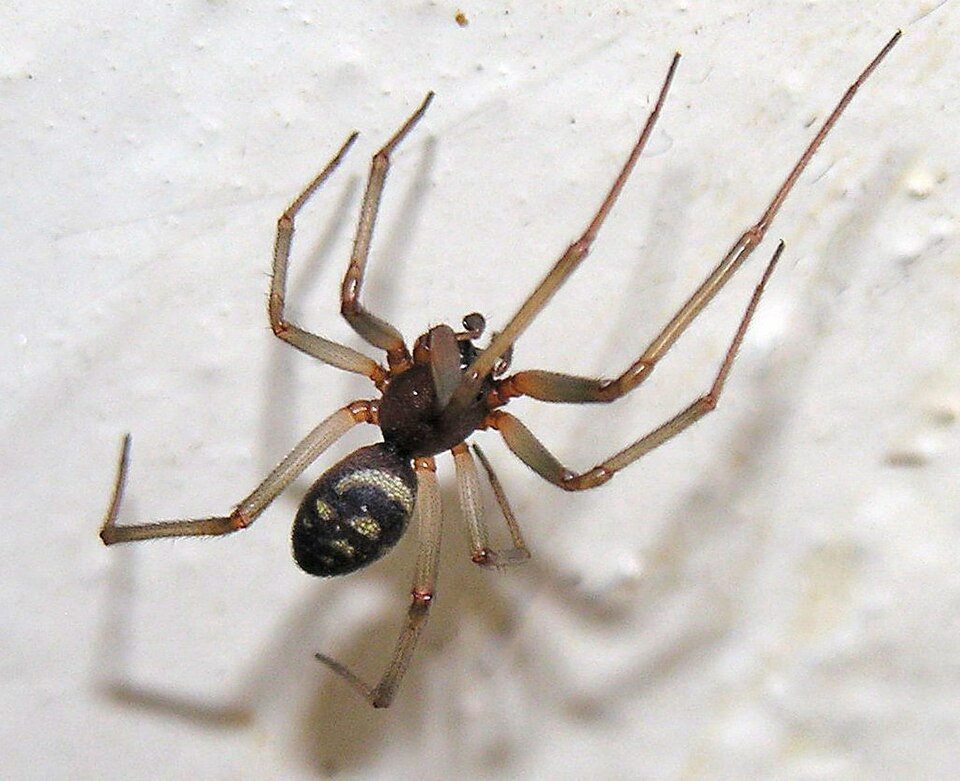

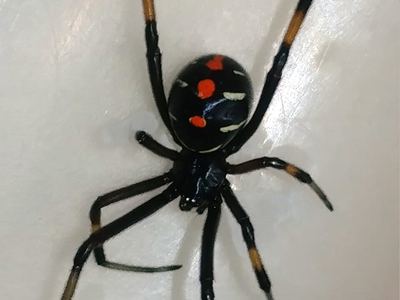
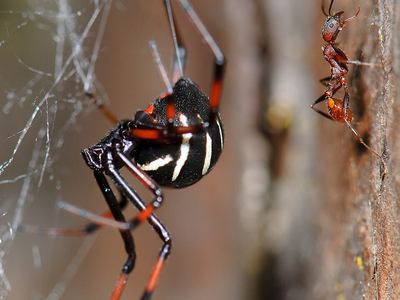
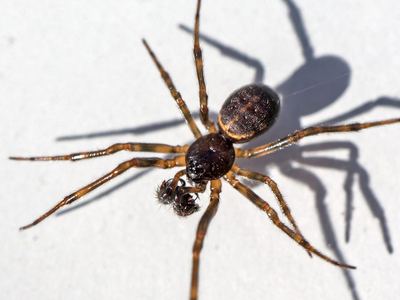
Steatoda grossa, commonly known as the cupboard spider, the dark comb-footed spider, the brown house spider (in Australia), or the false widow or false black widow (though several other species are known by these names), is a common species of spider in the genus Steatoda. As two of this spider's common names indicate, the spider superficially resembles, and is frequently confused for, the black widow and other venomous spiders in the genus Latrodectus.
From Wikipedia: Steatoda grossa, text under CC BY-SA 4.0.
Is the false black widow poisonous or venomous?
Not in any medically significant way. Like almost all spiders the false black widow (family Theridiidae) has venom for its prey, but it is not a widow or recluse, the two U.S. groups whose bites need medical attention.
Often mistaken for
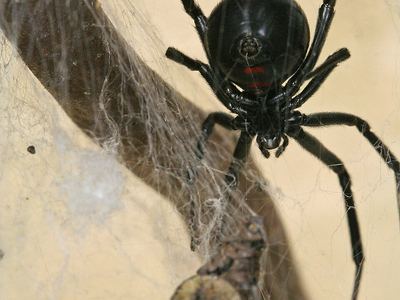
The false black widow is not dangerous to people, but people often take it for widow spiders (both are recorded in 16 of its 17 states).
Which states have the false black widow?
The false black widow's U.S. record is concentrated: California alone holds 85% of licensed records. It is listed in 17 states in all; the next are Washington (62), North Carolina (46) and Oregon (27).
| # | State | Records | Share of state spiders | Rank in state |
|---|---|---|---|---|
| 1 | California | 1,201 | 2.4% | 5th of 309 |
| 2 | Washington | 62 | 1.6% | 10th of 157 |
| 3 | North Carolina | 46 | 0.6% | 42nd of 184 |
| 4 | Oregon | 27 | 1.0% | 19th of 88 |
| 5 | Georgia | 12 | 0.2% | 86th of 186 |
| 6 | Virginia | 12 | 0.1% | 109th of 176 |
| 7 | Tennessee | 11 | 0.3% | 62nd of 138 |
| 8 | New Mexico | 10 | 0.4% | 45th of 247 |
| 9 | Alaska | 8 | 0.0% | 274th of 280 |
| 10 | Alabama | 6 | 0.2% | 83rd of 143 |
| 11 | South Carolina | 6 | 0.3% | 64th of 121 |
| 12 | Nevada | 2 | 0.4% | 34th of 47 |
| 13 | Texas | 2 | 0.0% | 294th of 386 |
| 14 | Colorado | 1 | 0.0% | 149th of 378 |
| 15 | Idaho | 1 | 0.2% | 35th of 56 |
| 16 | Kentucky | 0 | — | — |
| 17 | Maryland | 0 | — | — |
When is the false black widow seen?
Across the U.S., observation records of the false black widow run through most of the year, peaking in November with 13% of them. Winter (December to February) holds 25% of them.
Season by state
Observation records run through most of the year in California, North Carolina and Washington. Each of these states peaks in a different month: July in North Carolina, September in Washington and November in California.
| State | Main season | Peak month | Observation records |
|---|---|---|---|
| California | most of the year | November | 621 |
| Washington | most of the year | September | 62 |
| North Carolina | most of the year | July | 46 |
Where the false black widow is recorded in each state
California
California holds 1,201 licensed records, the 5th most recorded of 309 spiders listed there. Its observation records in California run through most of the year, peaking in November; most licensed records come from Los Angeles County, Solano County and Napa County. Next come San Diego County (72) and Orange County (45).
Washington
Washington holds 62 licensed records, the 10th most recorded of 157 spiders listed there. Its observation records in Washington run through most of the year, peaking in September; most licensed records come from King County, Thurston County and Pierce County. Next come Jefferson County (4) and Snohomish County (4).
North Carolina
North Carolina holds 46 licensed records, the joint 42nd most recorded of 184 spiders listed there. Its observation records in North Carolina run through most of the year, peaking in July; most licensed records come from Cumberland County, Robeson County and Wake County. Next come Durham County (5) and Davidson County (4).
Top counties in the U.S.
| # | County | State | Records | Share of U.S. |
|---|---|---|---|---|
| 1 | Los Angeles County | California | 582 | 41.0% |
| 2 | Solano County | California | 109 | 7.7% |
| 3 | Napa County | California | 106 | 7.5% |
| 4 | San Diego County | California | 72 | 5.1% |
| 5 | Orange County | California | 45 | 3.2% |
| 6 | Santa Clara County | California | 45 | 3.2% |
| 7 | Alameda County | California | 44 | 3.1% |
| 8 | San Francisco County | California | 24 | 1.7% |
| 9 | King County | Washington | 23 | 1.6% |
| 10 | Sonoma County | California | 22 | 1.5% |
| 11 | Ventura County | California | 22 | 1.5% |
| 12 | Santa Cruz County | California | 18 | 1.3% |
| 13 | San Mateo County | California | 13 | 0.9% |
| 14 | Contra Costa County | California | 13 | 0.9% |
| 15 | Thurston County | Washington | 12 | 0.8% |
How recent are the false black widow records?
Records of the false black widow span old collections and new observations: 63% date from 2017–2026, and the median record is from 2020. The oldest dated record is from 1935; the busiest year was 2002, with 266 records.
| Decade | Records | Share |
|---|---|---|
| 1930s | 1 | 0.1% |
| 1970s | 1 | 0.1% |
| 2000s | 420 | 29.5% |
| 2010s | 246 | 17.3% |
| 2020s | 756 | 53.1% |
Species recorded in the same counties
Of the 42 counties where the false black widow is most recorded, 27 are also top counties for the longbodied cellar spider, more than for any other spider. None of its closest neighbors is venomous.
| Species | Shared counties |
|---|---|
| Longbodied cellar spider | 27 |
| Garden spider | 24 |
| Bold jumper | 22 |
| Zebra spider | 22 |
| Arabesque orbweaver | 19 |
| Johnson jumper | 19 |
| Mouse spider | 19 |
| Sierra dome spider | 18 |
Related species in the U.S.
Other species of the genus Steatoda with profiles here: Triangulate bud spider and Boreal combfoot.
GBIF records read 2026-09-29. Listed: any license. Counted: CC0/CC BY only. How we count.