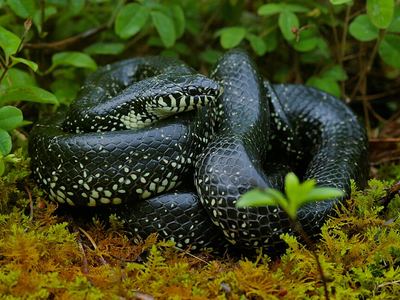
California kingsnake (Lampropeltis californiae)
The California kingsnake is a non-venomous snake in the family Colubridae. GBIF holds 3,096 licensed U.S. records of it; it reaches our listing threshold in 5 states, most of all California (2,675), Arizona (252) and Nevada (110). Its observation records peak in May.
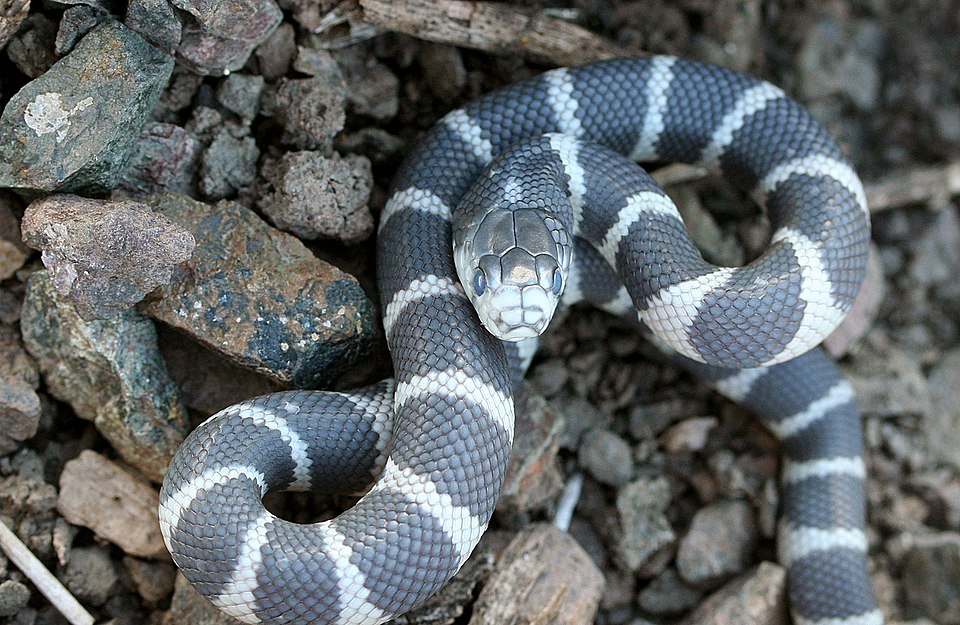

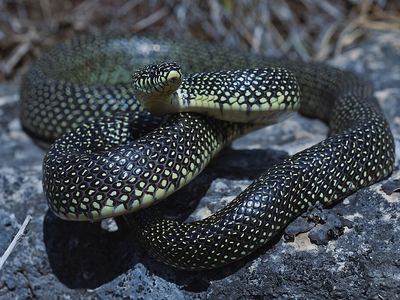
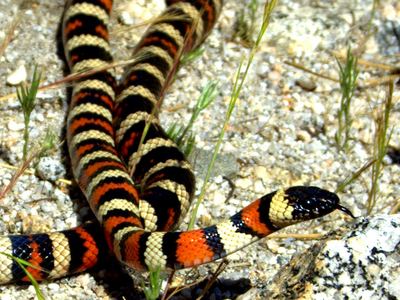
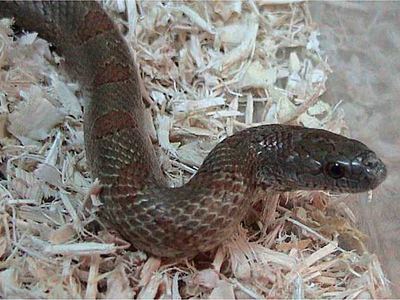
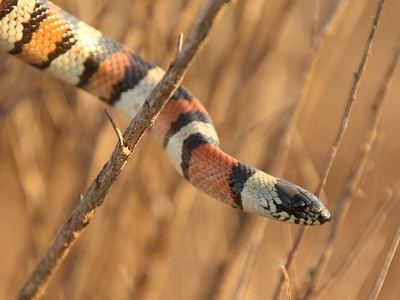
The California kingsnake (Lampropeltis californiae) is a nonvenomous colubrid snake endemic to the western United States and northern Mexico, and is found in a variety of habitats. Due to ease of care and a wide range of color variations, the California kingsnake is one of the most popular snakes in captivity.
From Wikipedia: California kingsnake, text under CC BY-SA 4.0.
Is the California kingsnake poisonous or venomous?
No. The California kingsnake is non-venomous: it belongs to the family Colubridae, not to the pit vipers or coral snakes, the only U.S. land snakes with medically dangerous venom. It may bite if handled; clean the bite like any small wound.
Which states have the California kingsnake?
The California kingsnake's U.S. record is concentrated: California alone holds 86% of licensed records. It is listed in 5 states in all; the next are Arizona (252), Nevada (110) and Utah (43).
The count includes 882 records filed under the older name Lampropeltis getula in California (780), Nevada (78), Oregon (3), Utah (19) and Washington (2).
| # | State | Records | Share of state snakes | Rank in state |
|---|---|---|---|---|
| 1 | California | 2,675 | 3.6% | 7th of 46 |
| 2 | Arizona | 252 | 1.2% | 23rd of 60 |
| 3 | Nevada | 110 | 2.7% | 10th of 27 |
| 4 | Utah | 43 | 1.3% | 10th of 28 |
| 5 | Oregon | 10 | 0.1% | 14th of 16 |
When is the California kingsnake seen?
Across the U.S., observation records of the California kingsnake run mostly March through September, peaking in May with 29% of them. Winter (December to February) holds 3% of them.
Season by state
The main season starts in the same month, March, in all 2 states whose main season falls within one calendar year. The most common peak month is May, shared by Arizona and California.
| State | Main season | Peak month | Observation records |
|---|---|---|---|
| California | March through September | May | 741 |
| Arizona | March through September | May | 68 |
Where the California kingsnake is recorded in each state
California
California holds 2,675 licensed records, the 7th most recorded of 46 snakes listed there. Its observation records in California run mostly March through September, peaking in May; most licensed records come from San Diego County, Los Angeles County and Riverside County. Next come Santa Clara County (129) and Santa Barbara County (121).
Arizona
Arizona holds 252 licensed records, the 23rd most recorded of 60 snakes listed there. Its observation records in Arizona run mostly March through September, peaking in May; most licensed records come from Maricopa County, Pima County and Yavapai County. Next come Yuma County (20) and Pinal County (10).
Nevada
Nevada holds 110 licensed records, the 10th most recorded of 27 snakes listed there. Most of its licensed records in Nevada come from Clark County, Nye County and Washoe County. Next come Mineral County (7) and Lincoln County (6).
Utah
Utah holds 43 licensed records, the 10th most recorded of 28 snakes listed there. Most of its licensed records in Utah come from Washington County, Kane County and Emery County. Next come San Juan County (1) and Garfield County (1).
Top counties in the U.S.
| # | County | State | Records | Share of U.S. |
|---|---|---|---|---|
| 1 | San Diego County | California | 817 | 26.4% |
| 2 | Los Angeles County | California | 173 | 5.6% |
| 3 | Riverside County | California | 149 | 4.8% |
| 4 | Santa Clara County | California | 129 | 4.2% |
| 5 | Santa Barbara County | California | 121 | 3.9% |
| 6 | San Bernardino County | California | 115 | 3.7% |
| 7 | Maricopa County | Arizona | 108 | 3.5% |
| 8 | Contra Costa County | California | 102 | 3.3% |
| 9 | Alameda County | California | 91 | 2.9% |
| 10 | Sonoma County | California | 84 | 2.7% |
| 11 | Kern County | California | 81 | 2.6% |
| 12 | Orange County | California | 65 | 2.1% |
| 13 | San Luis Obispo County | California | 65 | 2.1% |
| 14 | Monterey County | California | 55 | 1.8% |
| 15 | Clark County | Nevada | 55 | 1.8% |
How recent are the California kingsnake records?
The California kingsnake record leans on older material: only 25% of dated U.S. records come from 2017–2026, and the median record is from 1973. The oldest dated record is from 1855; the busiest year was 2025, with 115 records.
| Decade | Records | Share |
|---|---|---|
| 1850s | 1 | 0.0% |
| 1870s | 10 | 0.3% |
| 1880s | 5 | 0.2% |
| 1890s | 34 | 1.1% |
| 1900s | 28 | 0.9% |
| 1910s | 74 | 2.5% |
| 1920s | 133 | 4.4% |
| 1930s | 357 | 11.9% |
| 1940s | 281 | 9.3% |
| 1950s | 270 | 9.0% |
| 1960s | 248 | 8.2% |
| 1970s | 201 | 6.7% |
| 1980s | 217 | 7.2% |
| 1990s | 95 | 3.2% |
| 2000s | 130 | 4.3% |
| 2010s | 328 | 10.9% |
| 2020s | 596 | 19.8% |
Species recorded in the same counties
Of the 74 counties where the California kingsnake is most recorded, 60 are also top counties for the gopher snake, more than for any other snake. Venomous species among its neighbors: the western rattlesnake.
| Species | Shared counties |
|---|---|
| Gopher snake | 60 |
| Western rattlesnake venomous | 48 |
| Coachwhip | 35 |
| Long-nosed snake | 34 |
| Western terrestrial garter snake | 33 |
| Western patch-nosed snake | 32 |
| Desert nightsnake | 30 |
| Glossy snake | 30 |
Related species in the U.S.
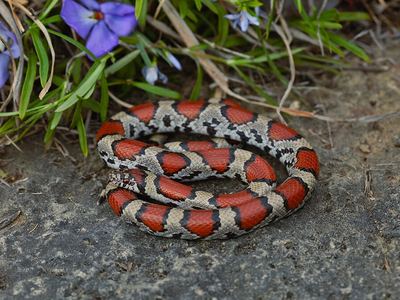
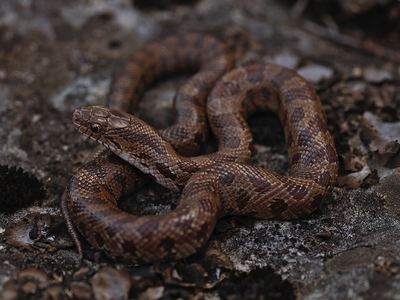
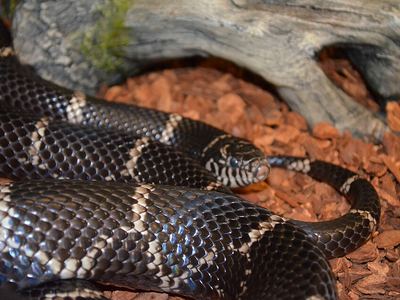
Other species of the genus Lampropeltis with profiles here: Eastern milksnake, Prairie kingsnake, Eastern kingsnake, Speckled kingsnake, California mountain kingsnake, Mole kingsnake, Central plains milksnake and Eastern black kingsnake.
GBIF records read 2026-09-29. Listed: any license. Counted: CC0/CC BY only. How we count.