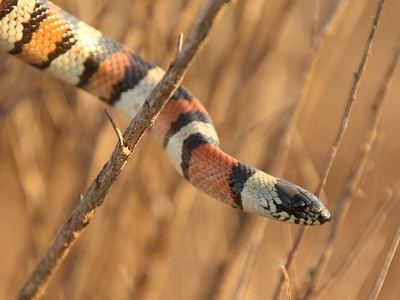
Eastern black kingsnake (Lampropeltis nigra)
The eastern black kingsnake is a non-venomous snake in the family Colubridae. GBIF holds 372 licensed U.S. records of it; it reaches our listing threshold in 11 states, most of all Tennessee (118), Alabama (81) and Kentucky (63). Its observation records peak in April.
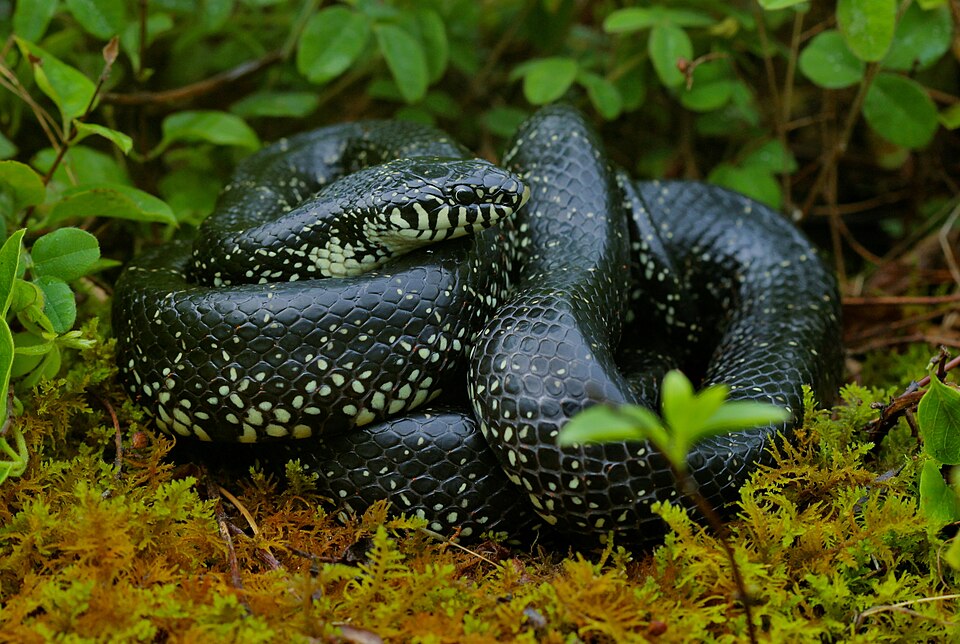
,_zusammengerollt.jpg)
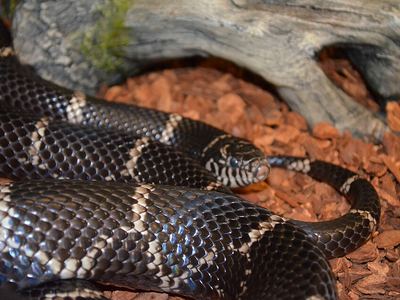
Lampropeltis nigra, commonly known as the black kingsnake, is a species of nonvenomous colubrid snake indigenous to the United States. It is a species of kingsnake.
From Wikipedia: Lampropeltis nigra, text under CC BY-SA 4.0.
Is the eastern black kingsnake poisonous or venomous?
No. The eastern black kingsnake is non-venomous: it belongs to the family Colubridae, not to the pit vipers or coral snakes, the only U.S. land snakes with medically dangerous venom. It may bite if handled; clean the bite like any small wound.
Which states have the eastern black kingsnake?
Records are spread over 11 states; the top three, Tennessee, Alabama and Kentucky, hold 70% of them.
The count includes 80 records filed under the older name Lampropeltis getula in Illinois (12), Indiana (28), Kentucky (8), Ohio (1), Tennessee (29) and West Virginia (2).
| # | State | Records | Share of state snakes | Rank in state |
|---|---|---|---|---|
| 1 | Tennessee | 118 | 4.5% | 9th of 32 |
| 2 | Alabama | 81 | 1.4% | 25th of 44 |
| 3 | Kentucky | 63 | 4.9% | 8th of 24 |
| 4 | Indiana | 40 | 1.8% | 14th of 27 |
| 5 | Illinois | 23 | 0.8% | 23rd of 33 |
| 6 | Ohio | 17 | 0.3% | 23rd of 25 |
| 7 | West Virginia | 11 | 0.7% | 17th of 18 |
| 8 | Mississippi | 9 | 0.5% | 33rd of 38 |
| 9 | Virginia | 4 | 0.0% | 30th of 30 |
| 10 | Georgia | 3 | 0.0% | 43rd of 44 |
| 11 | Louisiana | 1 | 0.0% | 40th of 41 |
When is the eastern black kingsnake seen?
Across the U.S., observation records of the eastern black kingsnake run mostly March through August, peaking in April with 36% of them. Almost none are from December to February.
Season by state
Among states whose main season falls within one calendar year, it starts earliest in March (Alabama and Tennessee) and latest in April (Kentucky). The most common peak month is April, shared by Kentucky and Tennessee.
| State | Main season | Peak month | Observation records |
|---|---|---|---|
| Tennessee | March through August | April | 82 |
| Kentucky | April through September | April | 50 |
| Alabama | March through August | May | 32 |
Where the eastern black kingsnake is recorded in each state
Tennessee
Tennessee holds 118 licensed records, the 9th most recorded of 32 snakes listed there. Its observation records in Tennessee run mostly March through August, peaking in April; most licensed records come from Stewart County, Hamilton County and Shelby County. Next come Wilson County (10) and Knox County (9).
Alabama
Alabama holds 81 licensed records, the 25th most recorded of 44 snakes listed there. Its observation records in Alabama run mostly March through August, peaking in May; most licensed records come from Blount County, Jefferson County and Bibb County. Next come Winston County (5) and Dallas County (4).
Kentucky
Kentucky holds 63 licensed records, the 8th most recorded of 24 snakes listed there. Its observation records in Kentucky run mostly April through September, peaking in April; most licensed records come from Trigg County, Madison County and Lyon County. Next come Calloway County (3) and Powell County (3).
Indiana
Indiana holds 40 licensed records, the 14th most recorded of 27 snakes listed there. Most of its licensed records in Indiana come from Knox County, Jackson County and Orange County. Next come Vanderburgh County (3) and Warrick County (3).
Top counties in the U.S.
| # | County | State | Records | Share of U.S. |
|---|---|---|---|---|
| 1 | Trigg County | Kentucky | 20 | 5.4% |
| 2 | Madison County | Kentucky | 15 | 4.0% |
| 3 | Stewart County | Tennessee | 15 | 4.0% |
| 4 | Hamilton County | Tennessee | 12 | 3.2% |
| 5 | Shelby County | Tennessee | 12 | 3.2% |
| 6 | Blount County | Alabama | 11 | 3.0% |
| 7 | Wilson County | Tennessee | 10 | 2.7% |
| 8 | Knox County | Tennessee | 9 | 2.4% |
| 9 | Jefferson County | Alabama | 7 | 1.9% |
| 10 | Cheatham County | Tennessee | 7 | 1.9% |
| 11 | Knox County | Indiana | 6 | 1.6% |
| 12 | Bibb County | Alabama | 5 | 1.3% |
| 13 | Winston County | Alabama | 5 | 1.3% |
| 14 | Lyon County | Kentucky | 5 | 1.3% |
| 15 | Hardeman County | Tennessee | 5 | 1.3% |
How recent are the eastern black kingsnake records?
Records of the eastern black kingsnake span old collections and new observations: 57% date from 2017–2026, and the median record is from 2020. The oldest dated record is from 1881; the busiest year was 2024, with 44 records.
| Decade | Records | Share |
|---|---|---|
| 1880s | 6 | 1.7% |
| 1890s | 2 | 0.6% |
| 1920s | 6 | 1.7% |
| 1930s | 26 | 7.3% |
| 1940s | 12 | 3.4% |
| 1950s | 18 | 5.0% |
| 1960s | 30 | 8.4% |
| 1970s | 18 | 5.0% |
| 1980s | 10 | 2.8% |
| 1990s | 3 | 0.8% |
| 2000s | 7 | 2.0% |
| 2010s | 30 | 8.4% |
| 2020s | 189 | 52.9% |
Species recorded in the same counties
Of the 76 counties where the eastern black kingsnake is most recorded, 34 are also top counties for the eastern copperhead, more than for any other snake. Venomous species among its neighbors: the eastern copperhead.
| Species | Shared counties |
|---|---|
| Eastern copperhead venomous | 34 |
| Eastern wormsnake | 31 |
| Rough greensnake | 31 |
| DeKay's brown snake | 29 |
| Ring-necked snake | 29 |
| Eastern racer | 28 |
| Eastern rat snake | 28 |
| Northern water snake | 27 |
Related species in the U.S.
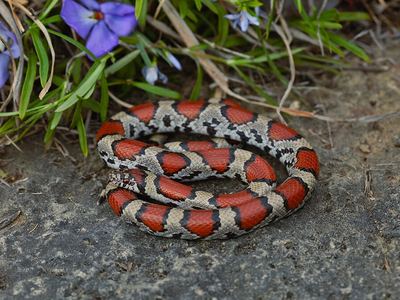
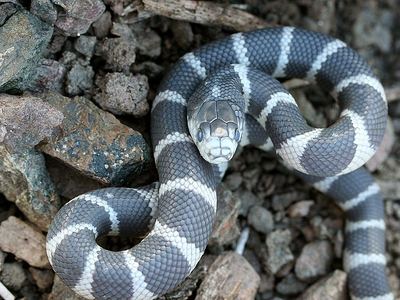
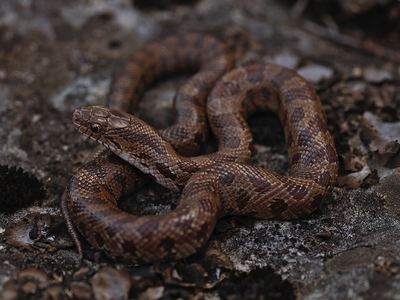
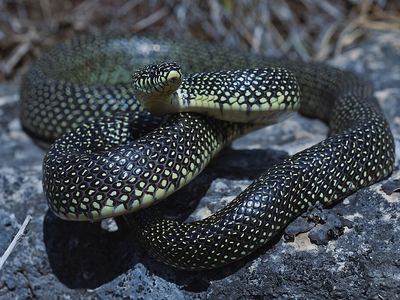
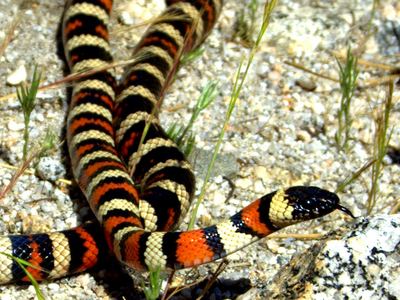
Other species of the genus Lampropeltis with profiles here: Eastern milksnake, California kingsnake, Prairie kingsnake, Eastern kingsnake, Speckled kingsnake, California mountain kingsnake, Mole kingsnake and Central plains milksnake.
GBIF records read 2026-09-29. Listed: any license. Counted: CC0/CC BY only. How we count.