Florida cottonmouth (Agkistrodon conanti)
The Florida cottonmouth is a venomous pit viper in the family Viperidae. GBIF holds 468 licensed U.S. records of it; it reaches our listing threshold in 2 states, most of all Florida (461) and Georgia (7). Its observation records peak in March.
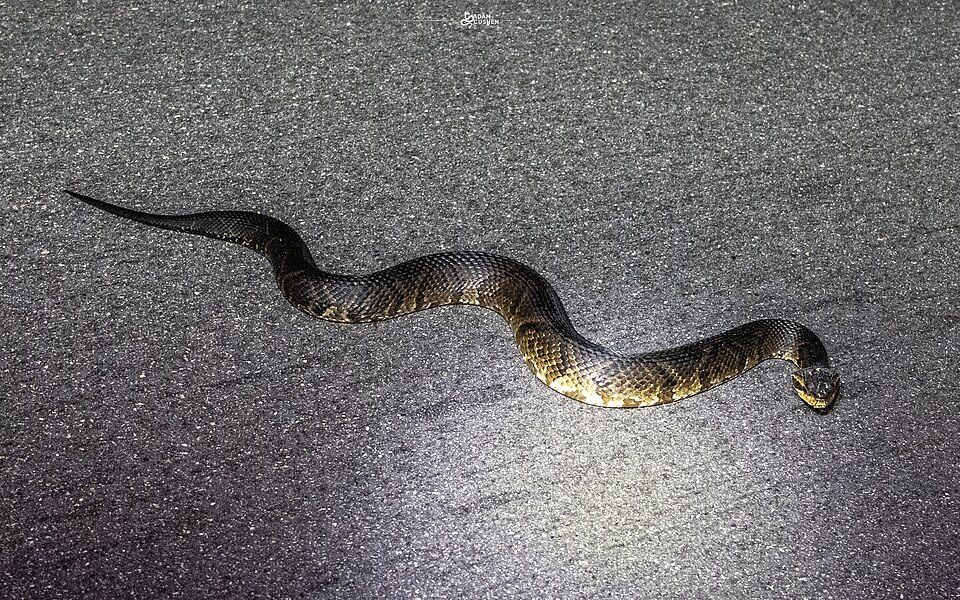

The Florida cottonmouth (Agkistrodon conanti) is a species of venomous snake, a pit viper in the subfamily Crotalinae of the family Viperidae. The species is endemic to the United States, where it occurs in southern Georgia and the Florida peninsula in nearly every type of wetlands in the region, including brackish water and offshore islands. However, it is not entirely dependent on water and is occasionally encountered as far as a mile (1.6 km.) from surface water.
From Wikipedia: Florida cottonmouth, text under CC BY-SA 4.0.
Is the Florida cottonmouth poisonous or venomous?
Yes. The Florida cottonmouth is a pit viper (family Viperidae), like every rattlesnake, copperhead and cottonmouth in the U.S. Its bite needs emergency care: call 911 and keep the bitten limb still. Antivenom is given in hospital.
Snakes often mistaken for it
Species commonly confused with cottonmouths and recorded in the same states: brown water snake (recorded in all 2 of its states), Florida green water snake (recorded in all 2 of its states), mud snake (recorded in all 2 of its states), northern water snake (recorded in all 2 of its states) and plain-bellied watersnake (recorded in all 2 of its states).
Which states have the Florida cottonmouth?
The Florida cottonmouth's U.S. record is concentrated: Florida alone holds 99% of licensed records. It is listed in 2 states in all; the next are Georgia (7).
Records filed under this name in Alabama are not counted: there the name stands for another species, or the record lies outside this species’ range.
| # | State | Records | Share of state snakes | Rank in state |
|---|---|---|---|---|
| 1 | Florida | 461 | 2.2% | 8th of 49 |
| 2 | Georgia | 7 | 0.1% | 38th of 44 |
When is the Florida cottonmouth seen?
Across the U.S., observation records of the Florida cottonmouth run through most of the year, peaking in March with 14% of them. Winter (December to February) holds 23% of them.
How recent are the Florida cottonmouth records?
Most of what is known about the Florida cottonmouth is recent: 74% of dated U.S. records were made in 2017–2026, and half date from 2021 or later. The oldest dated record is from 1916; the busiest year was 2024, with 59 records.
| Decade | Records | Share |
|---|---|---|
| 1910s | 3 | 0.6% |
| 1920s | 1 | 0.2% |
| 1930s | 6 | 1.2% |
| 1940s | 6 | 1.2% |
| 1950s | 8 | 1.7% |
| 1960s | 10 | 2.1% |
| 1970s | 4 | 0.8% |
| 1980s | 9 | 1.9% |
| 1990s | 3 | 0.6% |
| 2000s | 43 | 9.0% |
| 2010s | 108 | 22.5% |
| 2020s | 279 | 58.1% |
Species recorded in the same counties
Of the 15 counties where the Florida cottonmouth is most recorded, 12 are also top counties for the corn snake, more than for any other snake.
| Species | Shared counties |
|---|---|
| Corn snake | 12 |
| Southern watersnake | 11 |
| Eastern diamondback rattlesnake venomous | 10 |
| Eastern racer | 10 |
| Pygmy rattlesnake venomous | 10 |
| Ring-necked snake | 10 |
| Brahminy blindsnake | 9 |
| Common garter snake | 9 |
Related species in the U.S.
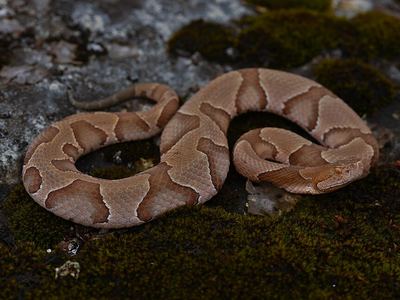
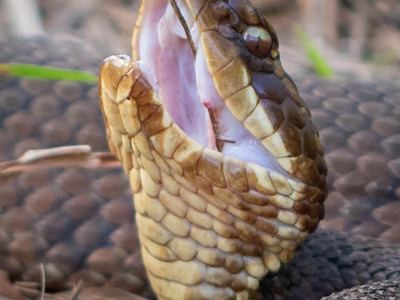
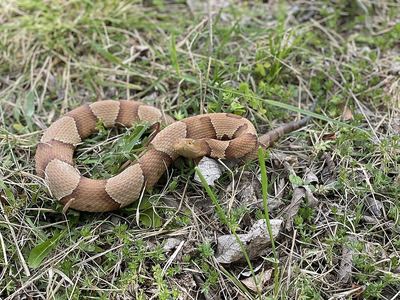
Other species of the genus Agkistrodon with profiles here: Eastern copperhead, Northern cottonmouth and Broad-banded copperhead.
GBIF records read 2026-09-29. Listed: any license. Counted: CC0/CC BY only. How we count.