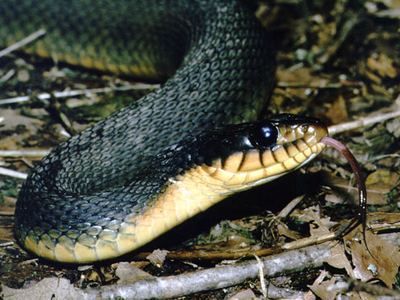
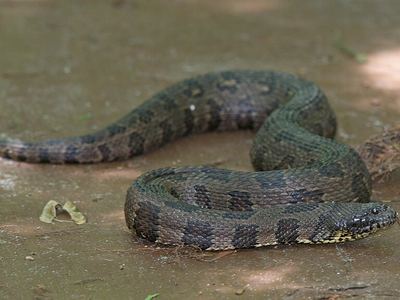
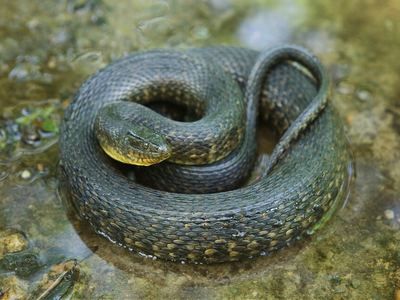
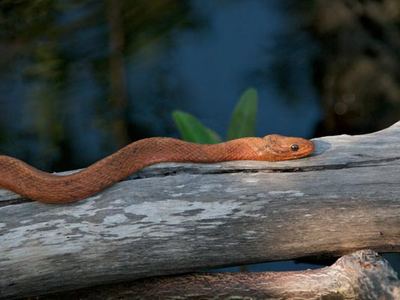
Florida green water snake (Nerodia floridana)
The Florida green water snake is a non-venomous snake in the family Colubridae. GBIF holds 456 licensed U.S. records of it; it reaches our listing threshold in 3 states, most of all Florida (431), South Carolina (17) and Georgia (5). Its observation records peak in March.
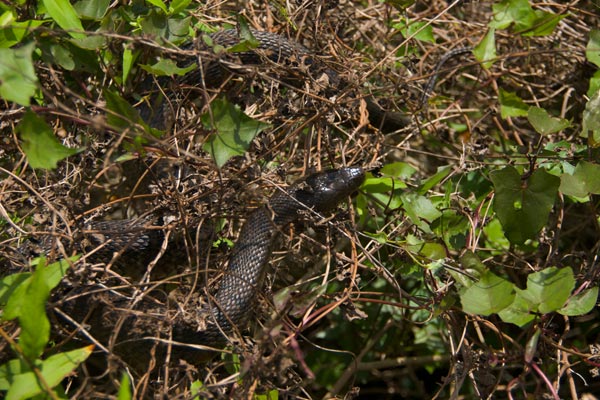

Nerodia floridana, commonly known as the Florida green watersnake, or eastern green watersnake, is a harmless species of snake in the subfamily Natricinae of the family Colubridae. The species is native to the southeastern United States.
From Wikipedia: Nerodia floridana, text under CC BY-SA 4.0.
Is the Florida green water snake poisonous or venomous?
No. The Florida green water snake is non-venomous: it belongs to the family Colubridae, not to the pit vipers or coral snakes, the only U.S. land snakes with medically dangerous venom. It may bite if handled; clean the bite like any small wound.
Often mistaken for
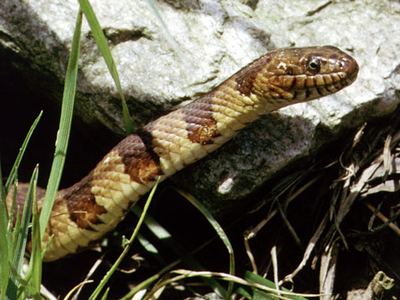
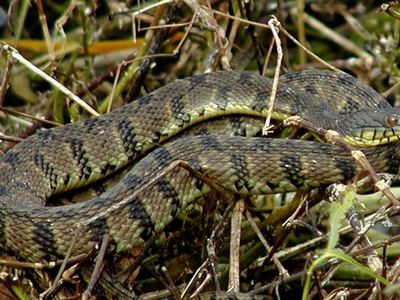
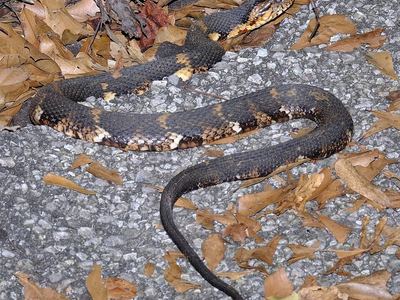
The Florida green water snake is non-venomous, but people often take it for cottonmouths (both are recorded in 3 of its 3 states).
Which states have the Florida green water snake?
The Florida green water snake's U.S. record is concentrated: Florida alone holds 95% of licensed records. It is listed in 3 states in all; the next are South Carolina (17) and Georgia (5).
| # | State | Records | Share of state snakes | Rank in state |
|---|---|---|---|---|
| 1 | Florida | 431 | 2.1% | 10th of 49 |
| 2 | South Carolina | 17 | 0.5% | 36th of 40 |
| 3 | Georgia | 5 | 0.1% | 40th of 44 |
When is the Florida green water snake seen?
Across the U.S., observation records of the Florida green water snake run through most of the year, peaking in March with 22% of them. Winter (December to February) holds 42% of them.
How recent are the Florida green water snake records?
The Florida green water snake record leans on older material: only 33% of dated U.S. records come from 2017–2026, and the median record is from 1984. The oldest dated record is from 1917; the busiest year was 1954, with 45 records.
| Decade | Records | Share |
|---|---|---|
| 1910s | 3 | 0.7% |
| 1920s | 5 | 1.1% |
| 1930s | 27 | 5.9% |
| 1940s | 20 | 4.4% |
| 1950s | 88 | 19.3% |
| 1960s | 41 | 9.0% |
| 1970s | 39 | 8.6% |
| 1980s | 17 | 3.7% |
| 1990s | 6 | 1.3% |
| 2000s | 41 | 9.0% |
| 2010s | 52 | 11.4% |
| 2020s | 117 | 25.7% |
Species recorded in the same counties
Of the 15 counties where the Florida green water snake is most recorded, 11 are also top counties for the striped crayfish snake, more than for any other snake. None of its closest neighbors is venomous.
| Species | Shared counties |
|---|---|
| Striped crayfish snake | 11 |
| Eastern kingsnake | 10 |
| Florida brown snake | 10 |
| Mud snake | 10 |
| Rough greensnake | 10 |
| Scarlet snake | 10 |
| Southern watersnake | 10 |
| Black swamp snake | 9 |
Related species in the U.S.
Other species of the genus Nerodia with profiles here: Northern water snake, Diamondback water snake, Southern watersnake, Plain-bellied watersnake, Brown water snake, Green water snake and Salt marsh snake.
GBIF records read 2026-09-29. Listed: any license. Counted: CC0/CC BY only. How we count.