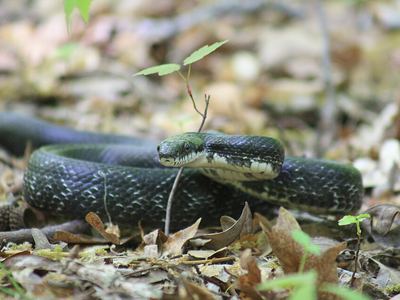
Striped crayfish snake (Liodytes alleni)
The striped crayfish snake (genus Liodytes) is a non-venomous snake in the family Colubridae. Of the 15 water snakes and swamp snakes profiled here, it is listed in fewer states than any other. All 2 states where it is listed lie in the South Atlantic division: Florida and Georgia. Its observation records peak in October.
Also called: striped swampsnake (English names in GBIF). Also spelled: striped swamp snake
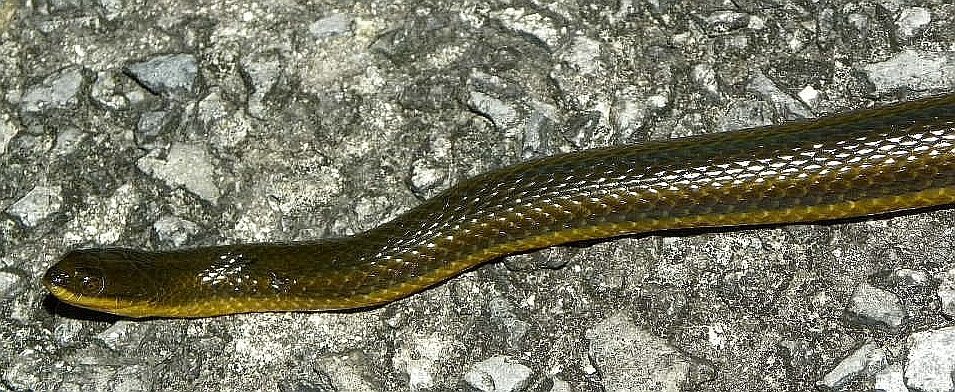

The striped crayfish snake (Liodytes alleni) is a species of semiaquatic North American snake in the family Colubridae. The species derives its common name from its principal prey, crayfish. This snake is also called Allen's snake, the striped swamp snake, the striped swampsnake, or simply the swamp snake.
From Wikipedia: Striped crayfish snake, text under CC BY-SA 4.0.
Is the striped crayfish snake poisonous or venomous?
No. The striped crayfish snake is non-venomous: it belongs to the family Colubridae, not to the pit vipers or coral snakes, the only U.S. land snakes with medically dangerous venom. It may bite if handled; clean the bite like any small wound.
Which states have the striped crayfish snake?
Florida alone holds 98% of its licensed U.S. records.
| # | State | Records | Share of state snakes | Rank in state |
|---|---|---|---|---|
| 1 | Florida | 370 | 1.8% | 13th of 50 |
| 2 | Georgia | 5 | 0.1% | 41st of 44 |
When is the striped crayfish snake seen?
Its observation records run through most of the year. December to February still holds 31% of them.
How recent are the striped crayfish snake records?
| Decade | Records | Share |
|---|---|---|
| 1910s | 2 | 0.5% |
| 1920s | 13 | 3.5% |
| 1930s | 18 | 4.9% |
| 1940s | 17 | 4.6% |
| 1950s | 56 | 15.2% |
| 1960s | 17 | 4.6% |
| 1970s | 114 | 30.9% |
| 1980s | 49 | 13.3% |
| 1990s | 11 | 3.0% |
| 2000s | 20 | 5.4% |
| 2010s | 18 | 4.9% |
| 2020s | 34 | 9.2% |
Species recorded in the same counties
| Species | Shared counties |
|---|---|
| Eastern coral snake venomous | 12 |
| Black swamp snake | 11 |
| Brahminy blindsnake | 10 |
| Coachwhip | 10 |
| Eastern kingsnake | 10 |
| Eastern racer | 10 |
| Florida brown snake | 10 |
| Florida green water snake | 10 |
Related species in the U.S.
GBIF records read 2026-11-05 (open these records on GBIF). Listed: any license. Counted: CC0/CC BY only. How we count.