American golden orb weaver (Trichonephila clavipes)
The American golden orb weaver is a spider in the family Araneidae that is not dangerous to people. GBIF holds 2,164 licensed U.S. records of it; it reaches our listing threshold in 9 states, most of all Florida (951), Louisiana (272) and Texas (211). Its observation records peak in August.
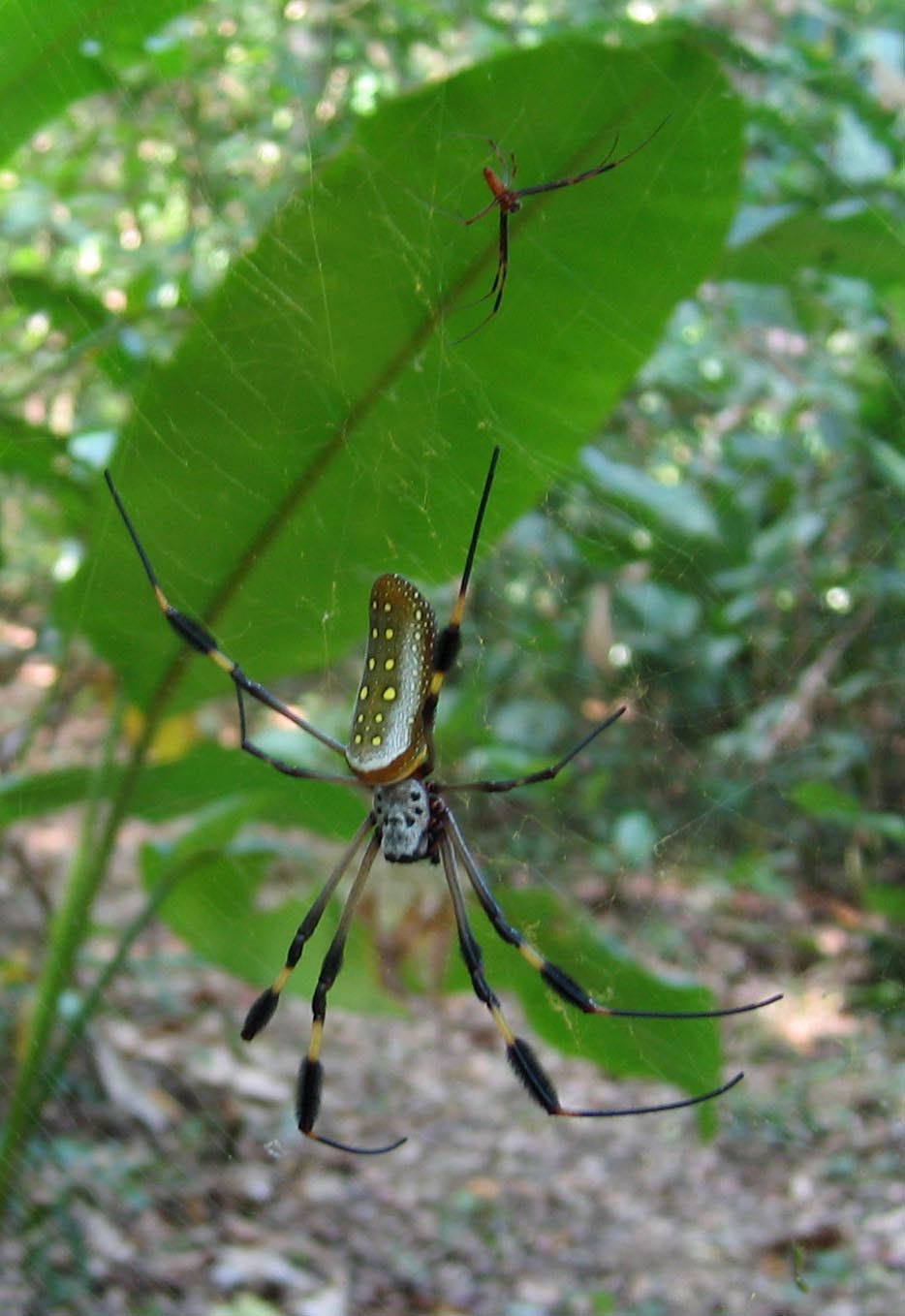

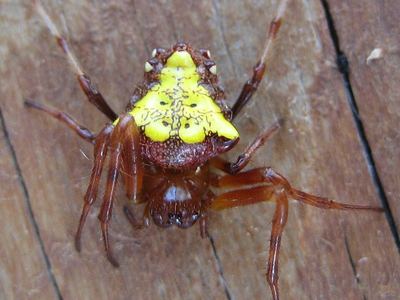
Trichonephila clavipes (formerly known as Nephila clavipes), commonly known as the golden silk orb-weaver, golden silk spider, golden orb weaver spider or colloquially banana spider (a name shared with several others), is an orb-weaving spider species which inhabits forests and wooded areas ranging from the southern US to Argentina. It is indigenous to both continental North and South America. Known for the golden color of their silk, the large size of their females, and their distinctive red-brown and yellow coloring, T. clavipes construct large, asymmetrical circular webs attached to trees and low shrubs in woods to catch small- and medium-size flying prey, mostly insects.
From Wikipedia: Trichonephila clavipes, text under CC BY-SA 4.0.
Is the American golden orb weaver poisonous or venomous?
Not in any medically significant way. Like almost all spiders the American golden orb weaver (family Araneidae) has venom for its prey, but it is not a widow or recluse, the two U.S. groups whose bites need medical attention.
Which states have the American golden orb weaver?
Records are spread over 9 states; the top three, Florida, Louisiana and Texas, hold 66% of them. It is the most recorded spider of all in Florida and South Carolina.
| # | State | Records | Share of state spiders | Rank in state |
|---|---|---|---|---|
| 1 | Florida | 951 | 7.6% | 1st of 237 |
| 2 | Louisiana | 272 | 6.8% | 2nd of 107 |
| 3 | Texas | 211 | 0.7% | 25th of 386 |
| 4 | Georgia | 194 | 2.9% | 6th of 186 |
| 5 | South Carolina | 183 | 7.7% | 1st of 121 |
| 6 | Alabama | 140 | 3.9% | 5th of 143 |
| 7 | North Carolina | 130 | 1.6% | 12th of 184 |
| 8 | Mississippi | 80 | 5.6% | 3rd of 117 |
| 9 | Virginia | 0 | — | — |
When is the American golden orb weaver seen?
Across the U.S., observation records of the American golden orb weaver run mostly April through December, peaking in August with 18% of them. Winter (December to February) holds 8% of them.
Season by state
Observation records run through most of the year in Florida. Among states whose main season falls within one calendar year, it starts earliest in May (Alabama, Georgia, Louisiana and South Carolina) and latest in June (Mississippi, North Carolina and Texas). The most common peak month is August, shared by Alabama, Georgia, North Carolina and Texas.
| State | Main season | Peak month | Observation records |
|---|---|---|---|
| Florida | most of the year | June | 924 |
| Louisiana | May through October | July | 271 |
| Texas | June through October | August | 199 |
| Georgia | May through October | August | 194 |
| South Carolina | May through October | July | 181 |
| Alabama | May through November | August | 140 |
| North Carolina | June through October | August | 130 |
| Mississippi | June through November | September | 79 |
Where the American golden orb weaver is recorded in each state
Florida
Florida holds 951 licensed records, the most recorded of 237 spiders listed there. Its observation records in Florida run through most of the year, peaking in June; most licensed records come from Alachua County, Miami-Dade County and Monroe County. Next come Broward County (95) and Palm Beach County (46).
Louisiana
Louisiana holds 272 licensed records, the 2nd most recorded of 107 spiders listed there. Its observation records in Louisiana run mostly May through October, peaking in July; most licensed records come from East Baton Rouge Parish, Saint Tammany Parish and Jefferson Parish. Next come West Feliciana Parish (14) and Lafayette Parish (11).
Texas
Texas holds 211 licensed records, the 25th most recorded of 386 spiders listed there. Its observation records in Texas run mostly June through October, peaking in August; most licensed records come from Jasper County, Fort Bend County and Harris County. Next come Chambers County (27) and Brazoria County (21).
Georgia
Georgia holds 194 licensed records, the 6th most recorded of 186 spiders listed there. Its observation records in Georgia run mostly May through October, peaking in August; most licensed records come from Chatham County, Bryan County and Glynn County. Next come Jones County (11) and Richmond County (10).
South Carolina
South Carolina holds 183 licensed records, the most recorded of 121 spiders listed there. Its observation records in South Carolina run mostly May through October, peaking in July; most licensed records come from Richland County, Charleston County and Georgetown County. Next come Beaufort County (13) and Aiken County (11).
Alabama
Alabama holds 140 licensed records, the 5th most recorded of 143 spiders listed there. Its observation records in Alabama run mostly May through November, peaking in August; most licensed records come from Mobile County, Baldwin County and Elmore County. Next come Lee County (8) and Montgomery County (6).
North Carolina
North Carolina holds 130 licensed records, the 12th most recorded of 184 spiders listed there. Its observation records in North Carolina run mostly June through October, peaking in August; most licensed records come from New Hanover County, Carteret County and Brunswick County. Next come Cumberland County (11) and Dare County (9).
Mississippi
Mississippi holds 80 licensed records, the 3rd most recorded of 117 spiders listed there. Its observation records in Mississippi run mostly June through November, peaking in September; most licensed records come from Jackson County, Pearl River County and Simpson County. Next come Forrest County (7) and Harrison County (6).
Top counties in the U.S.
| # | County | State | Records | Share of U.S. |
|---|---|---|---|---|
| 1 | Alachua County | Florida | 173 | 8.0% |
| 2 | Miami-Dade County | Florida | 145 | 6.7% |
| 3 | Monroe County | Florida | 136 | 6.3% |
| 4 | Broward County | Florida | 95 | 4.4% |
| 5 | East Baton Rouge Parish | Louisiana | 76 | 3.5% |
| 6 | Mobile County | Alabama | 63 | 2.9% |
| 7 | Chatham County | Georgia | 53 | 2.4% |
| 8 | Jasper County | Texas | 50 | 2.3% |
| 9 | Richland County | South Carolina | 48 | 2.2% |
| 10 | New Hanover County | North Carolina | 47 | 2.2% |
| 11 | Palm Beach County | Florida | 46 | 2.1% |
| 12 | Charleston County | South Carolina | 46 | 2.1% |
| 13 | Fort Bend County | Texas | 44 | 2.0% |
| 14 | Saint Tammany Parish | Louisiana | 41 | 1.9% |
| 15 | Harris County | Texas | 29 | 1.3% |
How recent are the American golden orb weaver records?
Most of what is known about the American golden orb weaver is recent: 88% of dated U.S. records were made in 2017–2026, and half date from 2022 or later. The oldest dated record is from 1951; the busiest year was 2025, with 346 records.
| Decade | Records | Share |
|---|---|---|
| 1950s | 1 | 0.0% |
| 1960s | 5 | 0.2% |
| 1970s | 2 | 0.1% |
| 1980s | 6 | 0.3% |
| 1990s | 1 | 0.0% |
| 2000s | 49 | 2.2% |
| 2010s | 470 | 21.1% |
| 2020s | 1,695 | 76.0% |
Species recorded in the same counties
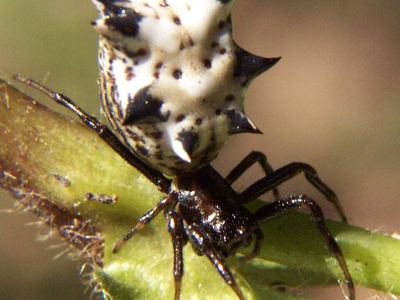
Of the 119 counties where the American golden orb weaver is most recorded, 66 are also top counties for the spiny-backed orbweaver, more than for any other spider. None of its closest neighbors is venomous.
| Species | Shared counties |
|---|---|
| Spiny-backed orbweaver | 66 |
| Leucauge argyrobapta | 58 |
| Magnolia green jumper | 55 |
| Black-and-yellow argiope | 54 |
| Twin-flagged jumping spider | 52 |
| Green lynx spider | 47 |
| Spotted orbweaver | 45 |
| White-banded fishing spider | 43 |
Related species in the U.S.
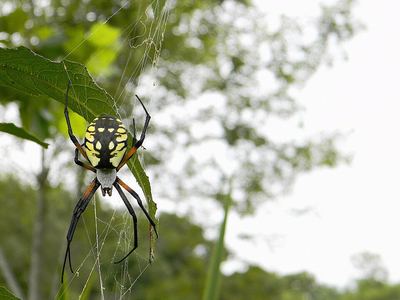
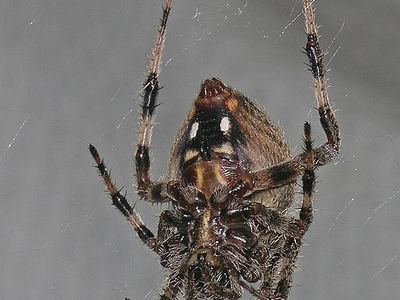
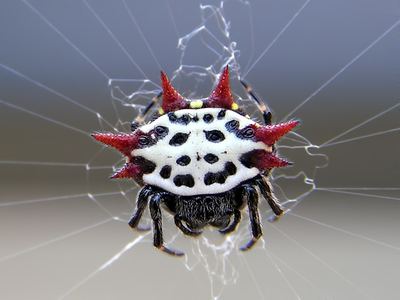
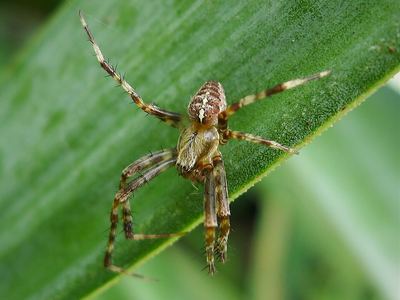
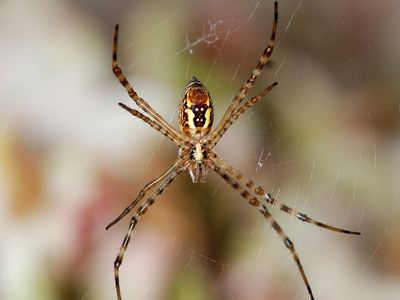
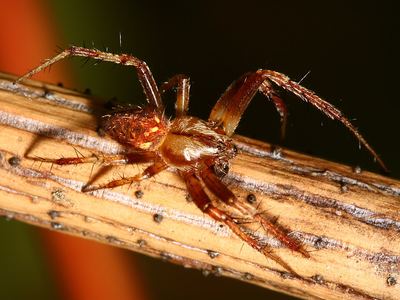
Other members of the family Araneidae with profiles here: Black-and-yellow argiope, Spotted orbweaver, Spiny-backed orbweaver, Garden spider, Spined micrathena and Banded garden spider.
GBIF records read 2026-09-29. Listed: any license. Counted: CC0/CC BY only. How we count.