Southern black widow (Latrodectus mactans)
The southern black widow is a venomous spider in the family Theridiidae. GBIF holds 772 licensed U.S. records of it; it reaches our listing threshold in 22 states, most of all Texas (200), Delaware (84) and Oklahoma (61). Its observation records peak in July.
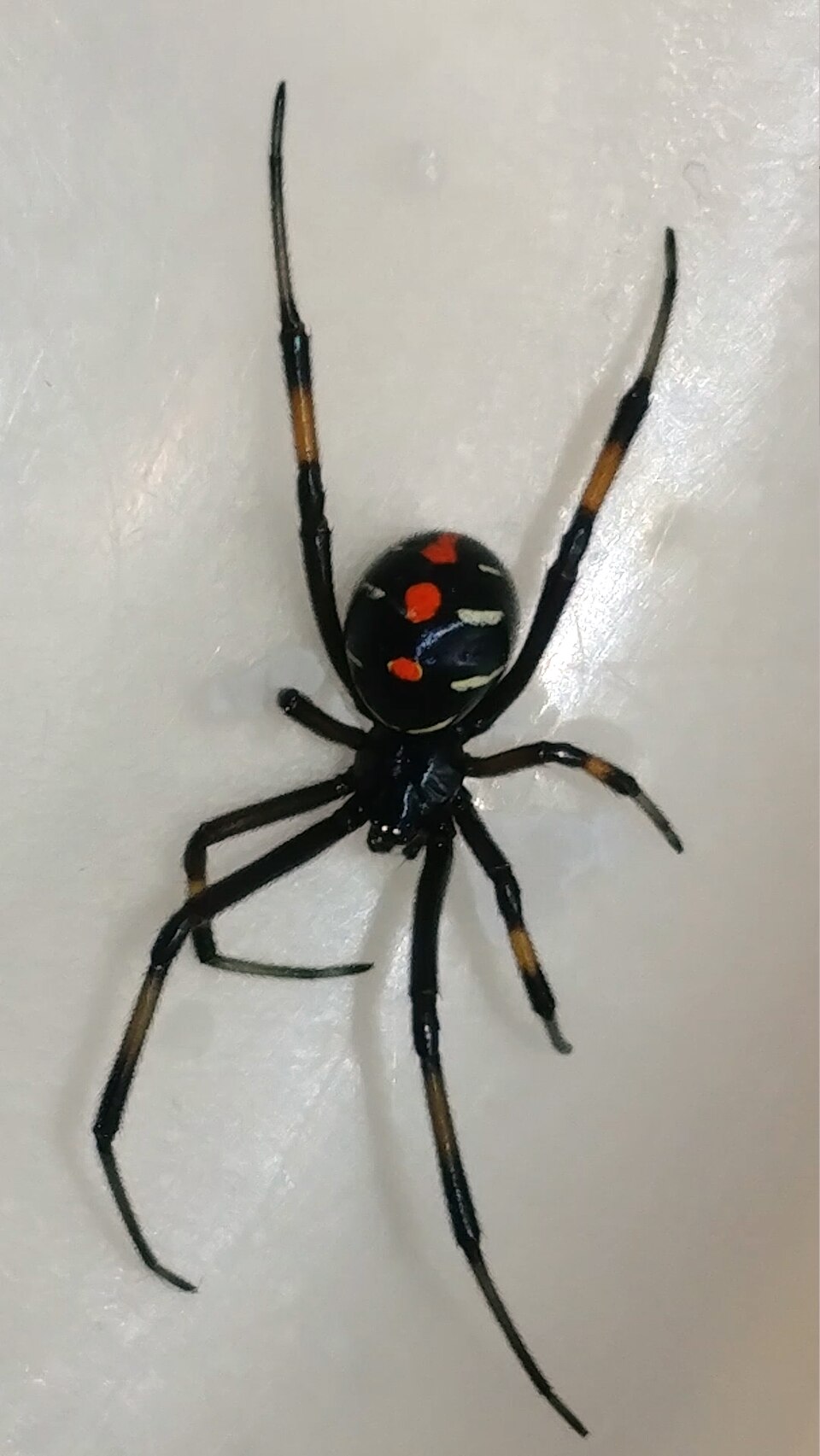

Latrodectus mactans, known as southern black widow or simply black widow, and the shoe-button spider, is a venomous species of spider in the genus Latrodectus. The females are well known for their distinctive black and red coloring and for the fact that they will occasionally eat their mates after reproduction. The species is native to North America.
From Wikipedia: Latrodectus mactans, text under CC BY-SA 4.0.
Is the southern black widow poisonous or venomous?
Yes. The southern black widow is a widow spider (genus Latrodectus). Its venom can cause pain, cramps and sweating spreading from the bite. Bites are rarely fatal but worth a call to Poison Help at 1-800-222-1222.
Spiders often mistaken for it
Species commonly confused with widow spiders and recorded in the same states: triangulate bud spider (recorded in all 22 of its states), common house spider (recorded in 21 of its 22 states), boreal combfoot (recorded in 12 of its 22 states), false black widow (recorded in 9 of its 22 states) and twospotted cobweb spider (recorded in 7 of its 22 states).
Which states have the southern black widow?
Records are spread over 22 states; the top three, Texas, Delaware and Oklahoma, hold 45% of them.
GBIF records filed under this name in Arizona, California and Colorado are counted as the western black widow, the species that lives there.
| # | State | Records | Share of state spiders | Rank in state |
|---|---|---|---|---|
| 1 | Texas | 200 | 0.7% | 27th of 386 |
| 2 | Delaware | 84 | 4.0% | 5th of 71 |
| 3 | Oklahoma | 61 | 1.2% | 20th of 149 |
| 4 | Virginia | 60 | 0.5% | 46th of 176 |
| 5 | Florida | 52 | 0.4% | 35th of 237 |
| 6 | North Carolina | 44 | 0.5% | 45th of 184 |
| 7 | Georgia | 40 | 0.6% | 36th of 186 |
| 8 | Alabama | 27 | 0.8% | 32nd of 143 |
| 9 | South Carolina | 26 | 1.1% | 23rd of 121 |
| 10 | Maryland | 25 | 0.4% | 51st of 153 |
| 11 | Mississippi | 24 | 1.7% | 12th of 117 |
| 12 | Arkansas | 22 | 1.3% | 22nd of 114 |
| 13 | Kentucky | 21 | 1.1% | 23rd of 103 |
| 14 | Illinois | 19 | 0.1% | 130th of 243 |
| 15 | Tennessee | 19 | 0.5% | 47th of 138 |
| 16 | New Jersey | 16 | 0.7% | 39th of 127 |
| 17 | Louisiana | 13 | 0.3% | 52nd of 107 |
| 18 | Missouri | 7 | 0.3% | 54th of 117 |
| 19 | Ohio | 5 | 0.1% | 114th of 332 |
| 20 | Kansas | 1 | 0.1% | 80th of 94 |
| 21 | West Virginia | 1 | 0.1% | 57th of 90 |
| 22 | Pennsylvania | 0 | — | — |
When is the southern black widow seen?
Across the U.S., observation records of the southern black widow run mostly March through November, peaking in July with 15% of them. Winter (December to February) holds 9% of them.
Season by state
Observation records run through most of the year in Florida and Texas. Among states whose main season falls within one calendar year, it starts earliest in January (Georgia) and latest in May (Delaware). The most common peak month is September, shared by Delaware, Georgia and Virginia.
| State | Main season | Peak month | Observation records |
|---|---|---|---|
| Texas | most of the year | July | 194 |
| Delaware | May through October | September | 84 |
| Virginia | April through November | September | 60 |
| Florida | most of the year | April | 47 |
| Oklahoma | March through October | April | 45 |
| North Carolina | April through November | July | 43 |
| Georgia | January through September | September | 40 |
Where the southern black widow is recorded in each state
Texas
Texas holds 200 licensed records, the joint 27th most recorded of 386 spiders listed there. Its observation records in Texas run through most of the year, peaking in July; most licensed records come from Dallas County, Travis County and Hidalgo County. Next come Milam County (12) and Wilson County (11).
Delaware
Delaware holds 84 licensed records, the 5th most recorded of 71 spiders listed there. Its observation records in Delaware run mostly May through October, peaking in September; most licensed records come from Sussex County and Kent County.
Oklahoma
Oklahoma holds 61 licensed records, the 20th most recorded of 149 spiders listed there. Its observation records in Oklahoma run mostly March through October, peaking in April; most licensed records come from Cleveland County, Oklahoma County and Tulsa County. Next come Comanche County (4) and Mayes County (4).
Virginia
Virginia holds 60 licensed records, the joint 46th most recorded of 176 spiders listed there. Its observation records in Virginia run mostly April through November, peaking in September; most licensed records come from Montgomery County, Prince William County and Accomack County. Next come Powhatan County (4) and Fairfax County (3).
Florida
Florida holds 52 licensed records, the 35th most recorded of 237 spiders listed there. Its observation records in Florida run through most of the year, peaking in April; most licensed records come from Alachua County, Duval County and Escambia County. Next come Polk County (4) and Marion County (3).
North Carolina
North Carolina holds 44 licensed records, the 45th most recorded of 184 spiders listed there. Its observation records in North Carolina run mostly April through November, peaking in July; most licensed records come from Brunswick County, Cumberland County and Dare County. Next come Durham County (3) and Buncombe County (2).
Georgia
Georgia holds 40 licensed records, the joint 36th most recorded of 186 spiders listed there. Its observation records in Georgia run mostly January through September, peaking in September; most licensed records come from Clarke County, Bryan County and Floyd County. Next come Columbia County (2) and DeKalb County (2).
Top counties in the U.S.
| # | County | State | Records | Share of U.S. |
|---|---|---|---|---|
| 1 | Sussex County | Delaware | 77 | 10.0% |
| 2 | Dallas County | Texas | 25 | 3.2% |
| 3 | Cleveland County | Oklahoma | 18 | 2.3% |
| 4 | Montgomery County | Virginia | 14 | 1.8% |
| 5 | Travis County | Texas | 13 | 1.7% |
| 6 | Hidalgo County | Texas | 12 | 1.6% |
| 7 | Milam County | Texas | 12 | 1.6% |
| 8 | Wilson County | Texas | 11 | 1.4% |
| 9 | Alachua County | Florida | 10 | 1.3% |
| 10 | Oklahoma County | Oklahoma | 10 | 1.3% |
| 11 | Clarke County | Georgia | 9 | 1.2% |
| 12 | Kent County | Delaware | 7 | 0.9% |
| 13 | Brunswick County | North Carolina | 7 | 0.9% |
| 14 | Tulsa County | Oklahoma | 7 | 0.9% |
| 15 | Nueces County | Texas | 7 | 0.9% |
How recent are the southern black widow records?
Most of what is known about the southern black widow is recent: 87% of dated U.S. records were made in 2017–2026, and half date from 2023 or later. The oldest dated record is from 1905; the busiest year was 2025, with 111 records.
| Decade | Records | Share |
|---|---|---|
| 1900s | 1 | 0.1% |
| 1920s | 5 | 0.6% |
| 1930s | 13 | 1.7% |
| 1940s | 10 | 1.3% |
| 1950s | 3 | 0.4% |
| 1960s | 3 | 0.4% |
| 1970s | 1 | 0.1% |
| 1980s | 4 | 0.5% |
| 1990s | 3 | 0.4% |
| 2000s | 10 | 1.3% |
| 2010s | 118 | 15.0% |
| 2020s | 615 | 78.2% |
Species recorded in the same counties
Of the 92 counties where the southern black widow is most recorded, 50 are also top counties for the spotted orbweaver, more than for any other spider. None of its closest neighbors is venomous.
| Species | Shared counties |
|---|---|
| Spotted orbweaver | 50 |
| Black-and-yellow argiope | 48 |
| Familiar jumping spider | 47 |
| Rabid wolf spider | 41 |
| Green lynx spider | 40 |
| Brilliant jumping spider | 38 |
| Sylvan jumping spider | 38 |
| Whitebanded crab spider | 38 |
Related species in the U.S.
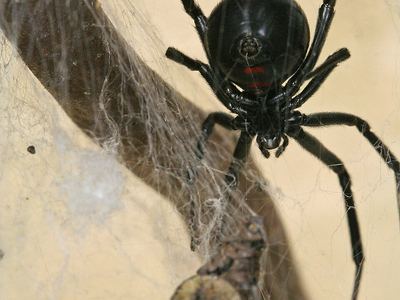
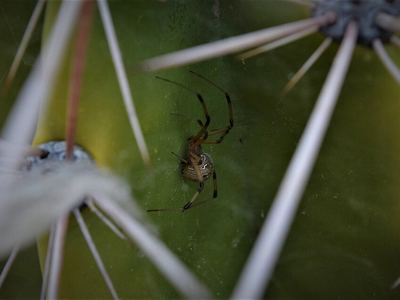
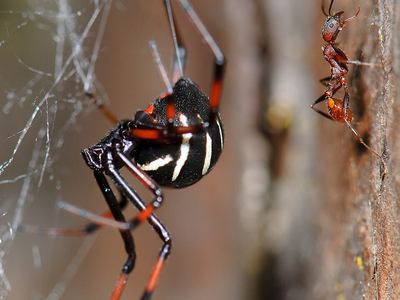
Other species of the genus Latrodectus with profiles here: Western black widow, Brown widow and Northern black widow.
GBIF records read 2026-09-29. Listed: any license. Counted: CC0/CC BY only. How we count.