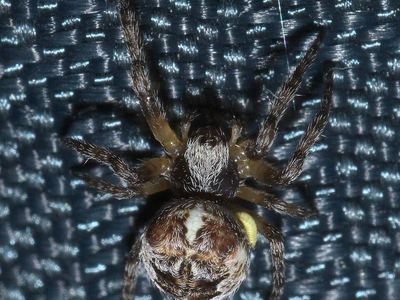
Shamrock orbweaver (Araneus trifolium)
The shamrock orbweaver is a spider in the family Araneidae that is not dangerous to people. GBIF holds 320 licensed U.S. records of it; it reaches our listing threshold in 26 states, most of all Alaska (58), California (56) and Minnesota (28). Its observation records peak in September.
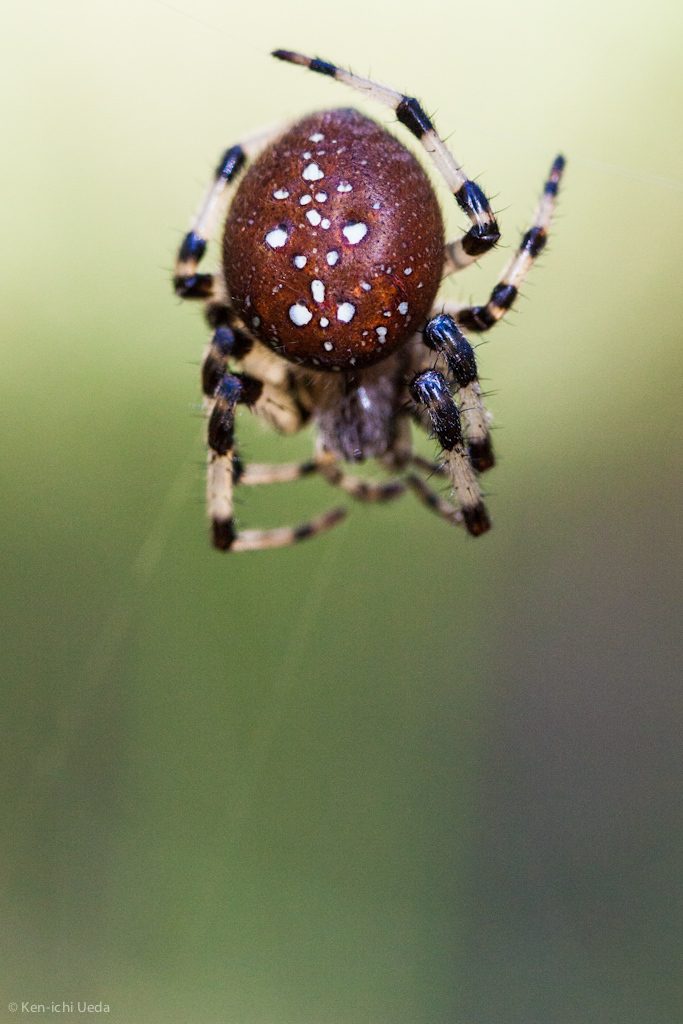
Araneus trifolium, commonly known as the shamrock orbweaver, is a species of orb-weaving spider in the family Araneidae. It is found throughout the USA and in Canada. It was first described by Nicholas Marcellus Hentz in 1847 and is known for a dorsal abdominal pattern resembling a clover leaf.
From Wikipedia: Araneus trifolium, text under CC BY-SA 4.0.
Is the shamrock orbweaver poisonous or venomous?
Not in any medically significant way. Like almost all spiders the shamrock orbweaver (family Araneidae) has venom for its prey, but it is not a widow or recluse, the two U.S. groups whose bites need medical attention.
Which states have the shamrock orbweaver?
Records are spread over 26 states; the top three, Alaska, California and Minnesota, hold 44% of them.
| # | State | Records | Share of state spiders | Rank in state |
|---|---|---|---|---|
| 1 | Alaska | 58 | 0.2% | 86th of 280 |
| 2 | California | 56 | 0.1% | 90th of 309 |
| 3 | Minnesota | 28 | 0.9% | 24th of 145 |
| 4 | Vermont | 26 | 1.7% | 15th of 74 |
| 5 | Wisconsin | 19 | 0.6% | 42nd of 149 |
| 6 | Illinois | 18 | 0.1% | 136th of 243 |
| 7 | New York | 18 | 0.3% | 62nd of 149 |
| 8 | Massachusetts | 15 | 0.3% | 56th of 189 |
| 9 | Michigan | 14 | 0.6% | 36th of 122 |
| 10 | New Hampshire | 10 | 0.7% | 34th of 72 |
| 11 | Ohio | 10 | 0.1% | 86th of 332 |
| 12 | Washington | 8 | 0.2% | 61st of 157 |
| 13 | Pennsylvania | 7 | 0.1% | 103rd of 164 |
| 14 | Colorado | 6 | 0.1% | 61st of 378 |
| 15 | Maine | 5 | 0.5% | 37th of 297 |
| 16 | Connecticut | 4 | 0.4% | 42nd of 86 |
| 17 | Oregon | 4 | 0.1% | 56th of 88 |
| 18 | Virginia | 4 | 0.0% | 144th of 176 |
| 19 | North Carolina | 2 | 0.0% | 154th of 184 |
| 20 | Wyoming | 2 | 0.9% | 11th of 68 |
| 21 | West Virginia | 1 | 0.1% | 57th of 90 |
| 22 | Idaho | 0 | — | — |
| 23 | Indiana | 0 | — | — |
| 24 | Iowa | 0 | — | — |
| 25 | Maryland | 0 | — | — |
| 26 | Montana | 0 | — | — |
When is the shamrock orbweaver seen?
Across the U.S., observation records of the shamrock orbweaver run mostly July through October, peaking in September with 44% of them. Almost none are from December to February.
Where the shamrock orbweaver is recorded in each state
Alaska
Alaska holds 58 licensed records, the joint 86th most recorded of 280 spiders listed there. Most of its licensed records in Alaska come from Anchorage Municipality, Fairbanks North Star Borough and Kenai Peninsula Borough. Next come Kodiak Island Borough (4) and Matanuska-Susitna Borough (4).
California
California holds 56 licensed records, the 90th most recorded of 309 spiders listed there. Its observation records in California run mostly August through November, peaking in September; most licensed records come from San Francisco County, San Mateo County and Marin County. Next come Sonoma County (5) and Humboldt County (2).
Top counties in the U.S.
| # | County | State | Records | Share of U.S. |
|---|---|---|---|---|
| 1 | San Francisco County | California | 24 | 7.5% |
| 2 | Anchorage Municipality | Alaska | 17 | 5.3% |
| 3 | Fairbanks North Star Borough | Alaska | 16 | 5.0% |
| 4 | San Mateo County | California | 11 | 3.4% |
| 5 | Marin County | California | 10 | 3.1% |
| 6 | Kenai Peninsula Borough | Alaska | 7 | 2.2% |
| 7 | Sonoma County | California | 5 | 1.6% |
| 8 | Kodiak Island Borough | Alaska | 4 | 1.2% |
| 9 | Matanuska-Susitna Borough | Alaska | 4 | 1.2% |
| 10 | Prince of Wales-Outer Ketchikan Census Area | Alaska | 2 | 0.6% |
| 11 | Southeast Fairbanks Census Area | Alaska | 2 | 0.6% |
| 12 | Wrangell-Petersburg Census Area | Alaska | 2 | 0.6% |
| 13 | Haines Borough | Alaska | 2 | 0.6% |
| 14 | Humboldt County | California | 2 | 0.6% |
| 15 | Mendocino County | California | 2 | 0.6% |
How recent are the shamrock orbweaver records?
Most of what is known about the shamrock orbweaver is recent: 76% of dated U.S. records were made in 2017–2026, and half date from 2021 or later. The oldest dated record is from 1932; the busiest year was 2025, with 53 records.
| Decade | Records | Share |
|---|---|---|
| 1930s | 4 | 1.2% |
| 1940s | 2 | 0.6% |
| 1950s | 4 | 1.2% |
| 1960s | 2 | 0.6% |
| 1970s | 4 | 1.2% |
| 1980s | 3 | 0.9% |
| 1990s | 3 | 0.9% |
| 2000s | 18 | 5.6% |
| 2010s | 83 | 25.7% |
| 2020s | 200 | 61.9% |
Species recorded in the same counties
Of the 19 counties where the shamrock orbweaver is most recorded, 14 are also top counties for both the goldenrod crab spider and the sixspotted orbweaver; no other spider shares more. None of its closest neighbors is venomous.
| Species | Shared counties |
|---|---|
| Goldenrod crab spider | 14 |
| Sixspotted orbweaver | 14 |
| Cone-shaped orbweaver | 11 |
| Long-jawed orb weaver | 11 |
| Versicolor long-jawed orbweaver | 10 |
| California turret spider | 8 |
| Mackenzie's thin-legged wolf spider | 8 |
| Shiny wolf spider | 8 |
Related species in the U.S.
Other species of the genus Araneus with profiles here: Garden spider, Marbled orbweaver, Butterfly orbweaver and Giant lichen orbweaver.
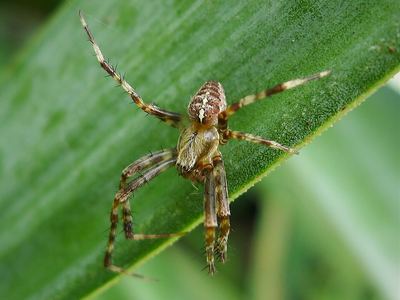
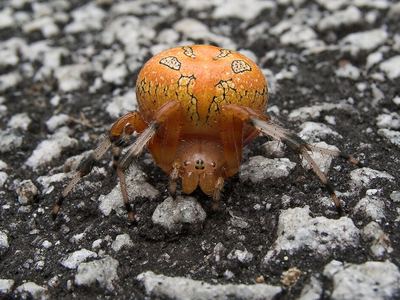
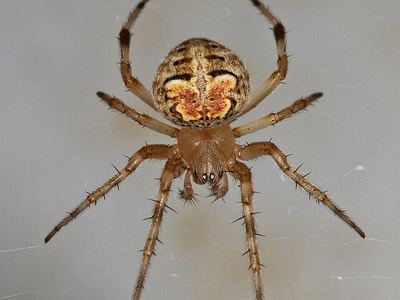
GBIF records read 2026-09-29. Listed: any license. Counted: CC0/CC BY only. How we count.