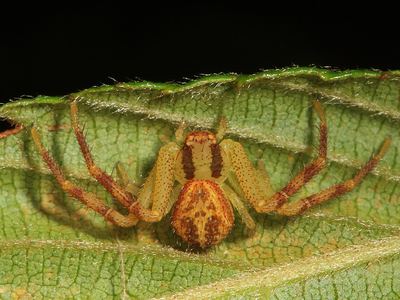
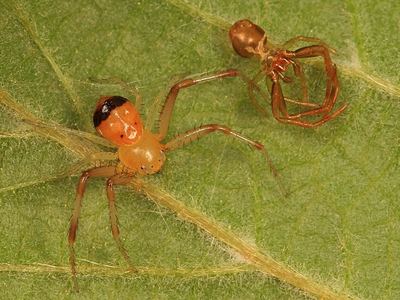
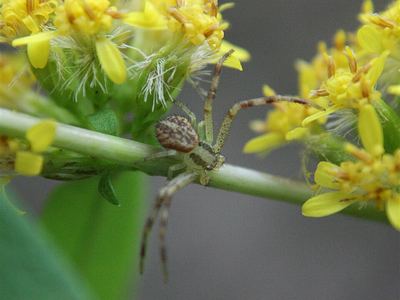
Tan crab spider (Xysticus ferox)
The tan crab spider (genus Xysticus) is a spider in the family Thomisidae that is not dangerous to people. Of the eight crab spiders profiled here, it is listed in fewer states than any other. Most of its 13 listed states are in the East North Central (4), New England (2) and West North Central (2) census divisions.
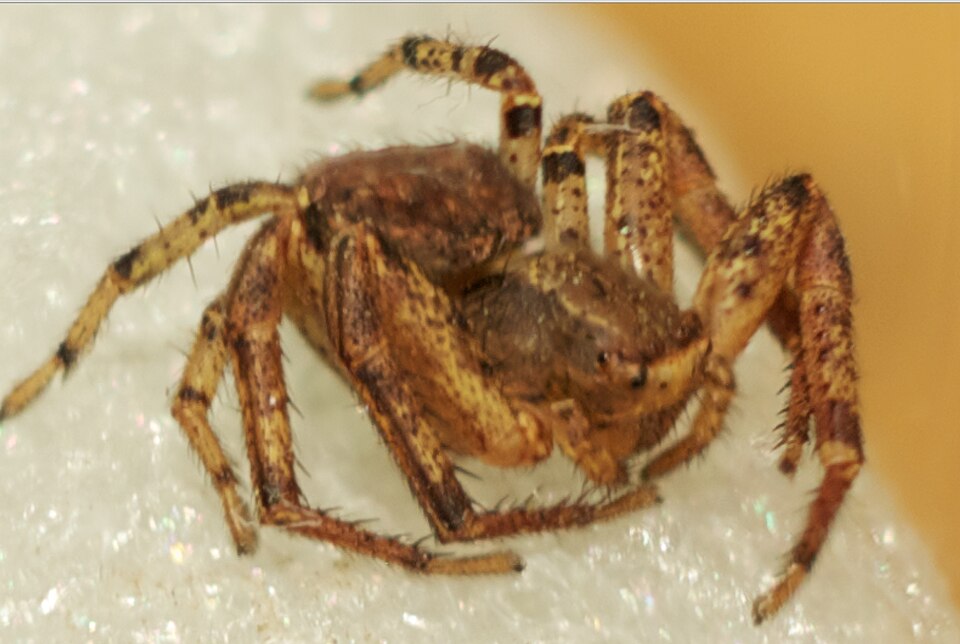

Xysticus ferox, the brown crab spider, is a species of crab spider in the family Thomisidae. It is found in the USA and Canada.
From Wikipedia: Xysticus ferox, text under CC BY-SA 4.0.
Is the tan crab spider poisonous or venomous?
Not in any medically significant way. Like almost all spiders the tan crab spider (family Thomisidae) has venom for its prey, but it is not a widow or recluse, the two U.S. groups whose bites need medical attention.
Which states have the tan crab spider?
Illinois alone holds 56% of its licensed U.S. records.
| # | State | Records | Share of state spiders | Rank in state |
|---|---|---|---|---|
| 1 | Illinois | 187 | 1.0% | 7th of 243 |
| 2 | Indiana | 44 | 0.9% | 22nd of 134 |
| 3 | Wisconsin | 18 | 0.6% | 47th of 148 |
| 4 | Alaska | 12 | 0.0% | 248th of 280 |
| 5 | Pennsylvania | 10 | 0.1% | 87th of 169 |
| 6 | Texas | 7 | 0.0% | 235th of 387 |
| 7 | Ohio | 5 | 0.1% | 116th of 333 |
| 8 | Massachusetts | 2 | 0.0% | 125th of 191 |
| 9 | New Mexico | 2 | 0.1% | 127th of 248 |
| 10 | Colorado | 1 | 0.0% | 147th of 372 |
| 11 | Maine | 1 | 0.1% | 63rd of 298 |
| 12 | Minnesota | 0 | — | — |
| 13 | North Dakota | 0 | — | — |
Where the tan crab spider is recorded in each state
| State | Licensed records | Place among the state's spiders | Most recorded counties |
|---|---|---|---|
| Illinois | 187 | 7th of 243 | Jo Daviess County (118), Mason County (19), Cook County (18), Champaign County (7) and McHenry County (5) |
| Indiana | 44 | 22nd of 134 | Lake County (39), Monroe County (1), Orange County (1), Parke County (1) and Porter County (1) |
Top counties in the U.S.
| # | County | State | Records | Share of U.S. |
|---|---|---|---|---|
| 1 | Jo Daviess County | Illinois | 118 | 35.4% |
| 2 | Lake County | Indiana | 39 | 11.7% |
| 3 | Mason County | Illinois | 19 | 5.7% |
| 4 | Cook County | Illinois | 18 | 5.4% |
| 5 | Champaign County | Illinois | 7 | 2.1% |
| 6 | McHenry County | Illinois | 5 | 1.5% |
| 7 | Carroll County | Illinois | 5 | 1.5% |
| 8 | Iroquois County | Illinois | 3 | 0.9% |
| 9 | Will County | Illinois | 2 | 0.6% |
| 10 | Fulton County | Illinois | 2 | 0.6% |
| 11 | Lake County | Illinois | 2 | 0.6% |
| 12 | Pope County | Illinois | 2 | 0.6% |
| 13 | Union County | Illinois | 2 | 0.6% |
| 14 | Lee County | Illinois | 1 | 0.3% |
| 15 | Vermilion County | Illinois | 1 | 0.3% |
How recent are the tan crab spider records?
| Decade | Records | Share |
|---|---|---|
| 1930s | 4 | 1.2% |
| 1950s | 2 | 0.6% |
| 1960s | 12 | 3.6% |
| 1970s | 4 | 1.2% |
| 1980s | 7 | 2.1% |
| 1990s | 44 | 13.2% |
| 2000s | 37 | 11.1% |
| 2010s | 177 | 53.2% |
| 2020s | 46 | 13.8% |
Species recorded in the same counties
| Species | Shared counties |
|---|---|
| Nursery web spider | 15 |
| Brush-legged split wolf spider | 12 |
| Common white-cheeked jumping spider | 12 |
| Peppered jumper | 12 |
| Whitebanded crab spider | 12 |
| Black-and-yellow argiope | 11 |
| Bold jumper | 11 |
| Dimorphic jumper | 11 |
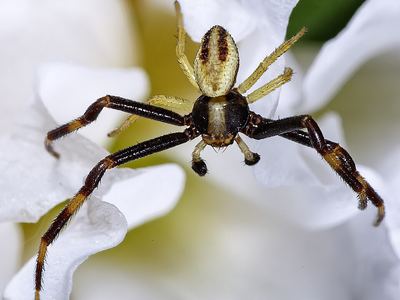
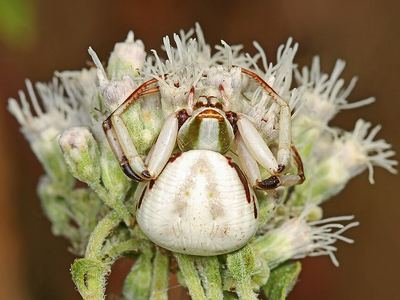
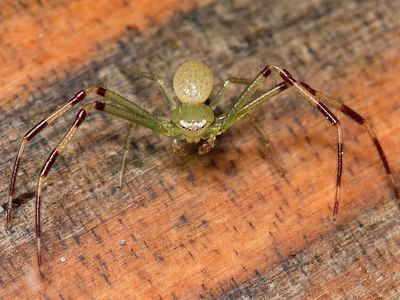
Related species in the U.S.
GBIF records read 2026-11-05 (open these records on GBIF). Listed: any license. Counted: CC0/CC BY only. How we count.