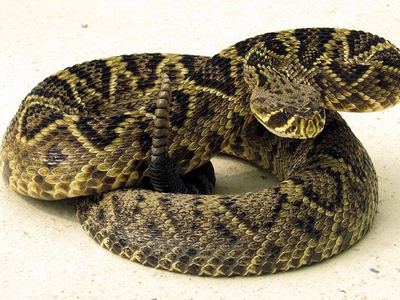
Prairie rattlesnake (Crotalus viridis)
The prairie rattlesnake is a venomous pit viper in the family Viperidae. GBIF holds 5,081 licensed U.S. records of it; it reaches our listing threshold in 14 states, most of all Colorado (1,328), South Dakota (970) and New Mexico (573). Its observation records peak in July.
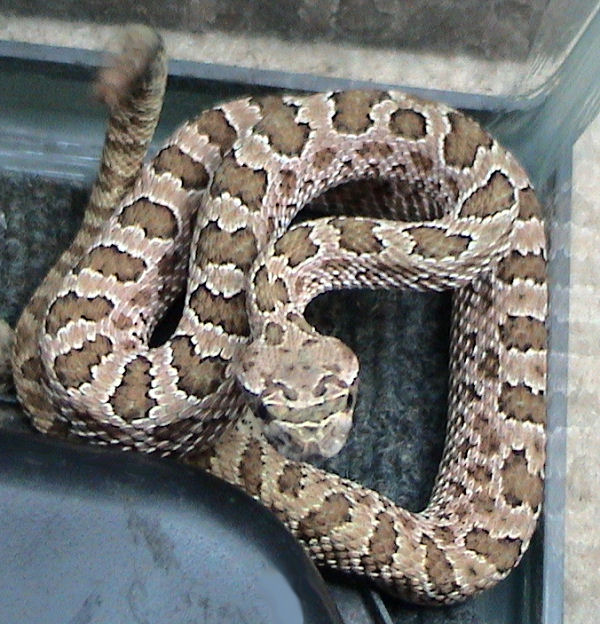

The prairie rattlesnake or Great Plains rattlesnake (Crotalus viridis) is a venomous pit viper species native to the western United States, southwestern Canada, and northern Mexico. Currently, two subspecies are recognized, including the prairie rattlesnake (C. v. viridis), the nominate subspecies, and the Hopi rattlesnake (C. v.
From Wikipedia: Crotalus viridis, text under CC BY-SA 4.0.
Is the prairie rattlesnake poisonous or venomous?
Yes. The prairie rattlesnake is a pit viper (family Viperidae), like every rattlesnake, copperhead and cottonmouth in the U.S. Its bite needs emergency care: call 911 and keep the bitten limb still. Antivenom is given in hospital.
Snakes often mistaken for it
Species commonly confused with rattlesnakes and recorded in the same states: gopher snake (recorded in all 14 of its states), plains hog-nosed snake (recorded in 11 of its 14 states), Great Plains rat snake (recorded in 7 of its 14 states), eastern hog-nosed snake (recorded in 6 of its 14 states) and eastern fox snake (recorded in 3 of its 14 states).
Which states have the prairie rattlesnake?
Records are spread over 14 states; the top three, Colorado, South Dakota and New Mexico, hold 57% of them. It is the most recorded snake of all in Colorado and South Dakota.
GBIF records filed under this name in California, Nevada, Oregon and Washington are counted as the western rattlesnake, the species that lives there. Records filed under this name in Ohio are not counted: there the name stands for another species, or the record lies outside this species’ range.
| # | State | Records | Share of state snakes | Rank in state |
|---|---|---|---|---|
| 1 | Colorado | 1,328 | 38.1% | 1st of 26 |
| 2 | South Dakota | 970 | 30.5% | 1st of 16 |
| 3 | New Mexico | 573 | 8.9% | 4th of 56 |
| 4 | Texas | 476 | 1.2% | 24th of 86 |
| 5 | Kansas | 347 | 2.4% | 12th of 44 |
| 6 | Montana | 344 | 26.9% | 2nd of 9 |
| 7 | Arizona | 330 | 1.6% | 21st of 60 |
| 8 | Wyoming | 254 | 23.9% | 2nd of 11 |
| 9 | Nebraska | 176 | 7.5% | 5th of 31 |
| 10 | Utah | 102 | 3.1% | 6th of 28 |
| 11 | Oklahoma | 78 | 0.6% | 35th of 50 |
| 12 | Idaho | 63 | 4.3% | 6th of 11 |
| 13 | Iowa | 20 | 1.9% | 13th of 22 |
| 14 | North Dakota | 20 | 9.3% | 3rd of 8 |
When is the prairie rattlesnake seen?
Across the U.S., observation records of the prairie rattlesnake run mostly April through September, peaking in July with 21% of them. Almost none are from December to February.
Season by state
Among states whose main season falls within one calendar year, it starts earliest in April (Kansas, Montana, New Mexico and Texas) and latest in May (Colorado, Nebraska and South Dakota). The most common peak months are July and September, each shared by two states.
| State | Main season | Peak month | Observation records |
|---|---|---|---|
| Colorado | May through September | May | 191 |
| New Mexico | April through September | September | 122 |
| Kansas | April through October | July | 78 |
| Montana | April through August | April | 69 |
| Texas | April through September | July | 52 |
| Nebraska | May through September | September | 50 |
| South Dakota | May through October | June | 46 |
Where the prairie rattlesnake is recorded in each state
Colorado
Colorado holds 1,328 licensed records, the most recorded of 26 snakes listed there. Its observation records in Colorado run mostly May through September, peaking in May; most licensed records come from Weld County, Moffat County and Baca County. Next come El Paso County (53) and Larimer County (41).
South Dakota
South Dakota holds 970 licensed records, the most recorded of 16 snakes listed there. Its observation records in South Dakota run mostly May through October, peaking in June; most licensed records come from Hughes County, Stanley County and Dewey County. Next come Gregory County (89) and Pennington County (63).
New Mexico
New Mexico holds 573 licensed records, the 4th most recorded of 56 snakes listed there. Its observation records in New Mexico run mostly April through September, peaking in September; most licensed records come from Hidalgo County, Doña Ana County and Socorro County. Next come Taos County (39) and Grant County (34).
Texas
Texas holds 476 licensed records, the 24th most recorded of 86 snakes listed there. Its observation records in Texas run mostly April through September, peaking in July; most licensed records come from El Paso County, Randall County and Andrews County. Next come Culberson County (21) and Hudspeth County (20).
Kansas
Kansas holds 347 licensed records, the 12th most recorded of 44 snakes listed there. Its observation records in Kansas run mostly April through October, peaking in July; most licensed records come from Ellis County, Logan County and Trego County. Next come Hamilton County (22) and Barber County (21).
Montana
Montana holds 344 licensed records, the 2nd most recorded of 9 snakes listed there. Its observation records in Montana run mostly April through August, peaking in April; most licensed records come from Chouteau County, Carbon County and Wheatland County. Next come Teton County (21) and Phillips County (19).
Arizona
Arizona holds 330 licensed records, the 21st most recorded of 60 snakes listed there. Most of its licensed records in Arizona come from Coconino County, Apache County and Navajo County. Next come Yavapai County (12) and Maricopa County (7).
Wyoming
Wyoming holds 254 licensed records, the 2nd most recorded of 11 snakes listed there. Most of its licensed records in Wyoming come from Campbell County, Sweetwater County and Fremont County. Next come Natrona County (13) and Park County (11).
Nebraska
Nebraska holds 176 licensed records, the 5th most recorded of 31 snakes listed there. Its observation records in Nebraska run mostly May through September, peaking in September; most licensed records come from Cherry County, Dundy County and Scotts Bluff County. Next come Sioux County (17) and Thomas County (10).
Utah
Utah holds 102 licensed records, the 6th most recorded of 28 snakes listed there. Most of its licensed records in Utah come from San Juan County, Grand County and Washington County. Next come Kane County (9) and Salt Lake County (8).
Oklahoma
Oklahoma holds 78 licensed records, the 35th most recorded of 50 snakes listed there. Most of its licensed records in Oklahoma come from Cimarron County, Beaver County and Alfalfa County. Next come Roger Mills County (5) and Texas County (5).
Idaho
Idaho holds 63 licensed records, the 6th most recorded of 11 snakes listed there. Most of its licensed records in Idaho come from Lemhi County, Ada County and Butte County. Next come Custer County (5) and Twin Falls County (5).
Top counties in the U.S.
| # | County | State | Records | Share of U.S. |
|---|---|---|---|---|
| 1 | Weld County | Colorado | 850 | 16.7% |
| 2 | Hughes County | South Dakota | 381 | 7.5% |
| 3 | Coconino County | Arizona | 164 | 3.2% |
| 4 | Campbell County | Wyoming | 154 | 3.0% |
| 5 | Stanley County | South Dakota | 112 | 2.2% |
| 6 | Hidalgo County | New Mexico | 104 | 2.0% |
| 7 | Chouteau County | Montana | 102 | 2.0% |
| 8 | Dewey County | South Dakota | 99 | 1.9% |
| 9 | Apache County | Arizona | 89 | 1.8% |
| 10 | Gregory County | South Dakota | 89 | 1.8% |
| 11 | Moffat County | Colorado | 77 | 1.5% |
| 12 | Baca County | Colorado | 71 | 1.4% |
| 13 | Doña Ana County | New Mexico | 65 | 1.3% |
| 14 | Pennington County | South Dakota | 63 | 1.2% |
| 15 | El Paso County | Colorado | 53 | 1.0% |
How recent are the prairie rattlesnake records?
The prairie rattlesnake record leans on older material: only 12% of dated U.S. records come from 2017–2026, and the median record is from 1941. The oldest dated record is from 1857; the busiest year was 1931, with 515 records.
| Decade | Records | Share |
|---|---|---|
| 1850s | 4 | 0.1% |
| 1870s | 9 | 0.2% |
| 1880s | 6 | 0.1% |
| 1890s | 24 | 0.5% |
| 1900s | 23 | 0.5% |
| 1910s | 31 | 0.6% |
| 1920s | 111 | 2.3% |
| 1930s | 2,147 | 44.8% |
| 1940s | 187 | 3.9% |
| 1950s | 120 | 2.5% |
| 1960s | 349 | 7.3% |
| 1970s | 245 | 5.1% |
| 1980s | 359 | 7.5% |
| 1990s | 142 | 3.0% |
| 2000s | 300 | 6.3% |
| 2010s | 315 | 6.6% |
| 2020s | 422 | 8.8% |
Species recorded in the same counties
Of the 159 counties where the prairie rattlesnake is most recorded, 124 are also top counties for the gopher snake, more than for any other snake. None of its closest neighbors is venomous.
| Species | Shared counties |
|---|---|
| Gopher snake | 124 |
| Eastern racer | 57 |
| Western terrestrial garter snake | 54 |
| Plains hog-nosed snake | 49 |
| Glossy snake | 47 |
| Coachwhip | 42 |
| Long-nosed snake | 41 |
| Plains garter snake | 41 |
Related species in the U.S.
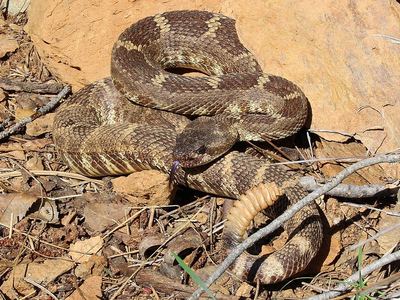
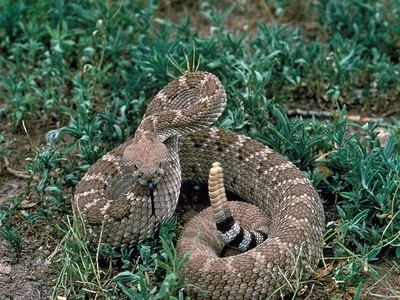
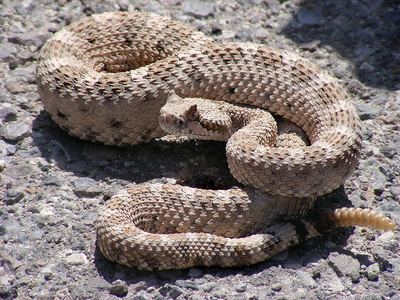
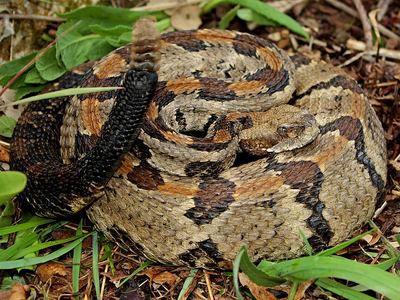
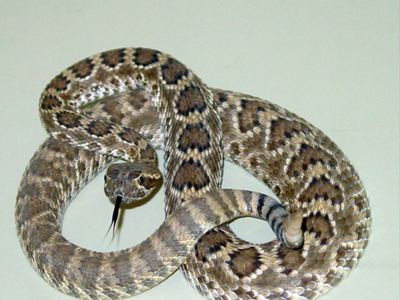
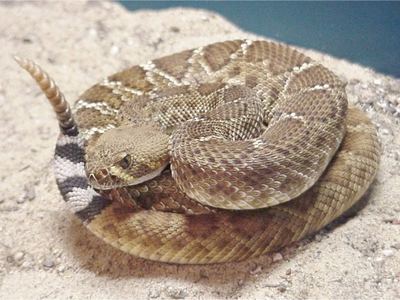
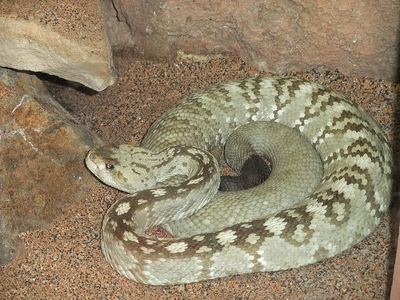
Other species of the genus Crotalus with profiles here: Western rattlesnake, Western diamondback rattlesnake, Sidewinder, Timber rattlesnake, Mohave rattlesnake, Red diamond rattlesnake, Black-tailed rattlesnake and Eastern diamondback rattlesnake.
GBIF records read 2026-09-29. Listed: any license. Counted: CC0/CC BY only. How we count.