StateFaunaFind your state

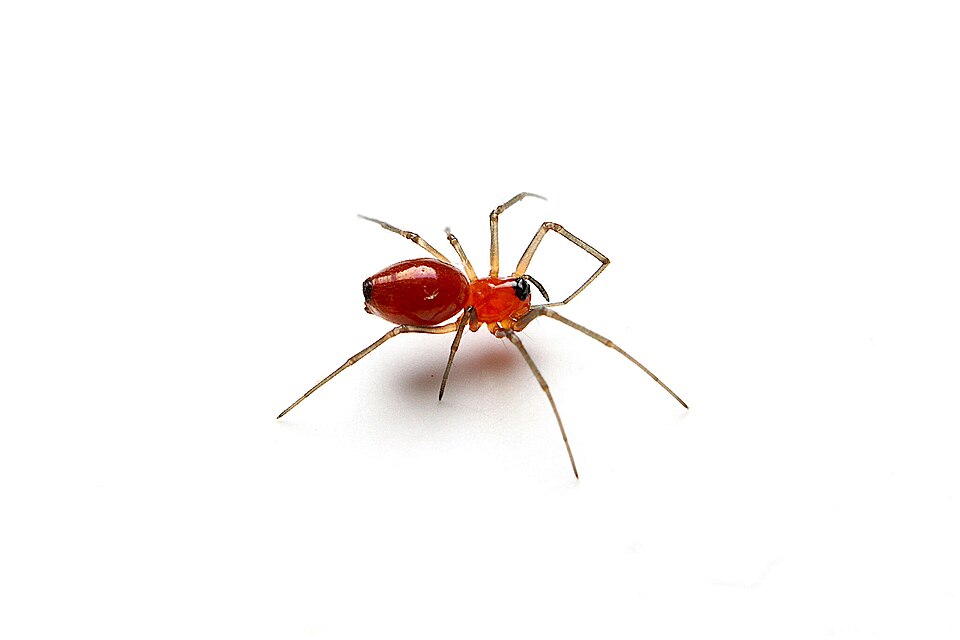
Blacktailed red sheetweaver (Florinda coccinea)

The blacktailed red sheetweaver (genus Florinda) is a spider in the family Linyphiidae that is not dangerous to people. Among the four sheetweb and dwarf spiders profiled here, it ranks 3rd by number of states listed. Most of its 23 listed states are in the South Atlantic (8) and East South Central (4) census divisions. None is in the West. Its observation records peak in April.

Blacktailed red sheetweaver (Florinda coccinea)
Photo: Matthew Lindsey, CC BY 4.0, via Wikimedia Commons
23states on record
303licensed U.S. records
Aprpeak month, observations
Novenomous to people
98%of wild records are field observations
Bitten? Call 911 for a venomous snakebite or any bite with trouble breathing. For advice on any bite or sting, call Poison Help at 1-800-222-1222 (free, 24/7, U.S.-wide). Do not cut the wound, suck out venom or use a tourniquet. General information, not medical advice. Do not handle or try to identify a snake or spider by this page; if unsure, treat it as venomous.

Is the blacktailed red sheetweaver poisonous or venomous?

Not in any medically significant way. Like almost all spiders the blacktailed red sheetweaver (family Linyphiidae) has venom for its prey, but it is not a widow or recluse, the two U.S. groups whose bites need medical attention.

Which states have the blacktailed red sheetweaver?

#StateRecordsShare of state spidersRank in state
1Florida530.4%35th of 241
2Virginia360.3%64th of 178
3Louisiana300.7%25th of 108
4Alabama190.5%53rd of 146
5Tennessee180.5%49th of 143
6Delaware170.8%34th of 73
7Illinois170.1%143rd of 243
8North Carolina170.2%75th of 189
9Maryland160.3%73rd of 155
10Georgia140.2%79th of 190
11Indiana100.2%85th of 134
12Texas90.0%223rd of 387
13Ohio70.1%109th of 333
14Kansas60.3%50th of 93
15Kentucky60.3%59th of 104
16South Carolina60.2%71st of 124
17Mississippi50.3%54th of 117
18Arkansas40.2%75th of 114
19Missouri40.2%70th of 117
20Pennsylvania30.0%134th of 169
21New Jersey10.0%118th of 127
22New York10.0%137th of 152
23West Virginia10.1%58th of 90
Source: GBIF, read 2026-11-05. A state is listed once GBIF holds at least 10 records of the species there under any license; Records counts only CC0 and CC BY records, so a listed state can show fewer.

When is the blacktailed red sheetweaver seen?

Its observation records run mostly March through October.

January: 1 observation record (0%)JanFebruary: 9 observation records (3%)FebMarch: 19 observation records (7%)Mar7%April: 48 observation records (18%)Apr18%May: 41 observation records (15%)May15%June: 38 observation records (14%)Jun14%July: 26 observation records (10%)Jul10%August: 23 observation records (8%)Aug8%September: 39 observation records (14%)Sep14%October: 16 observation records (6%)OctNovember: 8 observation records (3%)NovDecember: 3 observation records (1%)Dec

Season by state

Each of these states peaks in a different month: March in Florida and September in Virginia.

StateMain seasonPeak monthObservation records
FloridaDecember through JulyMarch45
VirginiaApril through OctoberSeptember36
Source: GBIF observation records (CC0, CC BY) by state and month, read 2026-11-05. States with fewer than 30 observation records with a month are left out.

Where the blacktailed red sheetweaver is recorded in each state

StateLicensed recordsPlace among the state's spidersMost recorded counties
Florida5335th of 241Alachua County (14), Sarasota County (7), Orange County (5), Putnam County (5) and Hillsborough County (3)
Virginia36joint 64th of 178Fairfax County (14), Prince William County (7), Rappahannock County (3), Loudoun County (3) and Prince Edward County (1)
Louisiana30joint 25th of 108East Baton Rouge Parish (13), Saint Tammany Parish (8), Orleans Parish (4), Calcasieu Parish (3) and Jefferson Davis Parish (1)
Source: GBIF licensed records (CC0 and CC BY), read 2026-11-05; place 1 = most recorded spider of the state list.

Top counties in the U.S.

#CountyStateRecordsShare of U.S.
1Alachua CountyFlorida144.6%
2Fairfax CountyVirginia144.6%
3East Baton Rouge ParishLouisiana134.3%
4Saint Tammany ParishLouisiana82.6%
5Sarasota CountyFlorida72.3%
6Prince William CountyVirginia72.3%
7Orange CountyFlorida51.7%
8Putnam CountyFlorida51.7%
9Orleans ParishLouisiana41.3%
10Hillsborough CountyFlorida31.0%
11St. Johns CountyFlorida31.0%
12Calcasieu ParishLouisiana31.0%
13Rappahannock CountyVirginia31.0%
14Loudoun CountyVirginia31.0%
15Flagler CountyFlorida20.7%
Source: GBIF licensed records by county (GADM level 2), read 2026-11-05.

How recent are the blacktailed red sheetweaver records?

2021median record year
86%dated records from 2017–2026
1961oldest dated record
2021busiest year, 43 records
DecadeRecordsShare
1960s51.5%
1970s10.3%
1980s20.6%
1990s175.3%
2010s6720.7%
2020s23171.5%
Source: GBIF licensed U.S. records with a year, read 2026-11-05.

Species recorded in the same counties

SpeciesShared counties
Arabesque orbweaver24
Rabid wolf spider22
Black-and-yellow argiope21
Magnolia green jumper21
Sylvan jumping spider20
Arrowhead orbweaver19
Familiar jumping spider19
Spotted orbweaver17
Source: GBIF licensed records, top counties per species and state, read 2026-11-05.

GBIF records read 2026-11-05 (open these records on GBIF). Listed: any license. Counted: CC0/CC BY only. How we count.

About these numbers

A species is listed for a state once GBIF holds at least 10 records of it located inside the state by coordinates, under any license. Every count, share, month and county shown is computed only from records published under CC0 or CC BY, so a listed species can show few or no counted records. Monthly patterns show when people record spiders, which also reflects when people are outdoors. Venomous status follows taxonomy: pit vipers and coral snakes; widow and recluse spiders; the Arizona bark scorpion. Records filed under older names count for the species they belong to today. Full methodology.