Spiders in Kansas
Kansas has 94 spider species on record, each with at least 10 GBIF records in the state, and 1,646 licensed records in all. The most recorded are the bold jumper, the brown recluse and the familiar jumping spider. Medically significant: the brown recluse, the western black widow, the northern black widow and the southern black widow.
Widow spiders in Kansas
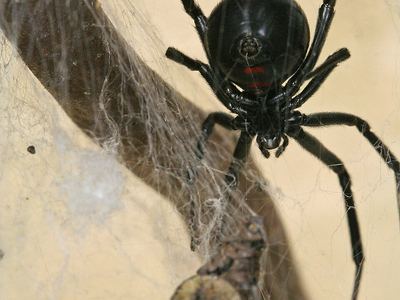
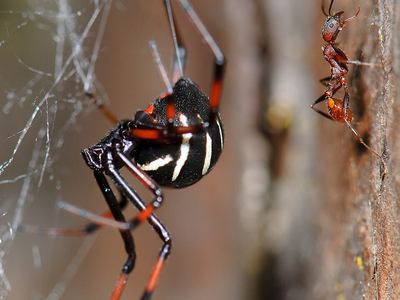
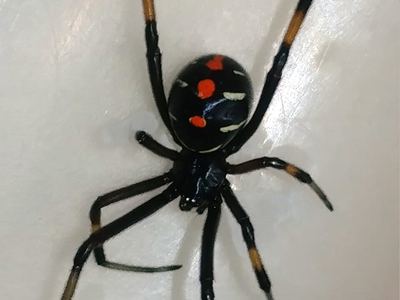
Widow spiders are a small part of the spider record here: three species with 0.7% of records between them. The most recorded is the western black widow (6), ahead of the northern black widow (4).
Recluse spiders in Kansas
One species of this group is listed for Kansas: the brown recluse, with 84 records (5% of the state's spider records).
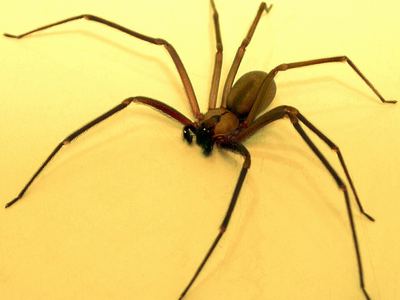
Observation records of the brown recluse in Kansas run mostly March through August, peaking in July; most licensed records come from Douglas County, Leavenworth County and Shawnee County.
Jumping spiders in Kansas
Jumping spiders: 23 species are listed for Kansas, with 407 records (25% of the state's spider records). The most recorded is the bold jumper (100), ahead of the familiar jumping spider (81).
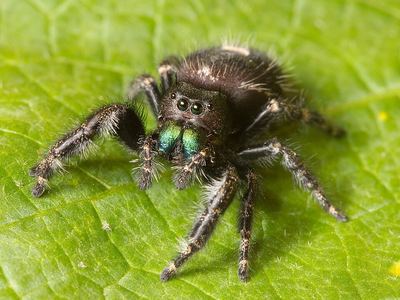
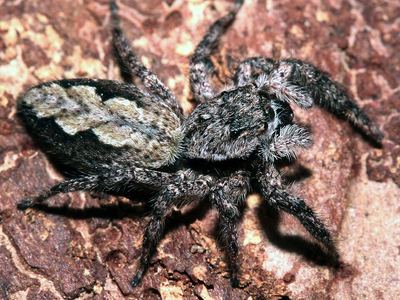
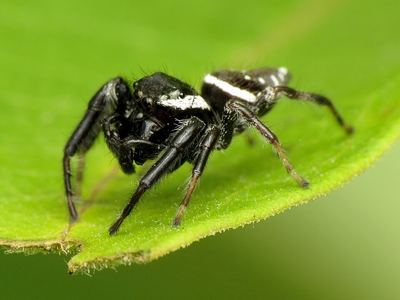
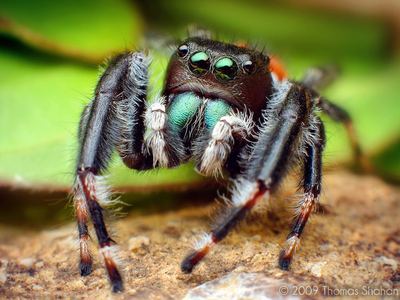
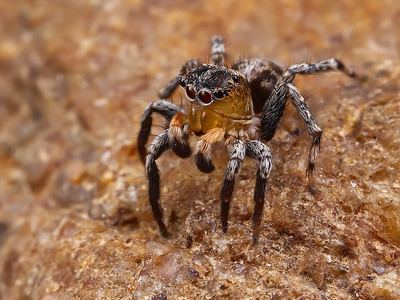
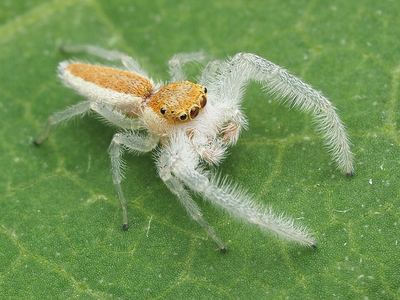
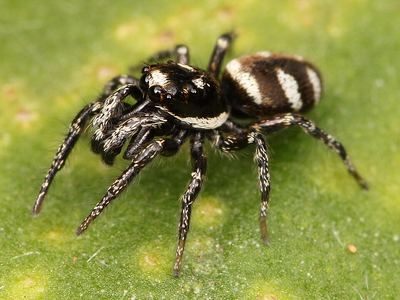
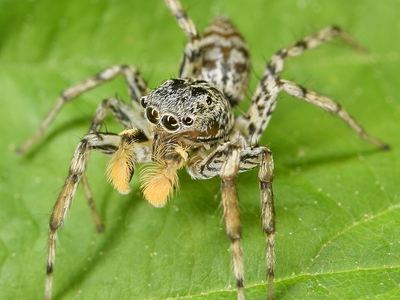
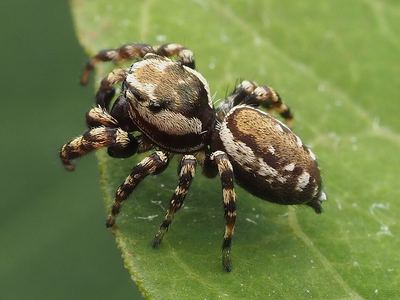
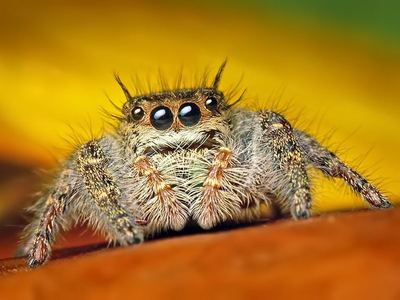
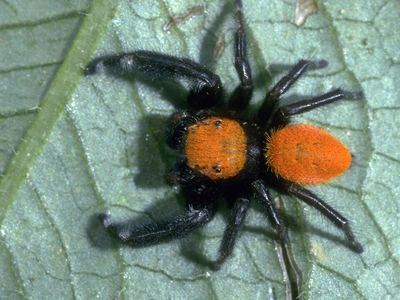
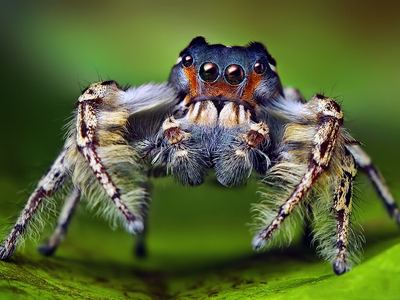
Plus eleven: Thin-spined jumping spider, Boreal paradise spider, Common Hentz jumping spider, Bronze jumper, Sylvan jumping spider, Common white-cheeked jumping spider, Pike slender jumper, Salticus austinensis, Cardinal jumper, Phidippus pius, Carolina jumping spider.
Observation records of the bold jumper in Kansas run mostly April through October, peaking in August; most licensed records come from Leavenworth County, Douglas County and Riley County. Observation records of the familiar jumping spider in Kansas run mostly March through September, peaking in September; most licensed records come from Leavenworth County, Douglas County and Shawnee County. Observation records of Paraphidippus aurantius in Kansas run mostly April through August, peaking in June; most licensed records come from Leavenworth County, Douglas County and Wyandotte County.
Wolf spiders in Kansas
Wolf spiders: ten species are listed for Kansas, with 69 records (4% of the state's spider records). The most recorded is the rabid wolf spider (37), ahead of the dotted wolf spider (7).
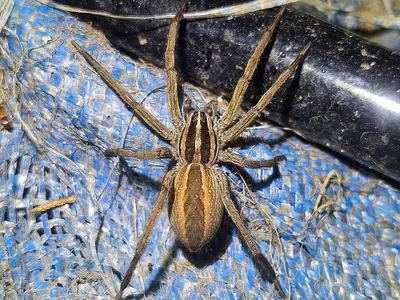
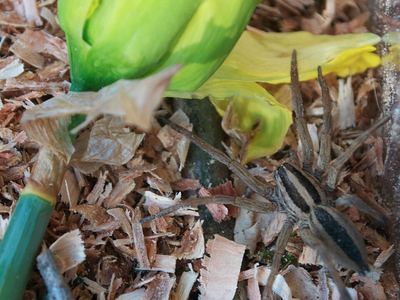
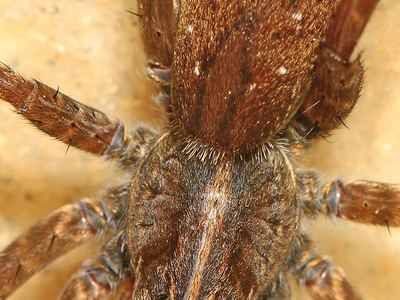
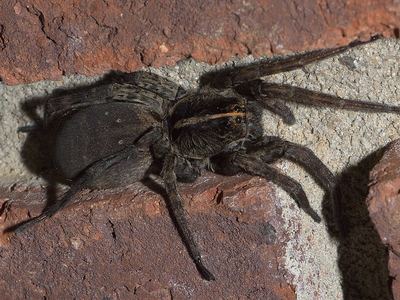
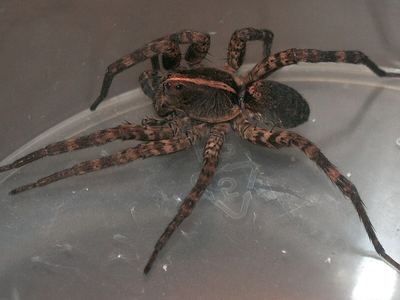
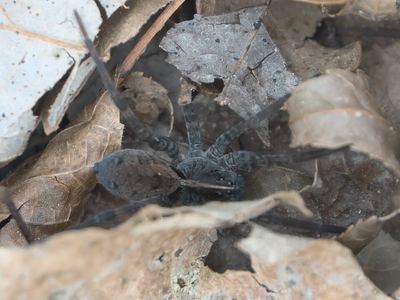
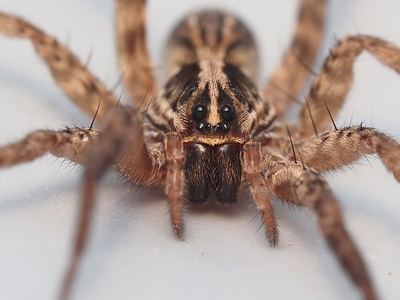
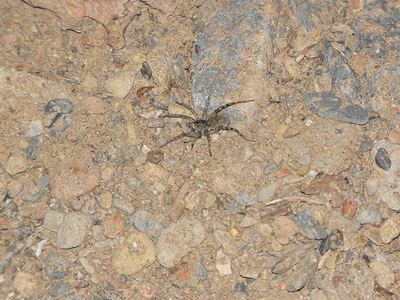
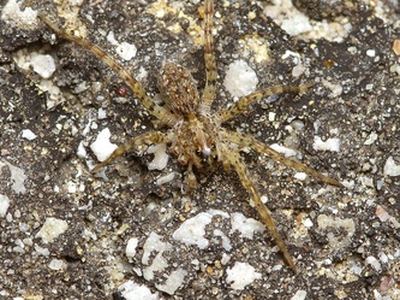
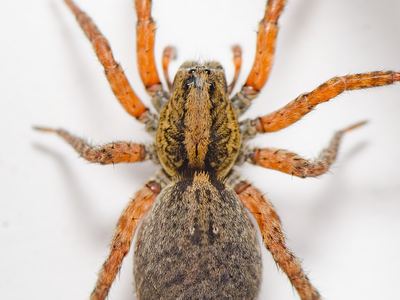
Observation records of the rabid wolf spider in Kansas run mostly May through September, peaking in July; most licensed records come from Leavenworth County, Douglas County and Riley County.
Orb weavers in Kansas
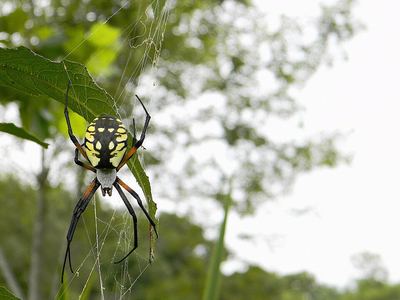
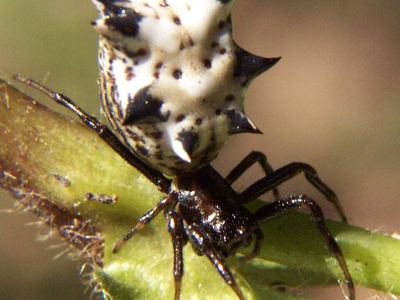
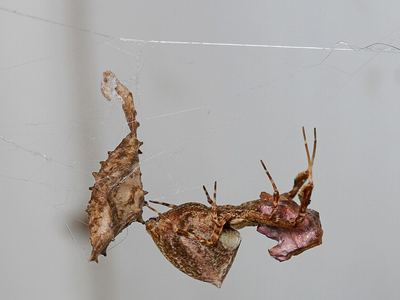
Orb weavers: 18 species are listed for Kansas, with 313 records (19% of the state's spider records). The most recorded is the black-and-yellow argiope (79), ahead of the spined micrathena (38).
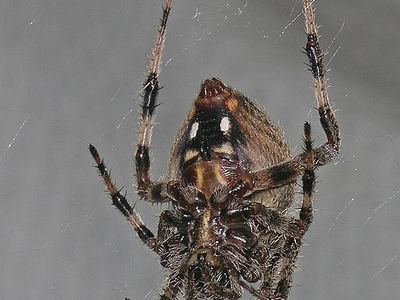
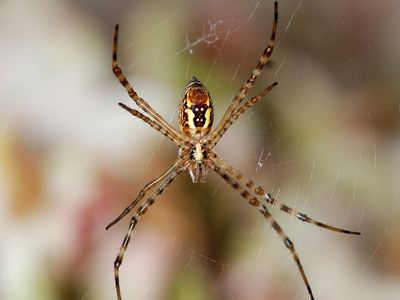
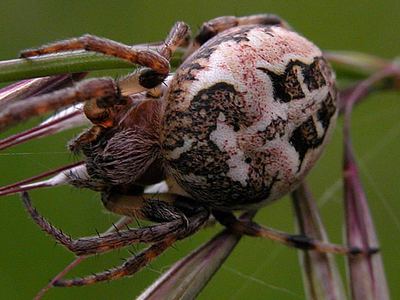
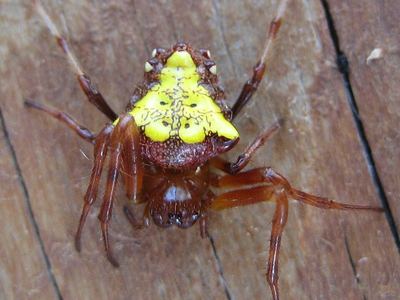
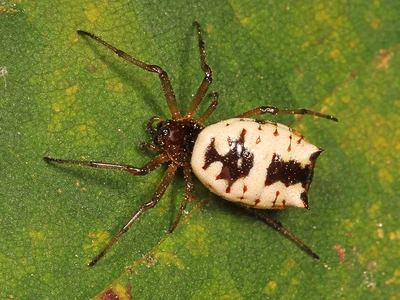
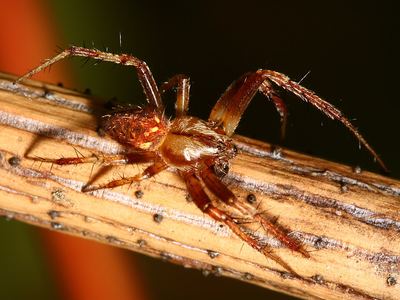
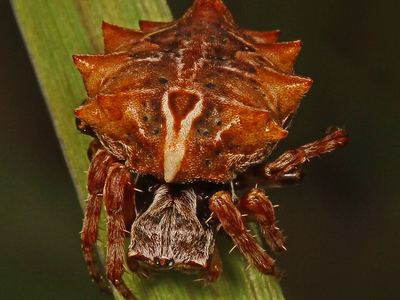
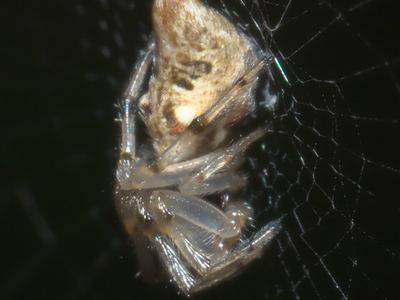
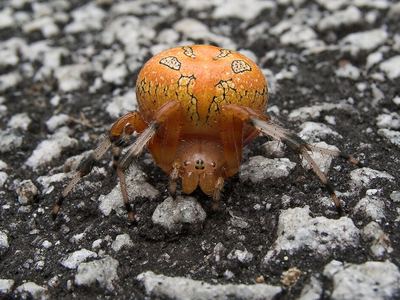
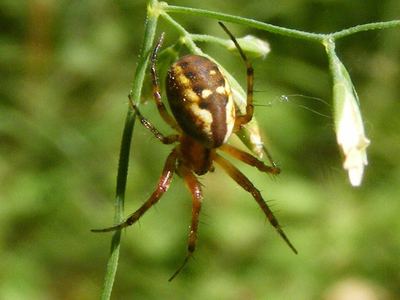
Plus six: Heptagonal orbweaver, Lattice orbweaver, Humpbacked orbweaver, Western spotted orbweaver, Butterfly orbweaver, Openfield orbweaver.
Observation records of the black-and-yellow argiope in Kansas run mostly July through September, peaking in August; most licensed records come from Douglas County, Leavenworth County and Shawnee County. Observation records of the spined micrathena in Kansas run mostly June through September, peaking in July; most licensed records come from Leavenworth County, Douglas County and Johnson County. Observation records of the spotted orbweaver in Kansas run mostly July through October, peaking in September; most licensed records come from Douglas County, Leavenworth County and Shawnee County.
Long-jawed orb weavers in Kansas
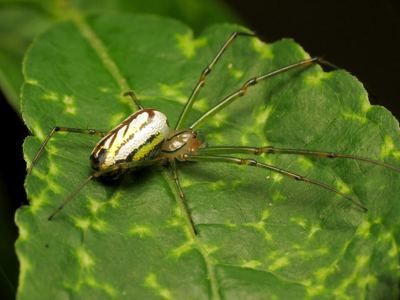
One species of this group is listed for Kansas: the orchard orbweaver, with 18 records (1% of the state's spider records).
Fishing and nursery web spiders in Kansas
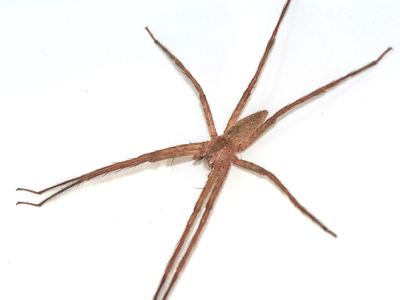
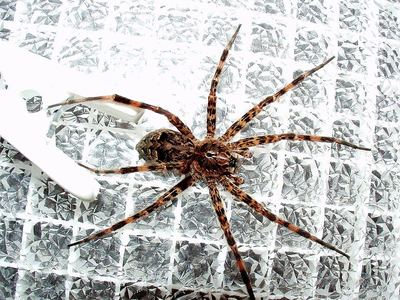
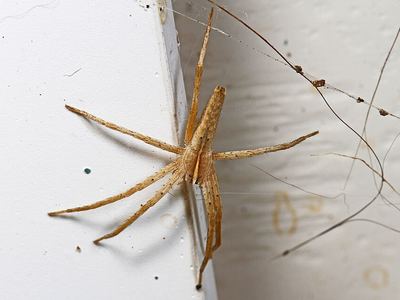
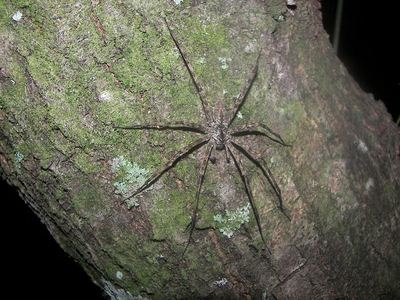
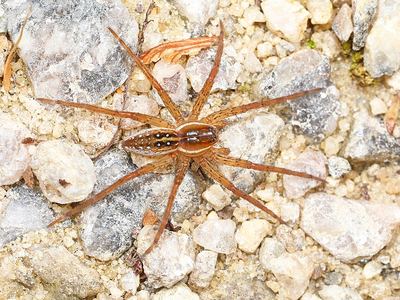
Fishing and nursery web spiders are a small part of the spider record here: five species with 3% of records between them. The most recorded is the nursery web spider (20), ahead of the dark fishing spider (11).
Tarantulas in Kansas
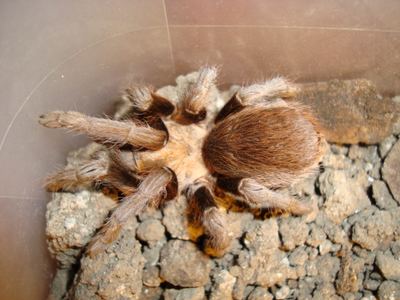
One species of this group is listed for Kansas: the Texas brown tarantula, with 8 records (0.5% of the state's spider records).
Crab spiders in Kansas
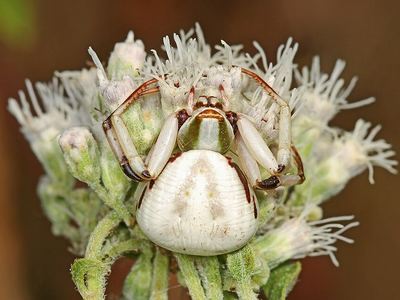
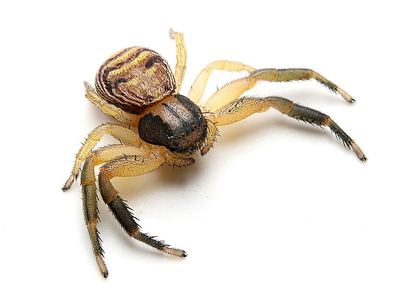
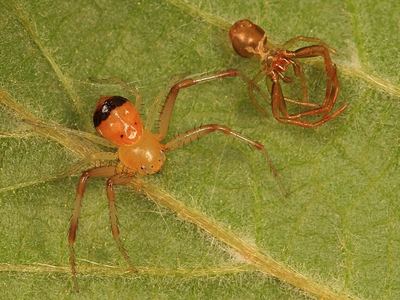
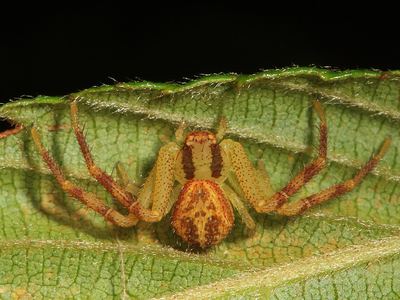
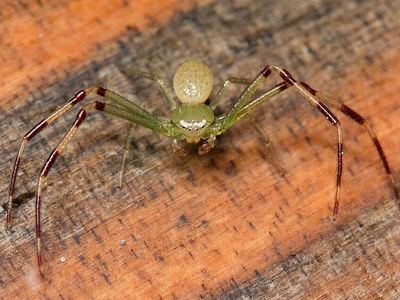
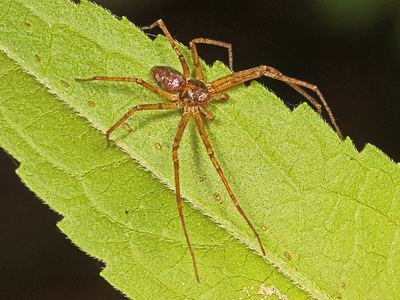
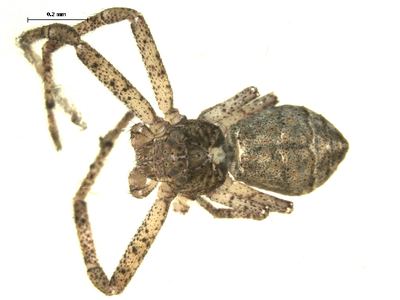
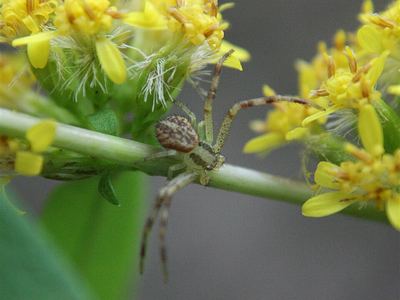
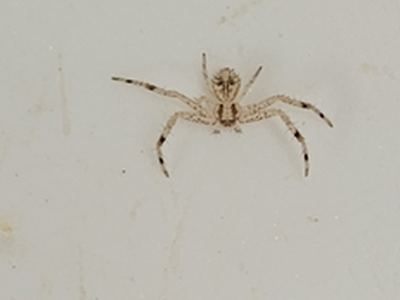
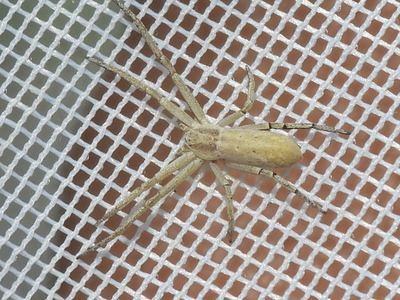
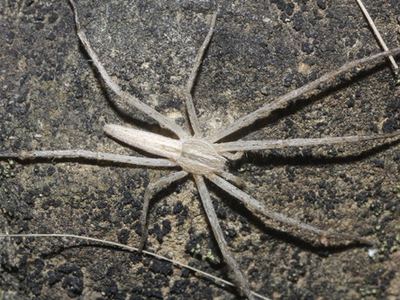
Crab spiders: eleven species are listed for Kansas, with 62 records (4% of the state's spider records). The most recorded is the whitebanded crab spider (23), ahead of Xysticus texanus (10).
Cobweb spiders in Kansas
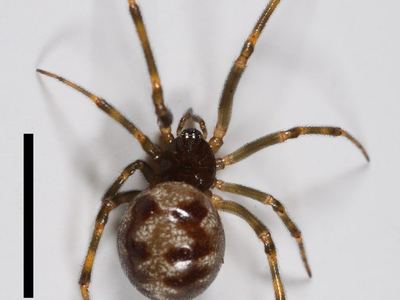
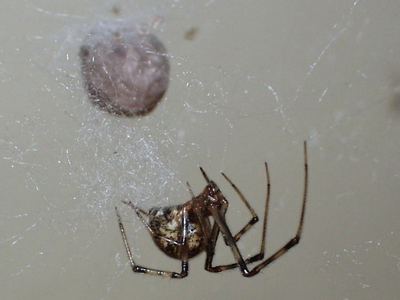
Cobweb spiders are a small part of the spider record here: three species with 2% of records between them. The most recorded is the triangulate bud spider (26), ahead of the common house spider (8).
Funnel weavers and grass spiders in Kansas
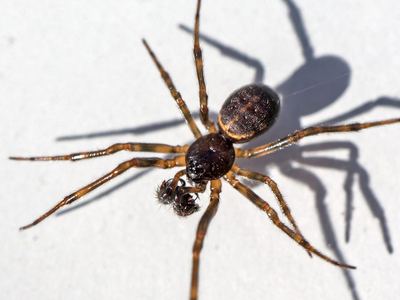
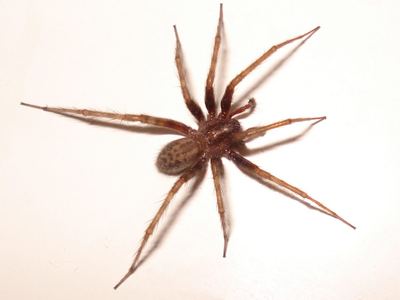
One species of this group is listed for Kansas: the barn funnel weaver, with 2 records (0.1% of the state's spider records).
Lynx spiders in Kansas
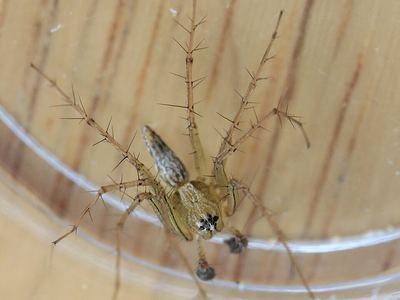
One species of this group is listed for Kansas: the striped lynx spider, with 29 records (2% of the state's spider records).
Sheetweb and dwarf spiders in Kansas
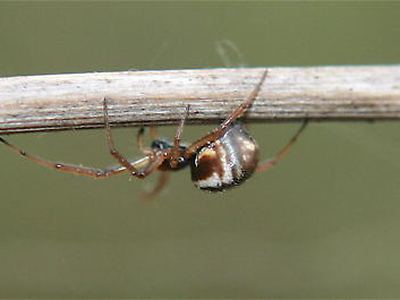
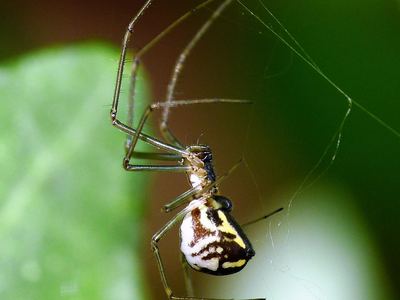
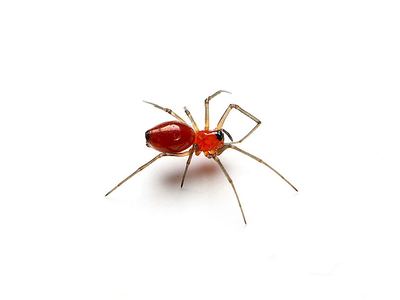
Sheetweb and dwarf spiders are a small part of the spider record here: three species with 2% of records between them. The most recorded is the bowl and doily spider (16), ahead of the filmy dome spider (8).
Ground and sac spiders in Kansas
Ground and sac spiders are a small part of the spider record here: six species with 2% of records between them. The most recorded is the parson spider (9), ahead of the broad-faced sac spider (6).
Other spiders in Kansas
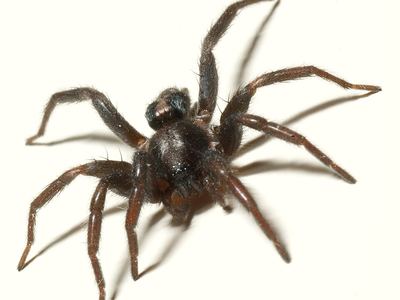
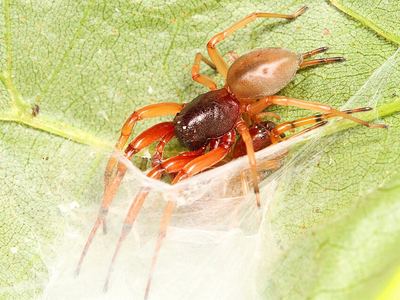
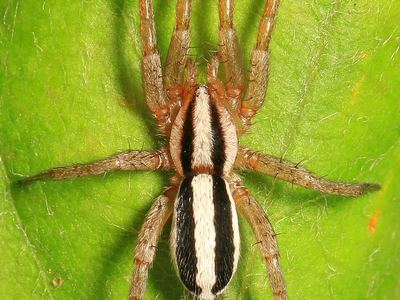
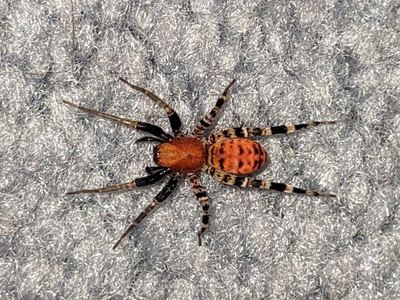
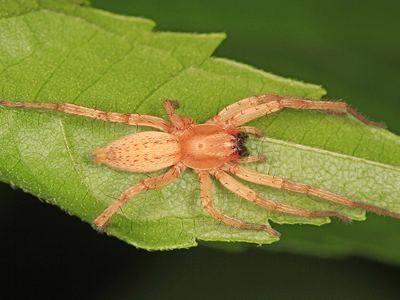
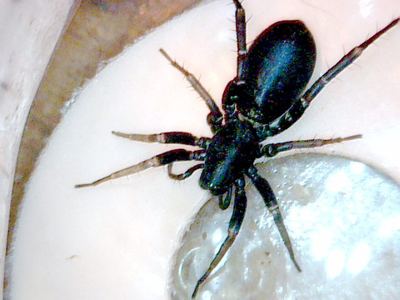
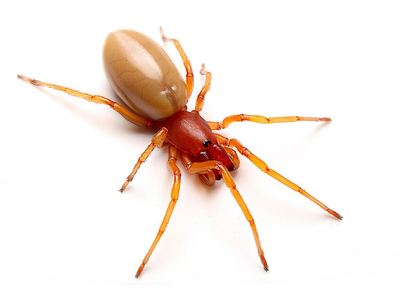
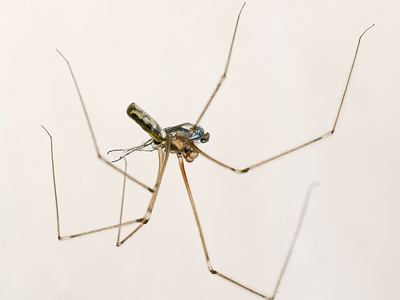
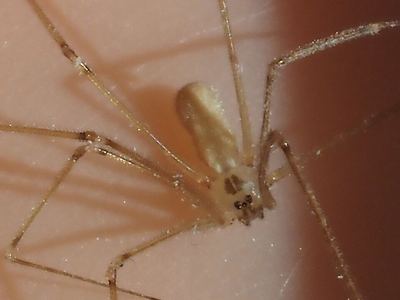
Other spiders are a small part of the spider record here: seven species with 2% of records between them. The most recorded is Dysdera crocata (9), ahead of Pholcus crypticolens (6).
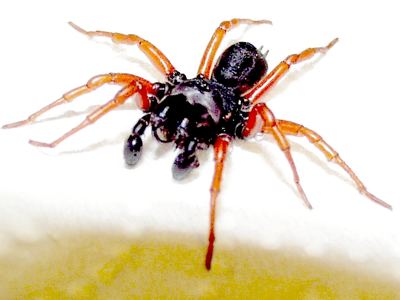
Where in Kansas are spiders recorded most?
Leavenworth County dominates: 28% of the state's licensed spider records come from it alone, and the top five counties hold 76%. 69 of Kansas's 105 counties have at least one licensed spider record.
| # | County | Records | Share |
|---|---|---|---|
| 1 | Leavenworth County | 466 | 28.3% |
| 2 | Wabaunsee County | 362 | 22.0% |
| 3 | Douglas County | 277 | 16.8% |
| 4 | Riley County | 84 | 5.1% |
| 5 | Shawnee County | 69 | 4.2% |
| 6 | Johnson County | 54 | 3.3% |
| 7 | Wyandotte County | 34 | 2.1% |
| 8 | Sedgwick County | 31 | 1.9% |
| 9 | Cowley County | 21 | 1.3% |
| 10 | Morris County | 19 | 1.2% |
| 11 | Greenwood County | 18 | 1.1% |
| 12 | Barton County | 13 | 0.8% |
When do spiders come out in Kansas?
Observation records of spiders in Kansas run mostly April through October, peaking in August with 20% of them. December through February together hold under 2% of the records, so spiders in Kansas are rarely recorded in winter. The sharpest rise comes from March to April.
| Jan | Feb | Mar | Apr | May | Jun | Jul | Aug | Sep | Oct | Nov | Dec |
|---|---|---|---|---|---|---|---|---|---|---|---|
| 0% | 1% | 3% | 11% | 12% | 12% | 15% | 20% | 17% | 7% | 1% | 0% |
Spiders: Kansas compared with its neighbors
Kansas ranks 35th of 50 states by the number of spider species listed; Texas leads with 386 species.
Of the four states bordering Kansas, Colorado, Oklahoma and Missouri list more spider species (Kansas: 94 species; Colorado 378, Oklahoma 149, Missouri 117, Nebraska 71).
What spiders are in Kansas? All 94 species
Ranked by licensed records in Kansas. The table shows the 60 most recorded of 94 listed spiders.
| # | Species | Family | Records | Share |
|---|---|---|---|---|
| 1 | Bold jumper Phidippus audax | Salticidae | 100 | 6.1% |
| 2 | Brown recluse venomous Loxosceles reclusa | Sicariidae | 84 | 5.1% |
| 3 | Familiar jumping spider Platycryptus undatus | Salticidae | 81 | 4.9% |
| 4 | Black-and-yellow argiope Argiope aurantia | Araneidae | 79 | 4.8% |
| 5 | Spined micrathena Micrathena gracilis | Araneidae | 38 | 2.3% |
| 6 | Spotted orbweaver Neoscona crucifera | Araneidae | 38 | 2.3% |
| 7 | Paraphidippus aurantius | Salticidae | 37 | 2.2% |
| 8 | Rabid wolf spider Rabidosa rabida | Lycosidae | 37 | 2.2% |
| 9 | Banded garden spider Argiope trifasciata | Araneidae | 33 | 2.0% |
| 10 | Striped lynx spider Oxyopes salticus | Oxyopidae | 29 | 1.8% |
| 11 | Brilliant jumping spider Phidippus clarus | Salticidae | 27 | 1.6% |
| 12 | Furrow orbweaver Larinioides cornutus | Araneidae | 27 | 1.6% |
| 13 | Triangulate bud spider Steatoda triangulosa | Theridiidae | 26 | 1.6% |
| 14 | Flea jumping spider Naphrys pulex | Salticidae | 25 | 1.5% |
| 15 | Whitebanded crab spider Misumenoides formosipes | Thomisidae | 23 | 1.4% |
| 16 | Nursery web spider Pisaurina mira | Pisauridae | 20 | 1.2% |
| 17 | Orchard orbweaver Leucauge venusta | Tetragnathidae | 18 | 1.1% |
| 18 | White-jawed jumping spider Hentzia mitrata | Salticidae | 18 | 1.1% |
| 19 | Arrowhead orbweaver Verrucosa arenata | Araneidae | 17 | 1.0% |
| 20 | Zebra spider Salticus scenicus | Salticidae | 17 | 1.0% |
| 21 | Bowl and doily spider Frontinella pyramitela | Linyphiidae | 16 | 1.0% |
| 22 | Dimorphic jumper Maevia inclemens | Salticidae | 14 | 0.9% |
| 23 | White micrathena Micrathena mitrata | Araneidae | 14 | 0.9% |
| 24 | Peppered jumper Pelegrina galathea | Salticidae | 13 | 0.8% |
| 25 | Arabesque orbweaver Neoscona arabesca | Araneidae | 12 | 0.7% |
| 26 | Dark fishing spider Dolomedes tenebrosus | Pisauridae | 11 | 0.7% |
| 27 | Grayish jumping spider Phidippus princeps | Salticidae | 10 | 0.6% |
| 28 | Starbellied orbweaver Acanthepeira stellata | Araneidae | 10 | 0.6% |
| 29 | Xysticus texanus | Thomisidae | 10 | 0.6% |
| 30 | Apache jumping spider Phidippus apacheanus | Salticidae | 9 | 0.5% |
| 31 | Cyclosa turbinata | Araneidae | 9 | 0.5% |
| 32 | Dysdera crocata | Dysderidae | 9 | 0.5% |
| 33 | Marbled orbweaver Araneus marmoreus | Araneidae | 9 | 0.5% |
| 34 | Parson spider Herpyllus ecclesiasticus | Gnaphosidae | 9 | 0.5% |
| 35 | Putnam's jumper Phidippus putnami | Salticidae | 9 | 0.5% |
| 36 | Thin-spined jumping spider Tutelina elegans | Salticidae | 9 | 0.5% |
| 37 | Tuftlegged orbweaver Mangora placida | Araneidae | 9 | 0.5% |
| 38 | Boreal paradise spider Habronattus borealis | Salticidae | 8 | 0.5% |
| 39 | Common Hentz jumping spider Hentzia palmarum | Salticidae | 8 | 0.5% |
| 40 | Common house spider Parasteatoda tepidariorum | Theridiidae | 8 | 0.5% |
| 41 | Filmy dome spider Neriene radiata | Linyphiidae | 8 | 0.5% |
| 42 | Heptagonal orbweaver Gea heptagon | Araneidae | 8 | 0.5% |
| 43 | Pisaurina dubia | Pisauridae | 8 | 0.5% |
| 44 | Texas brown tarantula Aphonopelma hentzi | Theraphosidae | 8 | 0.5% |
| 45 | Black-banded crab spider Synema parvulum | Thomisidae | 7 | 0.4% |
| 46 | Dotted wolf spider Rabidosa punctulata | Lycosidae | 7 | 0.4% |
| 47 | Wetland giant wolf spider Tigrosa helluo | Lycosidae | 7 | 0.4% |
| 48 | Blacktailed red sheetweaver Florinda coccinea | Linyphiidae | 6 | 0.4% |
| 49 | Broad-faced sac spider Trachelas tranquillus | Trachelidae | 6 | 0.4% |
| 50 | Bronze jumper Eris militaris | Salticidae | 6 | 0.4% |
| 51 | Pholcus crypticolens | Pholcidae | 6 | 0.4% |
| 52 | Sylvan jumping spider Colonus sylvanus | Salticidae | 6 | 0.4% |
| 53 | Two-lined stealthy ground spider Cesonia bilineata | Gnaphosidae | 6 | 0.4% |
| 54 | Western black widow venomous Latrodectus hesperus | Theridiidae | 6 | 0.4% |
| 55 | Boreal combfoot Steatoda borealis | Theridiidae | 5 | 0.3% |
| 56 | Flower crab spider Mecaphesa asperata | Thomisidae | 5 | 0.3% |
| 57 | Tigrosa grandis | Lycosidae | 5 | 0.3% |
| 58 | White-banded fishing spider Dolomedes albineus | Pisauridae | 5 | 0.3% |
| 59 | American green crab spider Misumessus oblongus | Thomisidae | 4 | 0.2% |
| 60 | Carolina wolf spider Hogna carolinensis | Lycosidae | 4 | 0.2% |
Related pages
GBIF records read 2026-09-29. Listed: any license. Counted: CC0/CC BY only. How we count.