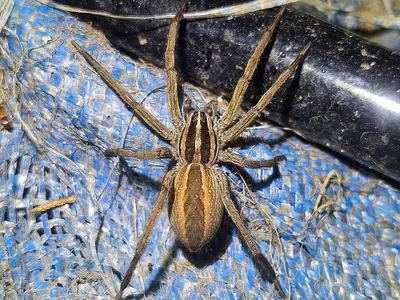
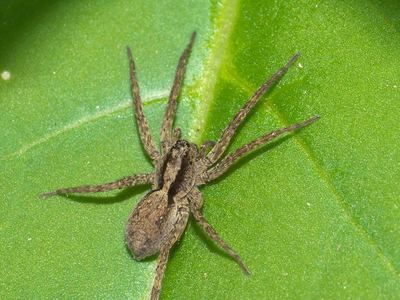
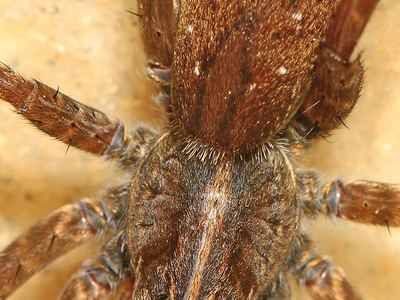
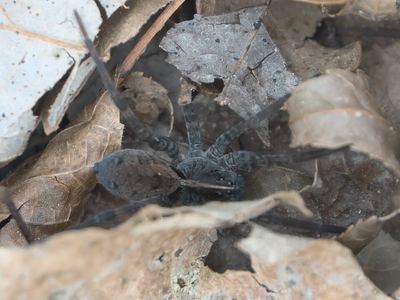
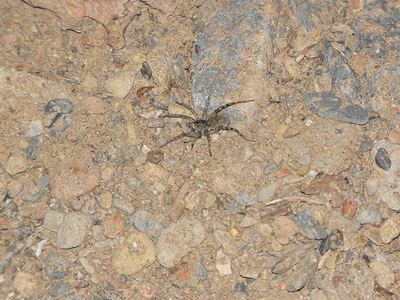
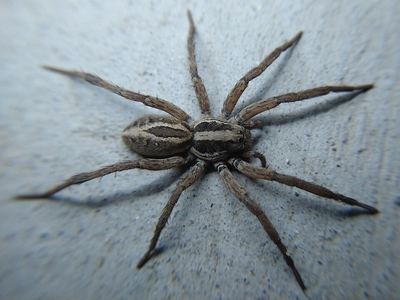
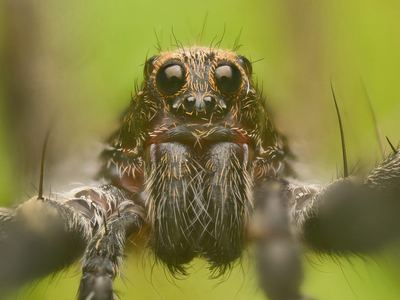
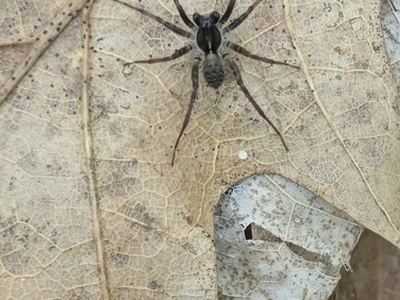
Lance wolf spider (Schizocosa avida)
The lance wolf spider is a spider in the family Lycosidae that is not dangerous to people. GBIF holds 381 licensed U.S. records of it; it reaches our listing threshold in 19 states, most of all Texas (150), Illinois (119) and Oklahoma (35). Its observation records peak in July.
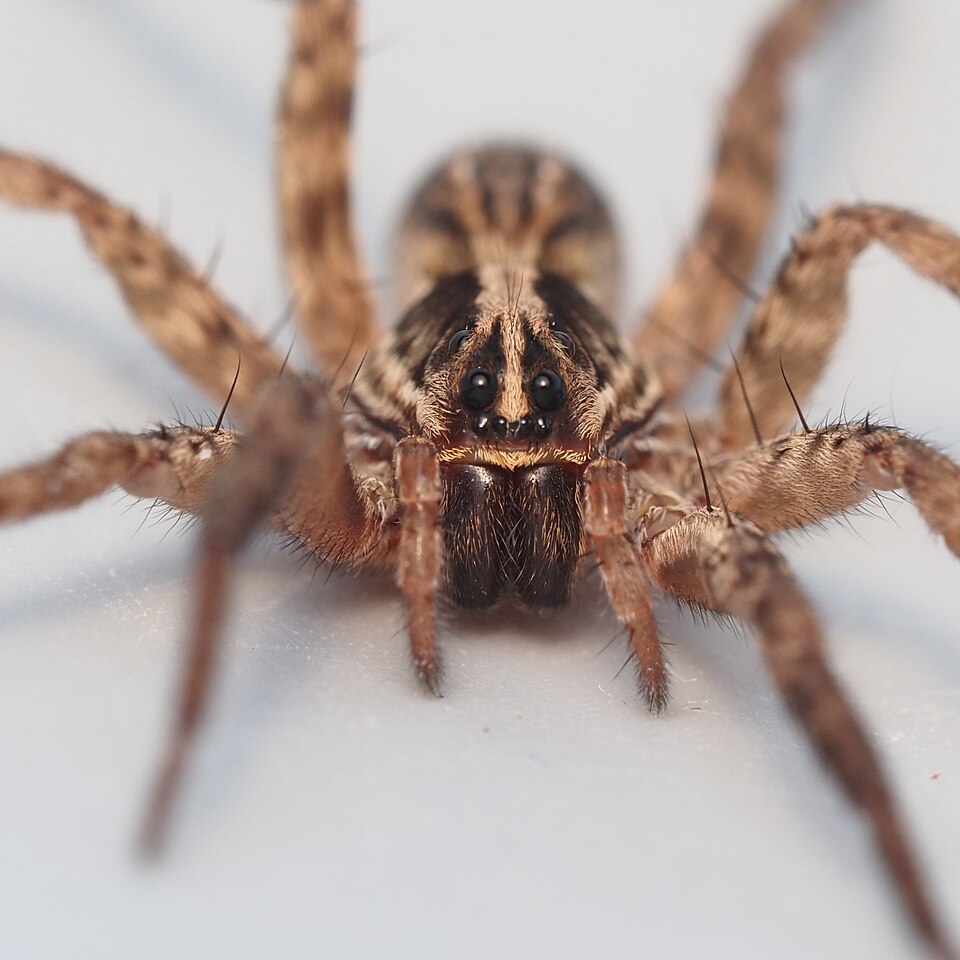

Is the lance wolf spider poisonous or venomous?
Not in any medically significant way. Like almost all spiders the lance wolf spider (family Lycosidae) has venom for its prey, but it is not a widow or recluse, the two U.S. groups whose bites need medical attention.
Which states have the lance wolf spider?
Records are spread over 19 states; the top three, Texas, Illinois and Oklahoma, hold 80% of them.
| # | State | Records | Share of state spiders | Rank in state |
|---|---|---|---|---|
| 1 | Texas | 150 | 0.5% | 38th of 386 |
| 2 | Illinois | 119 | 0.6% | 24th of 243 |
| 3 | Oklahoma | 35 | 0.7% | 33rd of 149 |
| 4 | Ohio | 23 | 0.3% | 62nd of 332 |
| 5 | Virginia | 8 | 0.1% | 118th of 176 |
| 6 | Arkansas | 7 | 0.4% | 52nd of 114 |
| 7 | Indiana | 7 | 0.2% | 103rd of 133 |
| 8 | Pennsylvania | 6 | 0.1% | 111th of 164 |
| 9 | Kansas | 3 | 0.2% | 67th of 94 |
| 10 | Mississippi | 3 | 0.2% | 72nd of 117 |
| 11 | New Jersey | 3 | 0.1% | 95th of 127 |
| 12 | Massachusetts | 2 | 0.0% | 121st of 189 |
| 13 | Missouri | 2 | 0.1% | 82nd of 117 |
| 14 | Kentucky | 1 | 0.1% | 93rd of 103 |
| 15 | Maryland | 1 | 0.0% | 136th of 153 |
| 16 | Alabama | 0 | — | — |
| 17 | Colorado | 0 | — | — |
| 18 | Minnesota | 0 | — | — |
| 19 | North Carolina | 0 | — | — |
When is the lance wolf spider seen?
Across the U.S., observation records of the lance wolf spider run mostly January through August, peaking in July with 21% of them. Winter (December to February) holds 13% of them.
Where the lance wolf spider is recorded in each state
Texas
Texas holds 150 licensed records, the 38th most recorded of 386 spiders listed there. Its observation records in Texas run mostly January through August, peaking in July; most licensed records come from Erath County, Dallas County and Collin County. Next come Runnels County (7) and Milam County (6).
Illinois
Illinois holds 119 licensed records, the 24th most recorded of 243 spiders listed there. Most of its licensed records in Illinois come from Effingham County, Fayette County and Jo Daviess County. Next come Marion County (19) and Champaign County (14).
Oklahoma
Oklahoma holds 35 licensed records, the joint 33rd most recorded of 149 spiders listed there. Most of its licensed records in Oklahoma come from Comanche County, McIntosh County and Cleveland County. Next come Alfalfa County (1).
Top counties in the U.S.
| # | County | State | Records | Share of U.S. |
|---|---|---|---|---|
| 1 | Erath County | Texas | 36 | 9.4% |
| 2 | Effingham County | Illinois | 32 | 8.4% |
| 3 | Fayette County | Illinois | 21 | 5.5% |
| 4 | Comanche County | Oklahoma | 21 | 5.5% |
| 5 | Jo Daviess County | Illinois | 20 | 5.2% |
| 6 | Marion County | Illinois | 19 | 5.0% |
| 7 | Dallas County | Texas | 19 | 5.0% |
| 8 | Collin County | Texas | 18 | 4.7% |
| 9 | Champaign County | Illinois | 14 | 3.7% |
| 10 | McIntosh County | Oklahoma | 9 | 2.4% |
| 11 | Runnels County | Texas | 7 | 1.8% |
| 12 | Milam County | Texas | 6 | 1.6% |
| 13 | Brazos County | Texas | 6 | 1.6% |
| 14 | Iroquois County | Illinois | 5 | 1.3% |
| 15 | Tarrant County | Texas | 5 | 1.3% |
How recent are the lance wolf spider records?
Records of the lance wolf spider span old collections and new observations: 55% date from 2017–2026, and the median record is from 2021. The oldest dated record is from 1924; the busiest year was 2023, with 75 records.
| Decade | Records | Share |
|---|---|---|
| 1920s | 25 | 6.6% |
| 1930s | 4 | 1.0% |
| 1940s | 2 | 0.5% |
| 1960s | 5 | 1.3% |
| 1970s | 3 | 0.8% |
| 1980s | 5 | 1.3% |
| 1990s | 92 | 24.1% |
| 2000s | 5 | 1.3% |
| 2010s | 45 | 11.8% |
| 2020s | 195 | 51.2% |
Species recorded in the same counties
Of the 32 counties where the lance wolf spider is most recorded, 21 are also top counties for the peppered jumper, more than for any other spider. None of its closest neighbors is venomous.
| Species | Shared counties |
|---|---|
| Peppered jumper | 21 |
| Black-and-yellow argiope | 19 |
| Bronze jumper | 19 |
| Familiar jumping spider | 19 |
| Striped lynx spider | 19 |
| Whitebanded crab spider | 19 |
| Bold jumper | 18 |
| Brilliant jumping spider | 18 |
Related species in the U.S.
Other species of the genus Schizocosa with profiles here: McCook's split wolf spider and Brush-legged split wolf spider.
GBIF records read 2026-09-29. Listed: any license. Counted: CC0/CC BY only. How we count.