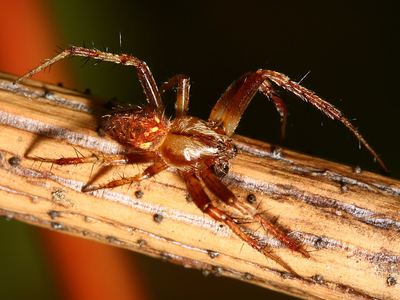
Humpbacked orbweaver (Eustala anastera)
The humpbacked orbweaver (genus Eustala) is a spider in the family Araneidae that is not dangerous to people. Among the 31 orb weavers profiled here, it ranks 8th by number of states listed, level with two others. It is listed in 33 states, spread over all nine census divisions. Its observation records peak in April.
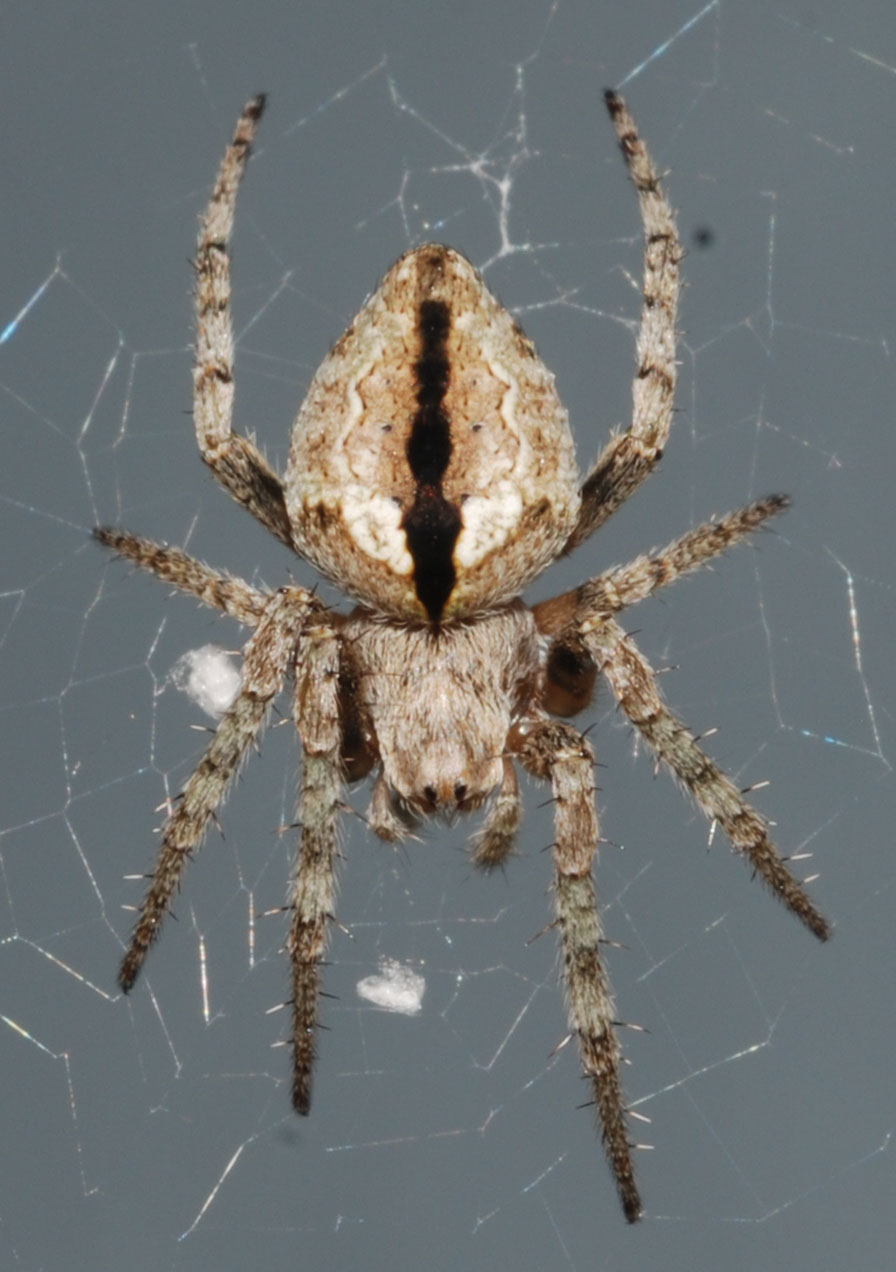

Eustala anastera, the humpbacked orbweaver, is a species of orb weaver in the family Araneidae. It is found in North and Central America.
From Wikipedia: Eustala anastera, text under CC BY-SA 4.0.
Is the humpbacked orbweaver poisonous or venomous?
Not in any medically significant way. Like almost all spiders the humpbacked orbweaver (family Araneidae) has venom for its prey, but it is not a widow or recluse, the two U.S. groups whose bites need medical attention.
Which states have the humpbacked orbweaver?
| # | State | Records | Share of state spiders | Rank in state |
|---|---|---|---|---|
| 1 | Texas | 97 | 0.3% | 60th of 387 |
| 2 | North Carolina | 20 | 0.2% | 68th of 189 |
| 3 | Virginia | 17 | 0.1% | 92nd of 178 |
| 4 | Indiana | 16 | 0.3% | 56th of 134 |
| 5 | Florida | 15 | 0.1% | 116th of 241 |
| 6 | Massachusetts | 15 | 0.3% | 60th of 191 |
| 7 | Maryland | 13 | 0.2% | 77th of 155 |
| 8 | Ohio | 13 | 0.2% | 78th of 333 |
| 9 | Georgia | 11 | 0.2% | 92nd of 190 |
| 10 | South Carolina | 11 | 0.4% | 55th of 124 |
| 11 | Alabama | 10 | 0.3% | 76th of 146 |
| 12 | Wisconsin | 8 | 0.2% | 83rd of 148 |
| 13 | Illinois | 7 | 0.0% | 213th of 243 |
| 14 | Oklahoma | 7 | 0.1% | 86th of 151 |
| 15 | California | 6 | 0.0% | 257th of 312 |
| 16 | Louisiana | 6 | 0.1% | 78th of 108 |
| 17 | New Jersey | 6 | 0.2% | 71st of 127 |
| 18 | New York | 6 | 0.1% | 96th of 152 |
| 19 | Tennessee | 6 | 0.2% | 83rd of 143 |
| 20 | Kentucky | 4 | 0.2% | 71st of 104 |
| 21 | Minnesota | 3 | 0.1% | 105th of 145 |
| 22 | New Hampshire | 3 | 0.2% | 54th of 74 |
| 23 | Pennsylvania | 3 | 0.0% | 134th of 169 |
| 24 | Kansas | 2 | 0.1% | 73rd of 93 |
| 25 | Michigan | 2 | 0.1% | 86th of 123 |
| 26 | Missouri | 2 | 0.1% | 83rd of 117 |
| 27 | Arkansas | 1 | 0.1% | 95th of 114 |
| 28 | Mississippi | 1 | 0.1% | 89th of 117 |
| 29 | West Virginia | 1 | 0.1% | 58th of 90 |
| 30 | Colorado | 0 | — | — |
| 31 | Connecticut | 0 | — | — |
| 32 | Maine | 0 | — | — |
| 33 | North Dakota | 0 | — | — |
When is the humpbacked orbweaver seen?
Its observation records run mostly March through November.
How recent are the humpbacked orbweaver records?
| Decade | Records | Share |
|---|---|---|
| 1920s | 2 | 0.6% |
| 1930s | 5 | 1.5% |
| 1940s | 3 | 0.9% |
| 1950s | 1 | 0.3% |
| 1960s | 2 | 0.6% |
| 1970s | 2 | 0.6% |
| 1980s | 13 | 4.0% |
| 1990s | 1 | 0.3% |
| 2000s | 7 | 2.1% |
| 2010s | 56 | 17.1% |
| 2020s | 235 | 71.9% |
Species recorded in the same counties
| Species | Shared counties |
|---|---|
| Bold jumper | 9 |
| Box spider | 9 |
| Celer crab spider | 9 |
| Deadly ground crab spider | 9 |
| Falconina gracilis | 9 |
| Familiar jumping spider | 9 |
| Peppered jumper | 9 |
| Rabid wolf spider | 9 |
Related species in the U.S.
GBIF records read 2026-11-05 (open these records on GBIF). Listed: any license. Counted: CC0/CC BY only. How we count.