Snakes and spiders in Suffolk County, Massachusetts
Suffolk County, home of Boston, has 3 snake and 30 spider species on record, from 35 licensed snake and 308 spider records. No venomous snake or spider reaches the county list, but the timber rattlesnake, the eastern copperhead and the northern black widow are on the Massachusetts list: treat any snake or spider like them as venomous until identified.
What snakes are in Suffolk County?
In all, 3 snake species are on the Suffolk County list. The most recorded are the common garter snake (20), the DeKay's brown snake (11) and the northern water snake (1).
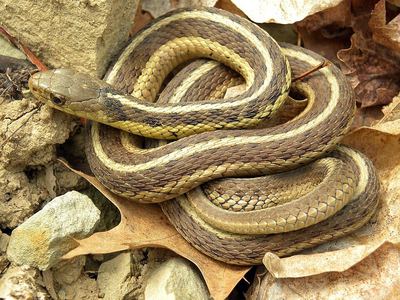
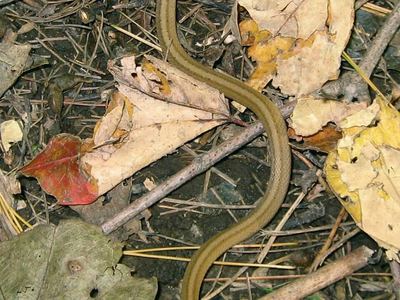
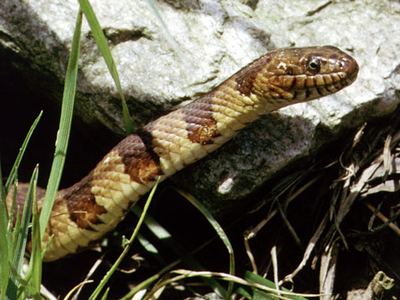
| # | Species | Records | Share of Massachusetts records |
|---|---|---|---|
| 1 | Common garter snake Thamnophis sirtalis | 20 | 2% |
| 2 | DeKay's brown snake Storeria dekayi | 11 | 13% |
| 3 | Northern water snake Nerodia sipedon | 1 | 0% |
What spiders are in Suffolk County?
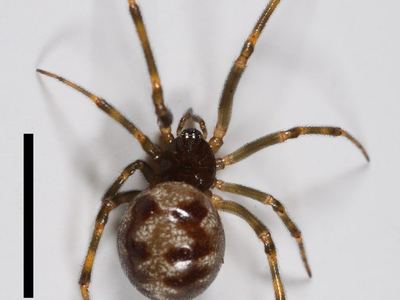
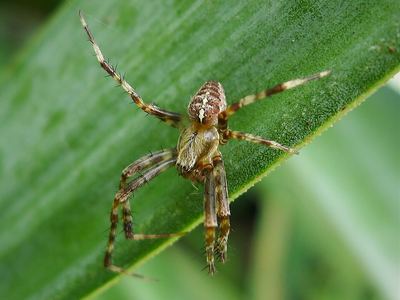
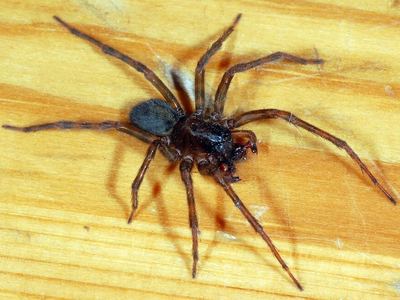
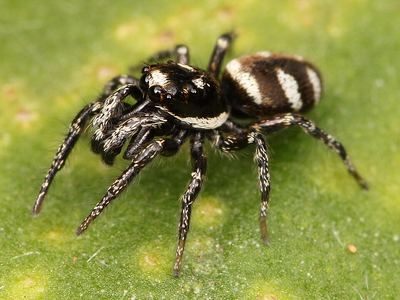
In all, 30 spider species are on the Suffolk County list. The most recorded are the bridge orbweaver (29), the triangulate bud spider (24) and the garden spider (17). Suffolk County holds more than half of all Massachusetts records of the bridge orbweaver and the Eurasian leaflitter crab spider.
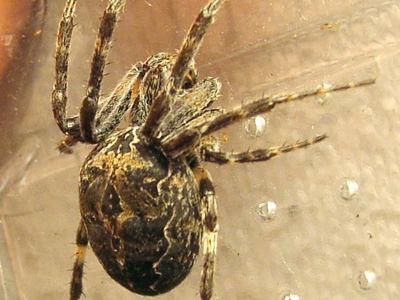
| # | Species | Records | Share of Massachusetts records |
|---|---|---|---|
| 1 | Bridge orbweaver Larinioides sclopetarius | 29 | 81% |
| 2 | Triangulate bud spider Steatoda triangulosa | 24 | 33% |
| 3 | Garden spider Araneus diadematus | 17 | 14% |
| 4 | Black laceweaver Amaurobius ferox | 14 | 44% |
| 5 | Zebra spider Salticus scenicus | 14 | 16% |
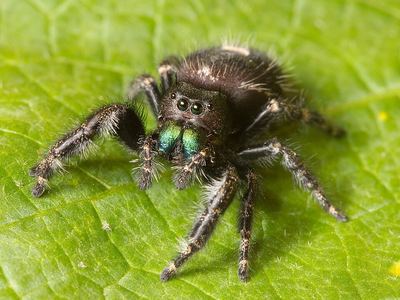
| 6 | Bold jumper Phidippus audax | 11 | 6% |
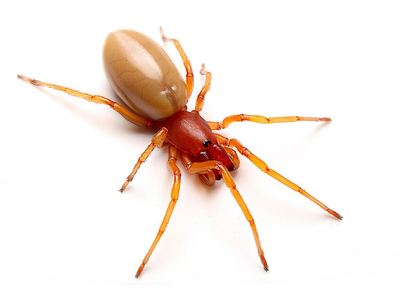
| 7 | Dysdera crocata | 11 | 18% |
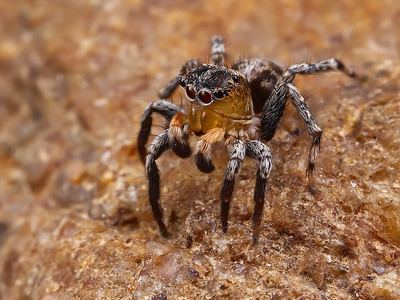
| 8 | Flea jumping spider Naphrys pulex | 8 | 10% |
| 9 | Garden ghost spider Hibana gracilis | 8 | 32% |
| 10 | Orchard orbweaver Leucauge venusta | 7 | 2% |
| 11 | Spotted orbweaver Neoscona crucifera | 7 | 14% |
| 12 | Humpbacked orbweaver Eustala anastera | 5 | 36% |
| 13 | Common house spider Parasteatoda tepidariorum | 4 | 6% |
| 14 | Nursery web spider Pisaurina mira | 4 | 2% |
| 15 | White sac spider Elaver excepta | 4 | 15% |
| 16 | Familiar jumping spider Platycryptus undatus | 3 | 1% |
| 17 | Sixspotted orbweaver Araniella displicata | 3 | 5% |
| 18 | Spitting spider Scytodes thoracica | 3 | 17% |
| 19 | Asian wall jumper Attulus fasciger | 2 | 8% |
| 20 | Hakka himeshimensis | 2 | 33% |
| 21 | Parson spider Herpyllus ecclesiasticus | 2 | 3% |
| 22 | Pseudeuophrys erratica | 2 | 13% |
| 23 | Spined micrathena Micrathena gracilis | 2 | 3% |
| 24 | Dimorphic jumper Maevia inclemens | 1 | 1% |
| 25 | Eurasian leaflitter crab spider Ozyptila praticola | 1 | 100% |
| 26 | Filmy dome spider Neriene radiata | 1 | 1% |
| 27 | Longbodied cellar spider Pholcus phalangioides | 1 | 3% |
| 28 | Paraphidippus aurantius | 1 | 3% |
| 29 | Trochosa ruricola | — | — |
| 30 | Zelotes fratris | — | — |
When are spiders out in Suffolk County?
Observation records of spiders in Suffolk County run mostly April through November, peaking in October with 24% of them; across Massachusetts the peak is August.
What stands out in Suffolk County
Species for which Suffolk County holds a large share of all Massachusetts records: the bridge orbweaver, 81% (29 of 36); the black laceweaver, 44% (14 of 32); the triangulate bud spider, 33% (24 of 72); Dysdera crocata, 18% (11 of 60); the zebra spider, 16% (14 of 86).
Common in Massachusetts, not on the Suffolk County list
Among the spiders most recorded across Massachusetts, these do not reach the county list: the northern black widow (162 statewide), the black-and-yellow argiope (95 statewide) and the drumming sword wolf spider (85 statewide). Few records here can mean the species is rare in the county, or that few people have looked.
Harmless lookalikes in Suffolk County
No copperheads reach the county list, but the eastern copperhead is on the Massachusetts list: treat any snake like it as venomous until identified. Harmless species often taken for them here: the northern water snake. Cottonmouths are not on the Massachusetts list, but GBIF holds 2 cottonmouth records of any license in Massachusetts (northern cottonmouth 2): treat any snake like this as venomous until identified. Harmless species often taken for them here: the northern water snake. No widow spiders reach the county list, but the northern black widow is on the Massachusetts list: treat any spider like it as venomous until identified. Harmless species often taken for them here: the triangulate bud spider and the common house spider. Recluse spiders are not on the Massachusetts list, but GBIF holds 1 recluse spider record of any license in Massachusetts (brown recluse 1): treat any spider like this as venomous until identified. Harmless species often taken for them here: the spitting spider and the longbodied cellar spider.
Suffolk County among Massachusetts counties
By licensed snake records Suffolk County ranks 14th of 14 Massachusetts counties with any.
Other Massachusetts counties with their own page: Middlesex County, Worcester County, Norfolk County, Essex County, Barnstable County, Plymouth County and Dukes County.
The whole state: venomous species in Massachusetts, all snakes, all spiders.
GBIF records read 2026-09-29. Listed: any license. Counted: CC0/CC BY only. How we count.