Snakes and spiders in Pima County, Arizona
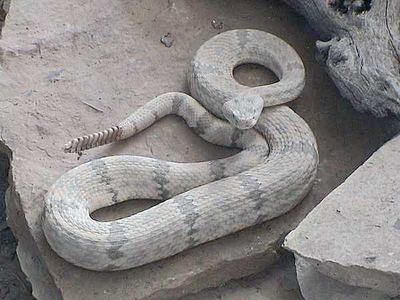
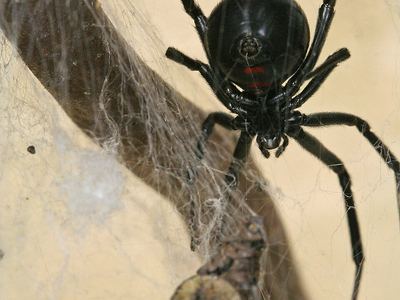
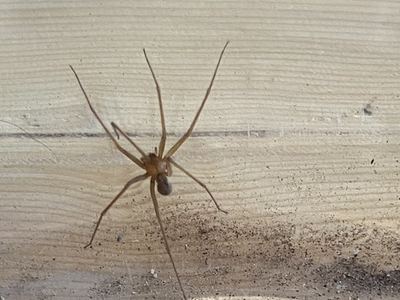
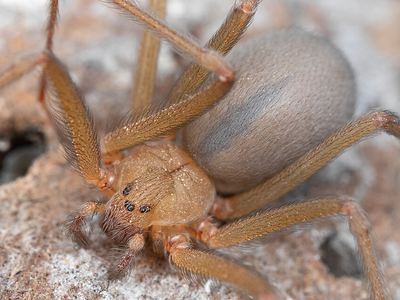
Pima County, home of Tucson, has 38 snake and 67 spider species on record, from 5,524 licensed snake and 1,510 spider records. Venomous species here: the western diamondback rattlesnake, the sidewinder, the tiger rattlesnake, the Mohave rattlesnake, the Sonoran coralsnake, the black-tailed rattlesnake, the Arizona black rattlesnake, the ridge-nosed rattlesnake, the rock rattlesnake, the western black widow, the Arizona recluse and the desert recluse.
Are there venomous snakes or spiders in Pima County?
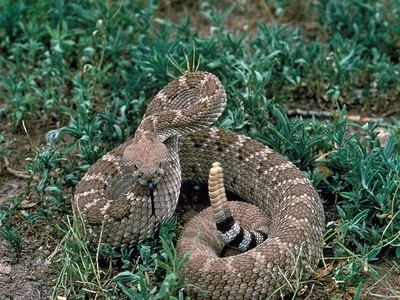
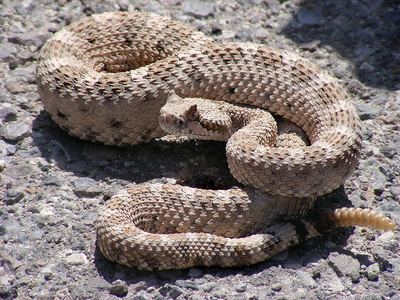
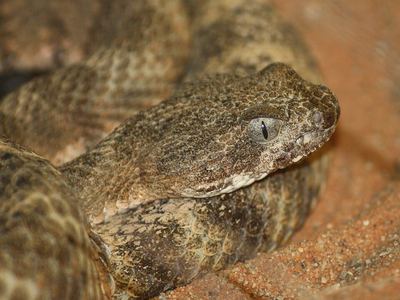
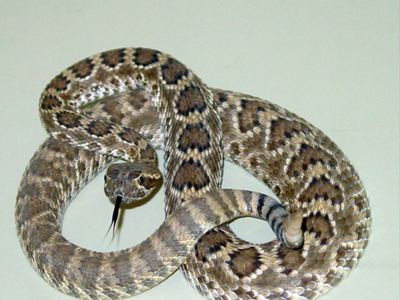
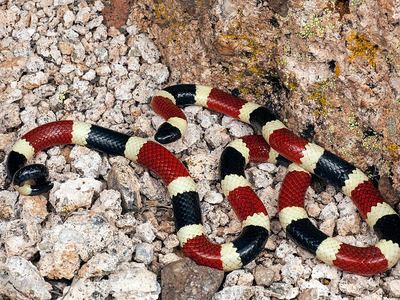
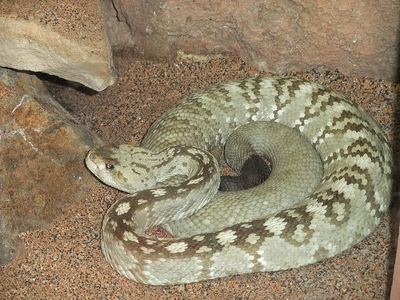
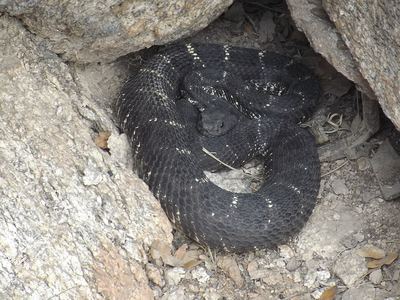
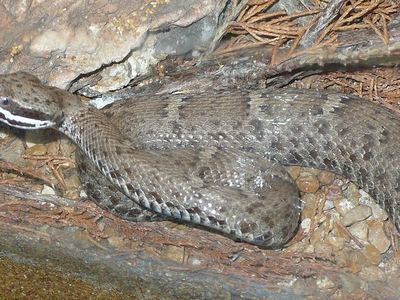
Yes. The western diamondback rattlesnake: 592 licensed records, 33% of all Arizona records of it. The sidewinder: 241 licensed records, 28% of all Arizona records of it. The tiger rattlesnake: 224 licensed records, 67% of all Arizona records of it. The Mohave rattlesnake: 182 licensed records, 13% of all Arizona records of it. The Sonoran coralsnake: 146 licensed records, 41% of all Arizona records of it. The black-tailed rattlesnake: 129 licensed records, 18% of all Arizona records of it. The Arizona black rattlesnake: 39 licensed records, 17% of all Arizona records of it. The ridge-nosed rattlesnake: 3 licensed records, 4% of all Arizona records of it. The rock rattlesnake: 2 licensed records, 1% of all Arizona records of it. The western black widow: 139 licensed records, 48% of all Arizona records of it. The Arizona recluse: 5 licensed records, 71% of all Arizona records of it. The desert recluse: 2 licensed records, 29% of all Arizona records of it.
What snakes are in Pima County?
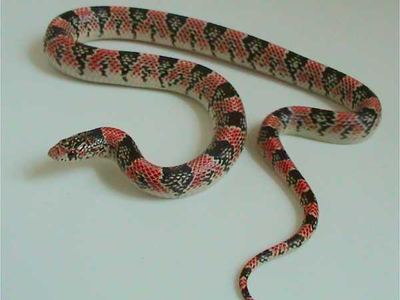
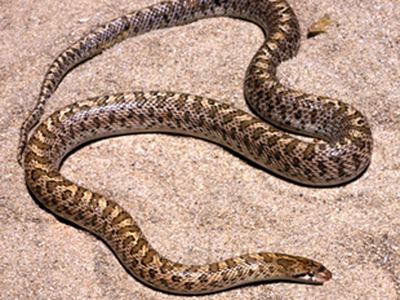
In all, 38 snake species are on the Pima County list. The most recorded are the long-nosed snake (627), the western diamondback rattlesnake (592) and the Maricopa leafnose snake (322). Pima County holds more than half of all Arizona records of the Maricopa leafnose snake, the tiger rattlesnake, the sand snake and the Sonoran shovel-nosed snake.
| # | Species | Records | Share of Arizona records |
|---|---|---|---|
| 1 | Long-nosed snake Rhinocheilus lecontei | 627 | 45% |
| 2 | Western diamondback rattlesnake venomous Crotalus atrox | 592 | 33% |
| 3 | Maricopa leafnose snake Phyllorhynchus browni | 322 | 85% |
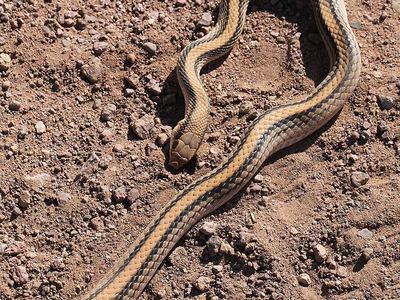
| 4 | Western patch-nosed snake Salvadora hexalepis | 293 | 35% |
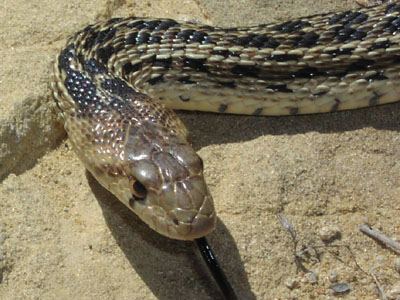
| 5 | Gopher snake Pituophis catenifer | 291 | 21% |
| 6 | Glossy snake Arizona elegans | 270 | 38% |
| 7 | Sidewinder venomous Crotalus cerastes | 241 | 28% |
| 8 | Tiger rattlesnake venomous Crotalus tigris | 224 | 67% |
| 9 | Blackneck garter snake Thamnophis cyrtopsis | 223 | 29% |
| 10 | Mohave rattlesnake venomous Crotalus scutulatus | 182 | 13% |
| 11 | Western threadsnake Rena humilis | 178 | 47% |
| 12 | Sonoran lyre snake Trimorphodon lambda | 174 | 41% |
| 13 | Coachwhip Masticophis flagellum | 165 | 27% |
| 14 | Spotted leaf-nosed snake Phyllorhynchus decurtatus | 160 | 44% |
| 15 | Sonoran whipsnake Masticophis bilineatus | 156 | 28% |
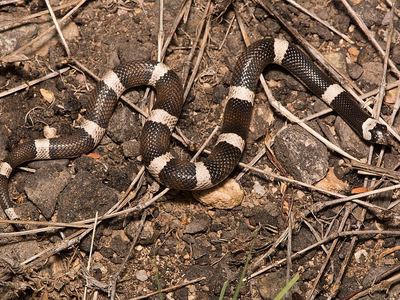
| 16 | Sonoran coralsnake venomous Micruroides euryxanthus | 146 | 41% |
| 17 | Sand snake Sonora straminea | 139 | 55% |
| 18 | Black-tailed rattlesnake venomous Crotalus molossus | 129 | 18% |
| 19 | Checkered garter snake Thamnophis marcianus | 104 | 19% |
| 20 | Desert nightsnake Hypsiglena chlorophaea | 53 | 47% |
| 21 | Southwestern blackhead snake Tantilla hobartsmithi | 53 | 29% |
| 22 | Western ground snake Sonora semiannulata | 46 | 7% |
| 23 | California kingsnake Lampropeltis californiae | 43 | 17% |
| 24 | Colorado desert shovel-nosed snake Chionactis annulata | 41 | 18% |
| 25 | Arizona black rattlesnake venomous Crotalus cerberus | 39 | 17% |
| 26 | Ring-necked snake Diadophis punctatus | 39 | 20% |
| 27 | Desert kingsnake Lampropeltis splendida | 33 | 31% |
| 28 | Eastern patch-nosed snake Salvadora grahamiae | 29 | 20% |
| 29 | Chihuahuan mountain kingsnake Lampropeltis knoblochi | 16 | 17% |
| 30 | Mexican garter snake Thamnophis eques | 16 | 18% |
| 31 | Sonoran shovel-nosed snake Sonora palarostris | 15 | 100% |
| 32 | Rosy boa Lichanura trivirgata | 11 | 34% |
| 33 | Green rat snake Senticolis triaspis | 10 | 20% |
| 34 | Big Bend patch-nosed snake Salvadora deserticola | 6 | 7% |
| 35 | Western shovel-nosed snake Sonora occipitalis | 4 | 2% |
| 36 | Ridge-nosed rattlesnake venomous Crotalus willardi | 3 | 4% |
| 37 | Sonoran mountain kingsnake Lampropeltis pyromelana | 3 | 2% |
| 38 | Rock rattlesnake venomous Crotalus lepidus | 2 | 1% |
When are snakes out in Pima County?
Observation records of snakes in Pima County run mostly March through September, peaking in August with 24% of them, the same peak as Arizona as a whole.
What spiders are in Pima County?
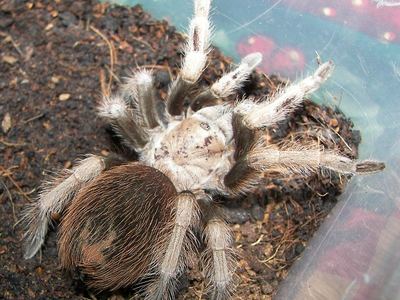
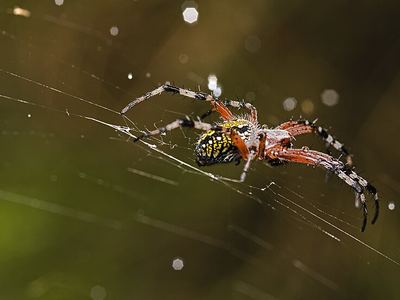
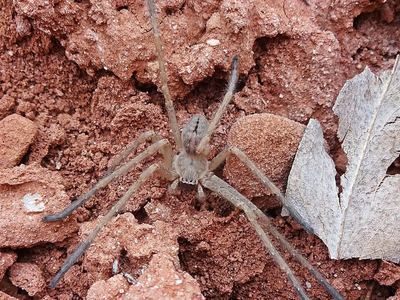
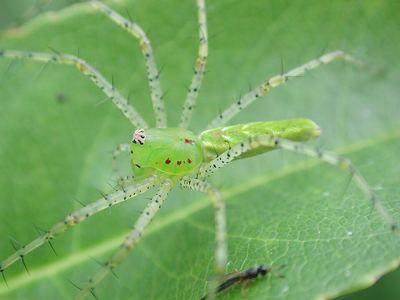
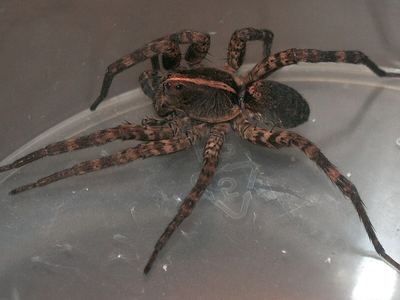
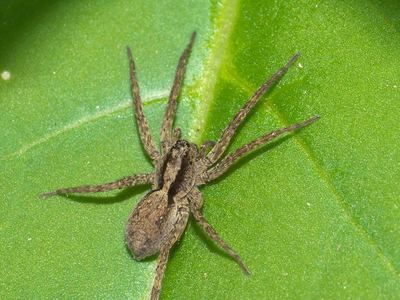
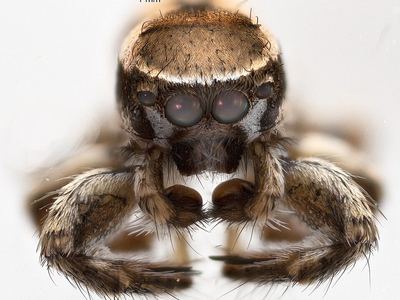
In all, 67 spider species are on the Pima County list. The most recorded are the desert blond tarantula (184), the western black widow (139) and the western spotted orbweaver (99). Pima County holds more than half of all Arizona records of the desert blond tarantula, the western spotted orbweaver, the giant crab spider and the green lynx spider.
| # | Species | Records | Share of Arizona records |
|---|---|---|---|
| 1 | Desert blond tarantula Aphonopelma chalcodes | 184 | 55% |
| 2 | Western black widow venomous Latrodectus hesperus | 139 | 48% |
| 3 | Western spotted orbweaver Neoscona oaxacensis | 99 | 65% |
| 4 | Giant crab spider Olios giganteus | 83 | 58% |
| 5 | Green lynx spider Peucetia viridans | 49 | 67% |
| 6 | Carolina wolf spider Hogna carolinensis | 42 | 52% |
| 7 | Koch's wolf spider Alopecosa kochi | 41 | 65% |
| 8 | Habronattus clypeatus | 23 | 47% |
| 9 | Shoreline wolf spider Arctosa littoralis | 23 | 50% |
| 10 | Phidippus carneus | 21 | 32% |
| 11 | Camptocosa parallela | 19 | 39% |
| 12 | Hirsute paradise spider Habronattus hirsutus | 19 | 49% |
| 13 | Metaphidippus chera | 19 | 61% |
| 14 | Dictis striatipes | 17 | 71% |
| 15 | Mecaphesa californica | 15 | 79% |
| 16 | Phidippus californicus | 14 | 56% |
| 17 | Rodeo black Aphonopelma vorhiesi | 14 | 40% |
| 18 | Arizona black hole spider Kukulcania arizonica | 13 | 68% |
| 19 | Ribbon jumping spider Metacyrba taeniola | 12 | 50% |
| 20 | Whitebanded crab spider Misumenoides formosipes | 11 | 32% |
| 21 | Banded garden spider Argiope trifasciata | 10 | 48% |
| 22 | Sosippus californicus | 10 | 30% |
| 23 | Tinus peregrinus | 10 | 77% |
| 24 | Colonus hesperus | 9 | 56% |
| 25 | Homalonychus selenopoides | 9 | 45% |
| 26 | Buttonhook leafbeetle jumping spider Sassacus vitis | 8 | 57% |
| 27 | Diguetia canities | 8 | 67% |
| 28 | Euagrus chisoseus | 8 | 62% |
| 29 | Habronattus ustulatus | 8 | 28% |
| 30 | Syspira longipes | 8 | 47% |
| 31 | California flattened jumping spider Platycryptus californicus | 7 | 44% |
| 32 | Desert red jumping spider Phidippus ardens | 6 | 60% |
| 33 | Habronattus conjunctus | 6 | 43% |
| 34 | Habronattus pyrrithrix | 6 | 50% |
| 35 | Marbled cellar spider Holocnemus pluchei | 6 | 32% |
| 36 | Apache jumping spider Phidippus apacheanus | 5 | 17% |
| 37 | Arizona recluse venomous Loxosceles arizonica | 5 | 71% |
| 38 | Box spider Crossopriza lyoni | 5 | 100% |
| 39 | Desert grass spider Agelenopsis aperta | 5 | 38% |
| 40 | Oxyopes tridens | 5 | 71% |
| 41 | Bark lynx spider Hamataliwa grisea | 4 | 50% |
| 42 | Eriophora edax | 4 | 80% |
| 43 | Habronattus hallani | 4 | 44% |
| 44 | Hogna antelucana | 4 | 27% |
| 45 | Plectreurys tristis | 4 | 44% |
| 46 | Sassacus papenhoei | 4 | 27% |
| 47 | Paloma dwarf tarantula Aphonopelma paloma | 3 | 75% |
| 48 | Phidippus asotus | 3 | 38% |
| 49 | Phidippus octopunctatus | 3 | 33% |
| 50 | Santa Catalina Mountain tarantula Aphonopelma catalina | 3 | 100% |
| 51 | Sixspotted fishing spider Dolomedes triton | 3 | 33% |
| 52 | Syspira tigrina | 3 | 75% |
| 53 | Aphonopelma saguaro | 2 | 100% |
| 54 | Apollophanes texanus | 2 | 40% |
| 55 | Asagena medialis | 2 | 67% |
| 56 | Desert recluse venomous Loxosceles deserta | 2 | 29% |
| 57 | Green lynx Peucetia longipalpis | 2 | 40% |
| 58 | Lauricius hooki | 2 | 22% |
| 59 | Phidippus tigris | 2 | 100% |
| 60 | Phoenix jumping spider Phidippus phoenix | 2 | 67% |
When are spiders out in Pima County?
Observation records of spiders in Pima County run mostly March through October, peaking in August with 23% of them, the same peak as Arizona as a whole.
What stands out in Pima County
Species for which Pima County holds a large share of all Arizona records: the Maricopa leafnose snake, 85% (322 of 377); Dictis striatipes, 71% (17 of 24); the green lynx spider, 67% (49 of 73); the tiger rattlesnake, 67% (224 of 335); the Koch's wolf spider, 65% (41 of 63); the western spotted orbweaver, 65% (99 of 153); Metaphidippus chera, 61% (19 of 31); the giant crab spider, 58% (83 of 142).
Common in Arizona, not on the Pima County list
Among the snakes most recorded across Arizona, these do not reach the county list: the western terrestrial garter snake (728 statewide). Few records here can mean the species is rare in the county, or that few people have looked.
Harmless lookalikes in Pima County
Rattlesnakes are on the county list, and so are harmless species often taken for them: the gopher snake. Coral snakes are on the county list, and so are harmless species often taken for them: the long-nosed snake and the Sonoran mountain kingsnake.
Pima County among Arizona counties
By licensed snake records Pima County ranks 1st of 15 Arizona counties with any.
Other Arizona counties with their own page: Cochise County, Maricopa County, Pinal County, Santa Cruz County, Yavapai County, Coconino County, Yuma County and Graham County.
The whole state: venomous species in Arizona, all snakes, all spiders.
GBIF records read 2026-09-29. Listed: any license. Counted: CC0/CC BY only. How we count.