Snakes and spiders in Hidalgo County, Texas
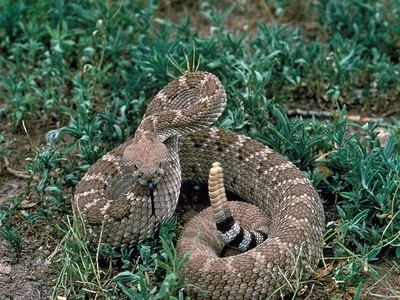
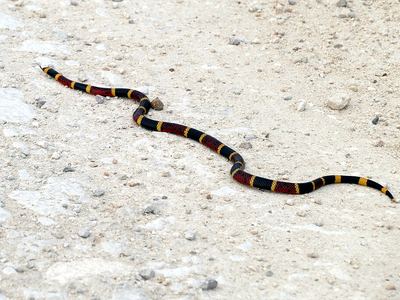
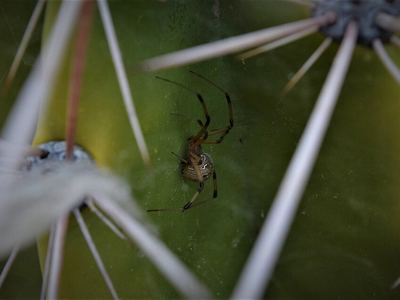
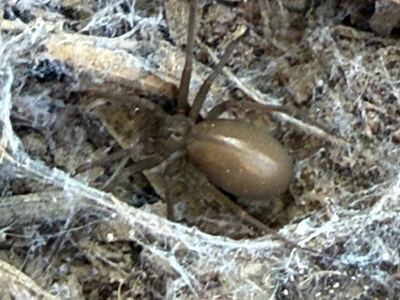
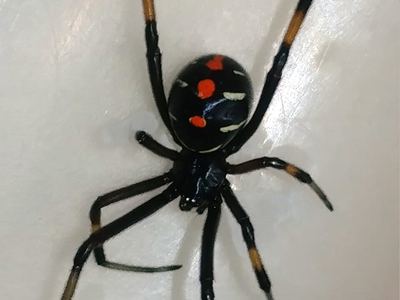
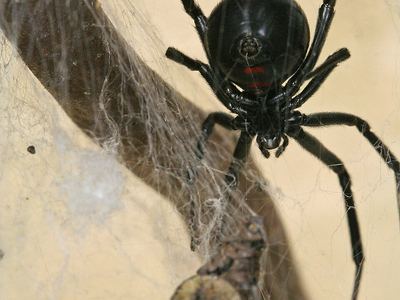
Hidalgo County, home of Edinburg, has 23 snake and 78 spider species on record, from 419 licensed snake and 2,897 spider records. Venomous species here: the western diamondback rattlesnake, the Texas coral snake, the brown widow, the Texas recluse, the southern black widow and the western black widow.
Are there venomous snakes or spiders in Hidalgo County?
Yes. The western diamondback rattlesnake: 47 licensed records, 2% of all Texas records of it. The Texas coral snake: 3 licensed records, 1% of all Texas records of it. The brown widow: 16 licensed records, 18% of all Texas records of it. The Texas recluse: 16 licensed records, 27% of all Texas records of it. The southern black widow: 12 licensed records, 6% of all Texas records of it. The western black widow: 5 licensed records, 3% of all Texas records of it.
What snakes are in Hidalgo County?
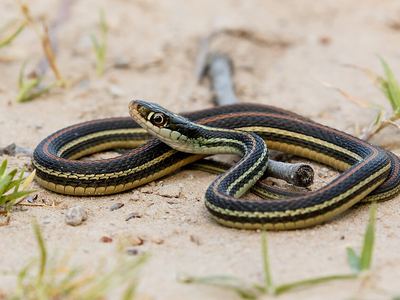
In all, 23 snake species are on the Hidalgo County list. The most recorded are the western ribbon snake (53), the western diamondback rattlesnake (47) and the Texas indigo snake (36).
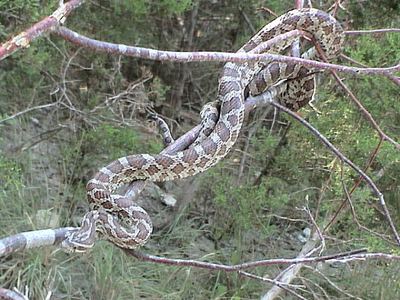
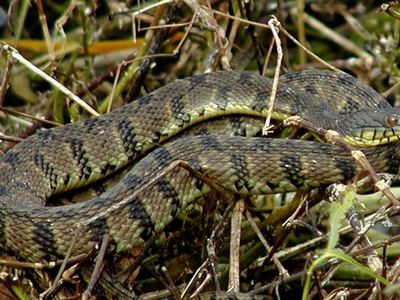
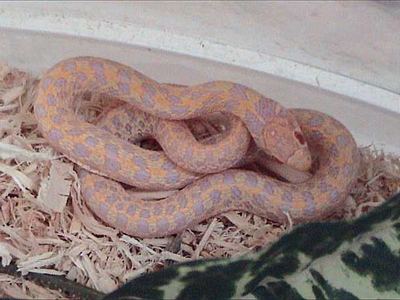
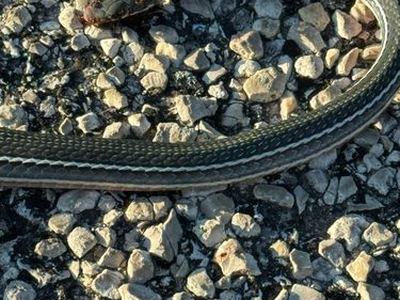
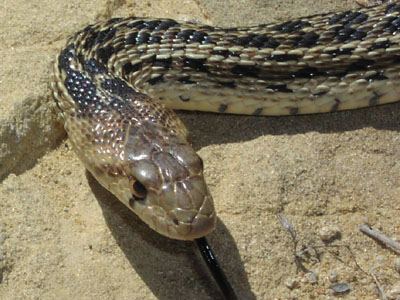
| # | Species | Records | Share of Texas records |
|---|---|---|---|
| 1 | Western ribbon snake Thamnophis proximus | 53 | 2% |
| 2 | Western diamondback rattlesnake venomous Crotalus atrox | 47 | 2% |
| 3 | Texas indigo snake Drymarchon melanurus | 36 | 17% |
| 4 | Great Plains rat snake Pantherophis emoryi | 33 | 5% |
| 5 | Diamondback water snake Nerodia rhombifer | 30 | 2% |
| 6 | Checkered garter snake Thamnophis marcianus | 28 | 2% |
| 7 | Schott's whipsnake Masticophis schotti | 21 | 14% |
| 8 | Gopher snake Pituophis catenifer | 18 | 1% |
| 9 | DeKay's brown snake Storeria dekayi | 17 | 2% |
| 10 | Texas blind snake Rena dulcis | 15 | 2% |
| 11 | Glossy snake Arizona elegans | 12 | 2% |
| 12 | Western ground snake Sonora semiannulata | 12 | 1% |
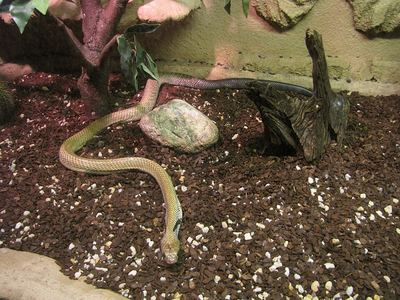
| 13 | Coachwhip Masticophis flagellum | 10 | 0% |
| 14 | Cat-eyed snake Leptodeira septentrionalis | 7 | 29% |
| 15 | Eastern racer Coluber constrictor | 7 | 1% |
| 16 | Texas patch-nosed snake Salvadora lineata | 7 | 6% |
| 17 | Long-nosed snake Rhinocheilus lecontei | 6 | 1% |
| 18 | Mexican hook-nosed snake Ficimia streckeri | 5 | 13% |
| 19 | Plain-bellied watersnake Nerodia erythrogaster | 5 | 0% |
| 20 | Sonora taylori | 5 | 5% |
| 21 | Brahminy blindsnake introduced Indotyphlops braminus | 3 | 9% |
| 22 | Texas coral snake venomous Micrurus tener | 3 | 1% |
| 23 | Black-striped snake Coniophanes imperialis | 2 | 11% |
When are snakes out in Hidalgo County?
Observation records of snakes in Hidalgo County run through most of the year, peaking in May with 14% of them; across Texas the peak is April.
What spiders are in Hidalgo County?
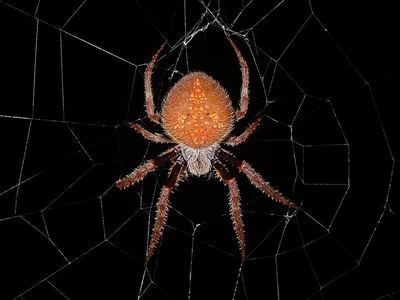
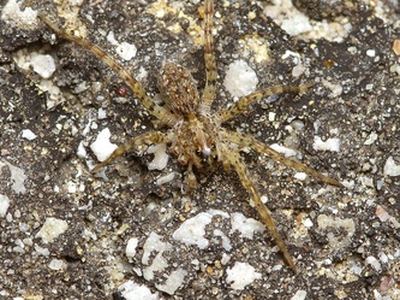
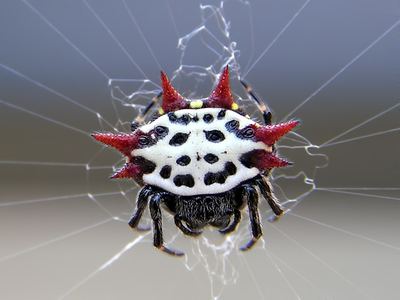
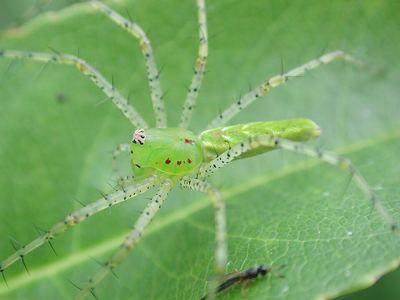
In all, 78 spider species are on the Hidalgo County list. The most recorded are the tropical orb weaver (326), Hogna antelucana (183) and the spiny-backed orbweaver (172). Hidalgo County holds more than half of all Texas records of the tropical orb weaver, Eriophora edax, the Texas tan tarantula and Metazygia wittfeldae.
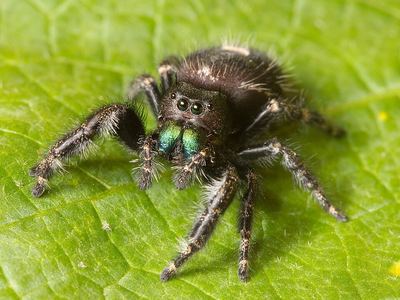
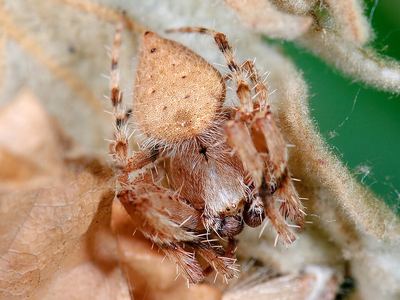
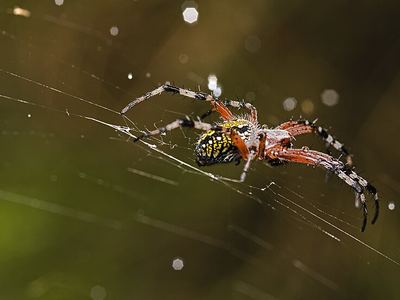
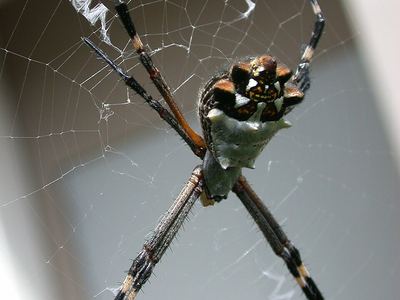
| # | Species | Records | Share of Texas records |
|---|---|---|---|
| 1 | Tropical orb weaver Eriophora ravilla | 326 | 77% |
| 2 | Hogna antelucana | 183 | 23% |
| 3 | Spiny-backed orbweaver Gasteracantha cancriformis | 172 | 23% |
| 4 | Bold jumper Phidippus audax | 134 | 9% |
| 5 | Eriophora edax | 122 | 86% |
| 6 | Western spotted orbweaver Neoscona oaxacensis | 118 | 25% |
| 7 | Silver argiope Argiope argentata | 112 | 48% |
| 8 | Green lynx spider Peucetia viridans | 81 | 9% |
| 9 | Texas tan tarantula Aphonopelma anax | 73 | 54% |
| 10 | Metazygia wittfeldae | 72 | 63% |
| 11 | Arabesque orbweaver Neoscona arabesca | 69 | 34% |
| 12 | Gray wall jumper Menemerus bivittatus | 68 | 25% |
| 13 | Rabid wolf spider Rabidosa rabida | 59 | 6% |
| 14 | Sylvan jumping spider Colonus sylvanus | 55 | 36% |
| 15 | Falconina gracilis | 53 | 27% |
| 16 | Pantropical jumper Plexippus paykulli | 48 | 16% |
| 17 | Bifurcate trashline orbweaver Allocyclosa bifurca | 44 | 43% |
| 18 | Leucauge argyrobapta | 39 | 17% |
| 19 | Larinia directa | 36 | 40% |
| 20 | Familiar jumping spider Platycryptus undatus | 34 | 7% |
| 21 | Messua limbata | 34 | 34% |
| 22 | Butterfly orbweaver Araneus pegnia | 33 | 46% |
| 23 | Tinus peregrinus | 33 | 73% |
| 24 | Mecaphesa dubia | 30 | 23% |
| 25 | Dictyna bellans | 27 | 47% |
| 26 | Three-lined maevia Paramaevia poultoni | 26 | 39% |
| 27 | Phidippus arizonensis | 24 | 24% |
| 28 | Box spider Crossopriza lyoni | 23 | 35% |
| 29 | Zilloides orb-weaver Metazygia zilloides | 23 | 35% |
| 30 | Araneus detrimentosus | 22 | 36% |
| 31 | Mexican two-tailed spider Neotama mexicana | 20 | 87% |
| 32 | Southern bolas spider Mastophora cornigera | 18 | 100% |
| 33 | Green lynx Peucetia longipalpis | 17 | 53% |
| 34 | Brown widow venomous introduced Latrodectus geometricus | 16 | 18% |
| 35 | Huntsman spider Heteropoda venatoria | 16 | 80% |
| 36 | Tetragnatha guatemalensis | 16 | 70% |
| 37 | Texas recluse venomous Loxosceles devia | 16 | 27% |
| 38 | Argiope blanda | 14 | 88% |
| 39 | Striped lynx spider Oxyopes salticus | 14 | 2% |
| 40 | Difoliate orbweaver Acacesia hamata | 13 | 54% |
| 41 | Featherlegged orbweaver Uloborus glomosus | 13 | 22% |
| 42 | Bagheera prosper | 12 | 39% |
| 43 | Colonus puerperus | 12 | 15% |
| 44 | Southern black widow venomous Latrodectus mactans | 12 | 6% |
| 45 | Southern house spider Kukulcania hibernalis | 12 | 18% |
| 46 | Wetland giant wolf spider Tigrosa helluo | 12 | 13% |
| 47 | Labyrinth orbweaver Metepeira labyrinthea | 11 | 61% |
| 48 | Triangulate bud spider Steatoda triangulosa | 11 | 3% |
| 49 | Tuftlegged orbweaver Mangora placida | 11 | 14% |
| 50 | Neoscona utahana | 10 | 56% |
| 51 | Arrowshaped micrathena Micrathena sagittata | 9 | 26% |
| 52 | Banded garden spider Argiope trifasciata | 9 | 4% |
| 53 | Humpbacked orbweaver Eustala anastera | 9 | 9% |
| 54 | Starbellied orbweaver Acanthepeira stellata | 9 | 14% |
| 55 | Leptoctenus byrrhus | 8 | 29% |
| 56 | Trochosa sepulchralis | 8 | 9% |
| 57 | American dewdrop spider Argyrodes elevatus | 7 | 6% |
| 58 | Common Hentz jumping spider Hentzia palmarum | 7 | 4% |
| 59 | Dictis striatipes | 7 | 78% |
| 60 | Two-lined stealthy ground spider Cesonia bilineata | 7 | 16% |
When are spiders out in Hidalgo County?
Observation records of spiders in Hidalgo County run through most of the year, peaking in April with 16% of them, the same peak as Texas as a whole.
What stands out in Hidalgo County
Species for which Hidalgo County holds a large share of all Texas records: the Mexican two-tailed spider, 87% (20 of 23); Eriophora edax, 86% (122 of 142); the huntsman spider, 80% (16 of 20); the tropical orb weaver, 77% (326 of 423); Tinus peregrinus, 73% (33 of 45); Tetragnatha guatemalensis, 70% (16 of 23); Metazygia wittfeldae, 63% (72 of 115); the difoliate orbweaver, 54% (13 of 24).
Common in Texas, not on the Hidalgo County list
Among the snakes most recorded across Texas, these do not reach the county list: the western rat snake (1,769 statewide), the rough earthsnake (1,448 statewide) and the eastern copperhead (1,188 statewide). Few records here can mean the species is rare in the county, or that few people have looked.
Among the spiders most recorded across Texas, these do not reach the county list: the twin-flagged jumping spider (669 statewide), Cicurina varians (514 statewide) and the spotted orbweaver (441 statewide). Few records here can mean the species is rare in the county, or that few people have looked.
Harmless lookalikes in Hidalgo County
No copperheads reach the county list, but the eastern copperhead and the broad-banded copperhead are on the Texas list: treat any snake like them as venomous until identified. Harmless species often taken for them here: the plain-bellied watersnake. No cottonmouths reach the county list, but the northern cottonmouth is on the Texas list: treat any snake like it as venomous until identified. Harmless species often taken for them here: the diamondback water snake and the plain-bellied watersnake. Rattlesnakes are on the county list, and so are harmless species often taken for them: the Great Plains rat snake and the gopher snake. Coral snakes are on the county list, and so are harmless species often taken for them: the long-nosed snake. Widow spiders are on the county list, and so are harmless species often taken for them: the triangulate bud spider. Recluse spiders are on the county list, and so are harmless species often taken for them: the southern house spider.
Hidalgo County among Texas counties
By licensed snake records Hidalgo County ranks 21st of 254 Texas counties with any.
Other Texas counties with their own page: Travis County, Brewster County, Harris County, Brazos County, El Paso County, Jeff Davis County, Val Verde County and Bexar County.
The whole state: venomous species in Texas, all snakes, all spiders.
GBIF records read 2026-09-29. Listed: any license. Counted: CC0/CC BY only. How we count.