Snakes and spiders in Douglas County, Kansas
Douglas County, home of Lawrence, has 22 snake and 30 spider species on record, from 1,215 licensed snake and 277 spider records. Venomous species here: the eastern copperhead, the timber rattlesnake and the brown recluse.
Are there venomous snakes or spiders in Douglas County?
Yes. The eastern copperhead: 121 licensed records, 20% of all Kansas records of it. The timber rattlesnake: 55 licensed records, 31% of all Kansas records of it. The brown recluse: 22 licensed records, 26% of all Kansas records of it.
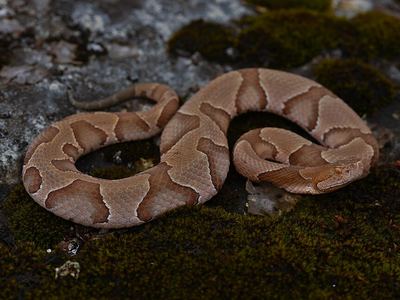
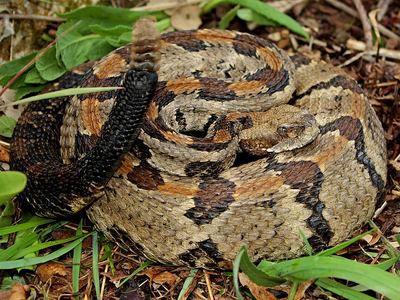
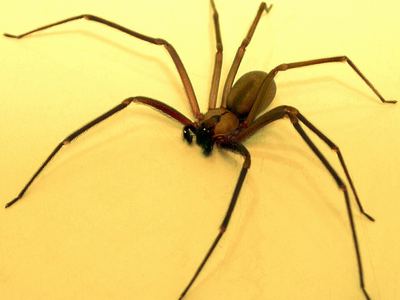
What snakes are in Douglas County?
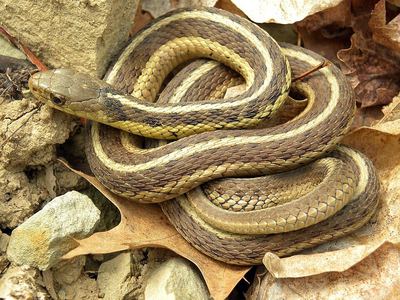
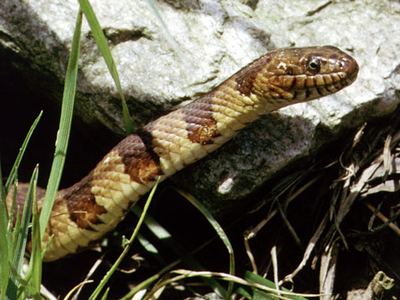
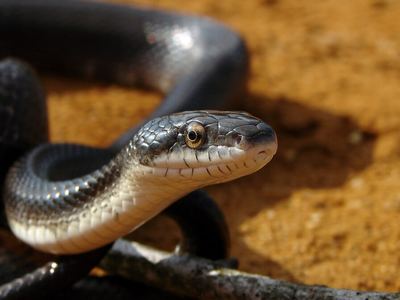
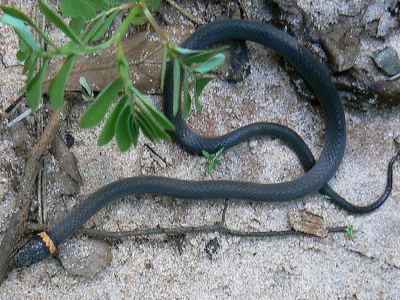
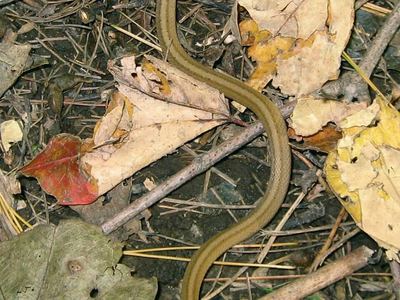
In all, 22 snake species are on the Douglas County list. The most recorded are the common garter snake (155), the eastern copperhead (121) and the northern water snake (95).
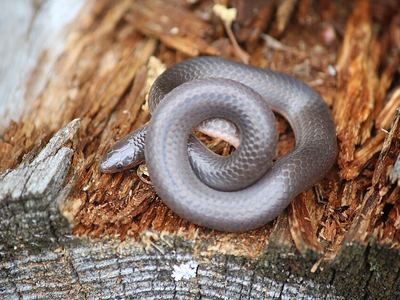
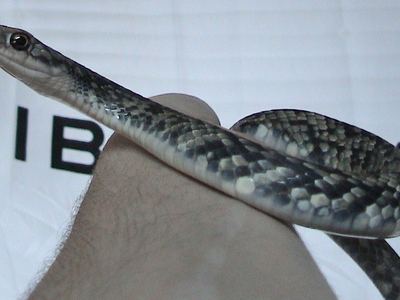
| # | Species | Records | Share of Kansas records |
|---|---|---|---|
| 1 | Common garter snake Thamnophis sirtalis | 155 | 24% |
| 2 | Eastern copperhead venomous Agkistrodon contortrix | 121 | 20% |
| 3 | Northern water snake Nerodia sipedon | 95 | 8% |
| 4 | Western rat snake Pantherophis obsoletus | 93 | 21% |
| 5 | Ring-necked snake Diadophis punctatus | 87 | 3% |
| 6 | DeKay's brown snake Storeria dekayi | 86 | 26% |
| 7 | Eastern wormsnake Carphophis amoenus | 70 | 27% |
| 8 | Eastern racer Coluber constrictor | 69 | 8% |
| 9 | Timber rattlesnake venomous Crotalus horridus | 55 | 31% |
| 10 | Prairie kingsnake Lampropeltis calligaster | 50 | 19% |
| 11 | Plains garter snake Thamnophis radix | 42 | 7% |
| 12 | Eastern milksnake Lampropeltis triangulum | 41 | 17% |
| 13 | Graham's crayfish snake Regina grahamii | 37 | 23% |
| 14 | Flathead snake Tantilla gracilis | 30 | 4% |
| 15 | Western worm snake Carphophis vermis | 27 | 10% |
| 16 | Speckled kingsnake Lampropeltis holbrooki | 23 | 9% |
| 17 | Diamondback water snake Nerodia rhombifer | 22 | 12% |
| 18 | Gopher snake Pituophis catenifer | 21 | 3% |
| 19 | Western ribbon snake Thamnophis proximus | 17 | 6% |
| 20 | Lined snake Tropidoclonion lineatum | 16 | 3% |
| 21 | Plain-bellied watersnake Nerodia erythrogaster | 16 | 5% |
| 22 | Central plains milksnake Lampropeltis gentilis | 6 | 3% |
When are snakes out in Douglas County?
Observation records of snakes in Douglas County run mostly March through October, peaking in May with 27% of them, the same peak as Kansas as a whole.
What spiders are in Douglas County?
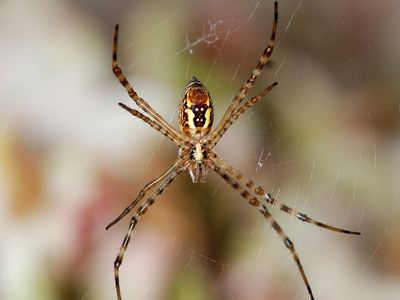
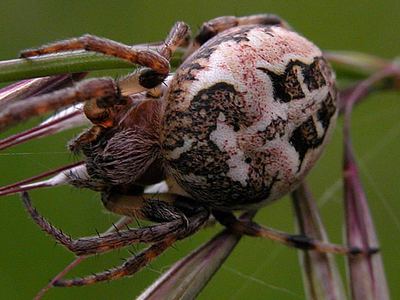
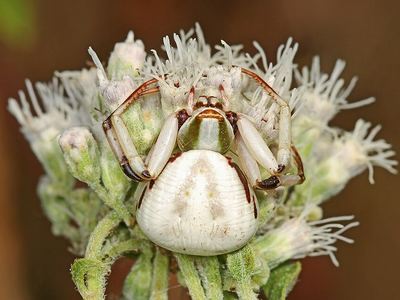
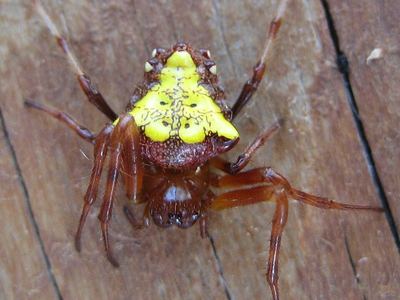
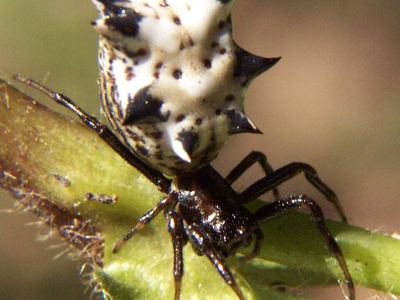
In all, 30 spider species are on the Douglas County list. The most recorded are the brown recluse (22), the bold jumper (21) and the black-and-yellow argiope (20). Douglas County holds more than half of all Kansas records of the whitebanded crab spider, the arrowhead orbweaver, the peppered jumper and the dimorphic jumper.
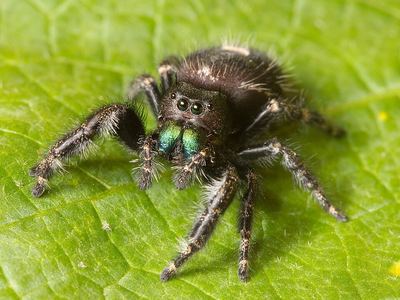
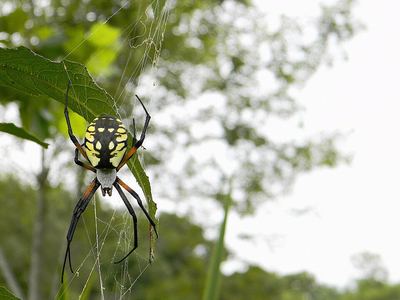
| # | Species | Records | Share of Kansas records |
|---|---|---|---|
| 1 | Brown recluse venomous Loxosceles reclusa | 22 | 26% |
| 2 | Bold jumper Phidippus audax | 21 | 21% |
| 3 | Black-and-yellow argiope Argiope aurantia | 20 | 25% |
| 4 | Banded garden spider Argiope trifasciata | 12 | 36% |
| 5 | Furrow orbweaver Larinioides cornutus | 12 | 44% |
| 6 | Whitebanded crab spider Misumenoides formosipes | 12 | 52% |
| 7 | Arrowhead orbweaver Verrucosa arenata | 10 | 59% |
| 8 | Spined micrathena Micrathena gracilis | 10 | 26% |
| 9 | Spotted orbweaver Neoscona crucifera | 10 | 26% |
| 10 | Familiar jumping spider Platycryptus undatus | 9 | 11% |
| 11 | Peppered jumper Pelegrina galathea | 8 | 62% |
| 12 | Brilliant jumping spider Phidippus clarus | 7 | 26% |
| 13 | Dimorphic jumper Maevia inclemens | 7 | 50% |
| 14 | Marbled orbweaver Araneus marmoreus | 6 | 67% |
| 15 | Paraphidippus aurantius | 6 | 16% |
| 16 | Rabid wolf spider Rabidosa rabida | 6 | 16% |
| 17 | Striped lynx spider Oxyopes salticus | 6 | 21% |
| 18 | Arabesque orbweaver Neoscona arabesca | 5 | 42% |
| 19 | White micrathena Micrathena mitrata | 5 | 36% |
| 20 | Flea jumping spider Naphrys pulex | 4 | 16% |
| 21 | Grayish jumping spider Phidippus princeps | 4 | 40% |
| 22 | Georgia wolf spider Tigrosa georgicola | 3 | 100% |
| 23 | Triangulate bud spider Steatoda triangulosa | 3 | 12% |
| 24 | Dysdera crocata | 2 | 22% |
| 25 | Nursery web spider Pisaurina mira | 2 | 10% |
| 26 | White-jawed jumping spider Hentzia mitrata | 2 | 11% |
| 27 | Dark fishing spider Dolomedes tenebrosus | 1 | 9% |
| 28 | Orchard orbweaver Leucauge venusta | 1 | 6% |
| 29 | Putnam's jumper Phidippus putnami | 1 | 11% |
| 30 | Sixspotted fishing spider Dolomedes triton | 1 | 33% |
When are spiders out in Douglas County?
Observation records of spiders in Douglas County run mostly May through October, peaking in August with 22% of them, the same peak as Kansas as a whole.
What stands out in Douglas County
Species for which Douglas County holds a large share of all Kansas records: the whitebanded crab spider, 52% (12 of 23); the furrow orbweaver, 44% (12 of 27); the banded garden spider, 36% (12 of 33); the timber rattlesnake, 31% (55 of 177); the eastern wormsnake, 27% (70 of 258); the spined micrathena, 26% (10 of 38); the spotted orbweaver, 26% (10 of 38); the DeKay's brown snake, 26% (86 of 327).
Common in Kansas, not on the Douglas County list
Among the snakes most recorded across Kansas, these do not reach the county list: the western massasauga (490 statewide) and the prairie rattlesnake (347 statewide). Few records here can mean the species is rare in the county, or that few people have looked.
Harmless lookalikes in Douglas County
Copperheads are on the county list, and so are harmless species often taken for them: the northern water snake, the eastern milksnake, the plain-bellied watersnake and the central plains milksnake. No cottonmouths reach the county list, but the northern cottonmouth is on the Kansas list: treat any snake like it as venomous until identified. Harmless species often taken for them here: the northern water snake, the diamondback water snake and the plain-bellied watersnake. Rattlesnakes are on the county list, and so are harmless species often taken for them: the gopher snake. No coral snakes reach the county list, and GBIF holds no coral snake record for Kansas under any license, so one reported here is most likely a harmless lookalike: the eastern milksnake and the central plains milksnake. No widow spiders reach the county list, but the western black widow, the northern black widow and the southern black widow are on the Kansas list: treat any spider like them as venomous until identified. Harmless species often taken for them here: the triangulate bud spider.
Douglas County among Kansas counties
By licensed snake records Douglas County ranks 2nd of 105 Kansas counties with any.
Other Kansas counties with their own page: Cowley County, Chase County, Ellis County, Russell County, Cherokee County, Riley County, Barber County and Johnson County.
The whole state: venomous species in Kansas, all snakes, all spiders.
GBIF records read 2026-09-29. Listed: any license. Counted: CC0/CC BY only. How we count.