Snakes and spiders in Howard County, Maryland
Howard County, home of Ellicott City, has 9 snake and 55 spider species on record, from 146 licensed snake and 536 spider records. Venomous species here: the eastern copperhead, the northern black widow and the southern black widow.
Are there venomous snakes or spiders in Howard County?
Yes. The eastern copperhead: 2 licensed records, 1% of all Maryland records of it. The northern black widow: 1 licensed record, 3% of all Maryland records of it. The southern black widow: on record, no openly licensed records to count.
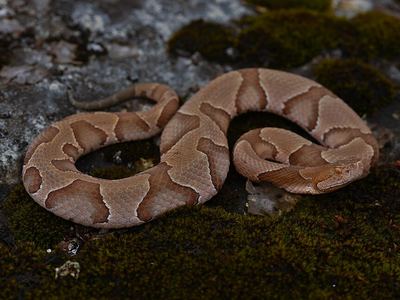
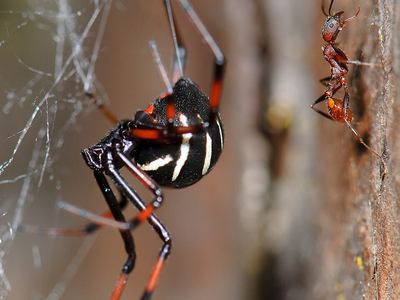
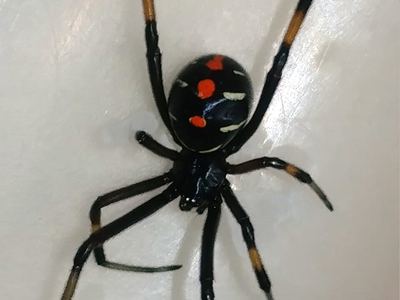
What snakes are in Howard County?
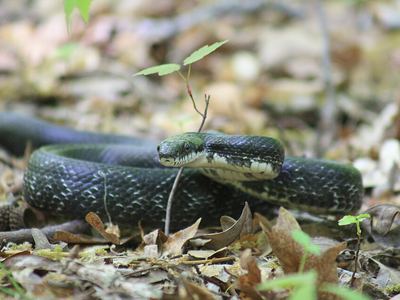
In all, 9 snake species are on the Howard County list. The most recorded are the eastern rat snake (37), the DeKay's brown snake (33) and the northern water snake (22).
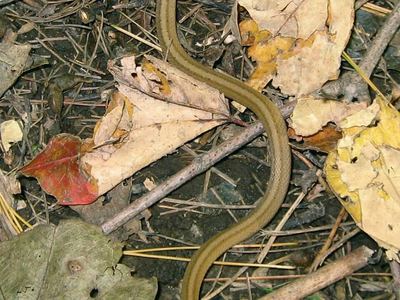
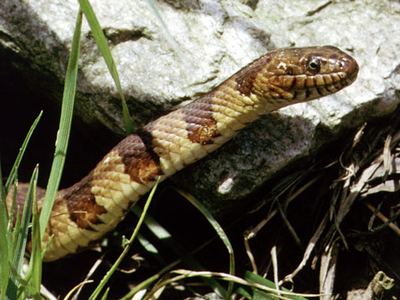
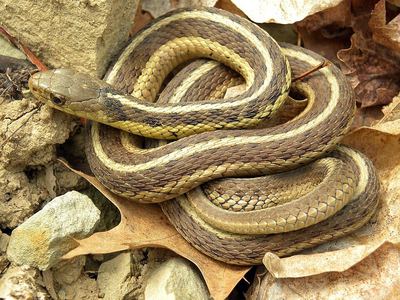
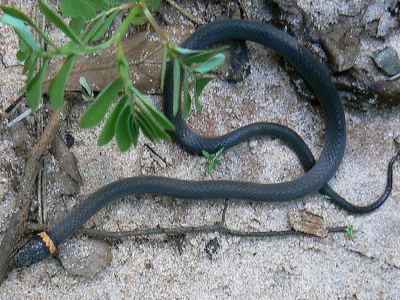
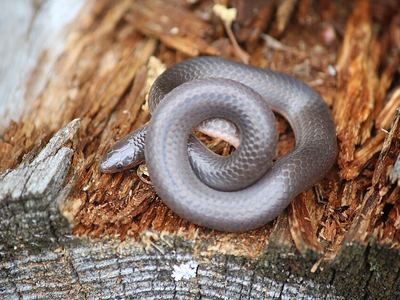
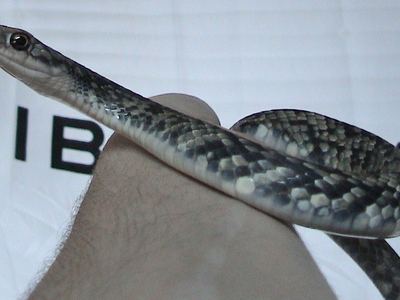
| # | Species | Records | Share of Maryland records |
|---|---|---|---|
| 1 | Eastern rat snake Pantherophis alleghaniensis | 37 | 7% |
| 2 | DeKay's brown snake Storeria dekayi | 33 | 11% |
| 3 | Northern water snake Nerodia sipedon | 22 | 4% |
| 4 | Common garter snake Thamnophis sirtalis | 17 | 3% |
| 5 | Ring-necked snake Diadophis punctatus | 13 | 5% |
| 6 | Eastern wormsnake Carphophis amoenus | 7 | 3% |
| 7 | Eastern racer Coluber constrictor | 4 | 2% |
| 8 | Eastern copperhead venomous Agkistrodon contortrix | 2 | 1% |
| 9 | Eastern hog-nosed snake Heterodon platirhinos | 2 | 2% |
When are snakes out in Howard County?
Observation records of snakes in Howard County run mostly March through October, peaking in May with 25% of them, the same peak as Maryland as a whole.
What spiders are in Howard County?
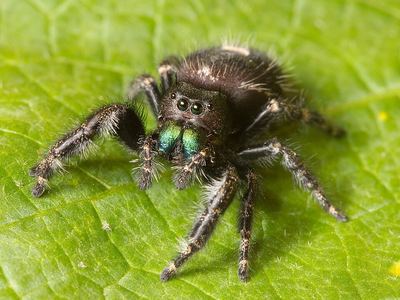
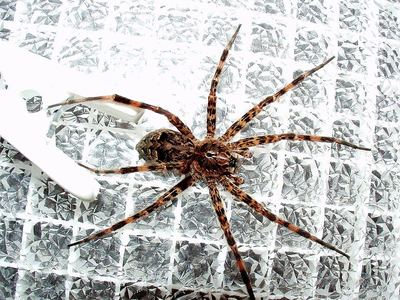
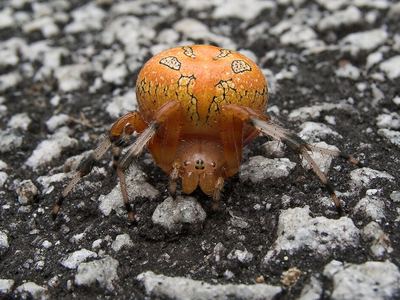
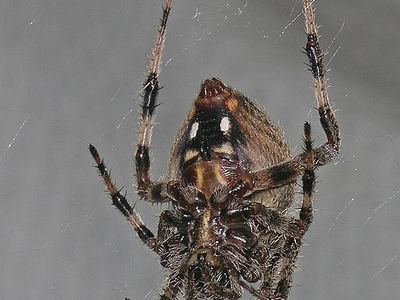
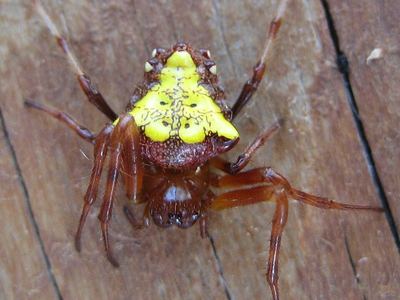
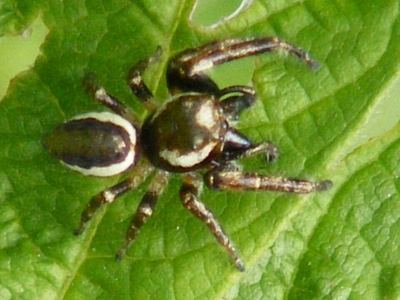
In all, 55 spider species are on the Howard County list. The most recorded are the orchard orbweaver (35), the familiar jumping spider (32) and the bold jumper (28). Howard County holds more than half of all Maryland records of the toadlike bolas spider, the lattice orbweaver, the American bolas spider and the Joro spider.
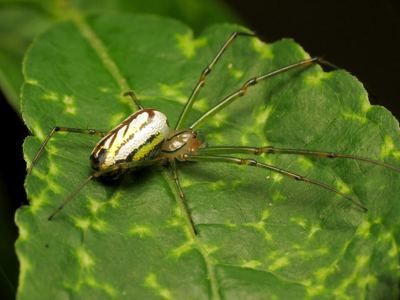
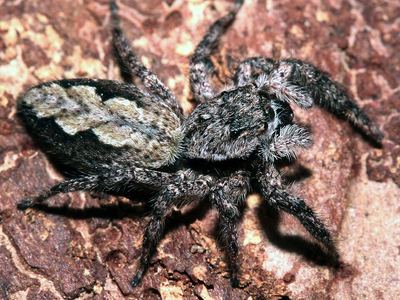
| # | Species | Records | Share of Maryland records |
|---|---|---|---|
| 1 | Orchard orbweaver Leucauge venusta | 35 | 9% |
| 2 | Familiar jumping spider Platycryptus undatus | 32 | 12% |
| 3 | Bold jumper Phidippus audax | 28 | 10% |
| 4 | Dark fishing spider Dolomedes tenebrosus | 28 | 12% |
| 5 | Marbled orbweaver Araneus marmoreus | 24 | 24% |
| 6 | Spotted orbweaver Neoscona crucifera | 20 | 15% |
| 7 | Arrowhead orbweaver Verrucosa arenata | 19 | 12% |
| 8 | Bronze jumper Eris militaris | 17 | 11% |
| 9 | Toadlike bolas spider Mastophora phrynosoma | 16 | 89% |
| 10 | Black-and-yellow argiope Argiope aurantia | 14 | 8% |
| 11 | Lattice orbweaver Araneus thaddeus | 14 | 56% |
| 12 | Basilica orbweaver Mecynogea lemniscata | 12 | 18% |
| 13 | Butterfly orbweaver Araneus pegnia | 10 | 21% |
| 14 | Paraphidippus aurantius | 10 | 6% |
| 15 | Spined micrathena Micrathena gracilis | 10 | 5% |
| 16 | American bolas spider Mastophora hutchinsoni | 9 | 100% |
| 17 | Joro spider Trichonephila clavata | 9 | 100% |
| 18 | Black-banded crab spider Synema parvulum | 8 | 24% |
| 19 | Boreal combfoot Steatoda borealis | 8 | 24% |
| 20 | White-banded fishing spider Dolomedes albineus | 8 | 13% |
| 21 | American green crab spider Misumessus oblongus | 7 | 7% |
| 22 | Bowl and doily spider Frontinella pyramitela | 7 | 14% |
| 23 | Canopy jumping spider Phidippus otiosus | 7 | 30% |
| 24 | Nursery web spider Pisaurina mira | 7 | 3% |
| 25 | Wetland giant wolf spider Tigrosa helluo | 7 | 12% |
| 26 | Garden ghost spider Hibana gracilis | 6 | 17% |
| 27 | Banded fishing spider Dolomedes vittatus | 5 | 19% |
| 28 | Common house spider Parasteatoda tepidariorum | 5 | 5% |
| 29 | Parson spider Herpyllus ecclesiasticus | 5 | 9% |
| 30 | Sylvan jumping spider Colonus sylvanus | 5 | 6% |
| 31 | Whitebanded crab spider Misumenoides formosipes | 5 | 9% |
| 32 | Arabesque orbweaver Neoscona arabesca | 4 | 6% |
| 33 | Grayish jumping spider Phidippus princeps | 4 | 8% |
| 34 | Labyrinth orbweaver Metepeira labyrinthea | 4 | 7% |
| 35 | Rabid wolf spider Rabidosa rabida | 4 | 6% |
| 36 | Slender ant mimicking jumping spider Synemosyna formica | 4 | 27% |
| 37 | Black laceweaver Amaurobius ferox | 3 | 14% |
| 38 | Broad-faced sac spider Trachelas tranquillus | 3 | 9% |
| 39 | Dimorphic jumper Maevia inclemens | 3 | 6% |
| 40 | Magnolia green jumper Lyssomanes viridis | 3 | 3% |
| 41 | Peppered jumper Pelegrina galathea | 3 | 5% |
| 42 | Ribbon jumping spider Metacyrba taeniola | 3 | 6% |
| 43 | Triangulate bud spider Steatoda triangulosa | 3 | 7% |
| 44 | Banded garden spider Argiope trifasciata | 2 | 7% |
| 45 | Dock spider Dolomedes scriptus | 2 | 10% |
| 46 | Dotted wolf spider Rabidosa punctulata | 2 | 10% |
| 47 | Dysdera crocata | 2 | 5% |
| 48 | Putnam's jumper Phidippus putnami | 2 | 2% |
| 49 | Tigrosa annexa | 2 | 10% |
| 50 | Furrow orbweaver Larinioides cornutus | 1 | 2% |
| 51 | Georgia wolf spider Tigrosa georgicola | 1 | 3% |
| 52 | Northern black widow venomous Latrodectus variolus | 1 | 3% |
| 53 | White-jawed jumping spider Hentzia mitrata | 1 | 2% |
| 54 | Sixspotted fishing spider Dolomedes triton | — | — |
| 55 | Southern black widow venomous Latrodectus mactans | — | — |
When are spiders out in Howard County?
Observation records of spiders in Howard County run mostly March through October, peaking in August with 19% of them, the same peak as Maryland as a whole.
What stands out in Howard County
Species for which Howard County holds a large share of all Maryland records: the lattice orbweaver, 56% (14 of 25); the marbled orbweaver, 24% (24 of 99); the butterfly orbweaver, 21% (10 of 48); the basilica orbweaver, 18% (12 of 66); the spotted orbweaver, 15% (20 of 133).
Common in Maryland, not on the Howard County list
Among the snakes most recorded across Maryland, these do not reach the county list: the rough greensnake (152 statewide), the eastern milksnake (110 statewide) and the smooth earth snake (86 statewide). Few records here can mean the species is rare in the county, or that few people have looked.
Harmless lookalikes in Howard County
Copperheads are on the county list, and so are harmless species often taken for them: the eastern rat snake, the northern water snake and the eastern hog-nosed snake. Cottonmouths are not on the Maryland list, but GBIF holds 1 cottonmouth record of any license in Maryland (northern cottonmouth 1): treat any snake like this as venomous until identified. Harmless species often taken for them here: the northern water snake. No rattlesnakes reach the county list, but the timber rattlesnake is on the Maryland list: treat any snake like it as venomous until identified. Harmless species often taken for them here: the eastern hog-nosed snake. Widow spiders are on the county list, and so are harmless species often taken for them: the boreal combfoot, the common house spider and the triangulate bud spider.
Howard County among Maryland counties
By licensed snake records Howard County ranks 7th of 23 Maryland counties with any.
Other Maryland counties with their own page: Prince George's County, Montgomery County, Anne Arundel County, Baltimore County, Frederick County and Harford County.
The whole state: venomous species in Maryland, all snakes, all spiders.
GBIF records read 2026-09-29. Listed: any license. Counted: CC0/CC BY only. How we count.