Snakes and spiders in Brazoria County, Texas
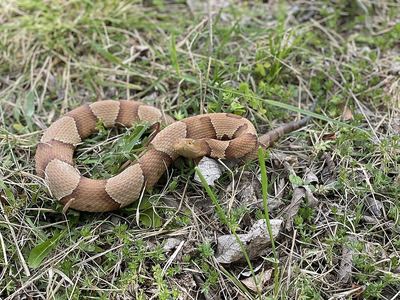
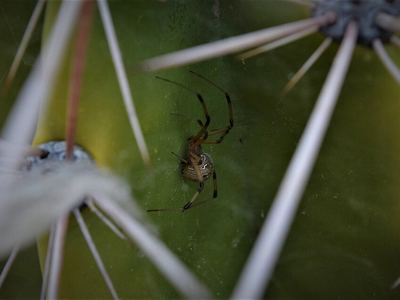
Brazoria County, home of Angleton, has 23 snake and 75 spider species on record, from 453 licensed snake and 301 spider records. Venomous species here: the northern cottonmouth, the eastern copperhead, the Texas coral snake, the western diamondback rattlesnake, the broad-banded copperhead and the brown widow.
Are there venomous snakes or spiders in Brazoria County?
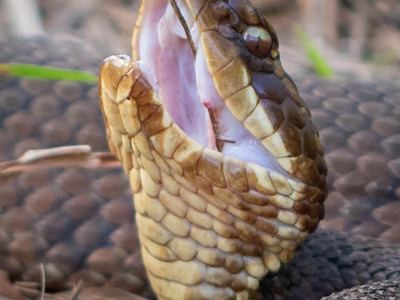
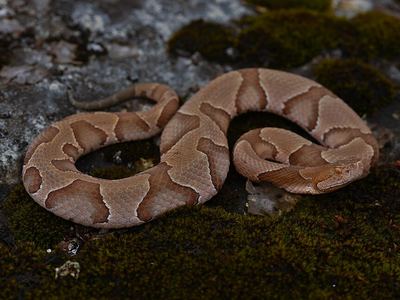
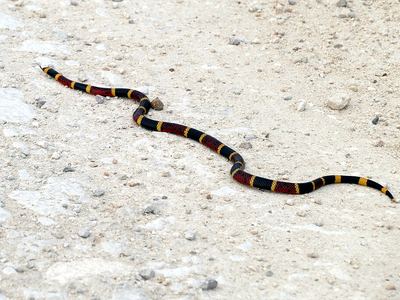
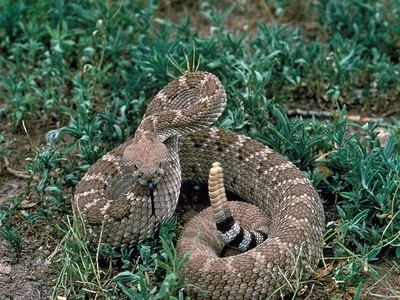
Yes. The northern cottonmouth: 36 licensed records, 4% of all Texas records of it. The eastern copperhead: 30 licensed records, 3% of all Texas records of it. The Texas coral snake: 15 licensed records, 3% of all Texas records of it. The western diamondback rattlesnake: 8 licensed records, 0% of all Texas records of it. The broad-banded copperhead: on record, no openly licensed records to count. The brown widow: on record, no openly licensed records to count.
What snakes are in Brazoria County?
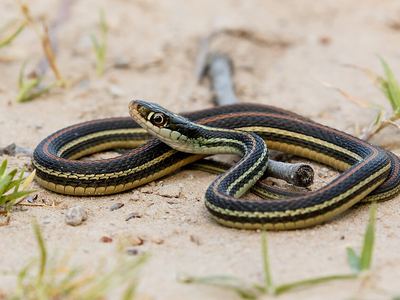
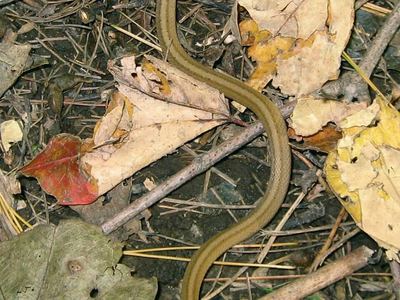
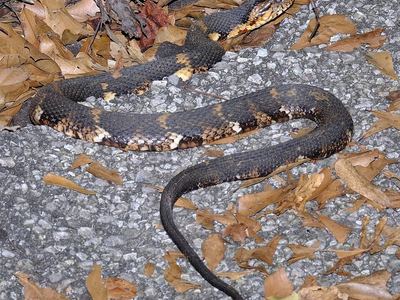
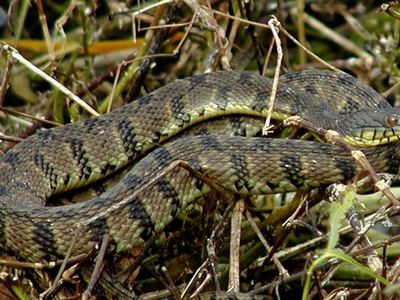
In all, 23 snake species are on the Brazoria County list. The most recorded are the western ribbon snake (68), the DeKay's brown snake (58) and the northern cottonmouth (36).
| # | Species | Records | Share of Texas records |
|---|---|---|---|
| 1 | Western ribbon snake Thamnophis proximus | 68 | 3% |
| 2 | DeKay's brown snake Storeria dekayi | 58 | 6% |
| 3 | Northern cottonmouth venomous Agkistrodon piscivorus | 36 | 4% |
| 4 | Southern watersnake Nerodia fasciata | 36 | 4% |
| 5 | Diamondback water snake Nerodia rhombifer | 35 | 2% |
| 6 | Eastern copperhead venomous Agkistrodon contortrix | 30 | 3% |
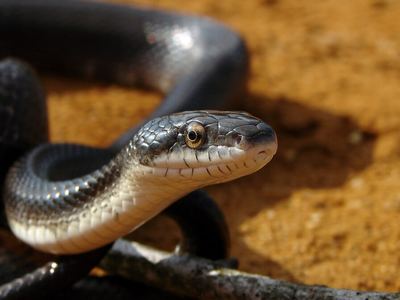
| 7 | Western rat snake Pantherophis obsoletus | 24 | 1% |
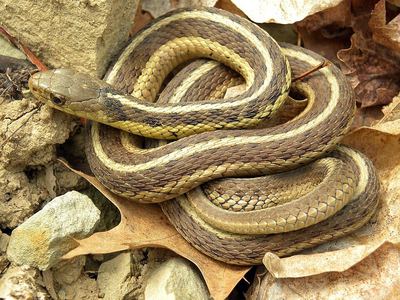
| 8 | Common garter snake Thamnophis sirtalis | 21 | 11% |
| 9 | Graham's crayfish snake Regina grahamii | 21 | 11% |
| 10 | Plain-bellied watersnake Nerodia erythrogaster | 20 | 1% |
| 11 | Texas coral snake venomous Micrurus tener | 15 | 3% |
| 12 | Rough earthsnake Haldea striatula | 14 | 1% |
| 13 | Rough greensnake Opheodrys aestivus | 13 | 2% |
| 14 | Green water snake Nerodia cyclopion | 9 | 6% |
| 15 | Western diamondback rattlesnake venomous Crotalus atrox | 8 | 0% |
| 16 | Salt marsh snake Nerodia clarkii | 7 | 2% |
| 17 | Mud snake Farancia abacura | 5 | 4% |
| 18 | Speckled kingsnake Lampropeltis holbrooki | 5 | 3% |
| 19 | Prairie kingsnake Lampropeltis calligaster | 3 | 1% |
| 20 | Coachwhip Masticophis flagellum | 2 | 0% |
| 21 | Crayfish snake Liodytes rigida | 2 | 3% |
| 22 | Eastern racer Coluber constrictor | 1 | 0% |
| 23 | Broad-banded copperhead venomous Agkistrodon laticinctus | — | — |
When are snakes out in Brazoria County?
Observation records of snakes in Brazoria County run through most of the year, peaking in February with 22% of them; across Texas the peak is April.
What spiders are in Brazoria County?
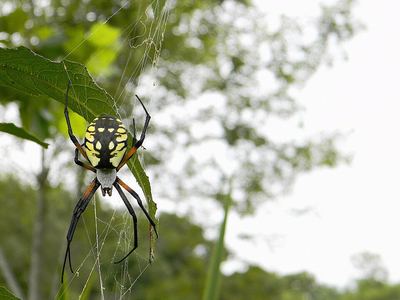
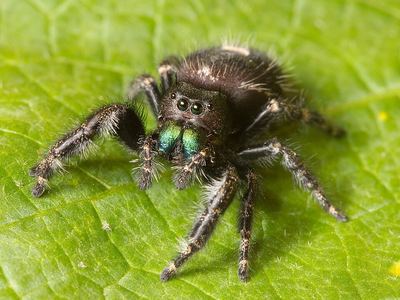
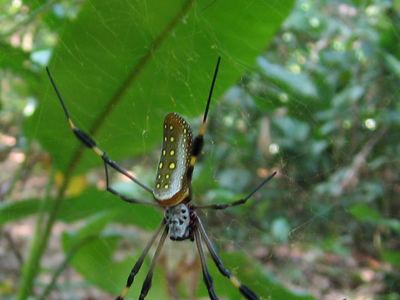
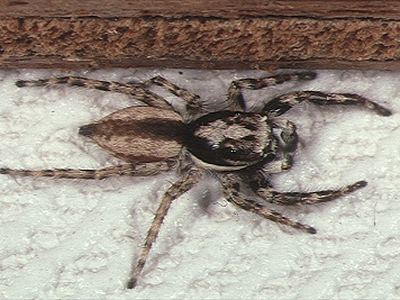
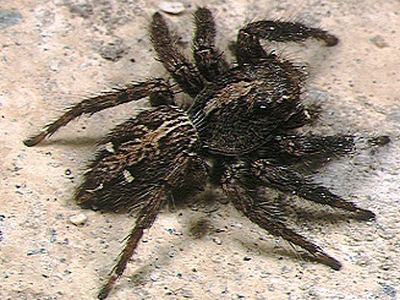
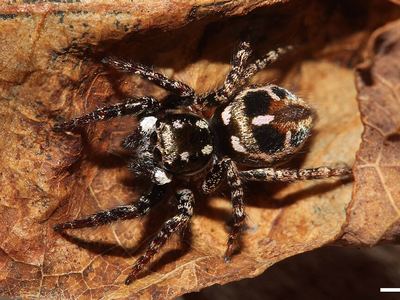
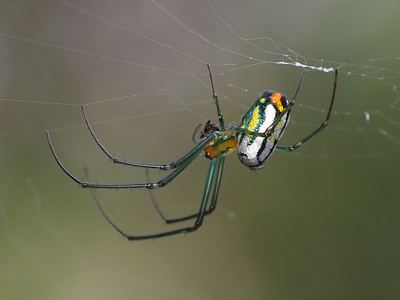
In all, 75 spider species are on the Brazoria County list. The most recorded are the black-and-yellow argiope (27), the bold jumper (24) and the American golden orb weaver (21).
| # | Species | Records | Share of Texas records |
|---|---|---|---|
| 1 | Black-and-yellow argiope Argiope aurantia | 27 | 1% |
| 2 | Bold jumper Phidippus audax | 24 | 2% |
| 3 | American golden orb weaver Trichonephila clavipes | 21 | 10% |
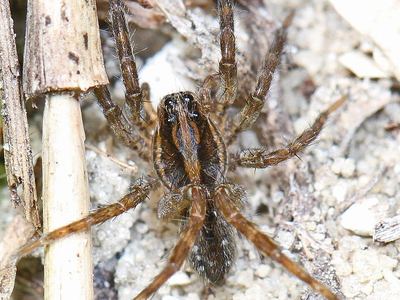
| 4 | Tigrosa annexa | 18 | 5% |
| 5 | Gray wall jumper Menemerus bivittatus | 16 | 6% |
| 6 | Pantropical jumper Plexippus paykulli | 14 | 5% |
| 7 | Twin-flagged jumping spider Anasaitis canosa | 14 | 2% |
| 8 | Leucauge argyrobapta | 12 | 5% |
| 9 | Spiny-backed orbweaver Gasteracantha cancriformis | 12 | 2% |
| 10 | Sixspotted fishing spider Dolomedes triton | 11 | 6% |
| 11 | Tropical orb weaver Eriophora ravilla | 8 | 2% |
| 12 | Arabesque orbweaver Neoscona arabesca | 7 | 3% |
| 13 | Southern house spider Kukulcania hibernalis | 7 | 10% |
| 14 | Georgia wolf spider Tigrosa georgicola | 6 | 4% |
| 15 | Familiar jumping spider Platycryptus undatus | 5 | 1% |
| 16 | Green lynx spider Peucetia viridans | 5 | 1% |
| 17 | Metazygia wittfeldae | 5 | 4% |
| 18 | Sylvan jumping spider Colonus sylvanus | 5 | 3% |
| 19 | Zilloides orb-weaver Metazygia zilloides | 5 | 8% |
| 20 | Messua limbata | 4 | 4% |
| 21 | Natal cellar spider Smeringopus natalensis | 4 | 17% |
| 22 | Rabid wolf spider Rabidosa rabida | 4 | 0% |
| 23 | Starbellied orbweaver Acanthepeira stellata | 4 | 6% |
| 24 | White-banded fishing spider Dolomedes albineus | 4 | 8% |
| 25 | Bifurcate trashline orbweaver Allocyclosa bifurca | 3 | 3% |
| 26 | Giant lichen orbweaver Araneus bicentenarius | 3 | 2% |
| 27 | Whitebanded crab spider Misumenoides formosipes | 3 | 3% |
| 28 | Box spider Crossopriza lyoni | 2 | 3% |
| 29 | Dotted wolf spider Rabidosa punctulata | 2 | 2% |
| 30 | Falconina gracilis | 2 | 1% |
| 31 | Heptagonal orbweaver Gea heptagon | 2 | 5% |
| 32 | Lined orbweaver Mangora gibberosa | 2 | 2% |
| 33 | Scytodes atlacoya | 2 | 3% |
| 34 | Striped lynx spider Oxyopes salticus | 2 | 0% |
| 35 | Arrowhead orbweaver Verrucosa arenata | 1 | 2% |
| 36 | Blacktailed red sheetweaver Florinda coccinea | 1 | 11% |
| 37 | Common Hentz jumping spider Hentzia palmarum | 1 | 1% |
| 38 | Cribellate spider Metaltella simoni | 1 | 0% |
| 39 | Dark fishing spider Dolomedes tenebrosus | 1 | 1% |
| 40 | Habronattus coecatus | 1 | 2% |
| 41 | Hammerjawed jumper Zygoballus rufipes | 1 | 1% |
| 42 | Hogna antelucana | 1 | 0% |
| 43 | Larinia directa | 1 | 1% |
| 44 | Mecaphesa dubia | 1 | 1% |
| 45 | Parson spider Herpyllus ecclesiasticus | 1 | 2% |
| 46 | Pisaurina dubia | 1 | 2% |
| 47 | Spotted orbweaver Neoscona crucifera | 1 | 0% |
| 48 | Wetland giant wolf spider Tigrosa helluo | 1 | 1% |
| 49 | American dewdrop spider Argyrodes elevatus | — | — |
| 50 | Araneus detrimentosus | — | — |
| 51 | Banded garden spider Argiope trifasciata | — | — |
| 52 | Basilica orbweaver Mecynogea lemniscata | — | — |
| 53 | Bronze jumper Eris militaris | — | — |
| 54 | Brown widow venomous introduced Latrodectus geometricus | — | — |
| 55 | Butterfly orbweaver Araneus pegnia | — | — |
| 56 | Colonus puerperus | — | — |
| 57 | Difoliate orbweaver Acacesia hamata | — | — |
| 58 | Featherlegged orbweaver Uloborus glomosus | — | — |
| 59 | Filmy dome spider Neriene radiata | — | — |
| 60 | Humpbacked orbweaver Eustala anastera | — | — |
When are spiders out in Brazoria County?
Observation records of spiders in Brazoria County run mostly April through November, peaking in September with 17% of them; across Texas the peak is April.
Common in Texas, not on the Brazoria County list
Among the snakes most recorded across Texas, these do not reach the county list: the western ground snake (1,963 statewide), the checkered garter snake (1,851 statewide) and the gopher snake (1,440 statewide). Few records here can mean the species is rare in the county, or that few people have looked.
Among the spiders most recorded across Texas, these do not reach the county list: Cicurina varians (514 statewide) and the western spotted orbweaver (465 statewide). Few records here can mean the species is rare in the county, or that few people have looked.
Harmless lookalikes in Brazoria County
Copperheads are on the county list, and so are harmless species often taken for them: the plain-bellied watersnake. Cottonmouths are on the county list, and so are harmless species often taken for them: the southern watersnake, the diamondback water snake, the plain-bellied watersnake and the green water snake. Widow spiders are on the county list, and so are harmless species often taken for them: the triangulate bud spider. No recluse spiders reach the county list, but the brown recluse, the Texas recluse, the Big Bend recluse and the Apache recluse are on the Texas list: treat any spider like them as venomous until identified. Harmless species often taken for them here: the southern house spider.
Brazoria County among Texas counties
By licensed snake records Brazoria County ranks 18th of 254 Texas counties with any.
Other Texas counties with their own page: Travis County, Brewster County, Harris County, Brazos County, El Paso County, Jeff Davis County, Val Verde County and Bexar County.
The whole state: venomous species in Texas, all snakes, all spiders.
GBIF records read 2026-09-29. Listed: any license. Counted: CC0/CC BY only. How we count.