Snakes and spiders in Orange County, North Carolina
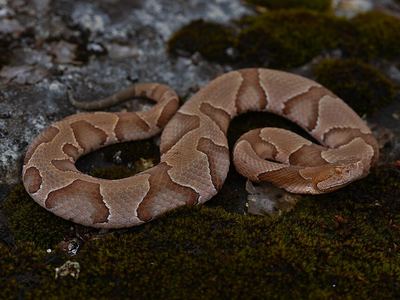
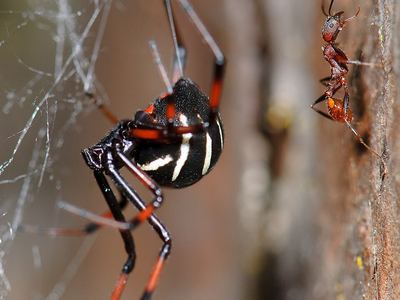
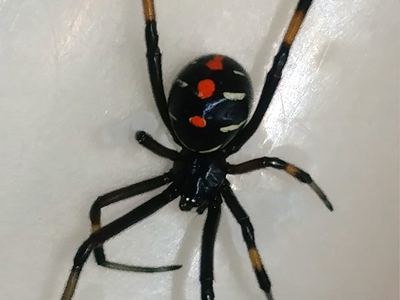
Orange County, home of Hillsborough, has 18 snake and 71 spider species on record, from 751 licensed snake and 1,294 spider records. Venomous species here: the eastern copperhead, the northern black widow and the southern black widow.
Are there venomous snakes or spiders in Orange County?
Yes. The eastern copperhead: 72 licensed records, 4% of all North Carolina records of it. The northern black widow: 9 licensed records, 22% of all North Carolina records of it. The southern black widow: 1 licensed record, 2% of all North Carolina records of it.
What snakes are in Orange County?
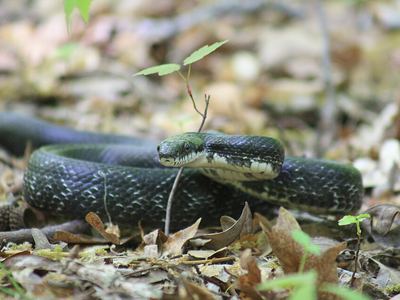
In all, 18 snake species are on the Orange County list. The most recorded are the eastern rat snake (107), the northern water snake (99) and the eastern wormsnake (93).
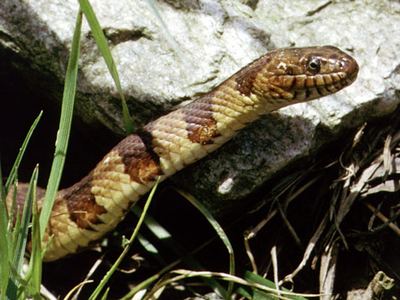
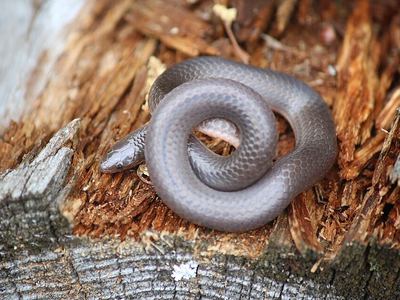
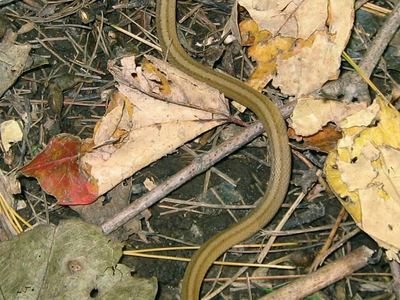
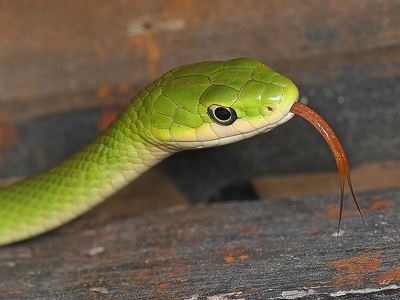
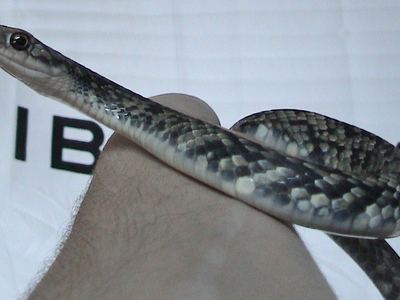
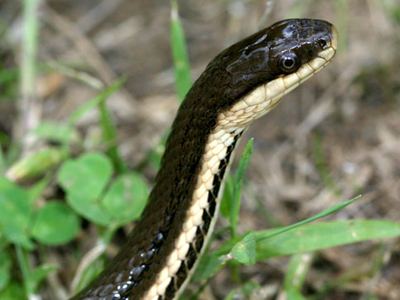
| # | Species | Records | Share of North Carolina records |
|---|---|---|---|
| 1 | Eastern rat snake Pantherophis alleghaniensis | 107 | 6% |
| 2 | Northern water snake Nerodia sipedon | 99 | 8% |
| 3 | Eastern wormsnake Carphophis amoenus | 93 | 9% |
| 4 | DeKay's brown snake Storeria dekayi | 92 | 10% |
| 5 | Eastern copperhead venomous Agkistrodon contortrix | 72 | 4% |
| 6 | Rough greensnake Opheodrys aestivus | 49 | 6% |
| 7 | Eastern racer Coluber constrictor | 38 | 3% |
| 8 | Queen snake Regina septemvittata | 38 | 11% |
| 9 | Ring-necked snake Diadophis punctatus | 31 | 2% |
| 10 | Common garter snake Thamnophis sirtalis | 30 | 2% |
| 11 | Red-bellied snake Storeria occipitomaculata | 21 | 4% |
| 12 | Smooth earth snake Virginia valeriae | 21 | 9% |
| 13 | Plain-bellied watersnake Nerodia erythrogaster | 16 | 3% |
| 14 | Prairie kingsnake Lampropeltis calligaster | 14 | 5% |
| 15 | Rough earthsnake Haldea striatula | 10 | 1% |
| 16 | Eastern hog-nosed snake Heterodon platirhinos | 7 | 1% |
| 17 | Eastern kingsnake Lampropeltis getula | 6 | 1% |
| 18 | Mole kingsnake Lampropeltis rhombomaculata | 1 | 0% |
When are snakes out in Orange County?
Observation records of snakes in Orange County run mostly March through October, peaking in May with 24% of them, the same peak as North Carolina as a whole.
What spiders are in Orange County?
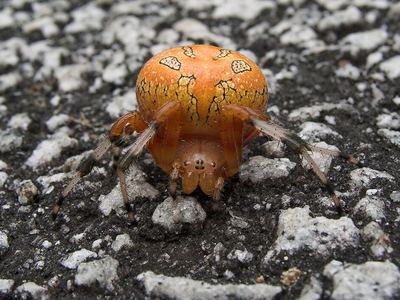
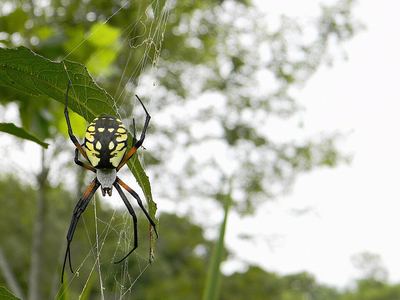
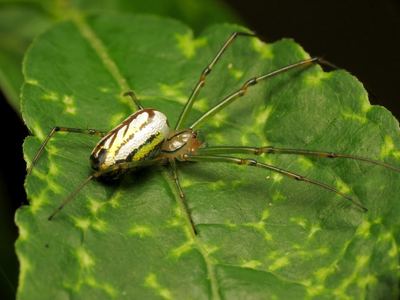
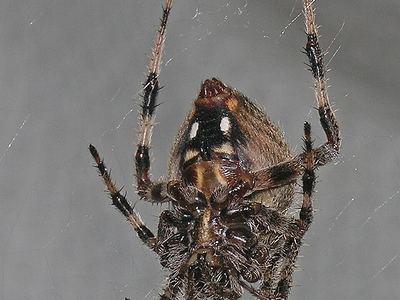
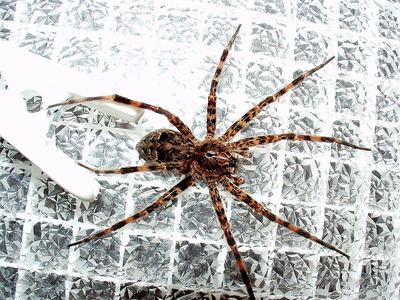
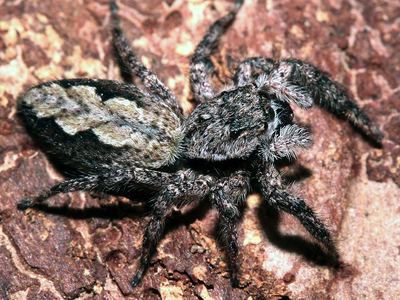
In all, 71 spider species are on the Orange County list. The most recorded are the nursery web spider (81), the magnolia green jumper (63) and the marbled orbweaver (62). Orange County holds more than half of all North Carolina records of Scytodes atlacoya, Gladicosa pulchra, Misumenops iners and the red-legged purseweb spider.
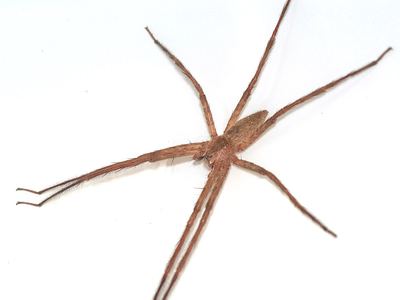
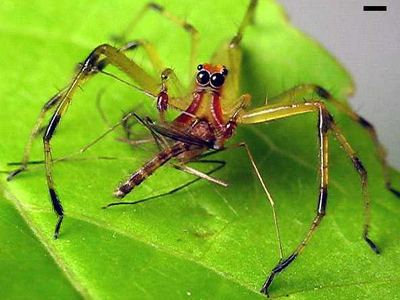
| # | Species | Records | Share of North Carolina records |
|---|---|---|---|
| 1 | Nursery web spider Pisaurina mira | 81 | 39% |
| 2 | Magnolia green jumper Lyssomanes viridis | 63 | 32% |
| 3 | Marbled orbweaver Araneus marmoreus | 62 | 30% |
| 4 | Black-and-yellow argiope Argiope aurantia | 54 | 11% |
| 5 | Orchard orbweaver Leucauge venusta | 54 | 18% |
| 6 | Spotted orbweaver Neoscona crucifera | 52 | 25% |
| 7 | Dark fishing spider Dolomedes tenebrosus | 41 | 32% |
| 8 | Familiar jumping spider Platycryptus undatus | 40 | 16% |
| 9 | White-banded fishing spider Dolomedes albineus | 40 | 32% |
| 10 | American green crab spider Misumessus oblongus | 36 | 35% |
| 11 | Arrowhead orbweaver Verrucosa arenata | 32 | 20% |
| 12 | Georgia wolf spider Tigrosa georgicola | 31 | 42% |
| 13 | Rabid wolf spider Rabidosa rabida | 31 | 26% |
| 14 | Green lynx spider Peucetia viridans | 29 | 13% |
| 15 | Spined micrathena Micrathena gracilis | 26 | 19% |
| 16 | Tigrosa annexa | 25 | 27% |
| 17 | Scytodes atlacoya | 24 | 50% |
| 18 | Whitebanded crab spider Misumenoides formosipes | 23 | 19% |
| 19 | Arabesque orbweaver Neoscona arabesca | 22 | 26% |
| 20 | Southern house spider Kukulcania hibernalis | 21 | 34% |
| 21 | Paraphidippus aurantius | 20 | 19% |
| 22 | Canopy jumping spider Phidippus otiosus | 19 | 20% |
| 23 | Tuftlegged orbweaver Mangora placida | 19 | 34% |
| 24 | Labyrinth orbweaver Metepeira labyrinthea | 18 | 44% |
| 25 | Putnam's jumper Phidippus putnami | 17 | 17% |
| 26 | Sylvan jumping spider Colonus sylvanus | 15 | 19% |
| 27 | Gladicosa pulchra | 13 | 65% |
| 28 | Arrowshaped micrathena Micrathena sagittata | 12 | 18% |
| 29 | Bowl and doily spider Frontinella pyramitela | 11 | 33% |
| 30 | Dotted wolf spider Rabidosa punctulata | 11 | 37% |
| 31 | Grayish jumping spider Phidippus princeps | 11 | 27% |
| 32 | Sixspotted fishing spider Dolomedes triton | 11 | 9% |
| 33 | Black-banded crab spider Synema parvulum | 10 | 30% |
| 34 | Dimorphic jumper Maevia inclemens | 10 | 25% |
| 35 | Parson spider Herpyllus ecclesiasticus | 10 | 18% |
| 36 | Red-femured spotted orbweaver Neoscona domiciliorum | 10 | 9% |
| 37 | Spiny-backed orbweaver Gasteracantha cancriformis | 10 | 8% |
| 38 | White-jawed jumping spider Hentzia mitrata | 10 | 22% |
| 39 | Furrow orbweaver Larinioides cornutus | 9 | 17% |
| 40 | Lattice orbweaver Araneus thaddeus | 9 | 45% |
| 41 | Misumenops iners | 9 | 53% |
| 42 | Northern black widow venomous Latrodectus variolus | 9 | 22% |
| 43 | White micrathena Micrathena mitrata | 9 | 18% |
| 44 | Banded fishing spider Dolomedes vittatus | 8 | 19% |
| 45 | Peppered jumper Pelegrina galathea | 8 | 20% |
| 46 | Basilica orbweaver Mecynogea lemniscata | 7 | 12% |
| 47 | Bold jumper Phidippus audax | 7 | 7% |
| 48 | Drumming sword wolf spider Gladicosa gulosa | 7 | 39% |
| 49 | Longbodied cellar spider Pholcus phalangioides | 7 | 11% |
| 50 | Whitman's jumping spider Phidippus whitmani | 7 | 15% |
| 51 | Cyclosa turbinata | 6 | 35% |
| 52 | Brilliant jumping spider Phidippus clarus | 5 | 6% |
| 53 | Heptagonal orbweaver Gea heptagon | 5 | 19% |
| 54 | Lined orbweaver Mangora gibberosa | 5 | 16% |
| 55 | Barronopsis texana | 4 | 17% |
| 56 | Dock spider Dolomedes scriptus | 4 | 15% |
| 57 | Red-legged purseweb spider Sphodros rufipes | 4 | 100% |
| 58 | Triangulate bud spider Steatoda triangulosa | 4 | 10% |
| 59 | False black widow Steatoda grossa | 3 | 6% |
| 60 | Audouin's trapdoor spider Ummidia audouini | 2 | 14% |
When are spiders out in Orange County?
Observation records of spiders in Orange County run mostly March through October, peaking in September with 17% of them, the same peak as North Carolina as a whole.
What stands out in Orange County
Species for which Orange County holds a large share of all North Carolina records: Gladicosa pulchra, 65% (13 of 20); Scytodes atlacoya, 50% (24 of 48); the labyrinth orbweaver, 44% (18 of 41); the Georgia wolf spider, 42% (31 of 73); the nursery web spider, 39% (81 of 209); the dotted wolf spider, 37% (11 of 30); the American green crab spider, 35% (36 of 103); the tuftlegged orbweaver, 34% (19 of 56).
Common in North Carolina, not on the Orange County list
Among the snakes most recorded across North Carolina, these do not reach the county list: the southern watersnake (1,161 statewide) and the corn snake (739 statewide). Few records here can mean the species is rare in the county, or that few people have looked.
Among the spiders most recorded across North Carolina, these do not reach the county list: the Pocock's lampshade-web spider (302 statewide) and the American golden orb weaver (139 statewide). Few records here can mean the species is rare in the county, or that few people have looked.
Harmless lookalikes in Orange County
Copperheads are on the county list, and so are harmless species often taken for them: the eastern rat snake, the northern water snake, the plain-bellied watersnake and the eastern hog-nosed snake. No cottonmouths reach the county list, but the northern cottonmouth is on the North Carolina list: treat any snake like it as venomous until identified. Harmless species often taken for them here: the northern water snake and the plain-bellied watersnake. No rattlesnakes reach the county list, but the timber rattlesnake and the pygmy rattlesnake are on the North Carolina list: treat any snake like them as venomous until identified. Harmless species often taken for them here: the eastern hog-nosed snake. Widow spiders are on the county list, and so are harmless species often taken for them: the triangulate bud spider and the false black widow. Recluse spiders are not on the North Carolina list, but GBIF holds 25 recluse spider records of any license in North Carolina (brown recluse 25): treat any spider like this as venomous until identified. Harmless species often taken for them here: the southern house spider and the longbodied cellar spider.
Orange County among North Carolina counties
By licensed snake records Orange County ranks 6th of 100 North Carolina counties with any.
Other North Carolina counties with their own page: Wake County, Sampson County, Columbus County, Durham County, Moore County, Dare County, Brunswick County and Bladen County.
The whole state: venomous species in North Carolina, all snakes, all spiders.
GBIF records read 2026-11-05 (open these records on GBIF). Listed: any license. Counted: CC0/CC BY only. How we count.